Your Ram’s headlight went out. You swapped the bulb. It’s still dead. Sound familiar? Dodge Ram headlight problems run deeper than a bad bulb — and the fix isn’t always obvious. Stick around, because this guide breaks down exactly what’s causing the problem and what you can actually do about it.
Why Dodge Ram Headlight Problems Are So Complicated
Ram trucks used to be simple. A fuse blew, you replaced it. Done.
That changed in 2006 when Ram switched to the Totally Integrated Power Module (TIPM) — a “smart” system that replaced old-school fuses and relays with solid-state drivers and computer logic.
The problem? Smart systems fail in smart (and deeply frustrating) ways.
Here’s a quick look at how Ram’s electrical architecture evolved — and where things went sideways:
| Model Year | Control Unit | Distribution Method | Common Failure |
|---|---|---|---|
| 2002–2005 | IPM | Fuses & Relays | Corroded sockets, blown fuses |
| 2006–2009 | TIPM | High-Side Drivers | Circuit lockout, driver burnout |
| 2010–2012 | TIPM | Integrated Circuitry | Fuel pump relay, lighting glitches |
| 2013–2018 | BCM/PDC | Software-Defined Logic | PWM flickering, harness melting |
| 2019–2026 | BCM/DSM | Adaptive Software | Non-serviceable LED board failure |
The TIPM “Permanent Lockout” Problem
This is one of the sneakiest Dodge Ram headlight problems out there.
The TIPM watches current draw on every circuit. If the amperage falls outside a narrow factory window — say, because a filament is breaking — the module flags it as a fault. It tries to reset the circuit a few times. If the fault keeps showing up across roughly five power cycles, the TIPM permanently disables that circuit.
So here’s what you experience:
- You install a brand-new bulb
- The headlight still doesn’t work
- You check voltage at the socket — it’s there… until you plug the bulb in
- Then nothing
That’s the lockout. The TIPM has decided that circuit is dead, and it’s not changing its mind on its own.
Diagnosing TIPM failure is tricky because voltage appears present under no-load conditions. Load it up, and the circuit shuts down.
What it costs you: Dealerships typically replace the entire TIPM — that’s $800 to $1,000 per visit. The 2006–2009 and 2011–2012 Ram 1500, 2500, and 3500 models hit this problem hardest. A better path for many owners is a TIPM remanufacture or repair service, which targets the specific failed drivers rather than replacing the whole unit.
Your Wiring Harness Is Melting — Here’s Why
Dodge Ram headlight problems don’t stop at the module. The wiring harness itself can be the culprit — literally melting.
On 4th gen Ram trucks (2009–2018) and the Ram Classic (2019–2024), the factory headlight connector uses thin 18-gauge wire. That wire carries serious current. Over time, heat builds up at the connector pins — especially if there’s any corrosion adding resistance to the connection.
Once the plastic housing softens, the connection becomes intermittent. You get:
- Flickering headlights
- One headlight cutting out randomly
- A burnt plastic smell near the headlight socket
- A visibly melted or discolored connector
Fixing a melted headlight connector for around $20 is absolutely doable. You bypass the damaged connector with a heavier-gauge pigtail or install a high-temperature ceramic socket.
Don’t just replace the bulb. The high-resistance hot spot in the harness will keep generating heat — and it’ll destroy the new bulb’s base or burn through the replacement connector just as fast.
LED Upgrades and the Flickering Nightmare
Thinking about swapping to LED bulbs? Great idea — but your Ram’s electrical system might fight you on it.
Here’s the core issue: Ram trucks use Pulse Width Modulation (PWM) to regulate lighting circuits. PWM rapidly cycles power on and off at high frequencies. A halogen bulb’s filament has enough thermal inertia to stay glowing through those tiny gaps. An LED doesn’t — it flickers at exactly that frequency, and it’s very visible.
On top of that, your BCM or TIPM expects the resistance and current draw of a halogen. Because LEDs draw far less current, the system reads it as a burned-out bulb. You get a dashboard warning. Sometimes the module cuts power to the circuit entirely.
Here’s how people solve it:
| Fix | Purpose | Pros | Cons |
|---|---|---|---|
| CANBUS Decoder | Signal conditioning | Kills flicker and dash errors | Adds bulk to harness |
| Load Resistor | Mimics halogen current draw | Simple, reliable | Runs hot, needs metal mount |
| PWM Module | Smooths the signal directly | Targets the real problem | More expensive |
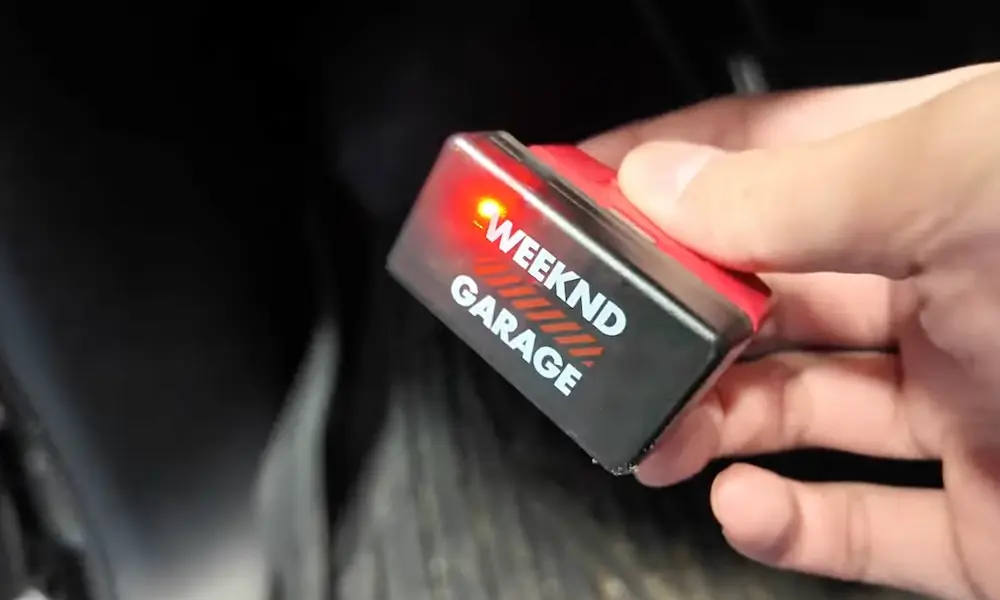
| Software Flash (AlfaOBD) | Reconfigures BCM registers | Permanent, no extra hardware | Needs specialized tools |
The cleanest fix? Use AlfaOBD software to reconfigure your BCM. You tell the truck it’s running LEDs — it adjusts the expected current draw and PWM behavior at the source. No heat-generating resistors bolted to your inner fender. No workarounds. AlfaOBD gives you factory-level control without the dealership price tag.
Moisture in Your Headlights: Normal vs. a Real Problem
Foggy headlights stress a lot of Ram owners out. But not every bit of condensation means your seal is blown.
Ram headlight assemblies have vents built in. They’re designed to breathe as temperature changes. When it rains or drops cold suddenly, you’ll sometimes see a light haze inside the lens. According to NHTSA TSB 23-024-22, if that fogging clears within 20 minutes of running the engine with the headlights on, the housing seal is likely fine — no repair needed.
You do have a problem when you see:
- Large water droplets pooling at the bottom of the housing
- Condensation that won’t clear after extended driving
- Visible cracks in the polycarbonate lens
- Missing or displaced vent caps
In 5th gen models, gunked-up fabric mesh vent filters are a frequent cause — they block pressure equalization and trap moisture inside. Ram-specific moisture TSBs cover housing seal failures, cracked lenses, and vent issues across multiple generations.
5th Gen Ram LED Headlights: Expensive and Non-Serviceable
If you have a 2019+ Ram 1500 Laramie, Rebel, or Limited, your truck came with premium LED headlights. They look incredible. They’re also completely non-serviceable.
One LED on the DRL board fails? The entire headlight assembly goes in the trash — at a cost of $1,000 to over $4,400 per side.
What’s “Popcorning” Doing to Your DRL Board?
The failure mechanism is called popcorning — and it’s as destructive as it sounds.
Moisture gets absorbed into the LED’s epoxy packaging over time. When the LED heats up during operation, that trapped moisture turns to steam. It expands rapidly, fractures the delicate gold wire bonds inside the LED, and takes out the whole LED string in an open-circuit failure.
| Failure Cause | What Happens | Symptom | Severity |
|---|---|---|---|
| Thermal Expansion | Mismatched expansion rates crack wire bonds | DRL section goes dark | High |
| Moisture Ingress (Popcorning) | Steam fractures LED internals | Entire DRL string fails | High |
| Joule Heating | Thin wire melts connector housing | Flickering, burnout | Moderate |
| TIPM Software Lockout | Module permanently disables circuit | Headlight won’t work at all | High |
The good news: aftermarket repair boards from companies like Diode Dynamics and Oracle Lighting let you restore (or upgrade) the DRL boards without buying a whole new assembly. The catch: you need to heat-open the housing to do it, and resealing it properly is critical — a bad seal leads right back to the moisture problems covered above.
NHTSA Recalls You Need to Know About
Dodge Ram headlight problems have gotten serious enough to trigger federal safety recalls. These aren’t just inconveniences — they’re safety risks the government has flagged.
| Recall | Trucks Affected | Model Years | The Problem |
|---|---|---|---|
| 24V-942 | ~85 | 2025 | Wrong headlamp module software — headlights can go completely dark |
| 25V-826000 | 72,509 | 2025–2026 | Instrument panel goes blank — loses headlight status indicators |
| 26V-059000 | 456,287 | 2024–2026 | Faulty trailer tow module — brake and turn signals don’t reach the trailer |
Recall 24V-942 is particularly alarming — the headlamps can fail completely without warning because of a software error in the headlamp module itself. Recall 25V-826000 affects over 72,000 trucks where a software glitch blanks the instrument panel, stripping the driver of headlight and high-beam indicators while driving.
If your Ram falls into any of these ranges, check NHTSA’s recall database with your VIN right now. These repairs are free at the dealership.
How to Actually Diagnose Your Ram’s Headlight Problem
Before you throw money at it, narrow it down:
- New bulb didn’t fix it? → Suspect TIPM lockout. Test with a known-good load on the circuit
- Headlight flickers while driving? → Check the connector for heat damage first, then harness condition
- Just installed LEDs and getting errors? → PWM/CANBUS issue — use a decoder or AlfaOBD
- One section of your DRL is dark? → LED board failure, likely popcorning on 5th gen trucks
- Light fog inside the lens? → Run it for 20 minutes. Clears up? You’re fine. Stays foggy? Check seals and vents
- Truck falls in a recall range? → Check NHTSA first — the fix might be free
The days of pulling a fuse and calling it fixed are long gone. Modern Dodge Ram headlight problems live at the intersection of software, thermal physics, and electrical engineering. Know what you’re actually dealing with, and you’ll stop wasting money on bulbs that can’t fix a module lockout.