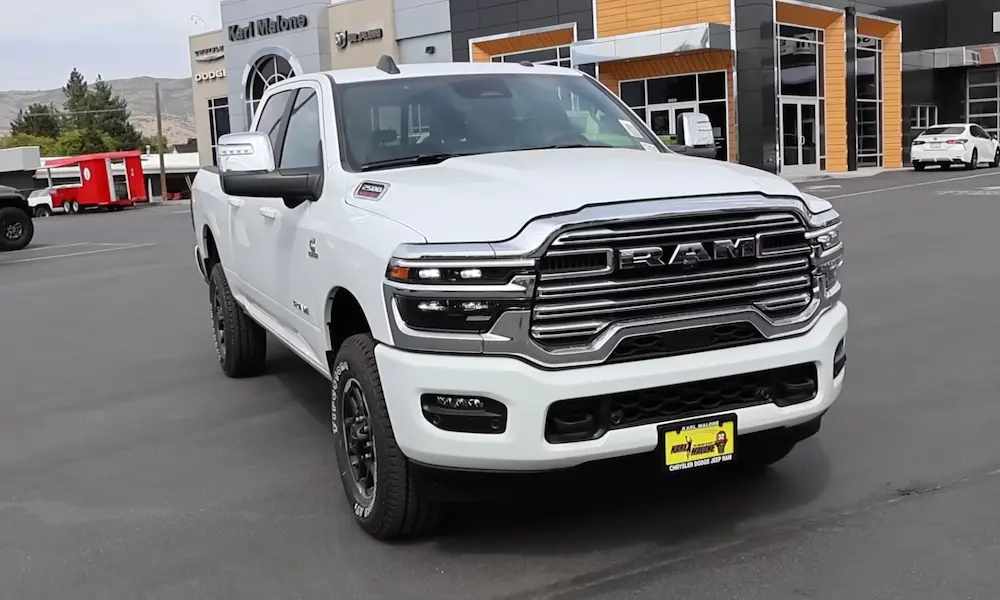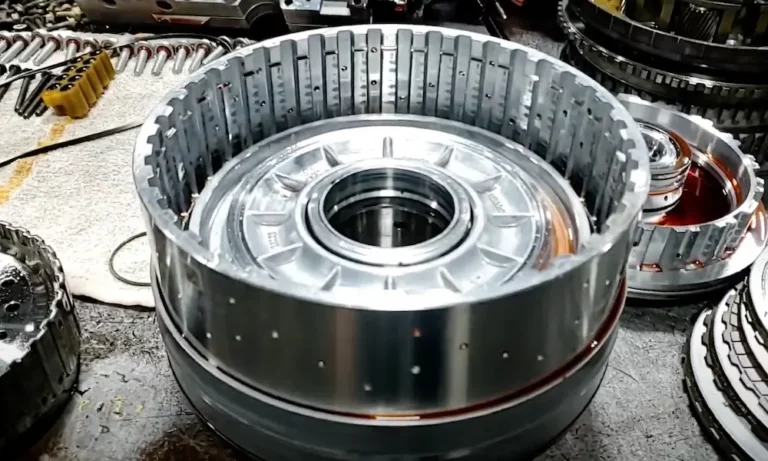
If your Ram’s 68RFE is slipping, shuddering, or dying in overdrive, you’re looking at a known design problem — not bad luck. The good news? The right 68RFE transmission upgrades can turn this weak link into a bulletproof unit. This guide breaks down exactly what fails, why it fails, and what you need to fix it for good.
Why the 68RFE Fails (It’s Not Your Fault)
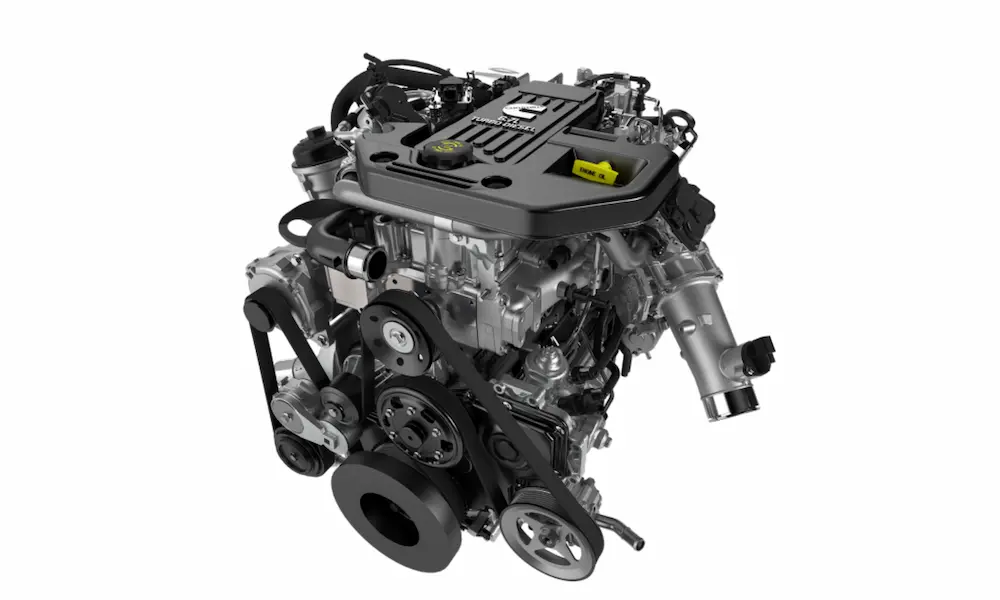
Chrysler introduced the 68RFE in 2007.5 to back the 6.7L Cummins Turbo Diesel. The problem? The transmission’s roots trace back to light-duty SUV and minivan platforms — the 45RFE and 545RFE — that were never designed to handle diesel torque.
Think of it this way: someone took a compact car engine and dropped it into a semi-truck frame. It works until it doesn’t.
The 68RFE brought real improvements over the old 48RE four-speed — tighter gear ratios, six speeds, and fully electronic control. But those improvements came with new failure points that show up in a very predictable order.
The Gear Ratio Advantage (and the Hidden Cost)
The 68RFE’s gear ratios are a genuine upgrade. First gear went from 2.45:1 on the 48RE to 3.23:1 — a 31.8% mechanical advantage improvement. That helps with towing and load starts.
Here’s where it gets tricky: the tighter shift recovery keeps the truck in its power band, but it puts constant stress on clutch packs during every gear change. Each gear in the 68RFE requires two clutch packs to engage at once. If one pack burns out — especially the overdrive pack — you lose 4th, 5th, and 6th gear at the same time.
| Gear | 68RFE Ratio | 48RE Ratio | Difference |
|---|---|---|---|
| 1st | 3.23:1 | 2.45:1 | +31.8% Advantage |
| 2nd | 1.84:1 | 1.45:1 | +26.9% Advantage |
| 4th | 1.00:1 | 0.69:1 | Direct Drive |
| 5th | 0.82:1 | N/A | Overdrive 1 |
| 6th | 0.63:1 | N/A | Deep Overdrive |
| Reverse | 4.44:1 | 2.21:1 | Significantly Lower |
The Three Most Common 68RFE Failure Points
1. Torque Converter Shudder
The factory torque converter is the first thing to go on a tuned Cummins. Its single-disc lockup clutch can’t hold under high torque, so it glazes. You’ll feel this as a vibration or rumble between 35 and 55 mph.
Once that clutch glazes, it generates heat instead of transferring power. That heat causes the converter cover to balloon, which knocks internal components out of alignment and sends metal debris through your fluid — straight into the valve body.
2. Overdrive Clutch Failure
The factory OD clutch steels measure just 0.034 inches thick. Compare that to the 0.080-inch steels in heavy-duty transmissions like the 4L80-E. These thin plates have almost no thermal mass, so they warp under load.
Warped clutches drag even when they’re not commanded to engage. That drag creates more heat. Eventually, you get a flare during the 4-5 or 5-6 shift, and then those gears disappear entirely. The transmission drops into limp mode to protect itself.
3. Solenoid Switch Valve Wear and Cross-Leaks
The valve body’s Solenoid Switch Valve (SSV) oscillates constantly during normal operation. Over time, it wears down the soft aluminum bore around it. That wear creates cross-leaks — fluid meant for one circuit bleeds into another.
The classic result: fluid leaks into the OD clutch circuit when it should be vented, causing those clutches to partially apply and burn. Watch for trouble codes P0871 or P1776 — these are your early warning signs.
Heat Is the Real Enemy: Thermal Management Upgrades
Fluid temps above 220°F rapidly break down ATF+4 and shorten clutch life. The factory cooling setup often can’t keep up with a tuned or towing truck.
Fix the Thermal Bypass Valve First
On 2013+ Ram trucks, the thermostatic bypass valve in the cooler lines reduces cooler flow by up to 87%. Worse, these valves stick in the “cold” position and completely block fluid from reaching the cooler. That’s a transmission meltdown waiting to happen.
The fix is a billet 6061 aluminum bypass upgrade from RevMax, PPE, or Mishimoto. These remove the thermostat element entirely and allow 100% cooler flow from the moment you start the truck.
Add a Deep Sump Pan
A deep-sump pan from ATS, RevMax, or BD Power adds 4 to 4.5 quarts of fluid capacity. More fluid means more thermal mass, which means slower temperature rise under load. These pans are cast aluminum with cooling fins — passive heat dissipation built right in.
| Cooling Component | Factory | Upgraded |
|---|---|---|
| Bypass Valve | Thermostatic (87% restricted) | Billet, Full Flow |
| Pan Capacity | ~17 Quarts | +4.5 Quarts |
| Pan Material | Stamped Steel | Cast Aluminum |
| Filtration | Dual Internal | Optional External Spin-On |
Hydraulic Upgrades: Fixing the Valve Body
The valve body controls every clutch engagement in the transmission. Upgrading it is often the most cost-effective 68RFE transmission upgrade you can make — even on a stock truck.
Billet Channel Plates
The factory stamped-steel separator plate warps when line pressure increases. A billet 6061 aluminum channel plate — sometimes called a “ZeroFlex” plate — is precision-machined to stay flat under pressures up to 325 PSI. It also features full-depth worm tracks in critical circuits, which eliminates restrictions that cause TCC dragging and harsh apply cycles.
SSV Bore Repair
Sonnax and TransGo both make SSV bore repair kits that ream the worn bore and fit a hard-coat anodized valve. The harder surface resists scuffing from contaminated fluid. Some valve bodies also add annular grooves that center the valve in its bore — preventing the side-loading that causes the wear in the first place.
Accumulator Piston Replacement
Factory plastic accumulator pistons crack and scuff, causing clutch apply pressure to drop. Upgraded billet aluminum pistons with dual-guide seals keep piston-to-bore contact from happening, which means consistent shift firmness for the life of the transmission.
Torque Converter Upgrades: Going Multi-Disc
A performance torque converter solves the glazing problem by replacing the factory single-disc lockup with a triple-disc design. Triple-disc converters triple the available friction surface area, so they can hold big torque without needing sky-high hydraulic pressure.
Top-tier units like the RevMax Stage 5 and SunCoast Category 3 use CNC-machined billet one-piece front covers and furnace-brazed impellers to prevent internal distortion under stress.
Picking the Right Stall Speed
Most diesel owners want a low or ultra-low stall converter — typically 15 or 17 blades. Low stall gets torque to the ground fast, which reduces fluid shear and heat buildup before lockup.
| Converter | Design | Stall | Best For |
|---|---|---|---|
| RevMax Stage 4 (405) | Multi-Disc | Ultra Low | Daily/Mild Tune |
| RevMax Stage 4 (404) | Multi-Disc | Low | Towing |
| RevMax Stage 5 (400A) | Triple-Disc | Ultra Low | Competition |
| SunCoast Cat 1 | Billet Cover | ~2000 RPM | Heavy Hauling |
| SunCoast (86-3D) | Triple-Disc | 2200 RPM | Racing |
Hard Parts: When You Need Billet Steel
Once you push past 500 horsepower, the factory steel shafts and hubs become the limiting factor. The input shaft is the most common mechanical failure point in high-power builds.
Billet 300M Input Shafts
Aftermarket input shafts use 300M or Maraging 300 steel — ultra-high-strength alloys heat-treated for exceptional toughness. These shafts are also gun-drilled through the center, which removes internal stress risers and makes the shaft far more resistant to twisting under a boosted launch. Rolled turbine splines add even more strength by preserving the steel’s grain structure — unlike cut splines, which disrupt it.
Forged Planetaries and Cryogenic Treatment
Under extreme load, aluminum planetary carriers flex and eventually destroy the gear assembly. Forged steel carriers eliminate that flex. Billet overdrive and underdrive hubs in high-stage builds are often cryogenically treated to -300°F, which stabilizes the metal’s molecular structure and improves fatigue resistance by up to 200%.
TCM Tuning: The Software Side of 68RFE Upgrades
The 68RFE is fully electronic — every clutch engagement starts with a software command. Many “mechanical” problems are actually calibration problems.
Line Pressure Tuning
The factory TCM caps line pressure at around 160 PSI to keep shifts smooth. For a tuned truck, that’s not enough to prevent clutch slip. Platforms like EFI Live, EZ Lynk, and MM3 let tuners push commanded line pressure to 175–225 PSI, which gives clutches enough clamping force to hold under full torque.
3rd Gear Lockup
By default, the 68RFE doesn’t lock the converter until 4th gear — which creates a flare on the 3-4 shift and builds heat. Commanding lockup in 3rd gear makes the 3-4-5-6 shifts feel crisp and direct while cutting converter heat significantly.
The UD Purge Test (2019+ Only)
Chrysler accidentally left an Underdrive Purge Test active in the factory calibration for 2019+ Cummins trucks. This test commands hydraulic sequences that overheat and wear the underdrive clutches during heavy use. TCM tuning deactivates it — and it’s not optional if you want your underdrive clutches to last.
Choosing a Build Level: What Each Stage Covers
A basic local rebuild costs $4,500–$6,500 in 2025, but standard rebuilds often reuse OEM-style parts that don’t fix the root causes. For tuned or towing trucks, re-failure rates are high.
| Build Level | HP Rating | Best For | Key Upgrades |
|---|---|---|---|
| Stock Plus | ~400 HP | Daily Driver | Stronger Frictions, Valve Body Updates |
| Stage 1 | ~500 HP | Heavy Towing | Billet VB Plate, Upgraded Clutches |
| Stage 1.5 | ~650 HP | Moderate Tune | Stronger Converter, Added Clutch Area |
| Stage 2 | ~750 HP | High Power | Billet Input Shaft, Triple-Disc Converter |
| Stage 3 | 900+ HP | Competition | Billet Everything, Race Converter |
Who Builds Them
- Randy’s Transmissions — 2-year unlimited mile warranty on Stage 1 and 2. Known for solid builds and responsive customer service.
- RevMax Diesel — Engineering-heavy approach, Signature Series built by a single technician start to finish. 2-year unlimited miles.
- SunCoast Performance — Pioneers in the 68RFE space. 3-year unlimited miles on tow/street builds.
- ATS Diesel — 5-year/500,000-mile warranty on Stage 3+ units.
Installation Rules That Protect Your Warranty
Getting a built 68RFE is only half the job. Installing it wrong voids your warranty fast.
Flush the cooler. Every reputable builder requires it. Debris from the old failure circulates through the cooler — if it gets into the new unit, the new clutches burn in days. A new cooler or professional flush is the minimum.
Reset the TCM. The TCM “learns” your old transmission’s wear patterns. If you don’t reset adaptive values before driving the new unit, it’ll apply wrong pressures and timing — potentially destroying the new clutch packs on the first drive.
Tire Size and Gearing Requirements
Big tires increase leverage against the output shaft, forcing clutches to work harder. Most major builders won’t cover trucks running tires over 35 inches without proof of a differential gear change.
| Tire Size | Minimum Gearing | Recommended | Warranty Requirement |
|---|---|---|---|
| 35″ | 3.73 | 4.10 | Re-gear Recommended |
| 37″ | 4.10 | 4.30 | Proof Required |
| 38″+ | 4.56 | 4.88 | Proof Required |
No amount of internal building compensates for stock gears under massive tires. Re-gearing isn’t optional at that point — it’s math.