Wondering where is Polaris made? You’re looking at one of the most spread-out manufacturing operations in powersports. From a tiny Minnesota town near the Canadian border to factories in Poland and Mexico, Polaris builds its vehicles across a surprisingly wide network. This guide breaks down every major facility, explains the recent shake-ups, and tells you exactly what gets built where.
The Short Answer: Mostly American, but Not Exclusively
Polaris manufactures the majority of its core vehicles in the United States. Its biggest plants sit in Minnesota, Alabama, Iowa, and Wisconsin. But the company also runs assembly operations in Mexico, Poland, France, and India.
The “Made in America” identity runs deep at Polaris. It started in Roseau, Minnesota in the 1950s and never fully left. That said, serving over 100 countries requires a global footprint. Here’s exactly how it breaks down.
U.S. Manufacturing: The Four Core Plants
| Facility | What Gets Built There | Workers |
|---|---|---|
| Roseau, Minnesota | Snowmobiles, Sportsman ATVs | ~1,500 |
| Huntsville, Alabama | Ranger UTVs, Slingshot, Electric Ranger XP Kinetic | 900,000+ sq ft |
| Spirit Lake, Iowa | Indian Motorcycle assembly | ~550 |
| Osceola, Wisconsin | ProStar engines, powertrains | ~200 (closing 2027) |
Roseau, Minnesota: Where It All Started
Roseau is the heartbeat of Polaris. The Roseau facility sits just ten minutes south of the Canadian border and has operated since the 1950s. It’s the company’s largest U.S. manufacturing plant.
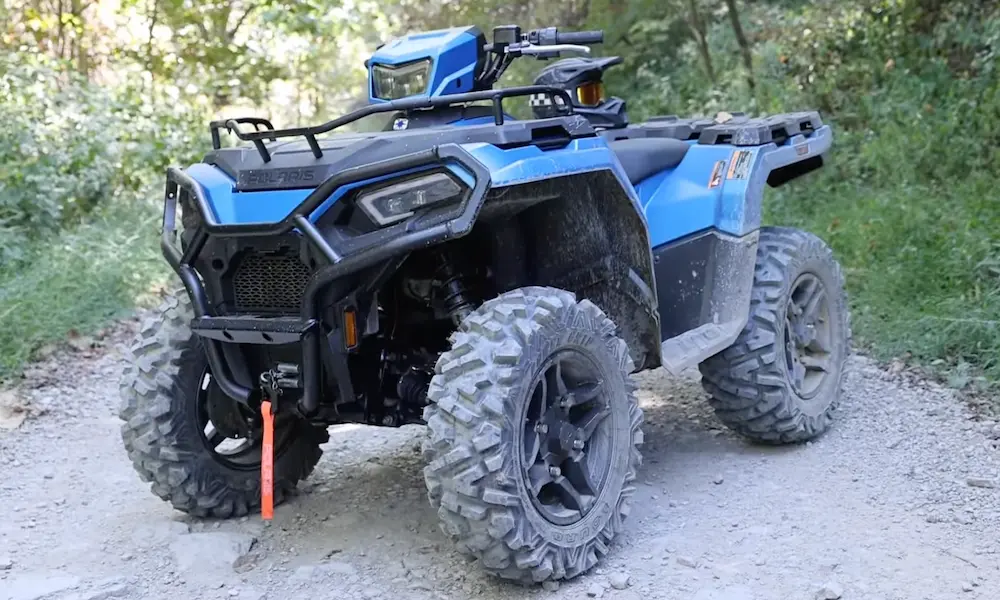
About 1,500 workers build every single Polaris snowmobile here — including the Pro RMK, Indy VR1, Switchback Assault, and Titan Nordic Pro. The facility also handles final assembly for the full Sportsman ATV lineup.
The campus includes state-of-the-art testing tracks that simulate brutal real-world conditions. If you’ve ever visited the Polaris Experience Center, you’ve seen the second snowmobile ever built back in 1956. Roseau isn’t just a factory — it’s where Polaris culture lives.
Huntsville, Alabama: High-Volume Production and EV Firsts
Polaris opened this facility in 2016 to handle growing demand and ease pressure on its northern plants. The Huntsville plant spans over 900,000 square feet and runs multiple manufacturing processes under one roof, including:
- Raw steel tube fabrication
- Robotic welding
- Large-scale injection molding
- Body painting and e-coating
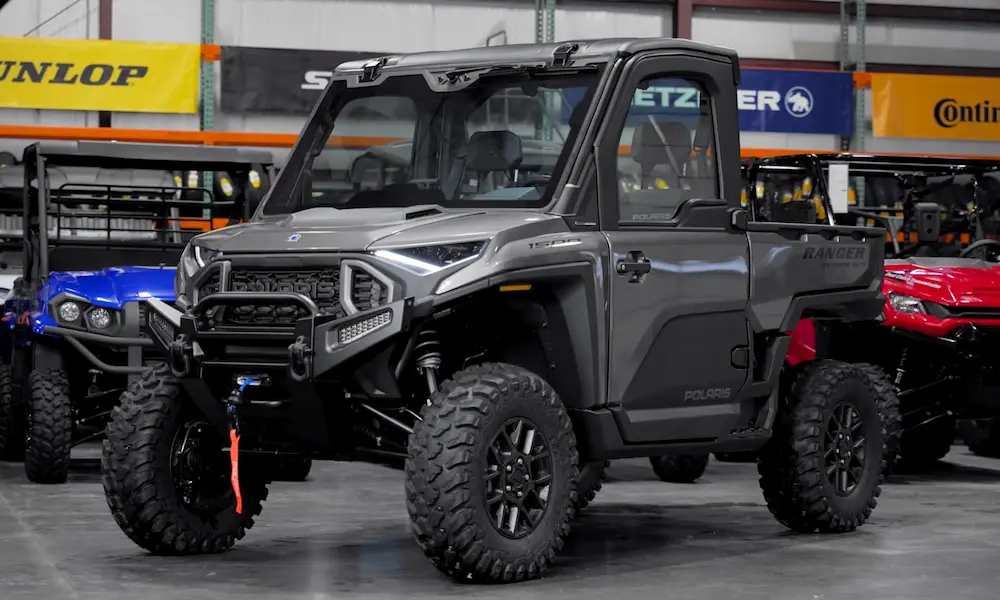
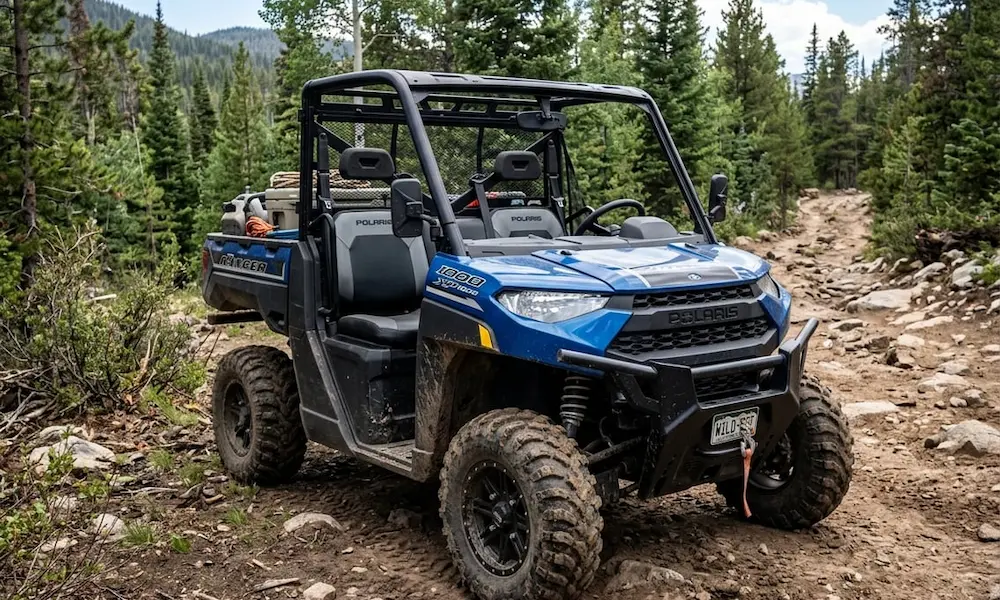
Huntsville builds the Ranger side-by-side line, the three-wheeled Polaris Slingshot, and the Pro XD commercial utility vehicles used by government agencies and construction fleets.
Most notably, in April 2023, Huntsville shipped the first all-electric Ranger XP Kinetic. Developed with Zero Motorcycles, the electric Ranger delivers instant torque, an 80-mile range, and dramatically lower maintenance needs compared to gas-powered models. The initial order window sold out in two hours — which says a lot about where things are headed.
Spirit Lake, Iowa: Motorcycle Craftsmanship
Spirit Lake houses Indian Motorcycle production. After Polaris acquired the Indian brand in 2011, it centralized manufacturing here and launched a completely redesigned lineup in 2013.
Around 550 workers assemble each motorcycle by hand — from bare engine to finished bike. Models built here include the Indian Scout, Chief, Challenger, FTR, and Roadmaster touring flagship.
In 2020, Polaris closed its separate paint facility in Spearfish, South Dakota, and consolidated all paint operations into Spirit Lake to streamline production. Even with Indian Motorcycle now under new ownership (more on that below), Spirit Lake remains its manufacturing home.
Osceola, Wisconsin: A Legacy Facility Closing Its Doors
The Osceola plant has built Polaris powertrains since 1970. For decades, it produced the ProStar off-road engines and the Thunderstroke and PowerPlus engines for Indian Motorcycle.
But following the Indian Motorcycle sale in 2026, Polaris announced the facility would permanently close by January 31, 2027. Without Indian’s engine volume, the plant simply couldn’t run efficiently. Initial layoffs started in July 2026, affecting roughly 189 to 200 workers in western Wisconsin.
Indian-specific engine production moves to Spirit Lake. The remaining off-road powertrain work gets distributed across other North American plants.
International Manufacturing: Three Key Countries
Polaris builds vehicles outside the U.S. for smart reasons — lower labor costs, faster regional delivery, and avoiding costly shipping tariffs.
Monterrey, Mexico: Cost Efficiency and Scale
Polaris moved part of its assembly to Monterrey in 2010, projecting $30 million in annual savings — mostly from lower labor costs. The Monterrey facility sits about 100 miles south of the U.S. border, making cross-border parts logistics fast and cheap.
The plant builds Ranger side-by-sides, Pro XD commercial vehicles, and select engine components. Its proximity to U.S. plants allows Polaris to scale production quickly when global demand spikes.
Opole, Poland: The European Gateway
Polaris opened its Opole, Poland facility in 2014 — the company’s first major non-North American manufacturing site. The 33,000-square-meter plant employs over 580 workers.
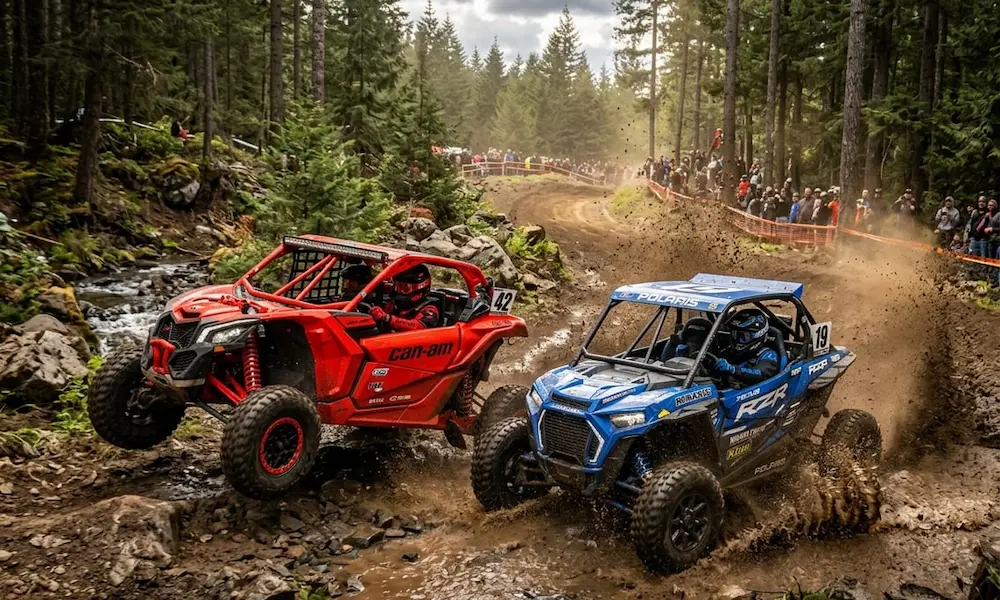
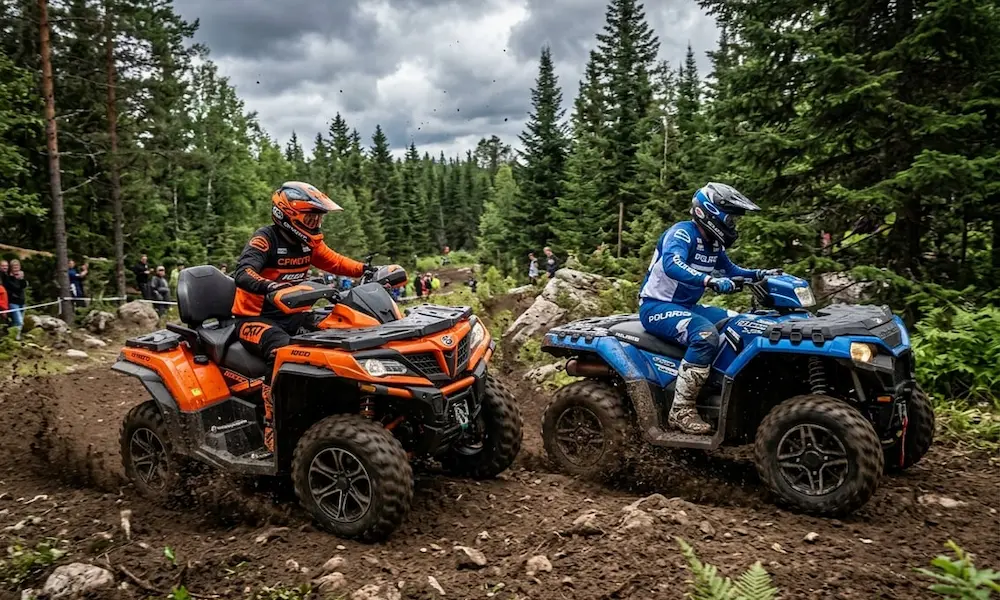
The Opole facility builds ATVs, Ranger UTVs, and RZR side-by-sides for the European, Middle Eastern, and African markets. Manufacturing within the EU avoids trans-Atlantic shipping costs and navigates European trade regulations far more smoothly. The plant has even been recognized as the best company to work for in the Opolskie region.
Polaris estimates the Opole plant accounts for roughly one-third of all its non-North American sales.
France: Aixam and Goupil Electric Vehicles
Polaris owns two French vehicle brands that most Americans have never heard of.
Aixam, founded in 1983, is Europe’s leading manufacturer of quadricycles and license-free vehicles — cars you can drive in France without a standard driver’s license. Based in Aix-les-Bains, its facilities cover over eight hectares and produce around 12,000 vehicles per year using robotic welding and precision machining.
Goupil, based in southwestern France, builds compact electric utility vehicles for municipalities, university campuses, and industrial operations. Both brands operate entirely within the French market ecosystem, separate from Polaris’s North American powersports identity.
Corporate, Engineering, and Digital Hubs
Manufacturing isn’t the whole story. Polaris runs specialized offices across the U.S. that support design, software, and research:
- Medina, Minnesota — Global corporate headquarters, 30 minutes west of Minneapolis. Houses executives, finance, HR, and industrial design.
- Plymouth, Minnesota — Off-road and snowmobile sales, marketing, and product planning.
- Wyoming, Minnesota — Primary R&D and engineering center. Engineers here work on suspension, vehicle dynamics, braking, and steering.
- Monticello, Minnesota — Contract machining, close-tolerance parts assembly, and commercial vehicle dealership operations.
- Sunnyvale, California — Digital user experience and infotainment design, including the Ride Command GPS and diagnostics platform.
- Novi, Michigan — Software and firmware engineering for connected vehicle systems.
- Bangalore, India — Engineering hub focused on IT infrastructure, software development, trade compliance, and financial shared services.
The Indian Motorcycle Sale: What Changed and Why
In October 2025, Polaris announced it was selling Indian Motorcycle to Carolwood LP, a private equity firm based in Los Angeles. The deal closed February 2, 2026.
The numbers drove the decision. Indian Motorcycle generated about $478 million in revenue over the prior 12 months — just seven percent of Polaris’s total revenue. By separating the brand, Polaris estimated it would boost annual earnings per share by roughly $1.00 and add about $50 million to adjusted EBITDA.
The newly independent Indian Motorcycle retained about 900 employees and kept its Spirit Lake manufacturing facility, Monticello operations, and European R&D center in Burgdorf, Switzerland. Under CEO Mike Kennedy, the standalone company now has the freedom to invest in electric motorcycle platforms and custom divisions without competing for resources inside a large conglomerate.
The Marine Division: Big Expansion, Bigger Retreat
In 2018, Polaris paid $805 million to acquire Boat Holdings, bringing Bennington, Godfrey, Hurricane, and Rinker under its umbrella. Manufacturing concentrated in Elkhart and Syracuse, Indiana. In early 2019, Polaris added the Larson Boat Group.
Then COVID-19 hit. In April 2020, Polaris abruptly discontinued all fiberglass boat lines — Larson, Larson FX, Striper, and Rinker — eliminating about 120 jobs in Syracuse. The decision came down to capital allocation. Sustaining competitive fiberglass fishing and cruiser brands required enormous ongoing investment with uncertain returns.
Today, Polaris’s marine business focuses exclusively on high-margin pontoon and deck boats: Bennington, Godfrey, and Hurricane.
Where Polaris Engines Actually Come From
For much of its early history, Polaris sourced engines from Robin, a Subaru subsidiary. That changed in 1995 when Polaris started building its own engines in-house, starting with the Magnum four-stroke ATV engine.
That move led to the “Liberty” and later “ProStar” engine families — designed specifically for off-road abuse and capable of reaching tens of thousands of miles with proper maintenance. Today, Polaris engineers all of its own powertrain architecture. The Osceola facility handled that production for decades. With its closure, those operations split between Spirit Lake (for Indian-specific engines) and other North American plants.
How the Supply Chain Actually Works
Final assembly happens in the U.S., but thousands of components come from global suppliers. At plants like Huntsville and Roseau, the core build process looks like this:
- Raw steel tubing arrives at the factory floor
- In-house tube fabrication cuts, bends, and mills chassis parts
- Robotic weld cells join the structures
- E-coat and powder coating protect the metal
- Injection molding departments produce plastic body panels on-site
- Globally sourced electronics, suspension components, and displays arrive just-in-time
Polaris supports over 2,400 global dealers through distribution warehouses in Vermillion, South Dakota; Wilmington, Ohio; and Winnipeg, Manitoba. These hubs fulfill OEM parts orders daily and ship directly to consumers worldwide.
Don’t Confuse These “Polaris” Brands
When you search “where is Polaris made,” you’ll stumble across companies that share the name but have zero connection to the vehicle manufacturer:
- Polaris Office — A South Korean productivity software app with 100 million users. Made by Infraware, Inc. Not a vehicle.
- Polaris Wireless — A Mountain View, California tech firm specializing in mobile location technology for E911 emergency systems.
- Polaris Worldwide Logistics — A Maryland-based international airfreight and supply chain consultancy incorporated in 1985.
None of these are subsidiaries or divisions of Polaris Inc. the powersports manufacturer.
The Bottom Line on Where Polaris Is Made
Polaris builds its core products — snowmobiles, ATVs, side-by-sides, and electric UTVs — primarily in the United States. Roseau, Minnesota remains the spiritual and industrial anchor. Huntsville, Alabama leads electrification efforts. Spirit Lake, Iowa keeps motorcycle craftsmanship alive. International plants in Mexico and Poland handle volume and regional demand.
The company has spent the past several years cutting what doesn’t fit — fiberglass boats, industrial brands, and even Indian Motorcycle — to sharpen its focus on off-road vehicles, snow, and pontoons. The Osceola closure is painful for that community, but it reflects a deliberate, calculated direction for everything Polaris builds next.