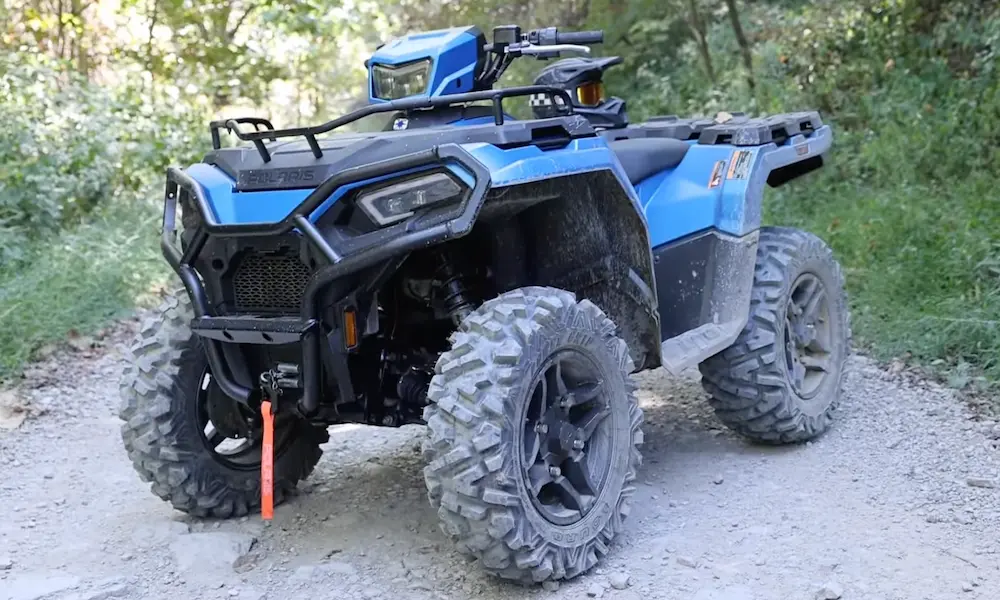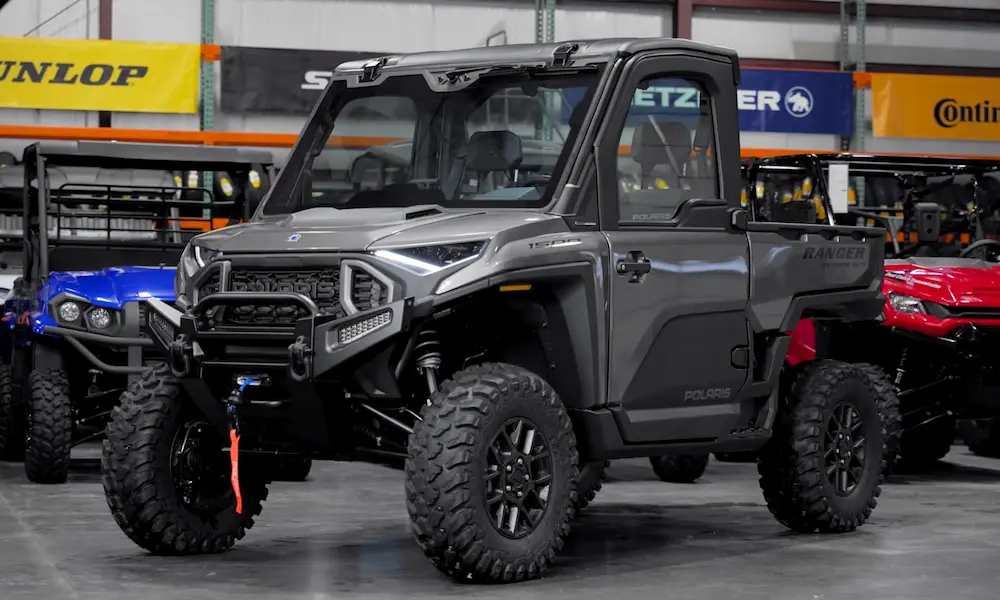
Using the wrong oil in your Polaris Ranger can destroy your engine faster than you think. This guide breaks down the exact Polaris Ranger oil type for every model, from the basic 500 to the heavy-duty XD 1500. Stick around — the wet clutch section alone could save you thousands in transmission repairs.
Why the Right Polaris Ranger Oil Type Matters So Much
Your Ranger isn’t a pickup truck. It hauls, climbs, drags, and sits in mud — often all in the same afternoon.
Standard car engines cruise at moderate speeds on smooth roads with decent airflow. Your Ranger’s engine works at high RPMs while crawling through deep mud or pulling a loaded trailer up a hill. That means extreme heat with almost zero airflow to cool things down.
The engine oil absorbs a massive chunk of that heat. It also has to:
- Keep metal parts from grinding against each other
- Suspend dirt and debris until the filter catches it
- Flush out moisture and unburned fuel before they turn acidic
- Survive mechanical shearing as it squeezes through tight bearing clearances
Polaris confirms that standard automotive oils deplete their additive packages far too quickly under these conditions. Their powersport-specific formulations are engineered to outlast automotive alternatives in these brutal operating environments.
The Standard Polaris Ranger Oil Type for Gasoline Engines
For the vast majority of gas-powered Ranger models, the answer is simple: full synthetic 5W-50 engine oil.
Polaris calls their proprietary version PS-4 Full Synthetic 5W-50. It covers almost every gasoline Ranger ever built, from the old 400 to the current XP 1000.
What the Numbers Mean
The “5W” rating tells you how the oil flows in cold temperatures. A 5W oil stays pumpable down to -40°F, meaning your engine gets lubrication in the first critical seconds of a cold start before any heat builds up. That’s when most engine wear happens — a thick, sluggish oil just sits in the pan while bare metal grinds against bare metal.
The “50” tells you the oil’s thickness at normal operating temperature. A 50-weight oil creates a thick, tough film between your bearings and crankshaft. That film holds up under the extreme pressure of heavy towing or high-RPM operation where lighter oils would simply squeeze out.
The PS-4 formulation is rated for ambient temperatures up to 100°F, making it a solid all-season choice for most of the United States.
What’s Inside the Oil
The base oil alone can’t do the job. The additive package is where the real protection happens.
PS-4 includes:
- Advanced viscosity modifiers that resist molecular shearing from mechanical agitation
- Detergents and dispersants that keep internal components up to 50% cleaner than leading automotive oils
- High-concentration zinc and phosphorus anti-wear compounds that create a sacrificial chemical barrier when the oil film breaks down under extreme load
- Rust and corrosion inhibitors that protect steel surfaces during long-term seasonal storage
Extreme Heat? Use the 0W-50 Polaris Ranger Oil Type
If you’re running your Ranger hard in desert heat — or doing commercial snow removal in brutal cold — the PS-4 Extreme Full Synthetic 0W-50 pushes the temperature limits even further.
The 0W-50 extreme duty formulation handles:
- Cold starts down to -45°F (five degrees colder than standard PS-4)
- Ambient operating temperatures exceeding 130°F
It also carries enhanced friction reduction through organic molybdenum compounds, plus elevated zinc anti-wear levels. This matters most when your engine oil gets so hot it starts to thin out — that’s exactly when your camshaft lobes and rod bearings need the most chemical protection.
Pick the 0W-50 if you’re in Arizona during summer, doing continuous heavy towing, or operating in high-altitude environments where engines run hotter than normal.
Polaris Ranger Diesel Oil Type: A Completely Different Story
Diesel Rangers — including the Pro XD platforms — need dedicated diesel engine oil. Never use gasoline engine oil in a diesel Ranger.
Diesel engines produce far more soot than gas engines. Their compression ratios can hit 24:1, creating violent combustion events that hammer bearings and valvetrain components with shock loads gas engines never experience.
Recommended Diesel Oil
The primary recommendation for Ranger Diesel and Pro XD models is a 5W-40 Heavy Duty Full Synthetic diesel engine oil.
Key differences from gasoline oil:
- 50% more zinc anti-wear compounds than typical passenger car oils
- Massive dispersant load to keep diesel soot particles individually suspended (clumped soot acts like sandpaper)
- Acid neutralization chemistry to fight the corrosive byproducts of diesel combustion
If your operating environment never drops below 15°F, a conventional 15W-40 diesel oil is an acceptable alternative. The Polaris owner’s manual charts show this grade works in temperatures from 15°F to 104°F. But for year-round use across most climates, the 5W-40 full synthetic is the better pick.
The XD 1500: Why It Has Unique Oil Requirements
The Ranger XD 1500 is Polaris’s most powerful utility side-by-side — 110 horsepower, 105 lb-ft of torque, and a wet clutch automatic transmission called STEELDRIVE.
That wet clutch changes everything about oil selection.
Wet Clutch Systems and Oil Chemistry
In a traditional Ranger, the CVT belt runs dry. The engine oil only lubricates the engine itself.
In the XD 1500, the engine oil lubricates both the engine and the transmission clutch plates simultaneously. The clutch packs run in a continuous oil bath.
Here’s the problem: standard automotive oils are packed with friction modifiers designed to reduce fuel consumption. Those friction-reducing chemicals soak into the porous clutch plates, destroy their grip, and cause catastrophic clutch slippage and overheating.
The XD 1500 requires 5W-50 full synthetic oil with a JASO MA or JASO MA2 certification. This certification specifically guarantees the oil contains the correct friction modifier profile for wet clutch systems. Without it, you’ll burn up a very expensive transmission.
The XD 1500 also holds 4.25 quarts — significantly more than any other Ranger model. That larger volume helps absorb the heat the wet clutch generates during slow-speed, high-load operations.
Quick Reference: Polaris Ranger Oil Type by Model
| Model | Engine | Oil Capacity | Recommended Oil | Drain Plug Torque |
|---|---|---|---|---|
| Ranger 400 | 455cc Single | 2.0 qt | 5W-50 Full Synthetic | 14 ft-lbs |
| Ranger 500 | 500cc Single | 2.0 qt | 5W-50 Full Synthetic | 12 ft-lbs |
| Ranger 570 | 567cc Single | 2.0 qt | 5W-50 Full Synthetic | Varies |
| Ranger 700 | 683cc Twin | 2.0 qt | 5W-50 Full Synthetic | 20 ft-lbs |
| Ranger 800 | 760cc Twin | 2.0 qt | 5W-50 Full Synthetic | 20 ft-lbs |
| Ranger XP 900 | 875cc Twin | 2.5 qt | 5W-50 Full Synthetic | 12 ft-lbs |
| Ranger XP 1000 | 999cc Twin | 2.5 qt | 5W-50 Full Synthetic | Varies |
| Ranger XD 1500 | 1500cc Three-Cyl | 4.25 qt | 5W-50 Full Synthetic (JASO MA/MA2) | 16 ft-lbs |
| Ranger Diesel / Pro XD | 898cc Three-Cyl Diesel | 3.9 qt | 5W-40 Heavy Duty Diesel | 12 ft-lbs |
Can You Use Aftermarket Oil in a Polaris Ranger?
Yes — but you need to match the specs exactly.
Brands like Maxima, Motul, AMSOIL, and Castrol make high-quality powersports synthetic oils in the correct 5W-50 viscosity. Many use advanced ester-based or polyalphaolefin synthetic base stocks that match or exceed the thermal stability of PS-4.
For diesel models, Shell Rotella T6 Full Synthetic 5W-40 is a widely accepted alternative. It holds strong certifications for soot suspension, acid neutralization, and heavy-duty wear protection.
The Warranty Question
Polaris’s warranty documentation excludes damage resulting from unapproved lubricants. But under U.S. federal warranty law, they can’t void your entire warranty just because you used a third-party oil.
They’d need to prove the oil directly caused the failure. If you used a proper 5W-50 JASO MA-rated oil and your wheel bearing fails, that warranty claim stands.
But if you put a standard 5W-30 car oil into an XD 1500 and burn the clutch, that warranty denial is completely justified. You take on full responsibility when you deviate from factory specs — so make sure what you’re using actually matches the requirements.
How Often to Change Your Polaris Ranger Oil
Fresh oil is your cheapest insurance policy. Here’s when to change it.
Break-In Oil Change (Critical)
Every Ranger — including the XD 1500 — needs an oil and filter change at 25 hours, 500 miles, or one month of use, whichever comes first.
During break-in, new metal parts wear against each other and release metallic particles into the oil. Leave that debris in the crankcase and you’re essentially running the engine in liquid sandpaper for the rest of its life.
Standard Intervals After Break-In
| Model Type | Standard Interval | Severe Duty Interval | Max Time Limit |
|---|---|---|---|
| Gas Models (500, 570, 900, 1000) | 100 hrs / 1,000 mi | 50 hrs / 500 mi | 6–12 months |
| XD 1500 | 200 hrs / 2,000 mi | 100 hrs / 1,000 mi | 12 months |
| Diesel / Pro XD | 100 hrs / 1,000 mi | 50 hrs / 500 mi | 12 months |
Are You Running Severe Duty?
Most Ranger owners are. Polaris defines severe duty as:
- Frequent mud, water, or sand immersion
- Constant high-speed or high-RPM operation
- Heavy towing for extended periods
- Lots of engine idling
- Short cold-weather trips where the engine never fully warms up
If any of those sound familiar, cut your oil change interval in half. Short trips are especially sneaky — the engine never gets hot enough to boil off moisture and fuel dilution, and those contaminants build up fast.
How to Change Your Polaris Ranger Oil the Right Way
Get this step wrong and you’re either leaking oil or stripping threads out of an aluminum engine block.
Step-by-step:
- Park on a completely level surface with the transmission in Park
- Start the engine and idle for 2–3 minutes to warm the oil
- Shut it off and place a drain pan underneath
- Remove the drain plug with the correct socket (6mm hex on most gas models)
- Let the oil fully drain — don’t rush this
- Inspect the drain plug’s sealing surface and install a new crush washer
- Reinstall and torque the drain plug precisely — most models need 12–16 ft-lbs depending on the model
- Remove the old filter with a 2.5-inch cap-style filter wrench
- Coat the new filter’s rubber gasket with fresh oil before installation
- Hand-thread the new filter until the gasket seats, then tighten three-quarters of a turn
- Add the correct volume of oil through the fill neck
- Start the engine and let it idle for 30 seconds
- Shut it off, check for leaks at the filter and drain plug
- Check the dipstick — insert it fully without locking it down for an accurate reading
Warm oil drains fast and carries out the suspended debris. Cold oil leaves a thick layer of contaminated sludge behind. Always warm up before draining.
Dispose of used oil at a certified recycling center. Most auto parts stores take it for free.
Storing Your Ranger Long-Term? Oil Still Matters
If your Ranger sits for months during the off-season, change the oil before storage, not after.
Used oil is full of moisture, acids, and combustion byproducts. Let that sit against your engine’s internal steel surfaces all winter and corrosion gets a head start. Fresh oil with rust inhibitors keeps those surfaces protected while everything sits idle.
Start the engine monthly if possible. Even a short idle cycle circulates fresh oil through the system and pushes moisture out of critical areas.
Getting the Polaris Ranger oil type right isn’t complicated — it just requires matching the right viscosity and additive profile to your specific model. Use the table above, check your owner’s manual for your exact model year, and don’t skip the break-in change. Your engine will thank you with years of reliable service.