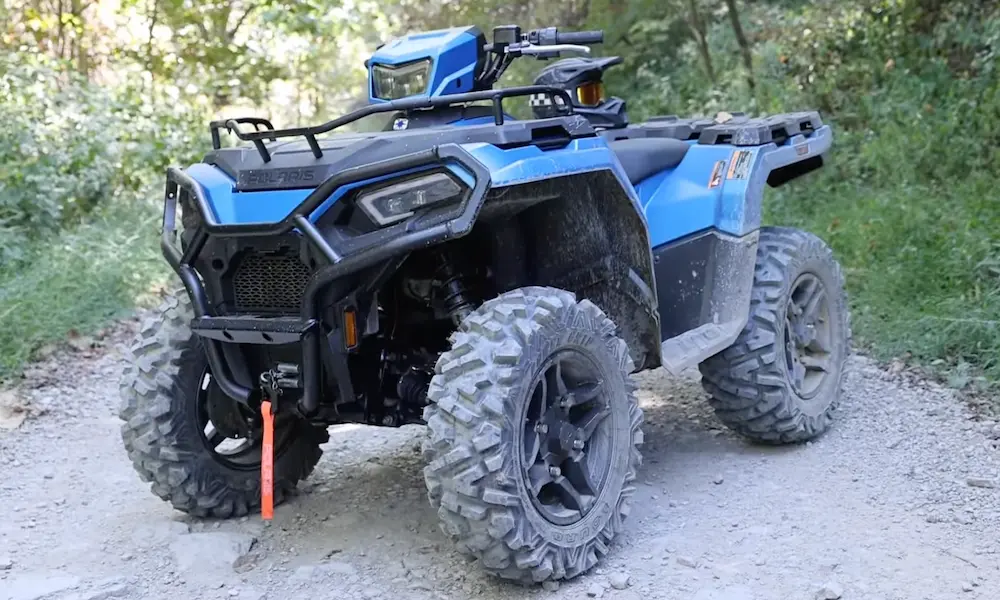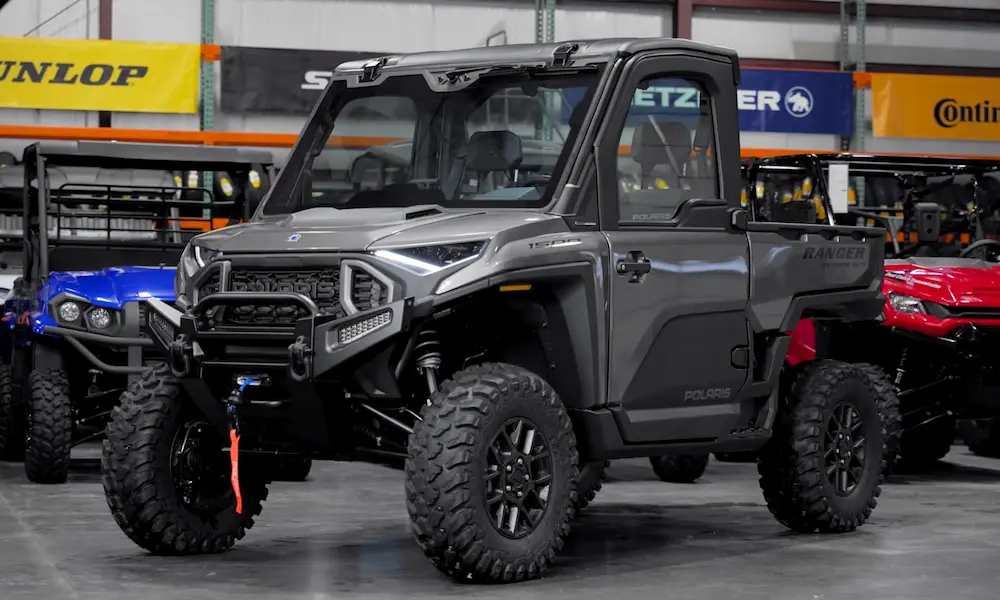
Finding a reliable Polaris AGL fluid equivalent can feel like a minefield. The wrong choice can quietly destroy your transmission’s brass bushings, leave your chain running dry, or void your warranty. This guide cuts through the noise and tells you exactly what works, why it works, and which option fits your riding situation.
What Is Polaris AGL and Why Does It Matter?
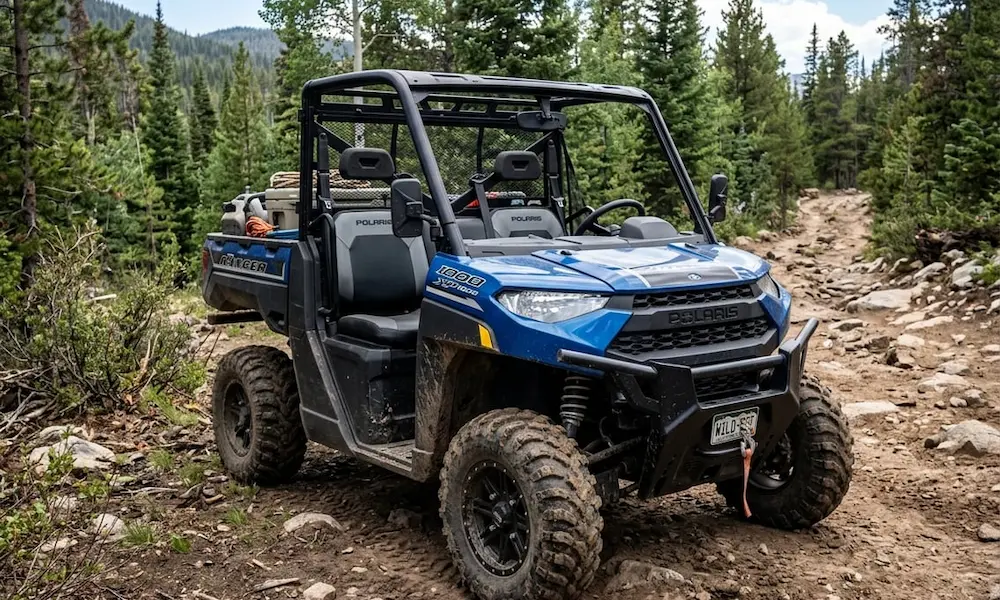
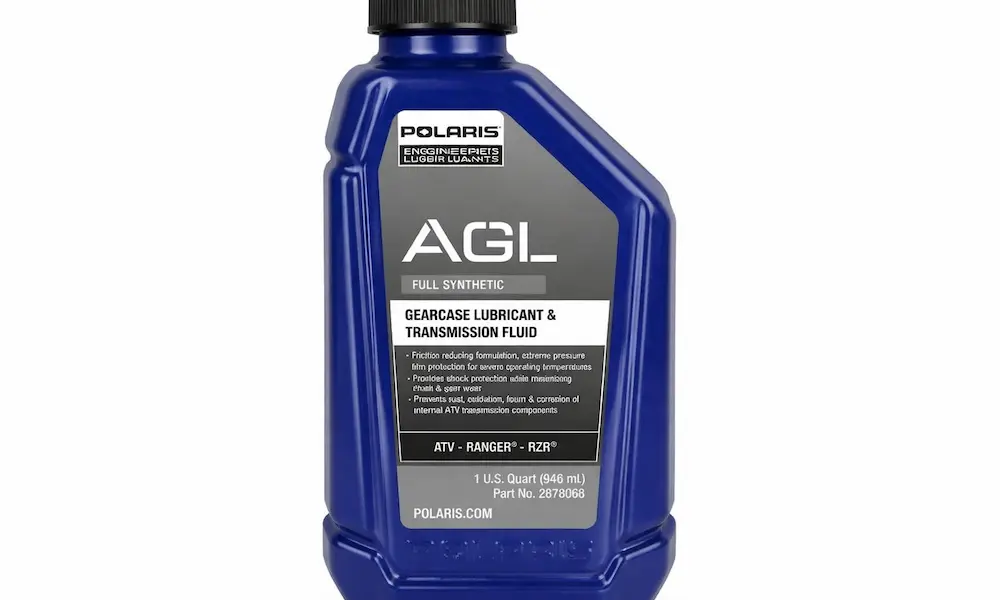
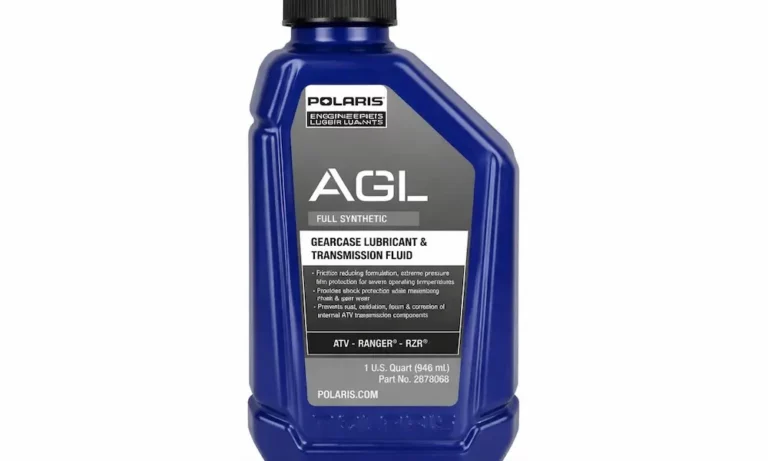
AGL stands for Automatic Gearcase Lubricant. It’s the specialized fluid that protects the transmissions and gearcases in Polaris Ranger, RZR, General, and Sportsman models.
It’s not a generic gear oil. Polaris designed AGL to handle a very specific set of problems unique to off-road vehicles:
- Chain lubrication: Many Polaris transmissions use a silent drive chain that needs a fluid capable of penetrating tight tolerances without being flung off at high RPM.
- Thermal stress: Off-road gearcases run hot because slow-speed trail riding doesn’t generate cooling airflow like highway driving does.
- Shock loading: Every time your wheels lose and regain traction, the entire driveline absorbs a massive torque spike. Your fluid needs the film strength to handle it.
Polaris offers two main versions: AGL Full Synthetic for standard use and AGL Extreme for heavy-duty and extreme-climate applications.
AGL vs. AGL Extreme: How Big Is the Gap?
| Metric | AGL Full Synthetic | AGL Extreme |
|---|---|---|
| Operating Temp Range | All-Season | -45°F to >130°F |
| Viscosity at 212°F | Standard | 50% better protection |
| Fluidity at -40°F | Standard | 50% improvement |
| Sump Temperature Under Load | Baseline | 83.8°F cooler |
| Film Strength | Baseline | 48% stronger |
That 83.8°F sump temperature reduction isn’t just a spec sheet number. A cooler gearcase means your seals last longer, your fluid oxidizes slower, and your chain wears less. If you tow, plow, or ride in summer heat, AGL Extreme is the clear upgrade.
The Viscosity Question Nobody Answers Clearly
Here’s where most guides get vague. Polaris doesn’t publish a standard SAE viscosity grade for AGL. So what viscosity are you actually looking for?
Independent testing and manufacturer cross-references show that Polaris AGL sits in the 75W-80 to 75W-90 gear oil range, or roughly equivalent to a 10W-40 engine oil in terms of kinematic viscosity at operating temperature.
One important thing to understand: gear oil viscosity grades and engine oil grades use completely different scales. A 90-weight gear oil flows similarly to a 50-weight engine oil. Don’t mix those numbers up when shopping for an equivalent.
| Polaris Fluid | Gear Oil Equivalent | Engine Oil Equivalent |
|---|---|---|
| Polaris AGL | 75W-80 / 75W-90 | 10W-30 / 10W-40 |
| Polaris Angle Drive | 80W-90 | 20W-50 |
| Polaris Demand Drive | Specialized ATF-like | N/A |
Polaris chose a lighter viscosity intentionally. Thicker oils create internal drag that steals power and generates heat. A well-formulated thin synthetic with strong film additives protects better than a heavy conventional gear oil.
The GL-4 vs. GL-5 Problem: Read This Before You Buy
This is where people make costly mistakes. Many cheap gear oils use a GL-5 rating, which sounds better than GL-4. It’s not — at least not for your Polaris.
Here’s why: GL-5 oils use highly active sulfur-phosphorus compounds to protect steel gears under extreme pressure. The problem is that these same compounds attack “yellow metals” — brass and bronze bushings found inside many Polaris transmissions.
The sulfur reacts with the bushing surface and forms a protective coating. But on brass, that coating is stronger than the metal underneath. When the gears move, they strip the coating off and take brass with it. Over time, the bushing gets eaten away, your shafts develop play, and transmission failure follows.
Stick to API GL-4 rated fluids unless a product specifically states it uses deactivated or buffered sulfur compounds safe for yellow metals.
| API Class | EP Additive Strength | Yellow Metal Safety | Best For |
|---|---|---|---|
| GL-1 | None | Excellent | Low-load applications |
| GL-4 | Moderate | Generally safe | Synchronized transmissions |
| GL-5 | High | Potentially corrosive | Hypoid differentials |
| MT-1 | High / Heat Stable | Specialized | Heavy-duty non-synchro |
Best Polaris AGL Fluid Equivalents
Amsoil Synthetic ATV/UTV Powertrain Fluid (AUPT)
The Amsoil AUPT is one of the most widely used AGL equivalents on the market, and it earns that reputation with a smart engineering approach.
What makes it different is that it replaces both Polaris AGL and Polaris Demand Drive Fluid in one bottle. Most Polaris models require two separate fluids — one for the rear transmission, one for the front drive system. Amsoil formulated AUPT to handle both jobs correctly without compromising either.
Key specs worth knowing:
- Pour point of -58°F (-50°C) — it stays pumpable in conditions where many fluids start to solidify
- High shear stability — the fluid maintains its viscosity grade over the full service interval
- Correct friction profile — it won’t cause clutch chatter in the Hilliard-style front drive clutches
- Warranty Secure program — Amsoil stands behind this product as a factory warranty-safe alternative
The flexible Easy-Pack pouch packaging is a genuinely useful feature too. Polaris transmission fill plugs are notoriously hard to reach. The soft pouch lets you squeeze fluid directly into tight spaces without a pump or funnel gymnastics.
Lucas Oil Synthetic SxS Transmission Fluid
Lucas Oil’s SxS Transmission Fluid is built specifically for the Polaris ACE, Sportsman, Ranger, and RZR platforms. It uses a blend of API Group III and Group V synthetic base oils, which is where the real performance comes from.
Group III oils provide excellent viscosity characteristics. Group V ester-based oils add thermal stability and make the fluid cling to metal surfaces — which matters a lot when you’ve shut the engine off and restarted it the next morning.
Lucas’s standout claim is that it won’t permanently shear thin. Mechanical shear is what happens when gear teeth “cut” the long polymer molecules in your oil, causing a permanent viscosity drop. That’s the reason your shifting gets noticeably clunkier toward the end of a service interval. Lucas built their formulation to resist this from the first hour to the five-hundredth hour.
Red Line UTV/ATV Gearcase Oil
Red Line’s UTV/ATV Gearcase Oil takes a different approach. It’s an ester-based 75W80 GL-4 formula, and the choice of GL-4 is deliberate — it avoids the yellow metal corrosion risk while still protecting the gear sets.
Esters are polar molecules with a natural electrical charge. That charge attracts them to metal surfaces, which means:
- Film stays on the gears even when the engine sits — no dry starts
- Higher thermal ceiling before the fluid breaks down chemically
- Strong contaminant suspension — oxidation byproducts stay in solution until you drain them
Red Line also specifically tunes their fluid to avoid being “too slippery.” That sounds counterintuitive, but some automotive gear oils reduce friction so aggressively they throw off the required coefficient of friction for Polaris’s internal components.
Which Equivalent Fits Your Situation?
You’re under factory warranty: Use Polaris AGL or AGL Extreme. It’s the cleanest way to protect your coverage, and there’s no ambiguity with the dealer.
You ride hard in hot climates or do heavy work: AGL Extreme is worth every penny. That 83.8°F sump temperature reduction is real protection for your seals and chain. If you prefer aftermarket, Lucas SxS or Amsoil AUPT match that thermal performance.
You ride in sub-zero temperatures: The Amsoil AUPT’s -58°F pour point beats most options on the market for cold-start protection. AGL Extreme’s -45°F rating is also solid.
You want one fluid for the whole drivetrain: Amsoil AUPT is your answer. It eliminates the risk of accidentally filling the wrong system with the wrong fluid.
Your vehicle is out of warranty and you want value: A high-quality 75W-90 GL-4 synthetic like Putoline SP 75W-90 gives you solid protection at a lower price point than OEM fluid.
How to Know Your Fluid Has Actually Failed
Don’t just go by mileage or hours alone. These are the real warning signs that your gearcase fluid is done:
- Black color with a sulfur smell — the fluid overheated and has likely lost its protective chemistry
- Chunky or flaky debris on the magnetic drain plug — the lubricant film failed and the gear teeth are chipping
- Hard shifting when hot — the fluid has sheared thin and no longer holds the right viscosity at temperature
- Fluid weeping around output shafts or the breather tube — the oil is running too hot or foaming excessively
A foaming problem is more serious than it looks. Foam means air is trapped in the oil. Air can’t carry heat away from gear teeth and can’t hold a protective film. High-quality AGL and its equivalents all contain anti-foam agents for this reason — because a fast-spinning transmission gearset whips air into the oil constantly.
Checking the drain plug regularly gives you early warning. A small amount of fine metallic paste is normal wear. Large metal shards are not.
The One Thing Most Riders Get Wrong
The biggest mistake isn’t choosing the wrong brand. It’s not changing the fluid often enough.
Even the best synthetic degrades. Shear thins it. Oxidation acidifies it. Contaminants build up. If you push a fluid past its service life — especially in a vehicle doing hard work like towing, sand riding, or racing — you’re not saving money. You’re trading a $20 fluid change for a $400 transmission repair.
Stick to Polaris’s recommended service intervals, check your drain plug debris after hard use, and use a fluid that matches your actual riding conditions. That’s the whole formula.