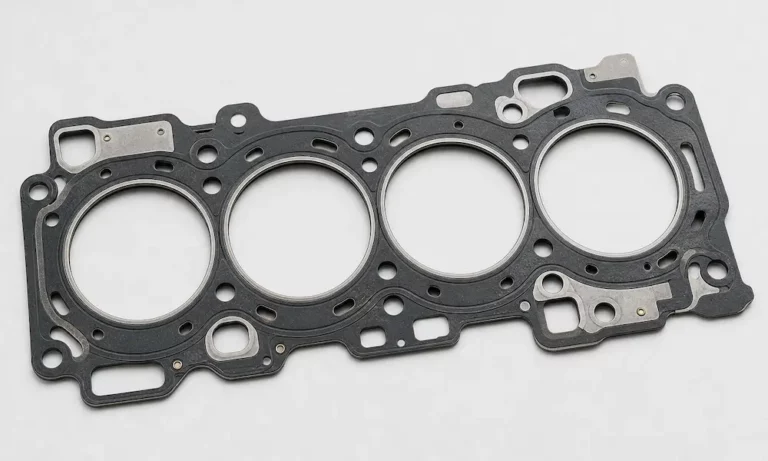
Choosing the wrong gasket brand can mean redoing a repair you just finished. This post breaks down exactly where Mahle and Fel-Pro each shine — and where they fall short. Stick around, because the answer depends entirely on what you’re working on.
Why the Mahle vs Fel-Pro Debate Matters
The aftermarket gasket segment is growing faster than the OEM channel right now. With the average American vehicle pushing past 12 years old, more repairs happen in independent shops and driveways than ever before.
That’s exactly where Mahle and Fel-Pro fight for your business. Both are quality brands. But they’re built on completely different philosophies — and that gap matters more than most people realize.
Who Makes These Gaskets?
Fel-Pro: The American Repair Shop Legend
Fel-Pro started in Chicago and built its name solving problems for American mechanics. Today it operates under the DRiV Incorporated umbrella after moving through Federal-Mogul and Tenneco. The corporate changes happened, but the core identity didn’t shift much.
Fel-Pro’s whole pitch is simple: engines in repair shops aren’t new engines. They’re warped, pitted, scored, and scraped. Fel-Pro designs gaskets for that reality, not a factory floor.
Their Skokie, Illinois facility runs massive 800-ton stamping presses. They also run a “Field Test Garage” using over 1,000 employee vehicles for real-world validation. That’s not marketing fluff — it’s actual mileage on actual broken-down cars.
Mahle: The German Precision Specialist
Mahle is headquartered in Stuttgart, Germany, and it’s been an OEM supplier since the early days of European automotive manufacturing. Its aftermarket division, Mahle Original, wraps in legendary brands including Victor Reinz for sealing and Clevite for engine bearings.
Mahle’s philosophy is “application-engineered.” Translation: they build the gasket to match the factory spec exactly. Their R&D pulls data from Formula One, NASCAR, and NHRA racing programs. When you install a Mahle gasket on a BMW or Honda, there’s a real chance you’re installing the identical part the factory used — just in different packaging.
Head Gaskets: Where the Biggest Differences Show Up
Fel-Pro PermaTorque MLS
Fel-Pro’s flagship is the PermaTorque Multi-Layer Steel head gasket. The defining feature is its NextGen rubber coating.
Here’s why that matters. Factory MLS gaskets often need a surface finish smoother than 30 microinches (Ra) to seal properly. Fel-Pro’s NextGen coating lets you seal surfaces as rough as 60–80 microinches Ra. That’s a massive tolerance buffer for mechanics working on engines that haven’t been through a machine shop.
Fel-Pro also uses LaserWeld technology — a patented process that creates a physical stopper layer inside the steel stack. This controls exactly how much compression the gasket takes under bolt load. It prevents over-compression, keeps sealing stress uniform around the bore, and dramatically reduces the chance of combustion blow-out.
Mahle Original MLS
Mahle builds its MLS gaskets from full-hard stainless steel with precisely embossed sealing beads. The outer layers carry an advanced fluoropolymer coating — a non-stick, high-temp compound that reduces friction between the gasket and the engine castings.
That friction reduction is critical. When a cast-iron block and an aluminum head heat up, the aluminum expands faster. This creates lateral “scrubbing” across the gasket face. Mahle’s coating lets the gasket slip microscopically against the aluminum without tearing. Long-term, that extends the seal’s life considerably in high-heat applications.
Mahle also offers center shim variations — different thickness options for the same engine platform. This matters when a head or block has been milled. A thicker shim restores the factory compression ratio and maintains piston-to-valve clearance.
Head Gasket Comparison
| Feature | Fel-Pro PermaTorque MLS | Mahle Original MLS |
|---|---|---|
| Surface finish tolerance | Up to 60–80 Ra microinches | Requires near-factory smooth finish |
| Coating type | NextGen rubber compound | Fluoropolymer anti-friction |
| Compression control | LaserWeld stopper layer | Stress-relieved embossed beads |
| Shim thickness options | Standard | Multiple thickness variations available |
| Best application | Repair environment, imperfect surfaces | Fresh machine work, OEM replacement |
Valve Cover Gaskets: The Import vs. Domestic Split
This is where the Mahle vs Fel-Pro debate gets really pointed — and where professional mechanics draw a hard line.
For domestic engines — classic Chevy small blocks, older Ford V8s, Chrysler pushrods — Fel-Pro is the go-to. Their thicker rubber-over-steel designs seal heavy stamped-steel or cast-iron valve covers reliably. Mechanics have used them for decades without complaints.
For imports, the consensus flips hard toward Mahle. Mechanics working on Toyota, Honda, Hyundai, and Subaru consistently report that Fel-Pro’s blue silicone gaskets for these platforms don’t always fit right. Common complaints include gaskets that are slightly too long, too short, or missing a molded bump for variable valve timing hardware.
Real documented example: Toyota Sequoia 4.7L V8 owners report Fel-Pro valve cover gaskets leaking oil into spark plug tubes shortly after installation. Mahle’s fit is clean on the same application.
Even on the popular GM LS V8 platform, engine builders have documented that the Mahle Victo-Tech valve cover gasket (VS50250A) outperforms the competing Fel-Pro (VS50504R) in both fitment and longevity.
Intake Manifold Gaskets: Engineering for Known Problem Engines
Both brands have done serious engineering work here — but Mahle’s problem-solving is especially well-documented.
Mahle engineers tackled the notorious GM 2.3L Quad Four intake failure (which often failed between 35,000–40,000 miles) by switching to a solid graphite facing clinched to a perforated steel core, with a sintered metal flange to boost local sealing load and dissipate heat.
For modern platforms, Mahle uses hydrolysis-resistant plastic carriers with embedded hydrogenated nitrile butadiene rubber (HNBR) sealing beads. HNBR resists breakdown from long-life antifreeze chemistry — a real issue with modern coolant formulas. Mahle even builds diversion channels into the carrier to catch excess RTV sealant before it contaminates the primary bead.
Fel-Pro handles intake sealing with their recognizable Blue Stripe coating technology and heavily reinforced materials. Their thicker composite solutions are the preferred choice for domestic V8s with pitted or corroded cast-iron flanges that need extra gap-filling.
Oil Pan Gaskets: Two Smart Solutions to the Same Problem
Overtightened pan bolts crush gaskets. Both brands solved this — differently.
Fel-Pro PermaDry integrates rigid metal torque limiters directly into the molded rubber. When you tighten the bolt, the limiter stops compression at the exact right point. No crushing, no extruding, no leak.
Fel-Pro also uses Hole-Lock technology on pan gaskets. The bolt holes are slightly undersized. You push the bolts through on the bench, and the rubber grips the threads. Now the pan, gasket, and bolts are one assembly you can lift into place without liquid adhesives. That matters — excess RTV sealant can break loose inside the pan, clog the oil pickup tube, and destroy the engine.
Mahle Victo-Tech oil pan gaskets use a jointless single-piece molded design with silicone compounds engineered for synthetic motor oil resistance. Internal metal carriers keep the gasket rigid during installation — no sagging or rolling. Engine builders praise the structural integrity on big, awkward gaskets where shape retention during installation is tough.
Surface Prep: The Variable Neither Brand Can Control
Here’s the hard truth: a $12 gasket installed on a properly prepped surface beats a $45 gasket on a sloppy surface every single time.
The most common installation mistake is using high-speed rotary abrasive pads on aluminum surfaces. These pads strip metal, create low spots, and send abrasive grit into oil passages. Use chemical gasket remover and plastic or brass scrapers instead.
Also — don’t glob RTV on molded rubber gaskets. The slick liquid acts as a lubricant and lets the gasket squeeze out when you torque the bolts. Use liquid sealant only at specific T-joints like head-to-timing-cover intersections, exactly where the manufacturer specifies.
And always replace Torque-To-Yield head bolts. These bolts intentionally stretch past their elastic limit during installation. Reusing them means uneven clamping force, which means a blown head gasket, regardless of which brand you chose.
Packaging, Kits, and Warranties
Mahle’s gasket sets ship in clear heavy-duty shrink-wrapped trays that let you verify contents before breaking the seal. This also protects thin MLS gaskets from bending during shipping — a single crease makes the gasket useless.
Fel-Pro’s kit philosophy is “Every Part for the Repair.” Their full head sets, upper engine sets, and lower conversion kits include every O-ring, valve stem seal, and specialty grommet for that repair. No extra trips to the parts store mid-job.
Both brands carry a limited one-year warranty covering manufacturing defects. Neither covers labor, diagnostic costs, or incidental engine damage from a failure. Fel-Pro’s warranty also won’t apply to parts bought through unauthorized online marketplaces — a direct counterfeit countermeasure worth knowing.
So Which Brand Do You Actually Pick?
Here’s the straightforward answer:
Choose Mahle when:
- You’re working on a European or Asian import (BMW, Audi, VW, Honda, Toyota, Hyundai)
- Surfaces are freshly machined and meet factory spec
- You need exact OEM dimensional matching on complex aluminum castings
- You’re doing a precision engine build with a milled head or decked block
Choose Fel-Pro when:
- You’re doing an in-vehicle repair without pulling the block for machining
- The engine surfaces are rough, pitted, or slightly warped
- You’re working on classic or modern domestic American V8s
- You need a complete kit with every peripheral seal included
Neither brand fails. They just solve different problems. Match the gasket to the job, prep the surfaces properly, use new TTY bolts, and you won’t be doing this repair twice.