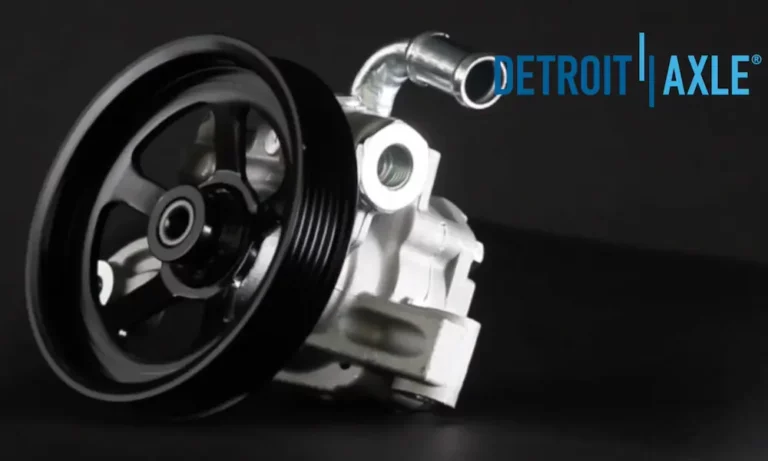
You’re staring at a cart full of Detroit Axle parts, and the price seems too good to be true. Before you click “buy,” let’s cut through the marketing fluff and figure out if these budget-friendly parts are actually worth your money—or if you’re setting yourself up for a headache down the road.
What Exactly Is Detroit Axle?
Here’s where it gets confusing. The name “Detroit Axle” sounds like it’s straight from the Motor City’s manufacturing glory days, right? Not quite.
Detroit Axle is a privately-held retailer and distributor run by the Musheinesh family. They’re not the same as Detroit Diesel (the heavy-duty truck manufacturer) or American Axle & Manufacturing (the OEM supplier). This confusion actually works in their favor—consumers see “Detroit” and assume they’re getting American-made OEM quality.
The company started in 1990 as a small parts shop near Ford’s Rouge Plant in Dearborn. By 2012, they’d shifted to a massive e-commerce operation, and by 2024, they were pulling in over $330 million annually. That’s serious money for aftermarket parts.
But here’s the catch: most of their parts aren’t manufactured in Detroit. They’re a mix of imported components and some domestic remanufacturing. Think of them as the middleman between overseas factories and your driveway.
The Real Story Behind Detroit Axle’s Supply Chain
Let’s talk about where these parts actually come from, because it matters.
Detroit Axle’s business model relies heavily on importing parts to keep prices low. That worked great until 2025, when aggressive new tariffs hit the auto industry hard. The 25% tariff on imported auto parts hit Detroit Axle like a sledgehammer.
In August 2025, the company filed a WARN notice announcing they’d close their Ferndale warehouse and lay off 102 workers. CEO Mike Musheinesh blamed “unforeseen circumstances, specifically the sudden imposition of government tariffs” for making continued operation “financially unsustainable.”
To survive, they’ve been playing supply chain chess—closing their Mexican plant and moving machinery back to Warren, Michigan, while simultaneously opening operations in Jordan to access Middle Eastern markets.
What does this mean for you? Parts availability might be spotty, and quality control could suffer when a company’s scrambling to stay afloat.
Breaking Down the Quality: Suspension Parts
So, are Detroit Axle parts good for your suspension? It depends on what you’re comparing them to—and what you’re willing to accept.
Control Arms and Ball Joints
A detailed teardown comparison between Detroit Axle and premium Moog control arms reveals some eye-opening differences:
The welds look rough. Premium control arms use robotic welding—clean, consistent, predictable. Detroit Axle? Hand-welded with inconsistent bead thickness. One reviewer noted the metal halves “don’t fit well” before welding, requiring them to be pressed together under high tension. That introduces stress into the part before it’s even on your car.
The ball joint boots are softer. That rubber boot protecting your ball joint from road grit? It’s noticeably inferior on Detroit Axle parts. Users report the boots sliding down the stud, exposing the greased joint to salt and water. That’s why you see complaints about clunking within 12-24 months.
They’re heavier, but not necessarily stronger. Detroit Axle parts often weigh more than OEM. That’s not always good—it usually means they’re using thicker material to compensate for lower-grade steel with less tensile strength.
Struts and Shocks
The “Quick Strut” assemblies are popular because they’re easy to install—everything’s pre-assembled. But there’s a problem: ride quality.
Multiple users complain about a significantly stiffer, harsher ride after installing Detroit Axle struts. Why? They’re using generic valving designed to support the heaviest trim level of a vehicle across all models. Your lightweight 4-cylinder sedan gets the same damping as a V6-loaded version.
Some savvy mechanics have actually disassembled the Detroit Axle struts and swapped their old OEM springs onto the new strut bodies just to fix the harshness. That’s a red flag.
Brake Parts: The Warping Problem
Detroit Axle pushes drilled and slotted rotors hard—they look sporty and appeal to enthusiasts. But the metallurgy doesn’t back up the aesthetics.
The most common complaint? Warping. Technically, it’s usually not true warping but uneven friction material transfer caused by thermal instability. Budget rotors use standard grey iron with lower carbon content, which can’t absorb heat spikes during heavy braking. Premium rotors use high-carbon iron with superior thermal conductivity.
Here’s the kicker: drilling holes in a rotor reduces its thermal mass (less metal to absorb heat) and creates stress points. Without high-quality casting, those drilled holes become crack initiation points. For a daily driver—especially a heavy truck like an F-150—a solid vented rotor is mechanically superior to a cheap drilled one.
The drilled/slotted feature on Detroit Axle rotors? It’s mostly for looks, not performance.
The Rust Issue
Another aesthetic complaint: Detroit Axle rotors and hubs turn orange with rust almost immediately after moisture exposure. Premium rotors come with Geomet or zinc coatings on non-contact surfaces. Detroit Axle rotors often lack this protection, leading to unsightly wheels and potential hub seizing.
Steering and Driveline Components
Detroit Axle does some remanufacturing in their Michigan facilities, particularly for steering racks and CV axles. This is where things get dicey.
Rack and Pinion Issues
Remanufactured steering racks generate a high volume of warranty claims for seal leaks. The problem? While they replace the soft parts (seals and O-rings), the hard parts—the rack bar itself—may not be properly polished. If there’s microscopic pitting from previous corrosion, it’ll tear through new seals rapidly.
Some enthusiasts on MR2 and BMW forums report receiving “remanufactured” racks with heavy paint applied directly over pitted or corroded housings—essentially painting over the problem.
Others complain about excessive steering play or “dead zones” immediately upon installation, indicating improper adjustment during reassembly.
CV Axles and Wheel Hubs
Detroit Axle offers both new and remanufactured CV axles. The remanufactured units may reuse the outer housing, which can be problematic. There are reports of axles arriving with wrong dimensions or separating during installation.
Wheel hubs with integrated ABS sensors? The mechanical bearing might hold up, but the electronic sensors are a weak point. Users report sensors arriving crushed due to poor packaging or failing to communicate with the vehicle’s ECU.
The “Lifetime Warranty” Reality Check
Detroit Axle heavily promotes a lifetime warranty on remanufactured parts and a 10-year warranty on new parts. Sounds great, right?
Here’s the fine print: you pay return shipping. For a heavy steering rack or set of rotors, that can easily run $50-$100—often more than the value of the replacement part itself.
Order the wrong part? There’s a 15% restocking fee plus shipping costs.
And in late 2025, there’s a disturbing trend: customers can’t reach anyone. The BBB complaint page shows a spike in “Unanswered” complaints. Users report unhelpful customer service agents or being completely ghosted.
One frustrated customer was repeatedly called “Thomas” despite that not being their name—a sign of a disorganized CRM system under strain.
Who Should (and Shouldn’t) Buy Detroit Axle Parts
Let’s be brutally honest about when these parts make sense.
Buy Detroit Axle If:
- You’re flipping a car. Need to get a beater past inspection and sold? Detroit Axle will do the job cheaply.
- You’re fixing a high-mileage vehicle you’re dumping soon. If your car’s got 180,000 miles and you’re driving it into the ground, spending OEM money doesn’t make sense.
- You’re on an extremely tight budget. Sometimes you need your car running now, and Detroit Axle is what you can afford. Just know what you’re getting.
Skip Detroit Axle If:
- You’re working on a truck you depend on. Heavy-duty trucks like F-150s or Silverados need quality suspension components. The labor cost of replacing failed parts will exceed your initial savings.
- You’re keeping the vehicle long-term. If you plan to drive this car for another 5+ years, invest in Moog or OEM parts.
- You need precision steering components. Don’t gamble on remanufactured steering racks for safety-critical applications.
- You tow or haul heavy loads. Budget parts won’t hold up under stress.
Better Alternatives Worth Considering
If Detroit Axle doesn’t fit your needs, here are some middle-ground options:
For suspension: Moog still offers superior robotic welding and boot designs. Their “Problem Solver” line often includes design improvements over OEM. Mevotech’s TTX (Terrain Tough Extreme) line is overbuilt and holds up better than even Moog in some applications.
For brakes: PowerStop’s Z23/Z36 kits use high-carbon rotors and formulated pads that resist fade. Many users recommend buying cheap Detroit Axle rotors but swapping in premium PowerStop or Akebono pads for better performance.
For CV axles: Raxles uses exclusively new OEM joints and often delivers better quality than dealer stock. Detroit Axle’s remanufactured axles are a gamble by comparison.
For comprehensive DIY support: TRQ (1A Auto) operates a similar import model but differentiates itself with a massive library of high-quality instructional videos and generally better packaging.
The Bottom Line on Detroit Axle Quality
So, are Detroit Axle parts good? The honest answer: they’re “good enough” for specific situations, but they’re not good.
The company serves a vital economic function—keeping aging vehicles on the road when OEM repairs would cost more than the car’s worth. For a 15-year-old beater, a $200 suspension kit is rational. It’ll pass inspection and give you a year or two of service.
But the technical evidence is clear: hand-welded control arms, soft rubber boots, low-carbon rotors, and inconsistent quality control mean these parts are engineered to a price point, not a performance standard.
The recent warehouse closures and layoffs suggest a company in survival mode, which doesn’t inspire confidence in quality or customer support.
If you buy Detroit Axle, inspect parts immediately upon arrival. Check welds, test-fit components before installation, and keep your expectations realistic. You’re paying bargain prices for bargain parts—the quality assurance is largely up to you.
For anything safety-critical or long-term, spend the extra money on proven brands. The labor cost of replacing failed parts—plus alignments, diagnostic time, and sheer frustration—will quickly erase any initial savings. In the automotive world, you really do get what you pay for.