
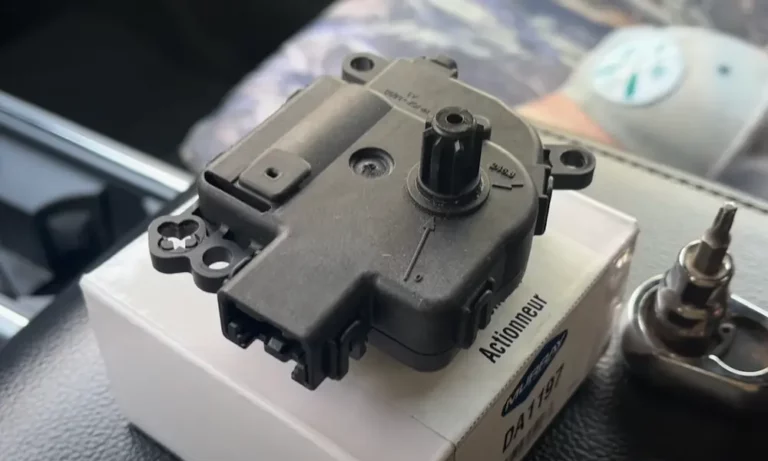
Is your car making an annoying clicking sound from behind the dashboard? You might be dealing with a blend door actuator problem. This small but crucial component controls the temperature in your vehicle, and when it fails, it can drive you crazy with that persistent ticking noise. I’ll walk you through what’s happening, why it matters, and what you can do about it without breaking the bank.
What Is a Blend Door Actuator?
A blend door actuator is a small electric motor that controls the airflow in your car’s heating and cooling system. Think of it as the traffic director for air in your vehicle. It moves little doors (called blend doors) that determine whether you get hot air, cold air, or something in between.
These actuators use plastic gears connected to a motor to move the blend doors to different positions. Most cars have 3-4 actuators controlling various aspects of your climate system:
- Temperature control (hot/cold)
- Airflow direction (face, feet, defrost)
- Air recirculation
Modern actuators also include feedback systems that tell your car’s computer where the doors are positioned. When everything works right, you get precisely the temperature you want. When something fails, you get that annoying clicking noise.
Why Your Blend Door Actuator Is Clicking
Stripped Plastic Gears
The most common cause of that irritating clicking is worn or stripped plastic gears inside the actuator. Over time, these gears experience a lot of stress from regular use. When teeth break off or wear down, the motor keeps trying to move the blend door but can’t engage properly.
This results in that distinctive clicking sound that typically lasts 10-15 seconds after starting your car or changing temperature settings. The motor is essentially slipping and repeatedly attempting to reach its programmed position.
Position Sensor Problems
In newer vehicles, especially Fords, the actuator contains position sensors instead of mechanical stops. When these sensors malfunction, the actuator loses track of where it’s positioned. This causes the control module to continuously search for the correct position, creating that repetitive clicking noise.
As this video demonstration shows, these newer designs often fail in different ways than older mechanical systems.
Physical Obstructions
Sometimes the problem isn’t the actuator itself but something blocking the blend door from moving. Debris, ice buildup, or damage to the door mechanism can cause the actuator to click as it repeatedly tries to move an immovable object.
Signs Your Blend Door Actuator Is Failing
That Unmistakable Clicking Noise
The most obvious symptom is a repetitive clicking, ticking, or knocking sound from behind your dashboard. You’ll typically hear it:
- Right after starting your vehicle
- When adjusting temperature settings
- When changing airflow direction
- When switching air recirculation on/off
The clicking usually lasts 5-15 seconds before stopping because most systems have timeout features to prevent continuous operation.
Temperature Control Problems
Beyond the annoying noise, you might notice:
- Inconsistent temperature (can’t maintain the setting you want)
- Wrong temperature output (hot when you want cold, or vice versa)
- Temperature differences between driver and passenger sides
- Some vents blowing properly while others don’t
These symptoms directly result from the actuator’s inability to properly position the blend doors.
Diagnosing the Problem
To confirm a blend door actuator issue, try these steps:
- Turn your climate control on and off while listening for clicks
- Change temperature settings from hot to cold and listen
- Switch between different vent modes and listen
- Feel for vibrations in the dashboard when the clicking occurs
Professional technicians might use scan tools to command actuator movement and observe system response, as demonstrated in this diagnostic video.
Vehicle Models Most Affected by Clicking Actuators
General Motors Vehicles
GM vehicles are notorious for blend door actuator failures, particularly in these models:
- Chevrolet Impala (2006-2016)
- Silverado trucks
- Equinox
- Pontiac G5/Chevrolet Cobalt
The failure typically occurs in actuators controlling air recirculation and temperature blend functions. GM actuators usually fail because the final drive gear loses teeth under normal operation stress.
Interestingly, some GM vehicles allow for temporary fixes using zip ties to prevent actuators from reaching problematic positions, as shown in this helpful video.
Ford Vehicles
Ford vehicles frequently experience blend door actuator issues, especially in:
- F-150 trucks
- Explorer SUVs
- Expedition models
Ford’s newer actuator designs often fail by losing position reference rather than experiencing gear failure. F-150 trucks show particularly high failure rates, with some owners replacing actuators multiple times.
The clicking typically occurs during the last two “cold” positions on the temperature control, making these vehicles especially problematic in hot climates.
Japanese Manufacturers
Honda and Toyota vehicles generally experience fewer blend door actuator problems compared to American manufacturers. When issues do occur, they often involve different root causes such as blower motor contamination rather than actuator failure.
However, certain models like the Honda Pilot and Toyota Highlander may require expensive dashboard removal for actuator access when problems develop.
Replacement Costs: Professional vs. DIY
Professional Repair Costs
According to RepairPal data, average replacement costs range from $437-$576, including:
- Labor: $296-$435
- Parts: Around $141
However, costs vary dramatically by vehicle type:
- Honda Civic repairs: $179-$212
- Toyota Camry repairs: $753-$1,014
| Vehicle Model | Average Total Cost | Labor Cost | Parts Cost |
|---|---|---|---|
| Chevy Impala | $437-$576 | $296-$435 | ~$141 |
| Ford F-150 | $500-$700 | $350-$550 | ~$150 |
| Honda Accord | $179-$212 | $110-$140 | ~$70 |
| Toyota Camry | $753-$1,014 | $600-$850 | ~$150 |
Some vehicles require extensive dashboard removal, significantly increasing labor costs. Ford Expedition owners report dealer quotes reaching $2,500 for driver-side actuator replacement due to the extensive disassembly required.
DIY Repair Feasibility
Many blend door actuator replacements can be performed by moderately skilled DIY mechanics, particularly for actuators located behind the glove box. These repairs typically require:
- Basic hand tools (Phillips screwdrivers, socket sets)
- Trim removal tools
- 30-60 minutes of work time
For an excellent walkthrough of a DIY repair, check out this YouTube guide showing step-by-step instructions.
However, certain vehicles present significant challenges for DIY repair. Actuators located deep within the dashboard may require:
- Airbag removal
- Steering column removal
- Extensive trim disassembly
These repairs involve safety considerations and specialized knowledge, making professional service advisable for inexperienced individuals.
Prevent Future Actuator Problems
Regular Maintenance Tips
You can extend your blend door actuator’s lifespan with these preventive measures:
- Replace cabin air filters regularly to prevent debris accumulation that can cause doors to bind or actuators to work harder.
- Request HVAC system cleaning during routine service to reduce mechanical stress on actuator components.
- Perform system calibration after battery disconnection or electrical work. Many vehicles support self-calibration procedures that can be performed during regular maintenance.
Driving Habits That Help
How you use your climate control system matters:
- Make gradual temperature changes rather than immediately switching from maximum heat to maximum cooling.
- Use auto mode when available to allow the system to make gradual adjustments rather than forcing actuators through their full range repeatedly.
- Don’t constantly switch between settings as this increases wear on the actuator components.
Repair Options: Beyond Simple Replacement
Try Recalibration First
Before replacing actuators, several recalibration procedures may resolve clicking issues without parts replacement:
- HVAC control module reset – Some vehicles have specific button combinations to reset the system.
- Fuse removal and reinsertion – Removing the climate control fuse for 5 minutes can sometimes reset the system.
- Battery disconnection – Disconnecting the battery for 15-30 minutes may reset the actuator position memory.
- Ignition cycling techniques – Specific key-on, key-off sequences can recalibrate some systems.
This YouTube demonstration shows various recalibration methods that might save you from a full replacement.
Choose Quality Replacement Parts
If replacement is necessary, part quality matters significantly:
OEM (Original Equipment Manufacturer) parts generally provide superior longevity compared to aftermarket alternatives:
- GM ACDelco actuators
- Ford Motorcraft parts
- Genuine Toyota/Honda components
While OEM parts cost more initially, their superior reliability often provides better long-term value. Many owners report multiple failures when using lower-quality aftermarket parts, requiring repeated repairs within short timeframes.
Temporary Workarounds
For vehicles requiring extensive disassembly or expensive repairs, consider these temporary solutions:
- Manual actuator manipulation – Some actuators can be manually set to desired positions.
- Disconnect problematic actuators – In some cases, you can disconnect clicking actuators while leaving functional ones operational.
- Zip-tie restraints – As shown in this clever fix, zip ties can prevent actuators from reaching problematic positions.
While not permanent solutions, these approaches can provide interim functionality while planning proper repairs.
Real-World Success Stories
Many owners have successfully addressed blend door actuator issues with creative solutions:
The GM Zip Tie Fix
Chevrolet Impala owners discovered that a simple zip tie could prevent the recirculation actuator from reaching its problematic final position. This $0.10 fix saved hundreds in repair costs and eliminated the clicking noise.
Ford F-150 Pattern Recognition
F-150 owners noticed that clicking typically occurs only in the coldest temperature settings. By avoiding the last two notches on the temperature dial, many owners prevent the clicking entirely while maintaining adequate cooling.
DIY Dashboard Warriors
Some owners of complex vehicles like the Chevy SSR have developed partial dashboard removal techniques that avoid complete disassembly, saving thousands in labor costs.
Making the Decision: Repair, Replace, or Live With It?
When facing blend door actuator clicking, consider these factors:
- Vehicle value – For older vehicles, expensive repairs may exceed the vehicle’s worth.
- Climate needs – If you live in extreme climates, proper HVAC function might be essential rather than optional.
- DIY comfort level – Your mechanical skills and comfort with dashboard disassembly should influence your approach.
- Budget constraints – Temporary fixes might make sense while saving for proper repairs.
The clicking itself won’t damage your vehicle further, so you have time to weigh your options and choose the approach that makes the most sense for your situation.
By understanding what’s happening behind your dashboard, you can make informed decisions about this common but fixable automotive annoyance.


