
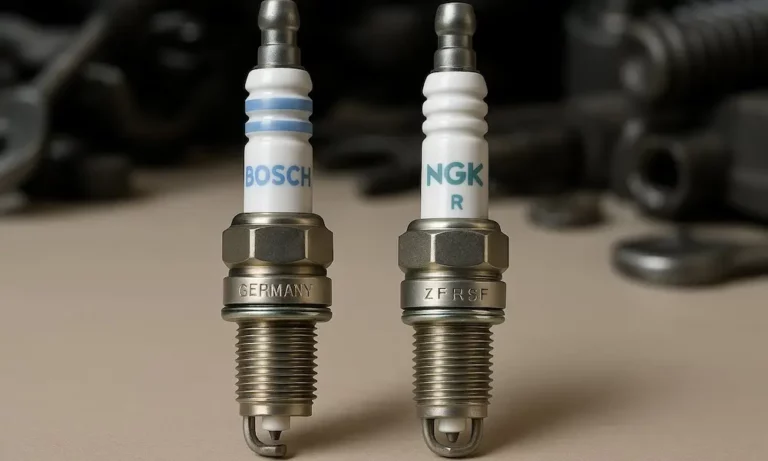
Choosing between Bosch spark plugs vs NGK isn’t just about price—it’s about matching the right technology to your specific engine. This guide breaks down the real differences that matter, so you can make a confident decision based on what’s actually under your hood.
What Makes Bosch and NGK Different From Each Other
Here’s something most mechanics won’t tell you upfront: these two brands weren’t built for the same engines.
NGK dominates the Japanese and Asian automotive market. They’re the go-to OEM supplier for Toyota, Honda, Nissan, and Subaru. When these manufacturers design engines, they work directly with NGK to create spark plugs that match their specific combustion chamber designs and performance parameters.
Bosch owns the European market. Since 1886, this German engineering powerhouse has been the primary supplier for BMW, Mercedes-Benz, Audi, and Volkswagen. Their plugs integrate seamlessly with European engine management systems, turbocharging setups, and direct injection tech.
This OEM relationship isn’t just corporate politics—it directly impacts how well your plugs perform. Professional mechanics consistently report better results when they match plug brands to vehicle origins. It’s not brand loyalty, it’s engineering compatibility.
Electrode Technology: Where the Magic Happens
The electrode is where combustion starts, and both manufacturers take vastly different approaches.
NGK’s philosophy centers on precision and reliability. Their flagship Iridium IX series features ultra-fine 0.6mm iridium center electrodes that concentrate electrical energy for more efficient air-fuel ignition. The finer the electrode, the less voltage you need to create a strong spark.
Their latest innovation—Ruthenium HX technology—offers superior oxidation resistance and enhanced high-temperature performance compared to traditional iridium designs. It’s the most advanced spark plug development currently available.
Bosch focuses on thermal efficiency through innovative configurations. Their Double Iridium and Platinum+4 designs use multiple ground electrodes and surface gap technology to enhance spark efficiency and combustion completeness. Instead of a single spark point, you get multiple firing opportunities.
Bosch’s patented 360° continuous laser welding process ensures precise electrode positioning and enhanced durability. Their copper core technology enhances heat transfer and provides protection against pre-ignition and carbon deposits.
The practical difference? NGK excels at consistent, reliable ignition across varying conditions. Bosch optimizes for maximum thermal efficiency and fuel economy—particularly important in high-compression European engines.
How Long Do These Plugs Actually Last?
Service life varies dramatically based on material and application.
NGK Iridium IX plugs typically deliver 60,000-100,000 mile service intervals. Their premium models offer up to 25% longer lifespan than platinum alternatives. The fine iridium electrode construction provides exceptional wear resistance, maintaining consistent spark gap throughout the service life.
Bosch emphasizes extended service intervals through advanced materials. Their Double Platinum series delivers 100,000-150,000 mile intervals, while Double Iridium configurations provide up to 4x longer service life compared to standard copper plugs. Independent testing shows that premium Bosch plugs can improve fuel economy by up to 4.8% over original equipment plugs.
Here’s the catch: these numbers assume proper application. In demanding conditions—turbocharged engines, severe service environments, or extreme temperatures—real-world performance varies.
Professional mechanics report that NGK plugs demonstrate superior anti-fouling characteristics in challenging conditions. They stay cleaner longer and maintain stable performance even when engines aren’t running optimally.
Bosch plugs excel in thermal management applications, particularly in European engines with advanced combustion strategies. They handle heat better and dissipate it more efficiently.
Heat Range: The Most Misunderstood Specification
Heat range selection critically impacts spark plug performance and engine longevity. Get this wrong, and you’ll be replacing plugs—or worse, repairing engine damage.
NGK utilizes a comprehensive heat range system optimized for precise temperature control. Their plugs maintain optimal firing end temperatures between 500°C-800°C. This range prevents both carbon fouling (too cold) and pre-ignition damage (too hot).
NGK’s heat range numbering system provides clear guidance for applications ranging from cold-climate starting to high-performance racing. Higher numbers indicate hotter plugs, while lower numbers run cooler—a crucial distinction for proper selection.
Bosch heat range specifications align with European engine requirements. Their testing methodology involves thermocouple-equipped plugs installed in the hottest engine cylinder to determine optimal heat dissipation characteristics. This approach ensures compatibility with high-compression engines, turbocharging systems, and direct injection applications.
Here’s what professionals know: heat range mismatches cause more spark plug failures than material quality issues. An overly cold plug fouls with carbon deposits. An excessively hot plug causes pre-ignition, detonation, and potentially catastrophic engine damage.
Always match heat range to your specific application, not just what’s cheapest or most readily available.
Installation Differences You Need to Know
Installation requirements differ significantly between manufacturers, and ignoring these differences can damage expensive components.
Most Bosch plugs arrive pre-gapped from the factory with gap measurements indicated on packaging or part numbers. Their advanced designs—including Platinum+4 and Double Iridium series—should never be re-gapped by installers to prevent electrode damage. The fine electrodes can’t withstand the physical stress of gap adjustment.
NGK plugs typically require gap verification and adjustment according to vehicle manufacturer specifications. Their cold-rolled thread design prevents cross-threading and cylinder head damage, while trivalent metal plating eliminates the need for anti-seize compounds.
One often-overlooked consideration: torque specifications matter tremendously. Under-torqued plugs can back out, causing misfires and potential thread damage. Over-torqued plugs can break insulators or strip threads—requiring expensive cylinder head repair.
NGK provides detailed installation guidelines with specific torque values for different plug sizes and applications. Follow them precisely.
The Counterfeit Problem Nobody Talks About
Quality control and counterfeit protection represent growing professional concerns, particularly with NGK products.
NGK implements comprehensive anti-counterfeiting measures including lot number verification systems and resistance testing protocols. Genuine NGK plugs maintain consistent 4-7 kΩ resistance values, while counterfeit units show erratic resistance readings ranging from 24-500 kΩ.
You can verify authenticity with a simple multimeter test. Connect the leads between the terminal and threaded shell. Genuine plugs show consistent resistance within specification. Counterfeits don’t.
Bosch products face similar counterfeit issues, though perhaps less widespread. Always purchase from authorized distributors and verify packaging details, build quality, and part number authenticity.
Installing counterfeit spark plugs can cause misfires, poor fuel economy, catalyst damage, and potential engine failure. The $5 you save buying questionable plugs can cost thousands in repairs.
Price vs. Value: The Real Cost Comparison
Pricing structures reflect different market positioning strategies.
Bosch generally offers competitive pricing with iridium plugs averaging $9-12 per unit. Their volume relationships with European manufacturers enable competitive aftermarket pricing without sacrificing performance. You’re getting German engineering at accessible prices.
NGK commands premium pricing at $12-18 per plug for iridium series. This reflects their precision manufacturing and extensive testing protocols. Each plug undergoes mechanical vibration, thermal shock, and combustion stability tests before leaving the factory.
But here’s what matters: total cost of ownership calculations must consider service intervals, replacement frequency, and potential engine damage from plug failures.
A $15 NGK plug that lasts 100,000 miles costs $0.00015 per mile. A $10 Bosch plug that lasts 150,000 miles costs $0.000067 per mile. Suddenly the “expensive” plug might not be.
Professional mechanics report fewer comebacks and warranty issues when they use properly matched plugs—NGK in Japanese vehicles, Bosch in European applications. That reliability has real value that doesn’t show up on the price tag.
Which Brand for Which Vehicle?
For Japanese and Asian vehicles, NGK represents the optimal choice. The OEM engineering integration, proven reliability, and superior anti-fouling performance make it the smart selection. These plugs were literally designed alongside the engines they’re installed in.
Toyota, Honda, Nissan, Subaru, and Mazda owners should stick with NGK unless there’s a compelling reason to switch. You’re working with the manufacturer’s intended design, not against it.
European vehicle applications benefit most from Bosch spark plugs. They’re engineered specifically for German automotive standards, turbocharging systems, and advanced combustion technologies. The thermal efficiency improvements and fuel economy benefits align with European performance expectations.
BMW, Mercedes-Benz, Audi, Volkswagen, and Porsche owners get better results with Bosch. The plugs understand the engine’s thermal management needs and deliver consistent performance.
What about American vehicles? Domestic manufacturers use both brands as OEM suppliers, so you’ve got more flexibility. Check your owner’s manual or consult with a trusted mechanic about what was originally installed.
Mixed fleet operations—like repair shops or fleet managers—should maintain brand consistency based on vehicle manufacturer origins rather than attempting to standardize on a single spark plug brand. It’s more inventory complexity, but it delivers better performance and reliability across diverse vehicle populations.
Performance Characteristics That Actually Matter
Beyond manufacturer claims and marketing fluff, certain performance characteristics make real differences in daily driving.
NGK excels in cold-weather starting and low-RPM performance. Their precision electrode design and tight manufacturing tolerances ensure consistent ignition even when conditions aren’t ideal. If you live in cold climates or deal with frequent short trips, this matters tremendously.
The anti-fouling capabilities shine in stop-and-go traffic, where engines don’t reach optimal operating temperatures consistently. NGK plugs resist carbon buildup better than most competitors.
Bosch delivers superior high-temperature performance and thermal management. In high-compression engines, turbocharged applications, or performance driving, Bosch plugs maintain consistent performance when combustion chamber temperatures spike.
The multiple ground electrode designs provide backup firing points if the primary electrode wears or fouls. You get more consistent performance as plugs age toward their service interval.
Fuel economy improvements are measurable with both brands when replacing worn plugs, but Bosch’s thermal efficiency focus delivers slightly better results in European engines specifically designed to work with their technology.
Manufacturing Quality and Standards
Manufacturing quality directly impacts long-term reliability and performance consistency.
NGK maintains ISO 11565-certified facilities employing laser precision gap measurement and extensive quality testing. The company maintains the tightest resistor manufacturing tolerances in the industry, ensuring consistent electrical performance across millions of units produced annually.
Their quality control process includes automated visual inspection, dimensional verification, resistance testing, and performance validation. Defective plugs don’t make it to retail packaging.
Bosch brings 130+ years of German engineering excellence to spark plug manufacturing. Their facilities employ advanced robotics, precision machining, and strict quality protocols that meet or exceed OEM specifications.
The 360° continuous laser welding process isn’t just marketing—it creates stronger, more durable electrode attachments that withstand extreme combustion pressures and thermal cycling better than traditional welding methods.
Both manufacturers invest heavily in research and development, continuously improving materials, designs, and manufacturing processes. You’re not buying yesterday’s technology with either brand.
Special Applications and Performance Modifications
Modified or high-performance applications require special consideration.
For turbocharged or supercharged engines, heat range becomes critically important. Forced induction increases combustion chamber temperatures significantly, requiring colder heat range plugs to prevent pre-ignition and detonation.
NGK offers extensive performance plug lines including racing-specific designs with precious metal electrodes optimized for extreme conditions. Their technical support helps identify proper heat ranges for modified applications.
For naturally aspirated performance builds, Bosch’s multiple ground electrode designs can provide more complete combustion and slightly better power output. The surface gap technology exposes more air-fuel mixture to the spark, improving flame propagation.
Both manufacturers offer plugs suitable for alternative fuels including E85, propane, and natural gas. These applications require specific electrode materials and heat ranges to handle different combustion characteristics.
If you’re running performance modifications—especially forced induction, nitrous oxide, or significant timing/fuel changes—consult with experienced tuners about proper plug selection. The wrong plugs can destroy an engine quickly under boost.
What Professional Mechanics Actually Recommend
After reviewing dozens of professional forums and consulting with experienced technicians, clear patterns emerge.
BMW and Mercedes specialists overwhelmingly recommend Bosch for European vehicles. The feedback from professional forums consistently shows better performance, fewer issues, and happier customers when using manufacturer-specified Bosch plugs.
Import specialists strongly prefer NGK for Japanese and Asian vehicles. The reliability, consistent performance, and superior anti-fouling characteristics deliver better results with fewer comebacks.
Independent shops serving mixed fleets report that matching plug brands to vehicle origins—rather than standardizing on a single brand—reduces diagnostic time, improves customer satisfaction, and minimizes warranty claims.
The professional consensus: don’t fight the engineering. Use NGK in vehicles designed for NGK plugs. Use Bosch in vehicles designed for Bosch plugs. The marginal cost difference isn’t worth the potential performance compromises or reliability concerns.
Technical Specifications Comparison
| Feature | Bosch | NGK |
|---|---|---|
| Primary OEM Partners | BMW, Mercedes-Benz, Audi, Volkswagen, Porsche | Toyota, Honda, Nissan, Subaru, Mazda |
| Electrode Technology | Double Platinum, Double Iridium, Surface Gap, Multiple Ground Electrodes | Fine Wire Iridium (0.6mm), Laser Iridium, Ruthenium HX |
| Service Life (Iridium) | Up to 150,000 miles (4x copper lifespan) | 60,000-100,000 miles (25% longer than platinum) |
| Service Life (Platinum) | 100,000-150,000 miles | 60,000-100,000 miles |
| Average Price (Iridium) | $9-12 per plug | $12-18 per plug |
| Heat Dissipation Focus | Optimized for European high-compression engines | Precise temperature control (500°C-800°C range) |
| Gapping Requirement | Pre-gapped, do not adjust | Verify and adjust to vehicle specifications |
| Resistance Range | Manufacturer specification | 4-7 kΩ (genuine units) |
| Manufacturing Origin | Germany (primary) | Japan (primary) |
| Best Application | European vehicles, thermal efficiency priority | Japanese/Asian vehicles, reliability focus |
| Anti-Fouling Performance | Good | Excellent |
| Fuel Economy Improvement | Up to 4.8% vs. worn OEM | Measurable improvement vs. worn plugs |
Making Your Final Decision
The choice between Bosch spark plugs vs NGK ultimately comes down to three factors: vehicle manufacturer origin, specific performance requirements, and budget considerations.
Choose NGK if you drive: Japanese or Asian vehicles, operate in cold climates, prioritize reliability above all else, or deal with frequent short-trip driving that doesn’t allow engines to reach optimal temperatures.
Choose Bosch if you drive: European vehicles, have turbocharged or high-compression engines, prioritize fuel economy improvements, or want maximum service intervals with premium materials.
Don’t overthink this decision. Match the plug brand to your vehicle’s engineering origins, select the appropriate heat range for your specific application, and purchase from authorized distributors to avoid counterfeits.
Both manufacturers produce excellent spark plugs backed by decades of engineering expertise and proven performance. You can’t really go wrong with either choice—as long as you’re selecting the right tool for the specific job.
Replace plugs at manufacturer-recommended intervals, verify proper gap specifications, and torque to specification during installation. These basic steps matter more than obsessing over minor performance differences between premium plug brands.


