
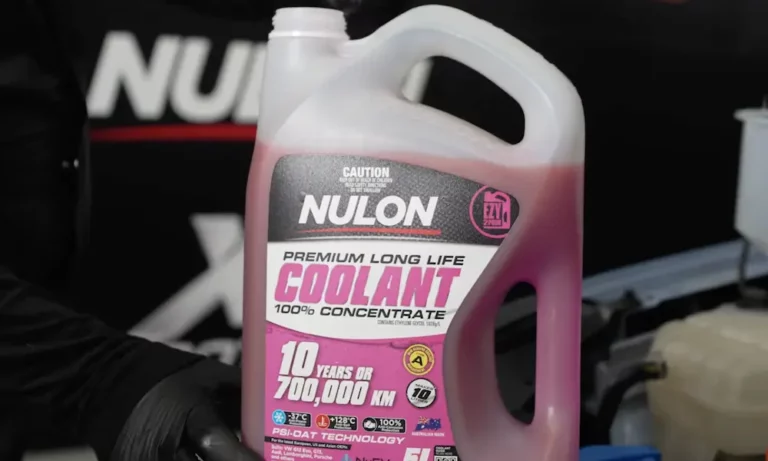
Your coolant level is low, and you’re wondering if you can just top it off yourself. Good news — in most cases, yes, you absolutely can. But there’s a right way and a very wrong way to do it. Get it wrong and you risk burns, engine damage, or worse. Read this through before you open that hood.
What Does Coolant Actually Do?
Your engine burns fuel and makes serious heat. Without a way to manage that heat, your engine would literally seize up and destroy itself. That’s where coolant comes in.
Coolant flows through your engine, absorbs heat, carries it to the radiator, and dumps it into the air. Then it loops back and does it all over again. It also keeps your cabin warm in winter through the heater core — a small heat exchanger behind your dashboard.
Without enough coolant, your engine overheats fast. And an overheated engine doesn’t just stop — it warps, cracks, and dies an expensive death.
Antifreeze vs. Coolant — They’re Not the Same Thing
People mix these terms up constantly. Here’s the actual difference:
- Antifreeze is the concentrated chemical — usually ethylene glycol or propylene glycol
- Coolant is what you put in your car — antifreeze mixed with water
The right mix is typically 50% antifreeze and 50% distilled water. That combo lowers the freezing point AND raises the boiling point. Pure antifreeze, oddly enough, freezes at a higher temperature than the diluted mix — so don’t skip the water.
Always use distilled water, not tap water. Tap water has minerals that build up inside your engine over time, acting like an insulating crust that blocks heat transfer and clogs passages. It’s a slow killer.
Choosing the Right Coolant for Your Car
This is where most DIYers go wrong. Coolant isn’t universal. Pour the wrong type in and you can cause corrosion, destroy seals, or turn your coolant into a thick, useless sludge.
There are three main types:
- IAT (Inorganic Additive Technology) — The old bright green stuff. Works for older cast-iron engines, but needs replacing every 2 years or 36,000 miles
- OAT (Organic Acid Technology) — No silicates or phosphates. Lasts up to 150,000 miles. Common in GM, Saab, and Volkswagen vehicles
- HOAT (Hybrid OAT) — A mix of both. Most modern cars use some version of this
Here’s a quick breakdown by manufacturer:
| Coolant Type | Common Colors | Typical Vehicles |
|---|---|---|
| IAT | Bright Green | Pre-2001 domestic vehicles |
| OAT | Orange, Red, Pink | GM, Saab, Volkswagen |
| Standard HOAT | Yellow, Orange | Ford, Chrysler, select European |
| Phosphate-Free HOAT | Turquoise | BMW, Volvo, Tesla, MINI |
| Phosphated HOAT | Pink or Blue | Toyota, Honda, Nissan, Hyundai, Kia |
| Silicated HOAT | Purple | Mercedes-Benz, Audi, Porsche |
Don’t go by color alone. Aftermarket “universal” coolants can mimic any color while using completely different chemistry. Always check your owner’s manual for the exact specification.
Signs Your Cooling System Has a Problem
Before you top off your coolant, you need to know why it’s low. A healthy cooling system doesn’t lose fluid. If your level dropped, something’s wrong.
Dashboard Warning Signs
If your temperature gauge creeps toward the red zone or a low-coolant warning light comes on, pull over immediately and shut the engine off. Don’t drive another mile hoping it’ll sort itself out. A few minutes of overheating can warp metal and trash your engine for good.
Smells and Visual Clues
Ethylene glycol has a sweet, syrupy smell. If you catch that scent near your hood, coolant is probably leaking onto a hot surface and evaporating. If you smell it inside the car along with a greasy film forming on the windshield — that’s your heater core leaking and pumping toxic vapor into the cabin. Get that fixed fast.
Check under your car too. Bright green, pink, or orange puddles under the engine bay mean a leaking hose, water pump seal, or cracked radiator tank.
The Really Scary Stuff — Milky Oil and White Smoke
These two symptoms mean serious internal damage. Don’t ignore them.
Milky oil — Pull your dipstick. If the oil looks like a creamy, frothy brown sludge, coolant has mixed with your oil. This usually means a blown head gasket. Milky oil destroys engine bearings fast because the emulsion can’t lubricate anything properly.
Thick white smoke from the exhaust — A little white vapor on a cold morning is normal condensation. But thick, sweet-smelling white smoke that doesn’t stop means coolant is leaking into the combustion chamber and burning. That’s a head gasket failure and it needs professional attention immediately.
If you see either of these, don’t just top off the coolant. Stop driving and get it diagnosed.
The Safety Rules You Can’t Skip
Here’s where people get hurt. The cooling system runs under high pressure — up to 18 psi in some vehicles. That pressure raises the boiling point of the fluid so it doesn’t vaporize inside a scorching engine.
Never open the radiator cap or reservoir cap on a hot engine. Removing the cap drops the pressure instantly. The superheated coolant flash-boils and erupts like a geyser of scalding liquid, straight at your face and hands. Third-degree burns happen in seconds.
Wait until the engine is completely cold. That usually takes several hours. Don’t try to speed it up.
Don’t pour cold coolant into a hot engine either. Even if you’re not opening the cap, dumping cold fluid into an overheated engine causes thermal shock — the rapid temperature change cracks the metal. You’ll turn an overheating problem into a destroyed engine block.
Wear gloves and eye protection every time. Coolant contains chemicals that irritate skin and eyes, and residual pressure can still spit fluid unexpectedly.
How to Top Off Your Coolant — Step by Step
Once the engine is cold and you’ve confirmed there’s no milky oil or white smoke, here’s how to do it right:
1. Park on a flat surface. An uneven surface gives you a false reading on the fluid level — you might overfill or underfill.
2. Locate the coolant reservoir. It’s usually a translucent plastic tank near the radiator with MIN and MAX lines on the side. You can see the level without removing the cap.
3. Check the fluid level and condition. The fluid should sit between the MIN and MAX lines. It should also be bright and clear. If it looks dark, rusty, or full of gunk, a top-off won’t cut it — you need a full flush.
4. Prepare the right fluid. Check your owner’s manual for the required coolant type. Buy a pre-mixed 50/50 ready-to-use formula, or mix concentrated antifreeze with distilled water yourself. Never use tap water.
5. Open the cap carefully. Cover it with a thick rag and turn it a quarter-turn counterclockwise first. Let any remaining pressure hiss out before removing it fully.
6. Add coolant slowly. Use a clean funnel. Pour until the level reaches the MAX line — no higher. That empty space above the MAX line is intentional; the fluid expands when hot and needs room.
7. Replace the cap firmly. Check the rubber gasket on the cap for cracks. A bad seal means the system won’t pressurize correctly.
What to Do If the Reservoir Was Completely Empty
Topping off a nearly empty reservoir isn’t enough. If the tank ran dry, air likely got into the engine block too. Trapped air creates “air locks” — pockets that block heat transfer and can fool your thermostat into staying shut. That means instant overheating.
You’ll need to bleed the system — also called “burping” it. The basic process:
- Fill the reservoir and radiator with coolant
- Start the engine cold with the heater set to maximum heat
- As the engine warms up, the thermostat opens and air bubbles escape through the fluid
- Squeeze the upper radiator hose repeatedly to dislodge stuck bubbles
- Keep topping up the fluid as the level drops
- You’re done when no more bubbles appear and the heater blows hot air consistently
Some European vehicles have dedicated bleeder screws on the hose or thermostat housing. Loosen them during the bleed until fluid — not air — comes out, then tighten them back up.
How Often Should You Change Your Coolant?
Topping off buys you time — it’s not maintenance. Coolant breaks down over time, loses its corrosion inhibitors, and turns acidic. Acidic coolant eats your radiator and water pump from the inside out.
The Car Care Council estimates nearly 16% of vehicles on the road have inadequate cooling protection. That’s a lot of engines quietly rotting.
Follow these general intervals:
- Old green (IAT) coolant — Flush every 2 years or 36,000 miles
- Modern OAT/HOAT coolants — Flush every 5 years or 150,000 miles
At minimum, check your coolant level, color, and concentration every 12 months. Also inspect your hoses for swelling or cracking — a burst hose empties your cooling system in seconds.
Coolant Is Toxic — Dispose of It Responsibly
This part matters. Ethylene glycol smells sweet and tastes sweet. That makes it deadly for pets. A cat can die from less than a teaspoon. A medium-sized dog can die from a few tablespoons. Antifreeze poisoning ranks among the top causes of pet poisoning in the U.S.
If you suspect your pet drank coolant, get to an emergency vet immediately. The antidote works only within the first 8 to 12 hours.
For disposal, never dump coolant down the drain or on the ground. It contaminates groundwater and it’s illegal. Collect it in a sealed container and take it to:
- A local household hazardous waste facility
- An auto parts store that accepts used fluids
- A licensed automotive shop
Spills on the driveway should be absorbed immediately with kitty litter or sand, then swept up and bagged. Don’t leave any pooled coolant outside.
If you’re worried about the toxicity risk — especially with pets or young kids around — consider switching to a propylene glycol-based coolant. It performs similarly but is significantly less toxic if accidentally ingested.


