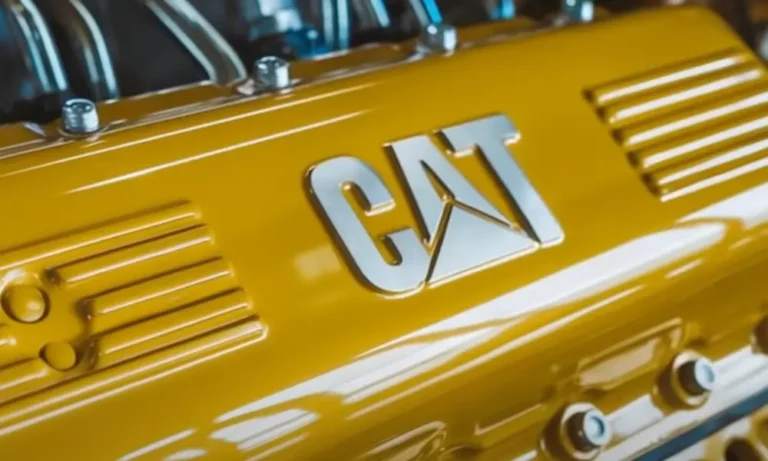
Looking for reliable power in industrial, marine, or transportation applications? The Caterpillar 3306 diesel engine has been a benchmark for durability and performance since its introduction in the early 1970s. Whether you’re maintaining an existing unit or researching this legendary powerplant, this guide breaks down everything you need to know about the CAT 3306 engine specs and why it’s remained a favorite across multiple industries for decades.
The CAT 3306 Engine: Basic Architecture and Design
The CAT 3306 is an inline 6-cylinder, 4-stroke diesel engine with a displacement of 10.5 liters (638 cubic inches). Its robust design features a 4.75-inch bore and 6.00-inch stroke (121mm x 152mm), creating a foundation capable of delivering substantial power and torque across various applications.
This engine’s construction prioritizes durability through:
- Heavy-duty cast iron block and cylinder head
- Direct injection combustion system
- Counterclockwise rotation (viewed from flywheel end)
- Firing order: 1-5-3-6-2-4 for smooth operation
- Two-valve per cylinder configuration (early models)
- Four-valve designs (later variants)
The 3306’s conservative engineering approach is what gives it its legendary reliability. With proper maintenance, these engines routinely deliver 20,000+ hours of operation before major overhaul.
Performance Variations: Naturally Aspirated, Turbocharged, and Aftercooled
Caterpillar manufactured the 3306 in three main configurations to suit different power requirements:
Naturally Aspirated (NA)
- Power output: 125-170 horsepower (93-127 kW)
- Compression ratio: 15.0:1
- Operating range: 2000-2200 rpm
- Simplest construction with lowest maintenance requirements
- Ideal for applications requiring steady, reliable power
Turbocharged (T)
- Power output: 190-275 horsepower (142-205 kW)
- Some variants reach 230-350 horsepower at 2300 rpm
- Maximum torque: 585 lb-ft at 2000 rpm
- Maintains same basic architecture with added turbocharger
- Perfect balance of power and reliability for most applications
Turbocharged-Aftercooled (TA)
- Power output: 275-335 horsepower (205-250 kW)
- Some ratings achieve up to 325 bhp (242 kW)
- Features aftercooling system to reduce intake air temperature
- Highest performance configuration for demanding applications
- Enhanced power density without sacrificing durability
The availability of these three configurations allowed Caterpillar to tailor the 3306 to nearly any industrial or transportation application requiring medium to heavy-duty power.
Industrial Applications and Performance Ratings
Caterpillar developed a comprehensive rating system for industrial applications, each designed for specific duty cycles and operating conditions:
| Rating | Power Output | Duty Cycle | Typical Applications |
|---|---|---|---|
| IND-A (Continuous) | 275 bhp (205 kW) | 100% | Heavy-duty continuous operation |
| IND-B | 295 bhp (220 kW) | 80% | Irrigation, oil field pumping |
| IND-C (Intermittent) | 325 bhp (242 kW) | Cyclic | Agricultural tractors, off-highway trucks |
| IND-D | 330 bhp (249 kW) | Periodic overloads | Offshore cranes, runway snowblowers |
| IND-E | 335 bhp (250 kW) | Emergency | Standby power systems |
These ratings allowed operators to select the perfect configuration for their specific application, balancing power needs with engine longevity. The 3306 found extensive use in construction equipment like the CAT 225 excavator, D6 and D7 dozers, and various motor graders.
Marine Engine Performance
The marine variant, designated as 3306B, offers multiple rating levels optimized for marine propulsion:
A Rating (Heavy Duty)
- Power output: 160-215 bhp (160 bkW at 2000 rpm)
- Maximum torque: 764 N-m (563 lb-ft)
- Applications: Freighters, tugboats, deep river towboats
- Designed for 100% rated load operation
B Rating (Medium Duty)
- Power output: 175-250 bhp
- Torque: 836-891 N-m (617-657 lb-ft)
- Applications: Midwater trawlers, ferries, supply boats
- For vessels with frequent speed variations
C Rating (Light Duty)
- Power output: 201-270 bhp (270 hp at 2200 rpm)
- Torque: 872 N-m (643 lb-ft)
- Applications: High-speed fishing boats, offshore service vessels
- Suitable for highly cyclical engine load and speed
The 3306B marine engine’s excellent torque characteristics and broad power curve made it particularly valuable for commercial fishing vessels and small commercial craft operating in demanding conditions.
Physical Dimensions and Installation
The CAT 3306 features compact dimensions relative to its power output, making it suitable for various installation environments:
Industrial Configuration
- Length: 59.2 inches (1505 mm)
- Width: 30.8 inches (783 mm)
- Height: 46.1 inches (1171 mm)
- Weight (NA): 2050 pounds (930 kg)
- Weight (T): 2160 pounds (980 kg)
- Weight (TA): 2220 pounds (1007 kg)
Marine Configuration
- Length: 67.7 inches (1719 mm)
- Width: 37.4-38.5 inches (951-978 mm)
- Height: 44.9 inches (1141 mm)
- Weight: 2469 pounds (1121 kg)
These dimensions reflect Caterpillar’s focus on creating a powerful engine that could still be reasonably accommodated in various equipment and vessel designs.
Fluid Capacities and Maintenance Requirements
Proper maintenance is key to maximizing the lifespan of any CAT 3306 engine. Here are the critical fluid capacities:
Cooling System
- DITA (Direct Injection Turbocharged Aftercooled): 4.8 gallons (18.2 liters)
- DINA (Direct Injection Naturally Aspirated): 4.2 gallons (15.9 liters)
- DIT (Direct Injection Turbocharged): 4.2 gallons (15.9 liters)
- Marine applications: 4.8 gallons (18.2 liters)
The cooling system uses gear-driven centrifugal water pumps and thermostats with full-open temperature of 97°C (207°F). Marine versions include additional components like sea water pumps with rubber impellers and corrosion-resistant heat exchanger tubes.
Lubrication System
- Oil capacity: 7.2-7.3 gallons (27.4 liters)
- Oil change interval: 250 hours
- Recommended oil: DEO 10W30 or 15W40
- Operating pressure: 300-500 kPa (3-5 bar) at rated speed
The generous oil capacity is one reason for the 3306’s exceptional longevity. Regular oil analysis can help detect early signs of wear and extend engine life significantly.
Transportation Applications
The CAT 3306 was widely used in transportation during its production period, powering vehicles from major manufacturers including:
- Peterbilt
- Kenworth
- Freightliner
Its 230-350 horsepower output made it ideal for:
- Highway tractors
- Vocational trucks
- Step vans
- Delivery vehicles
- Bread trucks
Truckers particularly appreciated the 3306’s reliability and consistent performance in demanding conditions. Many of these engines are still on the road today, testament to their incredible durability.
Common Failure Points and Solutions
Despite its legendary reliability, the CAT 3306 does have a few known weak points to watch for:
Water Pump Issues
The water pump shaft can fail after extensive operation. Watch for coolant leaks around the water pump and check for shaft play during maintenance.
Front Main Oil Seal Failures
Oil leaks from the front of the engine often indicate a failed front main seal. This repair requires substantial disassembly but is essential to prevent oil starvation.
Dropped Valves
After extremely high hours, valve seats can become loose. Regular valve lash adjustments can help catch this issue before catastrophic failure occurs.
Regular maintenance significantly reduces the likelihood of these problems. Most 3306 engines achieve 15,000+ hours before requiring any major repairs when properly maintained.
Production History and Legacy
Caterpillar produced the 3306 from the early 1970s through 1990, when advancing emissions regulations necessitated design updates. The engine’s legacy includes:
- Shanghai Diesel cooperation from 1987 (C6121 designation)
- Replacement by C7 and C9 engines around 2004
- Strong aftermarket support continuing today
- Thousands of engines still in active service worldwide
The 3306’s design philosophy – prioritizing reliability over peak performance – established it as one of Caterpillar’s most successful engines. Modern engines may offer more power and better emissions, but few match the 3306’s combination of simplicity, durability, and serviceability.
Aftermarket Support and Parts Availability
Despite being out of production for decades, the CAT 3306 enjoys excellent aftermarket support:
- Complete rebuild kits available from multiple vendors
- New and remanufactured replacement parts widely available
- Extensive service documentation still accessible
- Strong technical community support
- Numerous rebuilders specializing in 3306 engines
This ongoing support makes the 3306 a viable option even for critical applications today. Many operators prefer maintaining these proven engines rather than replacing them with newer, more complex models.
Power Generation Applications
The CAT 3306 found extensive use in stationary power generation, with generator sets ranging from 225 to 313 kVA. Key applications included:
- Standby emergency power
- Prime power in remote locations
- Water well drilling power
- Air compressor drives
- Oil field mechanical pumping
The engine’s consistent power delivery and extended maintenance intervals made it particularly suitable for applications requiring reliable operation with minimal supervision.
Engineering Excellence: Why the 3306 Succeeded
Several engineering decisions contributed to the 3306’s exceptional success:
Wet Liner Construction
Unlike the contemporaneous 3208 V8 engine (which shared similar displacement), the 3306 used wet liners for superior cooling and durability.
Heavy-Duty Bearings
Oversized bearings reduced pressure and wear, extending engine life significantly.
Conservative Operating Parameters
The 3306 was never pushed to its absolute limits, ensuring reliable operation even under stress.
Serviceability
Straightforward design allowed for field repairs with basic tools, crucial for remote operations.
These principles represent a design philosophy focused on total lifecycle cost rather than initial purchase price or maximum power density.
Modern Alternatives to the CAT 3306
If you’re looking for a new engine with similar characteristics to the 3306, several modern options exist:
- Caterpillar C7.1 (7.01L displacement, 300-400 hp)
- Caterpillar C9.3 (9.3L displacement, 300-456 hp)
- Cummins QSL9 (8.9L displacement, 250-400 hp)
These modern engines offer improved fuel efficiency and emissions control but typically come with more complex electronic systems. For applications where simplicity and reliability are paramount, rebuilding an existing 3306 often remains the preferred option.
Making the Most of Your CAT 3306 Engine
To maximize the lifespan and performance of a CAT 3306 engine:
- Follow the manufacturer’s maintenance schedule religiously
- Use only high-quality filters and lubricants
- Conduct regular oil analysis to catch issues early
- Keep the cooling system clean and properly maintained
- Address minor issues before they become major problems
- Consider a preventative rebuild at 15,000-20,000 hours
With proper care, a CAT 3306 engine can deliver decades of reliable service, making it a true standout in the world of industrial diesel engines.
The CAT 3306 engine represents an engineering achievement that balanced power, reliability, and serviceability in a package that became legendary across multiple industries. Its legacy continues today through thousands of units still providing dependable power worldwide and through the design principles that influenced generations of diesel engines that followed.