Thinking about towing a jet ski, small camper, or utility trailer? A class II trailer tow package might be exactly what you need — or it might not be enough. This guide breaks down everything from weight limits and wiring to real vehicle comparisons, so you can tow safely and confidently. Read to the end before you buy a single piece of hardware.
What Is a Class II Trailer Tow Package?
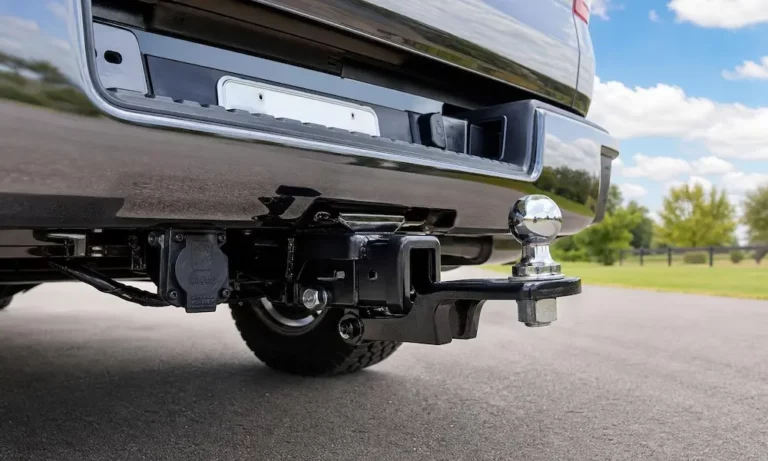
A class II trailer tow package is a factory or aftermarket system designed to tow trailers with a Gross Vehicle Weight Rating between 2,001 and 3,500 pounds. It’s not just a hitch bolted to your bumper. It’s a coordinated system of structural hardware, thermal management, and electrical components that work together to move that weight safely.
Think jet skis, small fishing boats, pop-up campers, and lightweight utility trailers. That’s the sweet spot for Class II.
How It Fits Into the Hitch Class Hierarchy
The Society of Automotive Engineers SAE J684 standard sets the rules for every hitch class in the U.S. Here’s where Class II sits in the lineup:
| Hitch Class | Max Trailer Weight | Max Tongue Weight | Receiver Size | Typical Vehicles |
|---|---|---|---|---|
| Class I | 2,000 lbs | 200 lbs | 1-1/4 inch | Compact cars, crossovers |
| Class II | 3,500 lbs | 350 lbs | 1-1/4 inch | Minivans, small SUVs, sedans |
| Class III | 8,000 lbs | 800 lbs | 2 inch | Midsize pickups, full-size SUVs |
| Class IV | 10,000 lbs | 1,000 lbs | 2 inch | Full-size pickups, heavy-duty SUVs |
| Class V | 20,000 lbs | 2,000 lbs | 2.5–3 inch | Heavy-duty commercial trucks |
The standard receiver for a Class II system is a 1-1/4 inch square tube. That physical size acts as a built-in safety gate — it physically prevents you from inserting a larger, heavier-duty ball mount that could overload your chassis. Some manufacturers now include a 2-inch receiver on Class II-rated vehicles for bike rack and cargo carrier compatibility, but the structural weight limit stays at 3,500 pounds regardless.
Weight Distribution: The Math That Keeps You Safe
Two numbers define safe towing with a class II trailer tow package: Gross Trailer Weight (GTW) and Tongue Weight (TW).
- GTW is the total weight of the trailer plus everything loaded on it — gear, fuel, water, cargo.
- Tongue Weight is the downward force the trailer pushes onto the hitch ball.
Tongue weight should stay between 10% and 15% of your total trailer weight. At the 3,500-pound Class II limit, that means 350 to 525 pounds of tongue weight is your target range.
Get this wrong, and things go sideways — literally.
- Too little tongue weight: The trailer’s center of gravity shifts rearward. At highway speeds, that triggers dangerous trailer sway, also called fishtailing.
- Too much tongue weight: The rear suspension compresses, the front end lifts, and you lose steering control and front brake effectiveness.
Unibody Vehicles and Why Mounting Points Matter
Most Class II vehicles — the Toyota RAV4, Subaru Outback, Honda CR-V — use unibody construction. There’s no separate frame to bolt your hitch into like on a pickup truck. The hitch must connect at specific reinforced points in the rear subframe so the towing forces distribute across the entire vehicle shell. A properly engineered Class II hitch for a unibody vehicle prevents metal fatigue and structural warping over years of use.
Thermal Management: Keeping Your Transmission Alive
Here’s something most people don’t think about until it’s too late — towing destroys transmissions if the cooling system isn’t up to the job.
When you’re hauling 3,500 pounds up a hill or crawling through stop-and-go traffic, your engine works significantly harder. That extra work generates heat, and your automatic transmission takes the worst of it.
The Transmission Cooler Explained
Transmission fluid acts as both a lubricant and a hydraulic fluid for gear changes. When the fluid exceeds 200 degrees Fahrenheit for extended periods, it oxidizes and breaks down. Once that happens, your gears and clutches wear faster — and replacement is expensive.
A quality class II trailer tow package includes an auxiliary transmission oil cooler mounted in front of the radiator. Hot fluid from the transmission passes through the cooler’s fins, sheds heat into the passing airflow, and returns to the gearbox at a safe temperature. Modern stacked-plate cooler designs pack maximum surface area into a small footprint. This upgrade can drop transmission temperatures by 20 to 30 degrees and effectively double transmission lifespan under regular towing conditions.
Engine Cooling Upgrades
The engine cooling system gets hit hard too. A factory-installed tow package on vehicles like certain Jeep Grand Cherokee models includes a higher-capacity radiator or more powerful electric cooling fans — hardware designed specifically to handle sustained high-load operation in summer heat.
Electrical Wiring: Getting the Signals Right
The electrical side of a class II trailer tow package ensures your trailer’s lights respond the instant you brake or signal. It’s not optional. It’s the law.
The 4-Pin Flat Connector
Most Class II setups use a 4-pin flat connector for basic trailers without onboard brakes. Each wire carries a specific signal:
| Wire Color | Circuit | Function |
|---|---|---|
| White | Ground | Returns current to the vehicle chassis |
| Brown | Running Lights | Powers marker and tail lights for visibility |
| Yellow | Left Turn / Brake | Left signal and brake light signal |
| Green | Right Turn / Brake | Right signal and brake light signal |
This connector covers the vast majority of utility trailers, small boat trailers, and cargo trailers. 4-pin wiring is clean, simple, and reliable for basic hauling.
When You Need a 7-Pin Connector
Pop-up campers, trailers with electric brakes, or anything with a house battery requires a 7-pin RV blade connector (defined by SAE J2863). This adds three critical circuits to the 4-pin base:
- 12-volt auxiliary power — charges the trailer’s house battery while you drive
- Electric brake control — communicates with the brake controller in the tow vehicle
- Reverse lights — illuminates the rear of the trailer when backing up
Many factory tow packages now include a dual-output housing with both a 4-pin and 7-pin socket side by side. No adapters needed, no compatibility headaches.
Protecting Your Vehicle’s Electronics
Modern vehicles use sensitive multiplexed wiring systems. Plug a trailer directly into those circuits and you risk blowing fuses or confusing the onboard computers. A proper wiring harness uses a powered converter or T-connector that reads the vehicle’s signals without drawing power from them. The actual trailer light power comes from a dedicated fused line straight to the battery. This protects your vehicle’s electronics from shorts and voltage spikes originating in the trailer.
The Hardware: Hitch Assembly Components
A class II trailer tow package is an assembly of matched components. Every piece must be rated for the same load.
Ball Mounts and Getting the Drop Right
The ball mount slides into the receiver and positions the hitch ball at the correct height. Because tow vehicles and trailer couplers sit at different heights, ball mounts come in various drop and rise configurations. A level trailer is not a cosmetic preference — it’s a safety requirement. An unlevel trailer causes uneven tire wear, reduced ground clearance, and unstable handling. Most Class II applications need a two-to-four-inch drop to level common trailers.
Hitch Balls and Shank Specs
The two most common ball sizes for Class II towing are 1-7/8 inch and 2 inch diameters. The ball size must exactly match the coupler size stamped on your trailer. A 1-7/8 inch ball sitting loose inside a 2-inch coupler creates a genuine risk of trailer separation at speed. The shank diameter for Class II is typically 3/4 inch, and the ball must be torqued to the manufacturer’s specification — often several hundred foot-pounds — to prevent it from backing off under the vibration and dynamic loads of towing.
Brand-by-Brand Class II Towing Comparison
Not all Class II implementations are created equal. Here’s how major brands stack up.
Subaru Outback and Crosstrek
Subaru owns a significant slice of the light-duty towing market. The 2026 Outback with the standard 2.5-liter Boxer engine is rated at 2,700 pounds. Upgrade to the Wilderness or XT trims with the 2.4-liter turbo, and you hit the full 3,500-pound Class II ceiling. Subaru’s Symmetrical AWD and X-MODE traction control add real-world value on boat ramps and loose terrain.
Popular 2026–2027 Model Towing Capacities
| Vehicle | Max Tow Capacity | Engine | Class |
|---|---|---|---|
| 2026 Subaru Crosstrek | 3,500 lbs | 2.5L 4-Cylinder | Class II Available |
| 2026 Toyota RAV4 | 3,500 lbs | 2.5L 4-Cylinder | Class II Available |
| 2026 Ford Escape | 3,500 lbs | 2.0L EcoBoost | Class II Available |
| 2026 Jeep Compass | 2,000 lbs | 2.0L Turbo 4-Cyl | Class I / II |
| 2027 Kia Telluride | 5,000 lbs | 3.8L V6 | Class III Standard |
| 2026 Nissan Pathfinder | 6,000 lbs | 3.5L V6 | Class III Standard |
Jeep Grand Cherokee vs. Ford Explorer
The 2025 Ford Explorer comes standard with a Class III package rated at 5,000 pounds. The Jeep Grand Cherokee goes further — equipped with a Class IV receiver and up to 6,200 pounds of tow capacity. If you only need Class II capability, Jeep’s Trailer Tow Group includes a Class IV receiver, heavy-duty engine cooling, and a dual 4-and-7-pin harness. That over-engineering means the system never operates at its thermal or structural limits when you’re pulling a 3,500-pound load.
Legal Requirements and Road Safety
Towing on public roads comes with real legal obligations. Ignore them and you’re looking at fines — or worse, liability in an accident.
Safety Chains: Not Optional
Federal law and most state statutes — including Pennsylvania and Texas — require safety chains on any ball-and-socket hitch. The chains must have a strength rating equal to or greater than the trailer’s gross weight. Cross them in an “X” pattern underneath the tongue. That crossing creates a cradle that catches the tongue if the hitch fails, preventing it from striking the pavement. A dropped tongue at highway speed can flip the trailer or launch it into oncoming traffic.
Federal Lighting Standards: FMVSS 108
Every trailer on a public road must comply with Federal Motor Vehicle Safety Standard 108. Required lighting includes:
- Tail and stop lamps — two red lights on the rear, mounted as far apart as possible
- Turn signal lamps — two red or amber signals on the rear
- Reflectors — red on the rear, amber on the sides toward the front
- License plate light — one white light illuminating the registration plate
Trailers wider than 80 inches must also carry three red identification lights centered on the rear and clearance lights at the top corners.
Maintenance and Pre-Trip Inspection
A class II trailer tow package sits at the back of your vehicle, exposed to road salt, moisture, and debris every mile you drive. Neglect it and it fails when you need it most.
Corrosion Protection
Quality hitches use carbon or alloy steel with a two-stage finish — a corrosion-resistant base coat followed by a powder coat topcoat. Inspect the hitch regularly for chips or scratches. Surface rust spreads under the powder coat and can weaken the steel tube or mounting brackets before you ever see visible damage.
Pre-Trip Safety Checklist
Run through this every time before you tow:
- Hitch pin and clip — confirm the ball mount is locked in the receiver with a steel pin and secured with a cotter pin or clip
- Coupler latch — verify the coupler fully seats on the ball and the latch locks closed
- Electrical continuity — test all trailer lights with a helper watching from behind; catch blown fuses and bad grounds before you hit the road
- Chain slack — enough slack for a full-radius turn, but not so much that the chains drag on the pavement and wear through
The class II trailer tow package is a system — every component depends on the others. When it’s properly spec’d, properly maintained, and properly loaded, it handles 70% of common recreational towing needs from a vehicle you can drive every day without thinking twice about fuel economy or parking.