
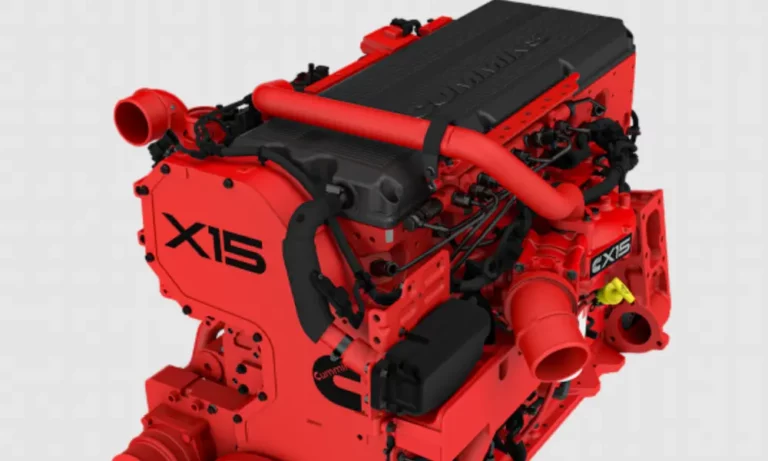
Getting the Cummins X15 oil capacity wrong isn’t just a minor mistake — it can mean premature engine wear or a costly rebuild. Whether you’re doing your first oil change on a new rig or managing a fleet of Class 8 trucks, this guide covers every oil pan configuration, filter spec, and drain interval you need. Read to the end — the dipstick tips alone are worth it.
Why Cummins X15 Oil Capacity Isn’t One Simple Number
Here’s where most people get tripped up. The Cummins X15 oil capacity changes depending on which oil pan your engine has. Three common pan types exist, and each holds a different amount of oil. Fill the wrong amount, and you’re either running low or potentially foaming the oil from overfill.
The X15 is a 14.9-liter inline-six powerplant that succeeded the ISX15 and can produce up to 605 horsepower and 2,050 lb-ft of torque. With that much power on tap, the lubrication system does far more than reduce friction. It cools piston crowns, feeds the Variable Geometry Turbocharger, and supports the XPI common-rail fuel system — which operates at pressures up to 32,000 PSI.
You need to know your specific pan type before you crack open the first quart.
Cummins X15 Oil Capacity by Oil Pan Type
Here’s the full breakdown straight from Cummins’ official X15 maintenance documentation:
| Oil Pan Type | Low Mark | High Mark | Service Fill (with filter) |
|---|---|---|---|
| Stamped Steel (Standard) | 34.1 L / 9.0 gal | 41.6 L / 11.0 gal | 43.5 L / 11.5 gal |
| Aluminum Wedge Type | 43.5 L / 11.5 gal | 47.3 L / 12.5 gal | 45.4 L / 12.0 gal |
| Aluminum Rear Center Sump | 34.1 L / 9.0 gal | 41.6 L / 11.0 gal | 41.6 L / 11.0 gal |
| Motorhome (Zephyr) | — | 41.6 L / 11.0 gal | 44 quarts |
The stamped steel pan is what you’ll find on most standard on-highway X15 trucks. A full oil and filter service requires 11.5 gallons (43.5 liters). The aluminum wedge pan takes 12.0 gallons (45.4 liters), while the aluminum rear center sump needs 11.0 gallons (41.6 liters).
One more number worth knowing: when the engine is completely dry — say, after a block replacement — the total system capacity for the stamped steel configuration reaches 13.0 gallons (49.2 liters). That extra 1.5 gallons sits in the internal oil galleries, oil cooler, and filter housing even after you drain the pan.
Vocational and Industrial Oil Capacities
The X15 platform doesn’t stop at on-highway trucks. In well-servicing applications, the oil system capacity steps up to 14.0 gallons (52.9 liters) to handle the brutal, sustained high-load cycles those machines run.
For QSX15-G9 generator sets, the lube oil capacity can reach an enormous 91.0 liters. That’s not a typo. Continuous power generation at full load without vehicle airflow demands a massive oil reservoir to keep temperatures stable.
Oil Pressure Specs: What’s Normal and What Isn’t
Oil pressure is the quickest real-time indicator of lubrication system health. The target numbers differ slightly between EPA 2017 and EPA 2024 models, so check which one you’re running.
| Parameter | EPA 2017 Spec | EPA 2024 Spec |
|---|---|---|
| Idle Oil Pressure (Min) | 103 kPa / 15 psi | 68 kPa / 10 psi |
| Governed Speed Pressure | 241–276 kPa / 35–40 psi | 241–324 kPa / 35–47 psi |
| Max Cold Start Pressure | 1,034 kPa / 150 psi | 1,034 kPa / 150 psi |
| Normal Oil Temp Range | 93–118°C / 200–245°F | 93–118°C / 200–245°F |
The 2024 EPA X15 runs a lower minimum idle pressure thanks to higher-efficiency oil pumps and lower-viscosity lubricants. Don’t panic if your idle pressure reads 10 psi on a newer engine — that’s within spec. On an older EPA 2017 model, anything below 15 psi at idle deserves a closer look.
Cold starts can spike to 150 psi on both versions. That’s normal. If that pressure doesn’t drop within a minute of running, you may have a restriction in the system.
The Right Oil Filter for the Cummins X15
The X15 Productivity Series documentation is clear: use Fleetguard filters. Specifically, the LF14000NN or LF14001NN for most on-highway applications.
| Filtration Component | Specification |
|---|---|
| Primary Lubricant Filter | Fleetguard LF14000NN / LF14001NN |
| Filter Oil Capacity | 2.2 L / 0.58 gal |
| Max Filter Pressure Drop | 172 kPa / 25 psi |
| Fuel Filter (Standard) | Fleetguard FF5825NN |
| Fuel Filter (Extended Life) | Fleetguard FF5971NN |
The “NN” in those part numbers stands for NanoNet® technology. This synthetic media catches 99.2% of harmful particles down to 4 microns. That level of filtration matters because particles in the 5-to-10-micron range are the primary cause of abrasive wear on fuel injector needles and high-pressure pump plungers.
Always pre-fill your oil filter before installation. A dry filter installation causes a momentary pressure drop — called a dry start — while the pump fills the canister. It only takes a few seconds of inadequate lubrication to score bearings. Fill the filter first. It’s a small habit with a big payoff, and marine engine technicians emphasize this constantly.
Oil Change Intervals: How Your Duty Cycle Dictates the Schedule
Cummins uses a fuel economy-based system to define duty cycles, because MPG directly reflects how hard the engine works. Harder work means oil breaks down faster.
| Duty Cycle | Fuel Economy | Base Interval | With Valvoline Premium Blue |
|---|---|---|---|
| Severe | Under 5.0–5.5 mpg | 25,000 miles | 30,000 miles |
| Short Haul | 5.0–5.9 mpg | 40,000–50,000 miles | 45,000–55,000 miles |
| Normal | 6.0–6.9 mpg | 50,000–60,000 miles | 55,000–65,000 miles |
| Light | Over 7.0 mpg | 75,000 miles | 80,000 miles |
Operators running Valvoline Premium Blue can extend those intervals by 5,000 to 10,000 miles — with Cummins’ official approval. Enroll in the Cummins OilGuard™ oil analysis program, and you can push light-duty intervals to 100,000 miles. That extension requires the LF14001NN high-capacity filter and regular lab analysis to track soot, viscosity drift, and wear metals.
The 2027 X15 platform is being engineered to make 100,000-mile drain intervals standard for light-duty cycles — a significant leap from where the industry started.
API Oil Classifications: CK-4 vs. FA-4
Choosing the right oil viscosity and specification matters as much as the fill quantity. Since 2016, heavy-duty diesel oils split into two categories.
CK-4 oils have a higher high-temperature high-shear (HTHS) viscosity. They’re backward compatible with older ISX engines and provide a thick, robust film.
FA-4 oils carry a lower HTHS viscosity. They reduce internal fluid friction and can improve fuel economy by roughly 1%. Many X15 engines support FA-4, but you need to verify your specific Engine Serial Number (ESN) before switching. FA-4 is not backward compatible with the ISX series. Use the wrong oil in an ISX and you’re risking real damage.
For a clear breakdown of what these classifications mean for 2027 engines, new “FB” category ultra-low viscosity grades like 5W-20 and 0W-20 are coming down the pipeline for the next-generation X15D.
Biodiesel Users: Pay Close Attention
The X15 runs on biodiesel blends up to B20, but biodiesel demands closer monitoring of your lubrication system. Because biodiesel has a higher boiling point than standard petroleum diesel, DPF regeneration cycles increase the risk of fuel dilution in the oil pan. Fuel dilution thins the oil, lowers viscosity, and accelerates bearing wear if it goes undetected.
Fleets running B20 should either shorten drain intervals or increase the frequency of oil analysis. Don’t wait for a problem to show up on the dipstick — by then, you’re already behind.
Real-World Dipstick Tips From the Field
The official spec says 11.5 gallons for the stamped steel pan. But experienced mechanics on forums like Rawze.com note that filling the full amount can put the level slightly above the “Full” mark on the dipstick. Their approach: add 42 quarts first, check the level, then top up to the crosshatch range if needed.
A few other field-tested tips worth following:
- Park on level ground before checking the dipstick. An angled truck gives a false reading.
- The “Add” mark on the dipstick represents roughly one gallon of oil below full. This reference from trucking forums confirms that gap is consistent across most X15 configurations.
- Some operators report lower oil consumption when they maintain the level between “Add” and “Full” rather than topping it right up to maximum.
- In marine or vocational applications where the engine sits at an angle, the dipstick marks may need recalibration to ensure accuracy during operation.
The DPF Connection: Why Oil Quality Protects Your Aftertreatment System
Your oil choice directly impacts the life of your Diesel Particulate Filter. The X15 Efficiency Series uses a Single Module™ aftertreatment system that’s 40% lighter than previous generations — but it’s still highly sensitive to oil quality.
Oils with sulfated ash content above 1.0 wt% cause the DPF to accumulate ash that can’t burn off during regeneration. That ash builds up, raises backpressure, hurts fuel economy, and eventually destroys the filter. Under normal conditions with spec-compliant oil, DPF cleaning intervals run between 250,000 and 800,000 miles depending on duty cycle. Use the wrong oil and you’ll be cleaning it a lot sooner.
What’s Coming: The X15D and the Next Generation of Lubrication
The X15D is Cummins’ next step forward, arriving as part of the HELM™ (Hydrogen, Electric, Logistics, Multi-fuel) platform targeting 2027 EPA standards. It’s approximately 496 lbs (225 kg) lighter than current X15 Euro VI models — a reduction achieved partly through a composite oil pan replacing the steel or aluminum designs used today.
Composite pans offer better thermal insulation, which helps oil reach operating temperature faster and keeps engine noise down. Combined with ultra-low viscosity FA-4 and upcoming FB-category oils, the X15D aims to make 100,000-mile drain intervals standard rather than a premium add-on.
The Maintenance Monitor suite will back this up by drawing on millions of miles of real-world data to forecast oil life with precision — no more fixed-interval guessing games.
Getting the Cummins X15 oil capacity right every time is straightforward once you know your pan type, filter spec, and duty cycle. Match those three factors, use the right oil classification, and this engine will reward you with the reliability it’s famous for.


