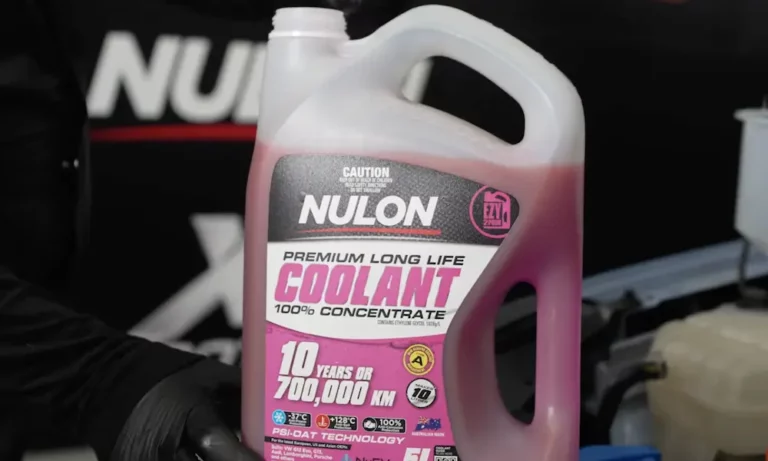
Grab the wrong coolant jug and you could turn your engine into a sludge factory. No joke. The difference between HOAT and OAT coolant isn’t just marketing — it’s chemistry that directly affects how long your engine lasts. Read to the end and you’ll know exactly which fluid belongs in your car.
What Are OAT and HOAT Coolants, Anyway?
These aren’t fancy buzzwords. They describe how the coolant’s protective chemicals actually work inside your engine.
OAT (Organic Acid Technology) uses organic carboxylates as its only inhibitors. No silicates. No phosphates. It protects your engine by reacting only where corrosion starts to form — a targeted approach that makes the inhibitors last much longer.
HOAT (Hybrid Organic Acid Technology) combines those same organic acids with a small dose of inorganic additives like silicates or phosphates. It gives you fast, broad protection alongside that long-term organic backbone.
Think of OAT as a precision strike and HOAT as a rapid-response team that also stays on the job for years.
How Each Coolant Actually Protects Your Engine
Understanding the mechanism helps you make smarter maintenance decisions.
OAT: The Selective Defender
OAT inhibitors sit in the coolant solution and wait. When corrosion starts on a metal surface, the organic acids rush in and seal that specific spot. Because they’re only consumed where they’re needed, the inhibitor concentration stays stable for 150,000 miles in light-duty vehicles and up to 1,000,000 miles in heavy-duty diesel applications.
OAT is also completely silicate-free. That matters because silicate dropout — where mineral silicates fall out of solution and form an abrasive gel — can destroy water pump seals and clog radiator passages. No silicates means none of that.
The trade-off? OAT is slow to establish protection. It can take several thousand miles before it builds a strong defensive barrier. That’s why OAT isn’t ideal for older copper-brass cooling systems that need instant protection.
HOAT: The Fast and Lasting Option
HOAT brings silicates or phosphates to the fight early. Those inorganic additives coat your metal surfaces almost immediately, buying time while the organic acids establish their long-term protection. This dual-action approach made HOAT the preferred choice for Ford, Chrysler, and many European manufacturers.
It’s particularly valuable in engines with both aluminum heads and iron blocks, where different metals need protection at different speeds.
OAT vs HOAT: Head-to-Head Comparison
| Feature | OAT | HOAT |
|---|---|---|
| Silicates/Phosphates | None | Low dose (silicate or phosphate) |
| Service Life (Light Duty) | Up to 150,000 miles | Up to 150,000 miles |
| Initial Protection Speed | Slow (thousands of miles) | Fast (near-immediate) |
| Best For | Modern aluminum engines | Mixed-metal and multi-brand fleets |
| Water Pump Safety | Excellent (no abrasives) | Good (low mineral content) |
| System Cleanliness | Excellent | Very Good |
| Typical Colors | Orange, purple, red | Gold, blue, yellow, turquoise |
The Gasket Problem Nobody Warned You About
Early OAT formulations used an organic acid called two-ethylhexanoic acid. It protected metal brilliantly but had a nasty side effect — it softened silicone-based gaskets and nylon components, leading to intake manifold gasket failures in several vehicle lines during the late 1990s and early 2000s.
Modern vehicles now use gasket materials that resist these acids. Many newer coolant formulations have also switched to a different organic inhibitor called sebacate, which offers similar corrosion protection without attacking elastomers.
This is exactly why using the spec-matched fluid for your vehicle matters. It’s not just about color.
HOAT Isn’t One Thing — There Are Two Versions
Here’s where most people get confused. HOAT splits into two distinct sub-types based on which inorganic additive is used.
Si-OAT: The European Version
European automakers like Mercedes-Benz, BMW, and the Volkswagen Group deal with hard water that’s rich in calcium and magnesium. Phosphates react badly with those minerals and form hard-water scale. So European manufacturers use silicates as their inorganic component instead. Si-OAT fluids usually come in blue, turquoise, or purple.
P-OAT: The Asian Version
Toyota, Honda, and Nissan went a different direction. Their engineers found that silicates can be abrasive and may cause premature water pump seal failure in their specific engine designs. So Asian manufacturers use phosphates instead. P-OAT fluids typically come in pink, red, or blue.
These two versions aren’t interchangeable. Using a Si-OAT in an Asian vehicle — or vice versa — can compromise protection. Always check the specification, not just the color.
Real-World Example: The Chrysler Coolant Confusion
Chrysler’s transition from HOAT to OAT is the perfect case study in why this stuff really matters.
For over a decade, Chrysler used a HOAT formulation called G-05, meeting the MS-9769 specification. It was dyed orange or gold. Then, starting in the 2013 model year, Chrysler switched all its vehicles to a pure OAT fluid meeting the MS-12106 specification.
The new OAT fluid was also orange at first. Almost impossible to tell apart from the old HOAT.
Mixing these two chemistries causes the inhibitors to fall out of solution and form a thick gel — the kind that blocks your radiator and heater core and triggers an overheating event fast. Chrysler eventually changed the new OAT fluid to purple to reduce confusion, but the 2012–2013 transition years remain a minefield for Jeep and Ram owners.
What to do if you own a 2012–2013 Jeep Wrangler or Grand Cherokee:
- Check the radiator cap or reservoir for the spec number
- Purple-pink fluid = newer OAT (MS-12106)
- Clear gold or orange = likely older HOAT (MS-9769)
- When in doubt, do a complete system flush and refill with the current purple OAT fluid
Ford’s Coolant Evolution: Gold, Orange, Then Yellow
Ford has gone through three coolant types over the past two decades. Here’s the breakdown:
| Ford Coolant Color | Specification | Technology | Compatibility |
|---|---|---|---|
| Gold | WSS-M97B51-A1 | HOAT | Not compatible with orange or yellow |
| Orange | WSS-M97B44-D | OAT | Compatible with new yellow |
| Yellow | WSS-M97B57-A2 | Advanced OAT | Current standard — backward compatible with orange |
The latest yellow fluid is rated for 10 years or 200,000 miles — one of the longest service intervals available today. It also offers immediate corrosion protection, which addresses the historical slow-start weakness of standard OAT chemistry.
What Happens When You Mix OAT and HOAT
Don’t do it. Seriously.
When you mix OAT and HOAT in roughly equal proportions, the mineral inhibitors from the HOAT react with the organic acids from the OAT. The result? The inhibitors precipitate out of solution and create a sludge that blocks radiator passages and heater core channels. You lose all corrosion protection and gain a clog.
If you’ve mixed coolants, here’s how to clean the system properly:
- Drain the radiator and engine block completely
- Fill the system with distilled water
- Run the engine to operating temperature with the heater on full blast
- Drain again and check the water — it should run clear
- Repeat until no color or particles appear
- Refill with the correct manufacturer-specified coolant
Only use distilled or deionized water for dilution. Tap water contains calcium, magnesium, and chlorides that react with organic inhibitors and cause scale buildup — which acts as an insulator and raises your engine temperature.
Heavy-Duty Diesel: Why Cylinder Liner Cavitation Changes Everything
Passenger car coolant decisions focus on service life and aluminum protection. Heavy-duty diesel adds another threat: cylinder liner cavitation.
In large diesel engines, vibrating cylinder liners create microscopic vapor bubbles in the coolant. When those bubbles collapse against the liner surface, the pressure literally blasts through the metal — creating pinholes that let coolant into the combustion chamber. That’s a catastrophic failure.
Heavy-duty OAT and HOAT fluids address this with nitrites and molybdates, which form a tough protective layer on the liners.
| Feature | Heavy-Duty OAT | Heavy-Duty HOAT |
|---|---|---|
| Service Life | Up to 1,000,000 miles | Fleet-standard intervals |
| Cavitation Control | Superior (nitrite or advanced organic) | Rapid (silicate/nitrate based) |
| Water Pump Life | Excellent — no silicates | Good — low silicates |
| Maintenance Need | Condition-based testing only | May need supplemental additives |
Proper coolant selection can reduce cooling system failures by 75% and extend engine component life by 60% in fleet applications. That’s a serious operational argument for getting the chemistry right.
Buying Coolant: What the Labels Actually Mean
Walk into any auto parts store and you’ll find three categories:
Universal / Global Fluids — Typically OAT-based without silicates, phosphates, or nitrites. Safe for small emergency top-offs but may not meet your manufacturer’s specific engineering requirements for a full refill.
Specification-Matched Aftermarket Fluids — Brands like Zerex, Peak, and Prestone make fluids designed to meet exact manufacturer specs. Zerex G-05, for example, meets the older Chrysler MS-9769 and Ford WSS-M97B51-A1 HOAT requirements. This is the smart choice for a full system refill.
OEM Dealer Fluid — Identical to the factory fill. Most expensive, but zero guesswork on compatibility.
| Product Type | Typical Price (US) | Best Use |
|---|---|---|
| Store Brand Universal | $8–$11 | Emergency top-off only |
| Major Brand Universal | $12–$17 | General maintenance |
| Specification-Matched | $16–$22 | Routine service and full refills |
| OEM Dealer Fluid | $25–$45 | Specialized repairs and factory-spec work |
How to Know Which Coolant Your Car Needs
Stop guessing based on color. Colors vary by brand and have changed over time — as the Chrysler situation proves, orange doesn’t always mean the same thing.
Here’s a reliable process:
- Check your owner’s manual for the specification number (MS-12106, WSS-M97B57-A2, etc.)
- Look at the coolant reservoir cap — many modern vehicles stamp the spec directly on it
- Search the spec number, not the color, when buying a replacement fluid
- Buy pre-diluted (50/50) fluid if you want to eliminate tap water risk entirely
One rule covers everything: never rely on color alone, and never mix different technology types.
Monitoring Your Coolant’s Health
Coolant doesn’t just expire on a schedule — it degrades based on conditions. Watch for these signs:
- Color change or cloudiness — inhibitor package may be failing or contamination has occurred
- Floating particles or sediment — chemistry has broken down
- pH below 7.5 — fluid has turned acidic and will start corroding metal surfaces actively
- Oily film on the surface — possible head gasket leak mixing engine oil into the coolant
Fleet operators should sample coolant every 50,000 miles or every six months. That gives you early warning on cylinder liner pitting, water pump seal wear, and intake manifold leaks — all problems that cost far less to fix early than after failure.
The bottom line on HOAT vs OAT coolant is simple: check your spec number, use distilled water, and never mix chemistry types. Your engine will quietly thank you for the next 200,000 miles.