That little orange light just popped on, and now you’re wondering if a free AutoZone scan is worth your time. Good news: it probably is. But there are real limits you should know before you go. Read this to the end — it could save you from wasting money on the wrong parts.
What Does AutoZone Actually Do When You Pull In?
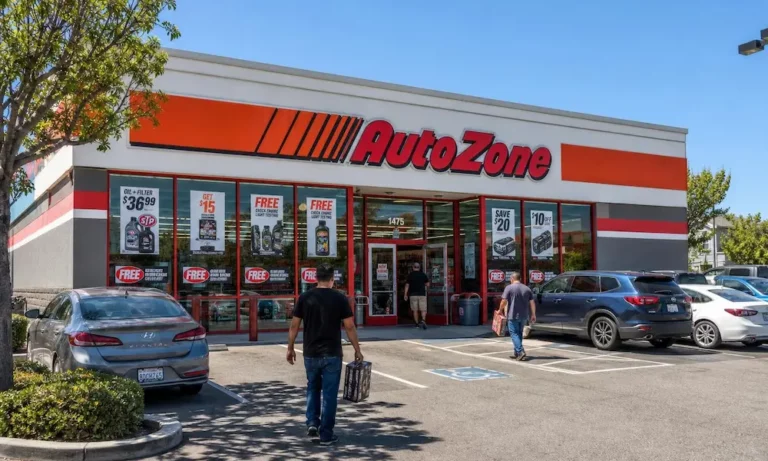
AutoZone offers a free service called Fix Finder. An employee walks out to your car, plugs a handheld scanner into your diagnostic port, and downloads the trouble codes stored in your engine’s computer. The whole process takes about five minutes.
You get a printed report called the MyZone Health Report. It translates your codes into plain English and lists the most likely parts that need replacing — backed by a database of over 5.5 million verified repair records from ASE-certified technicians.
It’s free. No appointment needed. No strings attached — though they’d obviously love to sell you the parts.
How the Scan Actually Works
The scanner connects to a 16-pin port under your dashboard, usually near the steering wheel. Your ignition goes to the ON position (engine off). The tool handshakes with your car’s computer in about four seconds and downloads everything it finds.
The tool has three LED lights that give you an instant snapshot:
| LED Color | Symbol | What It Means |
|---|---|---|
| Green | ✓ Checkmark | All systems normal. No codes present. |
| Yellow | ? Question mark | Monitors still running, or a pending code exists. |
| Red | ✗ X mark | Active trouble codes confirmed. Something’s wrong. |
If the screen stays blank during the scan, that’s usually a blown fuse in your car’s auxiliary power circuit — not a scanner problem.
Why Your Check Engine Light Is On: The Most Common Causes
Most check engine lights trace back to a handful of common failures. Here’s what AutoZone’s scanner will likely find:
Loose or Damaged Gas Cap
This is embarrassingly common. A loose cap lets fuel vapors escape, and your car’s evaporative emissions system detects the pressure drop immediately. Before anything else, tighten your gas cap and drive a few days. The light might go off on its own.
Failing Oxygen Sensor
Your car uses oxygen sensors to measure how much unburned oxygen is leaving the engine. When they wear out after tens of thousands of miles, fuel economy drops and you’ll likely fail an emissions test.
Dirty Mass Airflow Sensor
This sensor measures the air entering your engine. Dust and oil from certain aftermarket air filters coat the sensor over time. Once contaminated, it feeds your computer bad data, causing rough idling, stalling, and poor throttle response.
Engine Misfires
A misfire happens when a cylinder doesn’t fire properly. Your car detects it by sensing tiny slowdowns in crankshaft speed. The most common fix? Spark plugs or ignition coils. A mechanic can swap coils between cylinders to pinpoint which one is bad.
Catalytic Converter Inefficiency
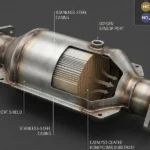
When an engine runs poorly for a long time, it can destroy the catalytic converter’s internal structure. This repair is expensive. If you see a P0420 code, don’t ignore it.
The Difference Between a Code and a Real Diagnosis
Here’s where people get burned. A diagnostic trouble code isn’t a parts list — it’s a symptom.
Take code P0171: “System running lean.” That sounds like a bad oxygen sensor, right? So people buy one and install it. But the oxygen sensor might be working perfectly. The actual problem could be a vacuum leak, weak fuel pump, or clogged fuel filter. The sensor is just reporting what it sees.
AutoZone’s Fix Finder report helps here by showing the most statistically likely fix for your specific make and model. But “most likely” isn’t “guaranteed.”
What a Real Diagnostic Looks Like
A professional mechanic goes several steps further:
- Live data streaming — watching sensor voltages in real time while the engine runs
- Bi-directional commands — manually triggering components like fans and solenoids to test them independently
- Wiring checks — probing harnesses with a multimeter to find corroded or rodent-chewed wires
A parts store scan can’t do any of that. Industry experts consistently recommend starting with a free scan but visiting a certified shop for anything complex.
Does AutoZone Clear the Check Engine Light?
No — and they won’t.
AutoZone’s corporate policy strictly prohibits employees from clearing codes. There are serious reasons for this:
Federal law. Erasing emissions codes without completing a repair is considered tampering with an emissions control system. The EPA has fined retailers for violations like this — $10,000 per incident, with potential criminal liability.
Fraud prevention. Sellers sometimes try to clear codes before showing a car to a buyer. AutoZone won’t help with that — and doing so would make them liable.
It destroys diagnostic data. Clearing codes also wipes freeze-frame data — the exact snapshot of engine conditions when the fault occurred. Mechanics rely on this data to diagnose intermittent problems. Wiping it can add hours to a repair job.
If you’ve fixed your car and want the light off, see the section below on how to do it yourself.
Steady Light vs. Flashing Light: This Distinction Matters
A steady check engine light means there’s a confirmed fault, but you’re probably safe to drive short-term while you sort it out.
A flashing check engine light is a different situation entirely. It almost always means an active engine misfire is sending raw fuel into your catalytic converter. Pull over and stop driving. Continued driving can destroy your catalytic converter in minutes — and that repair often costs over $1,000.
Free Testing Beyond the Check Engine Light
AutoZone also tests your battery, alternator, and starter for free. These failures rarely trigger a check engine code, so the scan alone won’t catch them.
| Component | Common Symptoms | How AutoZone Tests It |
|---|---|---|
| Battery | Slow cranking, clicking, dead car | Load tester applied to battery terminals in the parking lot |
| Alternator | Flickering lights, battery warning light, stalling | Tested while engine runs to check charging output |
| Starter | Single loud click, no crank | You remove it; they bench test it inside the store |
What California and Hawaii Drivers Need to Know
If you’re in California, you might find the service works differently. The California Bureau of Automotive Repair classifies code reading as an automotive repair service. Unlicensed retailers can’t legally perform that service — even for free.
AutoZone’s workaround? They loan you the scanner. You walk out to your own car, plug it in yourself, and bring the tool back inside. The employee then processes the data on their terminal. Same result, different legal structure.
This self-service model exists specifically to keep them out of legal trouble after a wave of class-action lawsuits in previous decades. Similar restrictions apply at certain Hawaii locations.
Don’t Try to Clear Codes Before a Smog Test
This one surprises a lot of people. If you clear your codes right before a smog inspection, your car will automatically fail — or get turned away.
Here’s why: clearing codes also resets your car’s readiness monitors — internal self-tests the computer runs to verify emissions systems are working. California’s Bureau of Automotive Repair checks these monitors during every inspection.
| Vehicle Year | Fuel Type | Incomplete Monitors Allowed |
|---|---|---|
| 1996–1999 | Gasoline | One monitor may be incomplete |
| 2000 and newer | Gasoline | Only the evap monitor may be incomplete |
| 1998–2006 | Diesel | None — zero incomplete monitors allowed |
| 2007 and newer | Diesel | Particulate filter and NMHC monitors may be incomplete |
And as of July 2019, California now uses Permanent Diagnostic Trouble Codes. These can’t be erased by any scanner or by disconnecting your battery. The only way to clear them is to actually fix the problem and let your car verify the repair through normal driving.
How to Clear the Light Yourself After a Real Repair
If you’ve fixed the problem and want to handle the light yourself, you’ve got three options:
Buy your own scanner. Bluetooth OBD2 dongles that pair with your phone start around $20. You get full control — read codes, monitor live data, clear codes — without depending on anyone else. AutoZone’s OBD guide walks through how these devices work.
Just drive it. After a successful repair, your car’s computer will re-run its self-tests during normal driving. Once it confirms the problem is gone over a few drive cycles, it turns the light off automatically. No tools needed.
Disconnect the battery. You can remove the negative terminal for 15 minutes to reset the computer. This works, but it wipes radio presets, clock settings, and adaptive transmission logic — and it resets all readiness monitors, meaning you’ll need significant driving time before you can pass a smog test.
The Real Value of a Free AutoZone Scan
AutoZone checks engine lights for free because it works as a business strategy. You arrive stressed, they hand you answers, and you’re standing right in front of the parts you might need.
That’s fine. It’s transparent, and the service genuinely helps.
The Fix Finder report is a solid starting point — especially for simple faults like a loose gas cap, a worn oxygen sensor, or a misfiring ignition coil. For complex codes with multiple possible causes, treat the scan as your first step, not your final answer. Take the report to a licensed shop, have an informed conversation, and avoid the trap of firing parts at a problem until something sticks.
A free scan is worth exactly what you paid for it — which is more than nothing, as long as you know its limits.