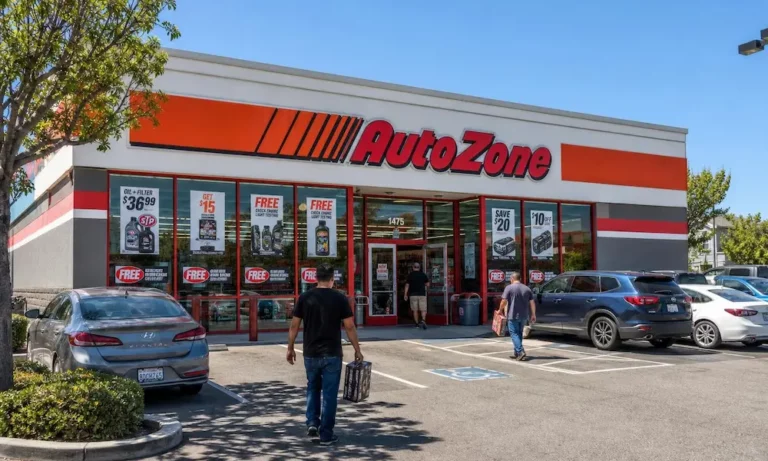
Your car’s AC just stopped blowing cold air. You’re sweating through your shirt and thinking AutoZone can fix it fast. Can they? Sort of — but probably not the way you’re imagining. Read to the end, because the answer depends on where you live and what’s actually wrong with your system.
Does AutoZone Recharge AC Systems?
No. AutoZone does not recharge your AC for you. No employee will touch your car’s climate control system — full stop.
This isn’t just a store policy quirk. It’s driven by serious legal and financial exposure. Federal law requires Section 609 EPA certification to service vehicle AC systems. AutoZone employees don’t hold that certification. If refrigerant escapes into the atmosphere during service, fines can hit $10,000 per incident in many states.
So what can AutoZone employees do at your car? They’ll swap your wiper blades, swap a battery, or change an accessible bulb. That’s about it. Touching fluids, running diagnostics on your OBD system, or handling refrigerants? Those actions can get an employee fired on the spot.
What AutoZone does offer is the products and tools to let you do the recharge yourself — or help you figure out whether your AC problem is even a refrigerant issue in the first place.
Free Diagnostics That Actually Help
Before you grab a refrigerant can off the shelf, it’s worth figuring out why your AC stopped working. Sometimes the problem isn’t low refrigerant at all.
A dead or weak battery can prevent the AC compressor clutch from engaging. A failing alternator causes the same issue. AutoZone’s free diagnostic services can rule those out quickly.
Here’s what you can get for free at AutoZone:
- Fix Finder scan: Reads engine, ABS, and maintenance codes and prints a report. Employees explain the codes but can’t clear them — that’s the liability line they don’t cross.
- Alternator test: Done while the alternator’s still in your car. A healthy alternator reads 14.0–15.0 volts under load. Dim headlights, slow windows, or belt squealing? Get it tested.
- Battery test and charge: Free testing, free charging (about 30 minutes for most batteries), and free recycling of the old one.
Signs Your Battery Might Be Killing Your AC
| Failure Symptom | What You’ll Notice | What’s Actually Happening |
|---|---|---|
| Slow cranking | Sluggish starts, especially when it’s cold | Battery cells losing chemical reaction speed |
| Power but no start | Radio works, but turning the key gives a click | Battery can’t deliver cranking amps to the starter |
| Swollen case | Battery looks bloated or fat | Faulty voltage regulator overcharging the battery, building hydrogen gas |
| Rotten egg smell | Nasty odor from under the hood | Overheated battery venting sulfuric acid gas |
Batteries typically last four to six years. If yours is in that range, test it before assuming refrigerant is the culprit.
How to Recharge Your AC at Home Using AutoZone Products
If diagnostics confirm low refrigerant is the problem, AutoZone stocks several DIY recharge kits at different price points.
Which Refrigerant Kit Should You Buy?
First, check what refrigerant your car uses. Vehicles made before 2021 mostly use R-134a. Newer cars are switching to R-1234yf, which costs significantly more — that price jump reflects the environmental regulations and manufacturing complexity behind newer refrigerants.
| Product | Refrigerant | Size | What’s Included | Price |
|---|---|---|---|---|
| A/C Pro Extreme Kit | R-134a + stop leak | 19 oz | Reusable hose + Bluetooth gauge | $69.99–$72.99 |
| A/C Pro Standard Kit | R-134a + stop leak | 18 oz | Standard hose + analogue gauge | $62.99–$64.99 |
| SubZero Refrigerant Kit | R-134a + stop leak | 15.6 oz | Hose + analogue gauge | $54.99 |
| A/C Pro R-1234yf Kit | R-1234yf + stop leak | 14 oz | Reusable Bluetooth hose + gauge | $129.99 |
| A/C Pro High Mileage Can | R-134a + stop leak + UV dye | 10.8 oz | Refill can only (needs separate hose) | $39.99–$41.99 |
The process is straightforward: locate your low-pressure AC port, attach the hose, start the car with AC on max, and add refrigerant until the gauge reads in the normal range. The kit instructions walk you through every step.
Borrow the Professional Tools for Free
If you want to do the job properly — checking both high and low-side pressures, pulling a vacuum, or flushing contaminated lines — AutoZone’s Loan-A-Tool program gives you access to professional-grade equipment without buying it outright.
You pay a deposit equal to the retail price, use the tool for up to 90 days, and get your full deposit back when you return it undamaged. If you keep it past 90 days, the deposit becomes the purchase price.
| Tool | Model | Key Specs | Deposit Value |
|---|---|---|---|
| Manifold Gauge Set | OEMTOOLS 57375 | Forged brass body, free-floating piston valves, dampened gauges | $130.00 |
| Electric Vacuum Pump | OEMTOOLS 57376 | 1.8 CFM, 75-micron deep vacuum, sight glass | $200.00 |
| Vacuum Pump + Gauge Kit | OEMTOOLS 68950 | 1.8 CFM, 100-micron, single-stage rotary vane, includes gauge and can tap | $283.99 |
| Air-Operated Vacuum Pump | Santech MT1028 | Venturi-style, requires external compressed air | $125.99 |
Reading both sides of a manifold gauge tells you a lot: high pressure on the high side points to overcharging or a blocked condenser. Low pressure on the high side suggests low refrigerant or a failing compressor. The AutoZone AC tools guide breaks down what each reading means.
Why DIY Recharge Kits Have Real Limits
A $55 refrigerant kit sounds like a great deal compared to a $250–$350 shop visit. But it pays to understand exactly what those kits can and can’t do.
The leak problem: Your AC system is sealed. If it’s low on refrigerant, it has a leak somewhere. Adding refrigerant without finding and fixing that leak just delays the same problem — and releases more refrigerant into the environment every time you repeat it.
The precision problem: DIY kits use low-side pressure to estimate fill level. But pressure varies with ambient temperature, so it’s a rough guess at best. Manufacturers specify refrigerant by weight, not pressure. That’s a meaningful gap in accuracy.
The moisture problem: DIY kits don’t pull a vacuum before adding refrigerant. Moisture left in the system reacts with compressor oil to form acids that destroy internal components over time. Residual air also reduces cooling efficiency.
The overcharging problem: Too much refrigerant creates extreme high-side pressure. That can kill your compressor fast. Compressor replacement runs $900–$1,200 on average for parts and labor combined.
| Factor | DIY Kit | Professional Shop |
|---|---|---|
| Upfront cost | $30–$130 | $250–$350 average |
| Precision | Low-side pressure estimate | Weight-based exact fill |
| Moisture removal | None — moisture stays in system | Full vacuum evacuation |
| Leak management | Masks symptoms temporarily | Locates, repairs, and pressure-tests |
| Overcharge risk | High | Minimal — automated systems prevent it |
| Compressor damage risk | Real if overcharged | Covered by shop warranty |
A DIY kit makes sense for a minor top-off on a healthy system with no active leak. For anything more serious, the math tips toward a professional service.
Does Your State Even Let You Buy Refrigerant Canisters?
This part surprises a lot of people. Where you live changes what you can legally buy.
The EPA’s Section 608 and 609 rules allow consumers to buy small canisters under two pounds for personal vehicle use — as long as the cans have unique fittings and self-sealing valves. But several states go further.
Washington State banned the sale of small R-134a canisters outright in 2021. R-134a has a global warming potential high enough that one 16-ounce can equals releasing 1,400 pounds of CO₂ — roughly the equivalent of driving a gas car 1,500 miles. Washington residents must take R-134a vehicles to a certified shop. They can still buy small cans of R-1234yf, since its global warming potential falls below the state’s threshold.
California eliminated its $10-per-canister deposit program as of July 1, 2024. The California Air Resources Board dropped the fee after finding consumers were losing over $5.5 million annually in unclaimed deposits. Self-sealing valve requirements remain, and the state is transitioning toward recycled refrigerant only by 2027.
Wisconsin prohibits “topping off” a leaking system. Before adding any refrigerant, Wisconsin law requires a full leak inspection and completed repairs first.
New York restricts virgin refrigerants with a global warming potential over 2,200 — think R-404A and R-507A. While an appeals court temporarily paused enforcement in March 2026 following a legal challenge, the state also enforces a 14-day leak repair mandate for commercial operators and has scheduled phase-outs of additional refrigerant types through 2040.
| State | Small Can DIY Sales | Key Rule |
|---|---|---|
| Federal (US) | Permitted under 2 lbs | Unique fittings + self-sealing valves required |
| California | Permitted | Deposit removed July 2024; recycled-only transition by 2027 |
| Washington | R-134a banned; R-1234yf permitted | GWP threshold of 150 |
| Wisconsin | Permitted for substitute refrigerants | Can’t top off a leaking system — must repair first |
| New York | Restricted above GWP 2,200 | 14-day commercial leak repair mandate; further bans through 2040 |
Check your state’s rules before you buy anything. A quick search on your state’s environmental agency site takes two minutes and could save you a fine.
Your Fastest Path to Cold Air
Here’s how to approach this based on your situation:
If your AC just started blowing warm: Head to AutoZone, get a free battery and alternator test, and run the Fix Finder scan. Rule out electrical issues first — they’re free to diagnose and cheap to fix.
If electrical checks out fine: Grab a DIY refrigerant kit that matches your car’s refrigerant type, follow the instructions carefully, and don’t overcharge. The Bluetooth-enabled gauges on the Extreme Kit make it easier to stop at the right pressure.
If you want to do it right: Use the Loan-A-Tool program to borrow a manifold gauge set and vacuum pump. Pull a proper vacuum first to check for leaks and remove moisture, then add refrigerant by following the pressure specs in your vehicle’s service manual.
If you’re in Washington, have a major leak, or suspect compressor damage: Skip the DIY route. Find an EPA-certified shop and get a professional evacuation and recharge. AutoZone’s Preferred Shops network can point you toward certified local options.
The short answer to “does AutoZone recharge AC” is no — but AutoZone gives you nearly everything you need to do it yourself, or to quickly figure out if the problem needs professional attention.