Your car won’t start, and you’re not sure if it’s the battery, alternator, or something else. Good news — AutoZone might solve this for free. Here’s exactly what they offer, what to expect, and a few things they won’t tell you upfront.
Yes, AutoZone Tests Batteries for Free
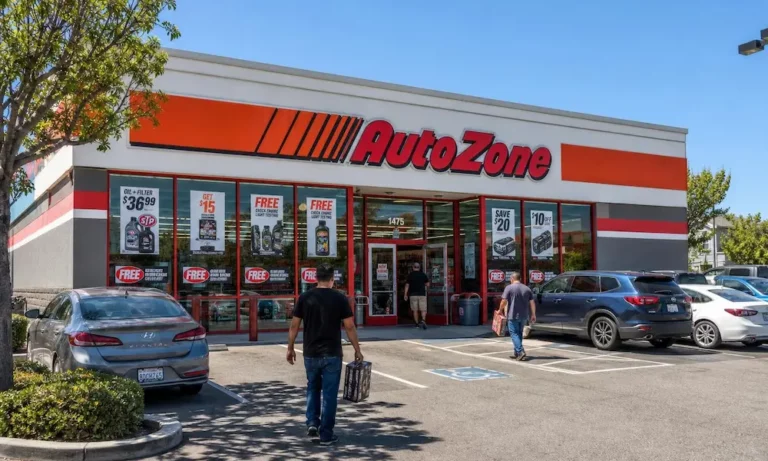
Does AutoZone test batteries? Absolutely. Every AutoZone location across the U.S. offers free battery diagnostic testing — no appointment, no purchase required.
You’ve got two options:
- Bring the battery in — Pull it out and hand it to the counter associate for a bench test
- Stay in the car — An associate comes out and tests it while it’s still installed
Both methods work. The in-vehicle test is faster and more convenient for most people.
How the Battery Test Actually Works
The associate connects a handheld digital battery analyzer directly to your battery terminals. This isn’t just checking voltage — that would miss a lot.
A fully charged 12-volt battery should read between 12.4 and 12.6 volts at rest. But here’s the thing: a dying battery can show normal resting voltage and then completely collapse the second it has to crank the engine.
That’s why AutoZone’s equipment applies a simulated load — mimicking the heavy draw of an engine start — and measures how far the voltage drops and how quickly it recovers. The device checks those results against your battery’s rated output and spits out a clear result.
What the Results Mean
| Result | What It Means | What Happens Next |
|---|---|---|
| Healthy | Battery is fine | Look at alternator or starter instead |
| Low Charge | Structurally okay, just drained | Needs a charge and retest |
| Failed | Internal damage — won’t hold charge | Replace it |
If your battery is structurally sound but drained, don’t buy a new one yet. The test isn’t conclusive until it’s fully charged and retested.
AutoZone Also Charges Your Battery for Free
If your battery comes back as “low charge,” AutoZone will charge it right there — also free. Their industrial fast chargers can restore a dead standard car battery in about 30 minutes.
This service covers more than just car batteries:
- Marine batteries (deep cycle)
- Lawn and garden batteries
- Motorcycle and ATV batteries
One heads-up: powersport batteries charge slowly by necessity. Their compact size means they can’t handle the aggressive current of a fast charger. Plan to leave yours overnight if that’s your situation.
What the Test Results Tell You About Other Problems
Battery testing doesn’t happen in isolation. Your battery, alternator, and starter work as a team. A problem with one often looks like a problem with another.
Common warning signs that something’s off with this trio:
- Slow or labored engine cranking
- Dashboard warning lights flickering on
- Dim interior or exterior lights
- Car starts fine then dies shortly after
- Complete silence when you turn the key
If your battery passes the test but you’re still having issues, the problem shifts to your alternator or starter.
Does AutoZone Test Alternators and Starters Too?
Yes — in most states. AutoZone offers free alternator and starter testing at most locations.
Alternator testing: An associate connects the tester while the engine runs, then cranks up your electrical load — headlights, AC, rear defroster all at once. A healthy alternator should hold steady between 14.0 and 15.0 volts under that demand. If it drops, the alternator’s suspect.
Starter testing: If the engine won’t crank at all, they can bench test a removed starter using a machine that physically spins it to isolate it from any faulty wiring in your vehicle.
California Is Different
Here’s where things get interesting. If you’re in California, AutoZone cannot test your alternator or starter.
The California Bureau of Automotive Repair classifies diagnosing complex electrical components as a licensed automotive repair activity. AutoZone employees aren’t certified mechanics, and retail stores aren’t registered repair facilities. So they’re legally prohibited from offering those tests.
Basic battery testing and charging? Still allowed in California. But for alternator or starter diagnosis, California drivers need to head to a licensed repair shop.
Free Battery Installation — But Read the Fine Print
AutoZone advertises free battery installation. Many people show up expecting a guaranteed swap. Here’s the honest version:
It’s a conditional courtesy, not a guaranteed service.
Associates are retail employees, not mechanics. They’ll install your battery if it’s quick, safe, and straightforward. If it’s not, they’re fully authorized to decline.
When They’ll Say No
They won’t install your battery if:
- The battery is hidden under the seat, in the trunk, or inside the wheel well
- Accessing it requires removing other components (air intake, fuse boxes, bracing)
- Your vehicle needs computer recalibration after the swap
- It’s raining, snowing, or dangerously hot outside
- It’s dark and the parking lot lighting is poor
Modern vehicles increasingly tuck batteries into awkward locations for space efficiency and weight distribution. If yours is one of them, bring the battery home and do it yourself, or head to a proper shop.
Also, many newer vehicles have battery management systems that need to be electronically registered after replacement. That requires advanced scan tools — something retail associates don’t have. Missing this step can cause erratic electronics or shorten the new battery’s life.
The Core Charge: What It Is and How to Get Your Money Back
When you buy a new battery at AutoZone, you’ll see a $22 core charge on your receipt. That’s not a fee they’re pocketing — it’s a refundable deposit designed to ensure your old battery gets recycled properly.
Car batteries contain toxic heavy metals and corrosive acid. They can’t go in regular trash. The core charge system creates a financial incentive to return the old unit.
Hand over your old battery when you buy the new one, and you get the $22 back immediately.
Recycling Old Batteries for Store Credit
Already replaced your battery somewhere else? Or found an old one in your garage? Bring it in.
AutoZone gives you a $10 merchandise credit per battery for recycling — no purchase necessary. This works for old car batteries, UPS backup power batteries, and similar lead-acid units.
A few rules apply:
- Most locations cap returns at 5 to 10 batteries per day
- If the battery is tied to a previous AutoZone purchase in their system, you’ll get the full $22 core refund instead of the $10 credit
Can You Test It Yourself? Yes, With a Multimeter
If you’d rather skip the trip or just want to double-check AutoZone’s results, a basic digital multimeter does the job at home.
Resting voltage test (engine off):
Red probe on positive terminal, black on negative. A healthy battery reads 12.4 to 12.6 volts. Lower than that, and it’s depleted or compromised.
Charging system test (engine running):
Keep the probes in place and start the engine. Voltage should jump to 14.0 to 14.5 volts. That confirms your alternator is producing power.
Then crank up the electrical load — headlights, heater, rear defroster. Voltage will dip slightly but should stay above 13.0 volts on a healthy system.
If voltage stays flat at battery level with the engine running, your alternator isn’t charging. If it shoots past 15 volts, the voltage regulator has failed — and that can fry your electronics.
Battery Replacement: What to Buy and What’s Covered
When your battery fails the test, you need to pick a replacement. AutoZone sells everything from budget flooded batteries to premium AGM units. Here’s a simplified breakdown of their warranty tiers:
| Battery Line | Best For | Free Replacement Period |
|---|---|---|
| Econocraft | Budget builds | 90 days |
| Duralast ProPower | Standard vehicles | 1 year |
| Duralast ProPower Plus | Enhanced needs | 2 years |
| Duralast ProPower AGM | Modern electronics | 4 years |
| Duralast ProPower AGM Elite | Flagship vehicles | 5 years |
| Optima Red/Yellow Top | Performance | 2 years |
Standard flooded batteries run roughly $90–$225 and work well for older vehicles with basic electrical needs.
AGM batteries range from $230 to $450+. They handle vibration better, are spill-proof, and recover from deep discharges that would kill a standard battery. If your vehicle uses a start-stop system or has heavy electronics, AGM is the right choice.
Warranty Limitations Worth Knowing
The warranty covers manufacturing defects — not misuse. A few things void it outright:
- Using a car battery in a marine application (waves crack the internal plates)
- Improper installation
- Selling or transferring your vehicle — the warranty doesn’t transfer with it
Should You Go to AutoZone First?
For most people, yes. It’s free, fast, and gives you a solid baseline before spending money on anything. If the battery fails the test, you know exactly what you need. If it passes, you’re pointed toward the alternator or starter.
Just know the service has limits. Retail testing isn’t the same as a licensed mechanic using an oscilloscope or an amp clamp. If the problem keeps repeating or the results seem off, a professional shop is the right next step — especially in California, where state automotive repair laws already draw a clear line between retail diagnostics and licensed repair work.
Start with AutoZone. It costs nothing and might save you an expensive guess.