Your brakes are making that noise again, and you’re wondering if Valvoline can fix it during your next oil change. The answer depends on which Valvoline location you visit. Not all of them offer the same services, and knowing the difference could save you time, money, and a second trip across town. Read this to the end before you book anything.
Valvoline Isn’t One-Size-Fits-All
Most people think of Valvoline as that quick oil change place where you stay in your car. That’s true — but it’s only part of the picture.
Valvoline actually runs three distinct types of locations, and each one handles brakes differently:
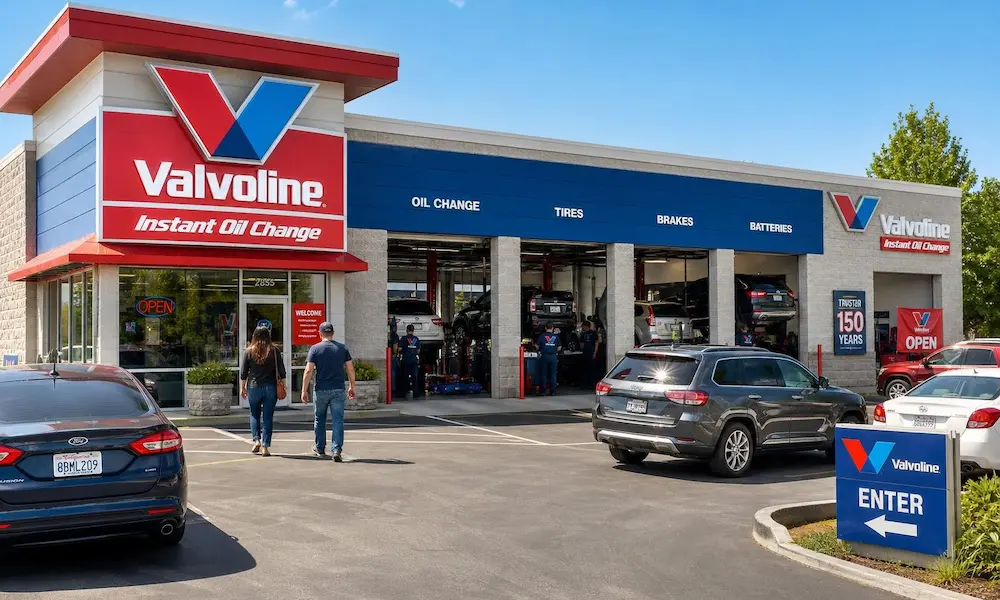
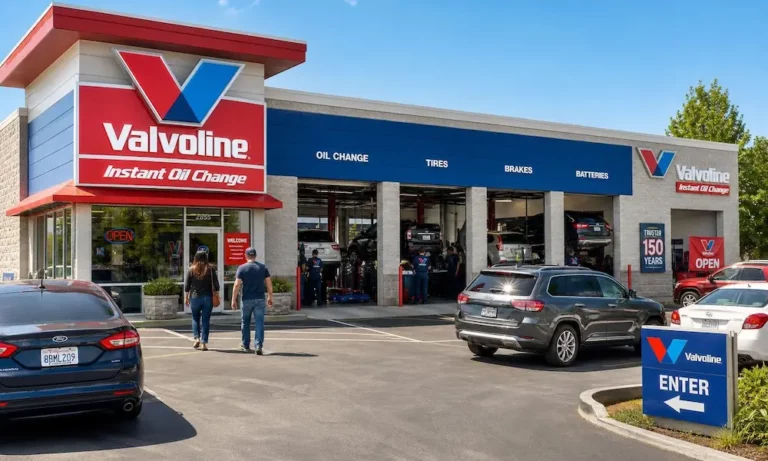
- Valvoline Instant Oil Change (VIOC) — Over 2,100 locations nationwide. Focused on fast, in-car preventive maintenance. Brake fluid inspection and exchanges? Yes. Pad replacements? Not typically.
- Valvoline Tire and Auto — Full-service repair centers in Indiana, Texas, and Pennsylvania. These do complete brake jobs — pads, rotors, calipers, ABS diagnostics, the whole deal.
- Valvoline Express Care — Over 250 independently owned shops. Services vary by location, so one might replace your pads while another only handles fluids.
Here’s a quick breakdown:
| Service | VIOC | Express Care | Tire & Auto |
|---|---|---|---|
| Brake fluid inspection | ✅ Standard | ✅ Standard | ✅ Standard |
| Brake fluid exchange | ✅ Most locations | ✅ Frequently | ✅ Standard |
| Brake pad replacement | ❌ Not typical | ⚠️ Varies | ✅ Standard |
| Rotor resurfacing | ❌ Not offered | ⚠️ Rarely | ✅ Standard |
| Caliper/hardware repair | ❌ Not offered | ⚠️ Varies | ✅ Standard |
| ABS diagnostics | 👁️ Visual only | ⚠️ Varies | ✅ Comprehensive |
So yes, Valvoline does do brakes — but the type of brake service depends entirely on which location you walk into.
What Every Valvoline Oil Change Includes for Your Brakes
Even at a basic VIOC location, your brakes get attention every single visit. Valvoline includes an 18-point maintenance check with every full-service oil change.
Here’s what that means for your brakes specifically:
Fluid level check: The technician checks the brake fluid reservoir. If it’s low, that’s often a sign your brake pads are wearing thin. As pads wear down, calipers extend further to reach the rotor — and that pulls more fluid from the reservoir. Low fluid is basically your car waving a red flag.
Fluid condition check: Brake fluid should be clear to light yellow. If it looks dark and tea-colored, moisture has gotten in and the fluid is degraded. Technicians spot this visually and flag it for a fluid exchange.
This check won’t replace pads or machine rotors. But it’s a useful early warning system — and it costs you nothing extra on top of your oil change.
The Valvoline Brake Fluid Exchange: What It Is and Why It Matters
If the 18-point check reveals contaminated fluid, Valvoline offers the VPS Professional Series Brake Fluid Exchange. This is available at most VIOC locations and takes roughly 30 minutes.
Why Brake Fluid Goes Bad
Brake fluid is hygroscopic — it naturally absorbs moisture from the air over time. Water sneaks in through tiny pores in rubber hoses and reservoir seals. That sounds harmless, but the consequences are serious.
Water in your brake fluid does two damaging things:
- Lowers the boiling point. Under hard braking or long downhill runs, contaminated fluid can actually boil. Gas bubbles form in the lines. Since gas is compressible (liquid isn’t), your pedal goes spongy and braking power drops dramatically. The NHTSA links brake fluid degradation to real stopping distance increases — not something to ignore.
- Causes internal corrosion. Moisture rusts brake lines, calipers, and the master cylinder from the inside. Over time, components seize or leak.
How the VPS Exchange Works
Valvoline doesn’t just “bleed” the brakes the old-fashioned way. Their VPS machine uses a pressurized simultaneous exchange — old fluid out, fresh fluid in, at constant pressure. This method is especially important for ABS-equipped vehicles, which have complex internal valves that trap old fluid if you don’t use the right equipment.
The replacement fluid exceeds both DOT 3 and DOT 4 federal standards. It features a higher boiling point and additives that fight internal corrosion.
What Does It Cost?
| Service | Valvoline | Independent Shop | Dealership |
|---|---|---|---|
| Brake fluid exchange | $150–$180 | $150–$200 | $210–$275 |
| Brake pad replacement | Competitive (Tire & Auto) | $150–$300/axle | $300–$500/axle |
| Rotor replacement | Competitive (Tire & Auto) | $350–$500/axle | $500–$800/axle |
| ABS diagnostic | Low cost/included | $100–$150 | $150–$275 |
Check the Valvoline website for coupons before you go — discounts of $15 or more on fluid exchanges show up regularly. Valvoline also claims customers save 30–50% compared to dealerships on non-oil-change services.
Full Brake Repair at Valvoline Tire and Auto
If you’ve got a grinding noise, a vibrating pedal, or a dashboard warning light, you need hardware work — not just a fluid swap. That’s where Valvoline Tire and Auto steps in.
These full-service centers handle everything:
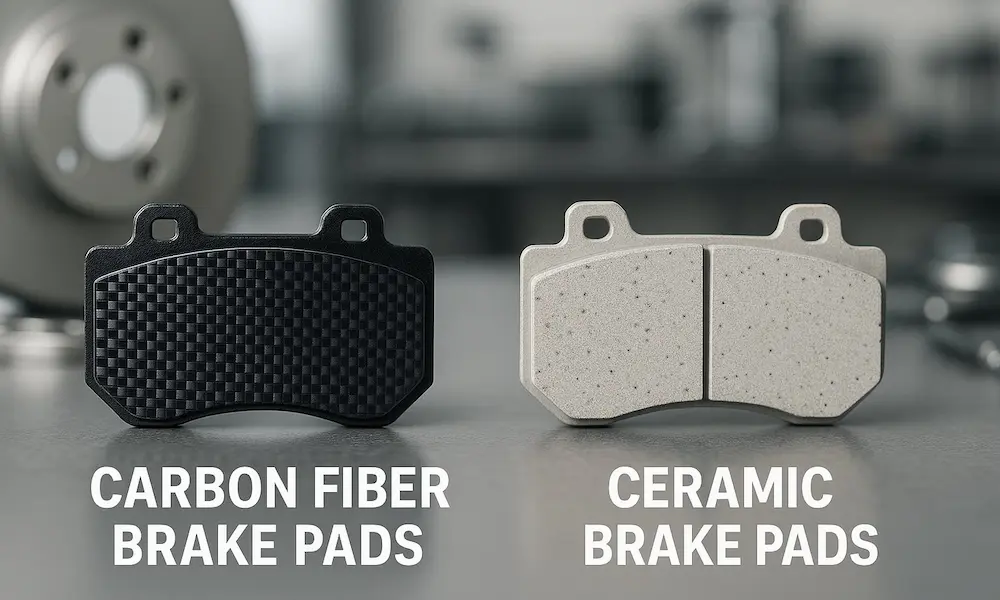
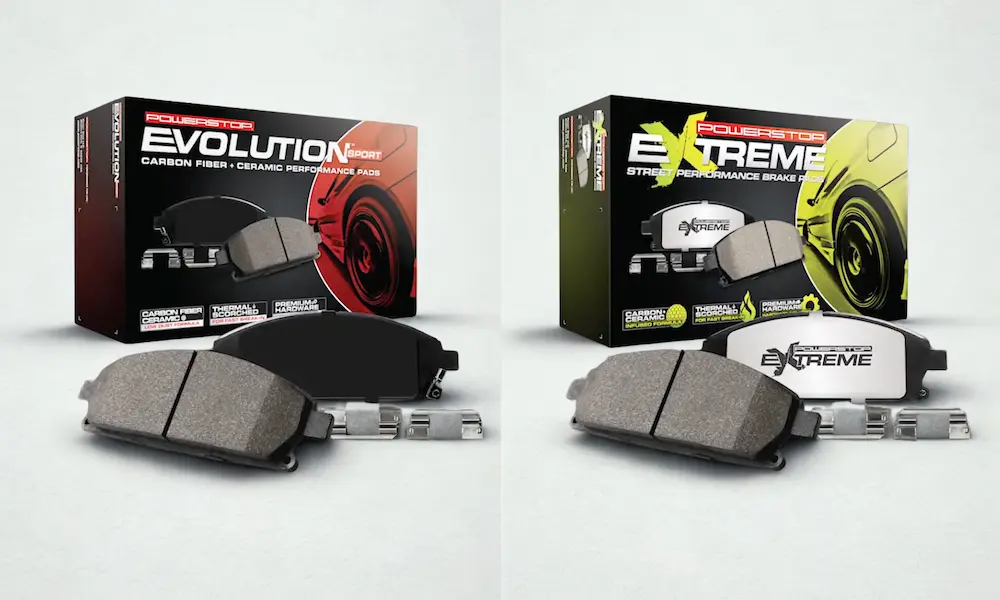
- Brake pad replacement — ceramic, semi-metallic, or organic, matched to your manufacturer’s specs
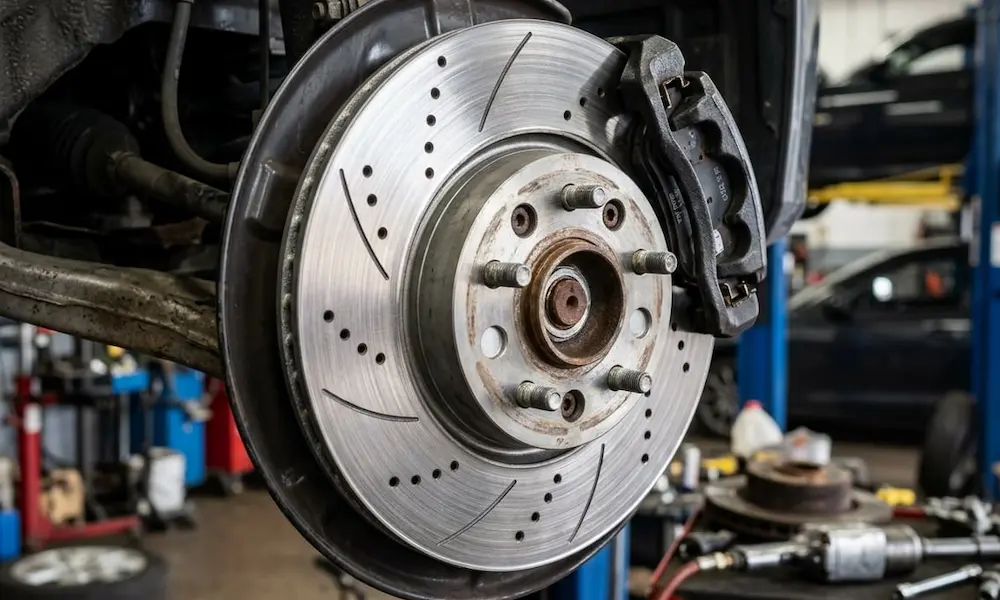
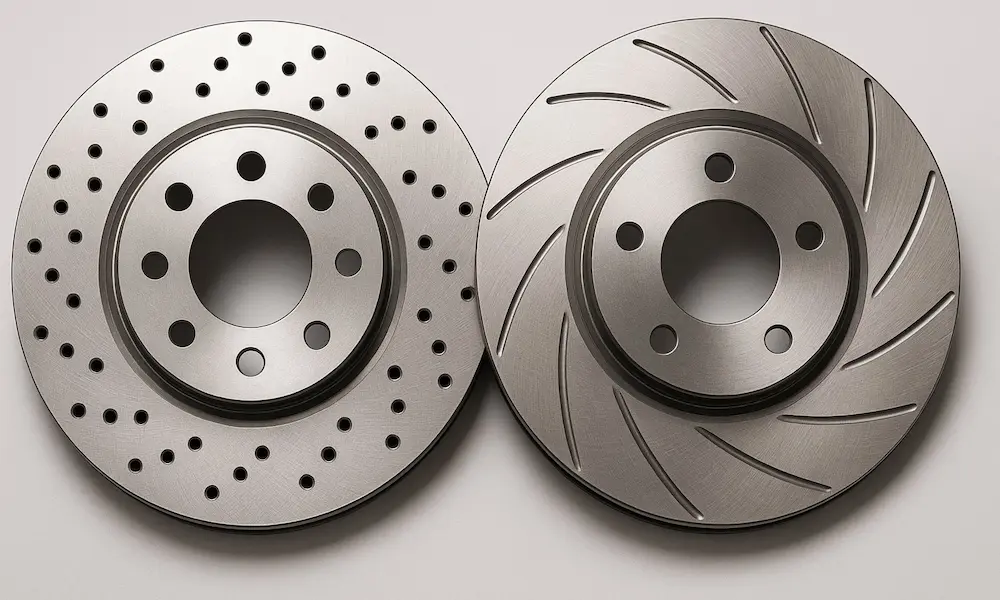
- Rotor resurfacing or replacement — warped rotors cause that steering wheel shimmy under braking; technicians use computerized lathes to restore a flat surface or swap out rotors below minimum thickness
- Caliper replacement — seized or leaking calipers get swapped out with a full system bleed
- Drum brake service — rear drum systems need careful shoe, spring, and wheel cylinder adjustment; Tire and Auto handles it
- ABS diagnostics — computerized equipment reads wheel speed sensor errors, ECU faults, and ABS actuator failures
- Emergency brake adjustments — cable tension and parking brake shoes checked and corrected
- Wheel bearing inspection — worn bearings mimic brake problems; these centers check and replace them too
Current Valvoline Tire and Auto locations are in Crown Point, IN; Tyler, TX; and McKeesport, PA. If you’re not near one, use Valvoline’s store locator to find a full-service Express Care nearby.
The Service Plus Lifetime Guarantee
Here’s something most people don’t know about. Valvoline offers a Service Plus Limited Lifetime Guarantee tied to their brake fluid exchange service.
Get the VPS exchange done regularly, keep your receipts, and Valvoline backs the major hydraulic components of your brake system for life — up to certain dollar limits based on your mileage at the time of your first service.
| Coverage Level | Mileage at First Service | Max Lifetime Benefit |
|---|---|---|
| Level 1 | Up to 50,000 miles | $4,000 |
| Level 2 | 50,001–100,000 miles | $2,000 |
| Level 3 | 100,001–125,000 miles | $1,000 |
| Level 4 | 125,001–150,000 miles | $500 |
What’s covered: brake calipers, master cylinder, and ABS actuators — the expensive hydraulic components most vulnerable to fluid contamination.
What’s NOT covered: brake pads, shoes, rotors, drums, hoses, gaskets, and seals. Those wear items are on you.
To stay eligible, you need the VPS exchange every 30,000 miles and must keep proof of service. Start early with a lower-mileage vehicle and you’re looking at up to $4,000 in coverage — not a bad deal for a $150–$180 service.
How to Get the Most Out of Valvoline for Your Brakes
Here’s a simple game plan:
Step 1: Start with the free check. Every oil change includes the 18-point inspection. Let the technician flag what’s going on before you spend money on anything.
Step 2: Match the service to the location. Fluid maintenance? Any VIOC works and you can stay in your car the whole time. Squealing brakes or a warning light? Head to a Tire and Auto or full-service Express Care.
Step 3: Start the warranty early. If your car has under 150,000 miles, start the VPS maintenance schedule now. The sooner you begin, the higher your lifetime coverage.
Step 4: Grab a coupon first. Always check the Valvoline deals page before your visit. Savings on fluid exchanges are common and easy to find.
Step 5: Ask questions upfront. Call or use the Valvoline app to confirm what your specific location offers. Not every VIOC has every adapter for every vehicle — better to know before you drive over.
Valvoline’s technicians complete 270 hours of professional training through an ASE-accredited program. For fluid services, that’s more than enough expertise. For complex mechanical repairs, Tire and Auto technicians carry higher-level certifications for the computerized diagnostics and hardware work your car needs.
The bottom line: Valvoline does do brakes — just know which location to visit and what you’re asking for before you show up.