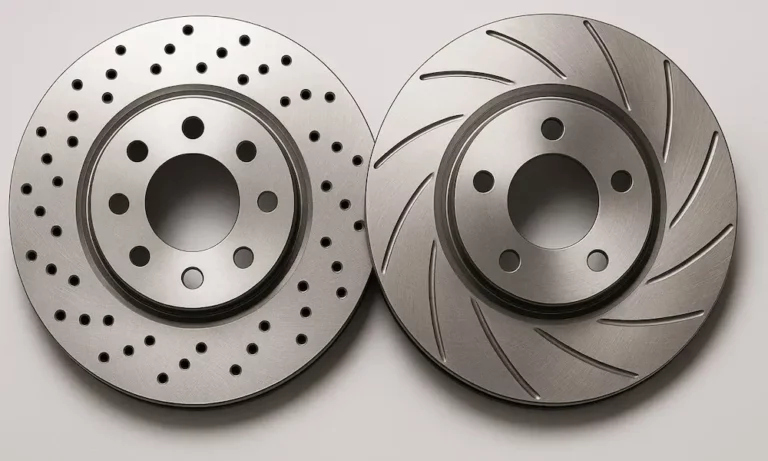
You’re staring at your brake rotors wondering if those fancy drilled or slotted designs are worth the hype—or just expensive eye candy. Here’s the truth: the “best” rotor depends entirely on how you drive. Let’s cut through the marketing fluff and figure out what actually belongs on your car.
What Makes Drilled and Slotted Rotors Different?
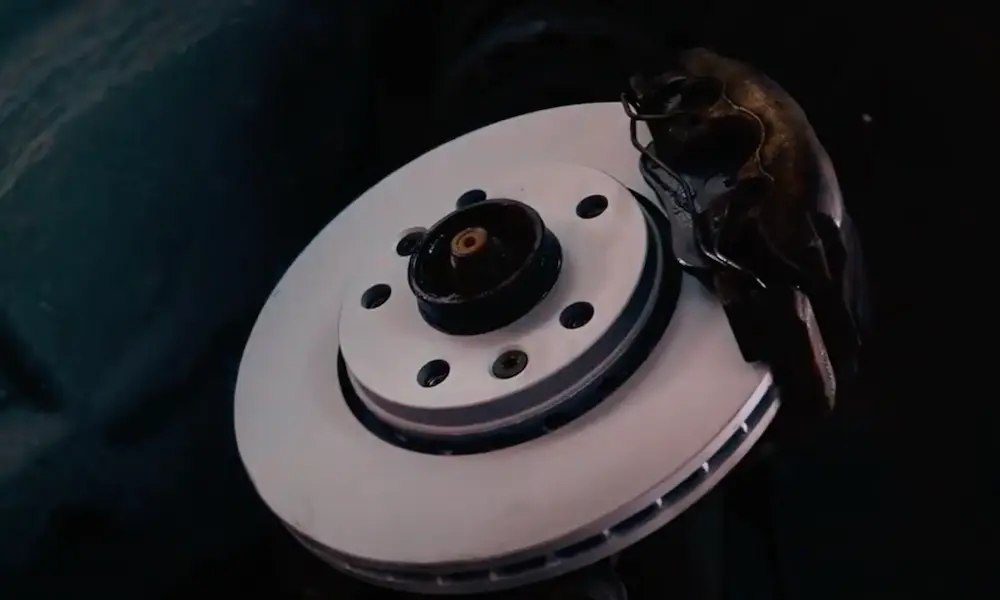
Plain rotors are smooth discs. Simple as that.
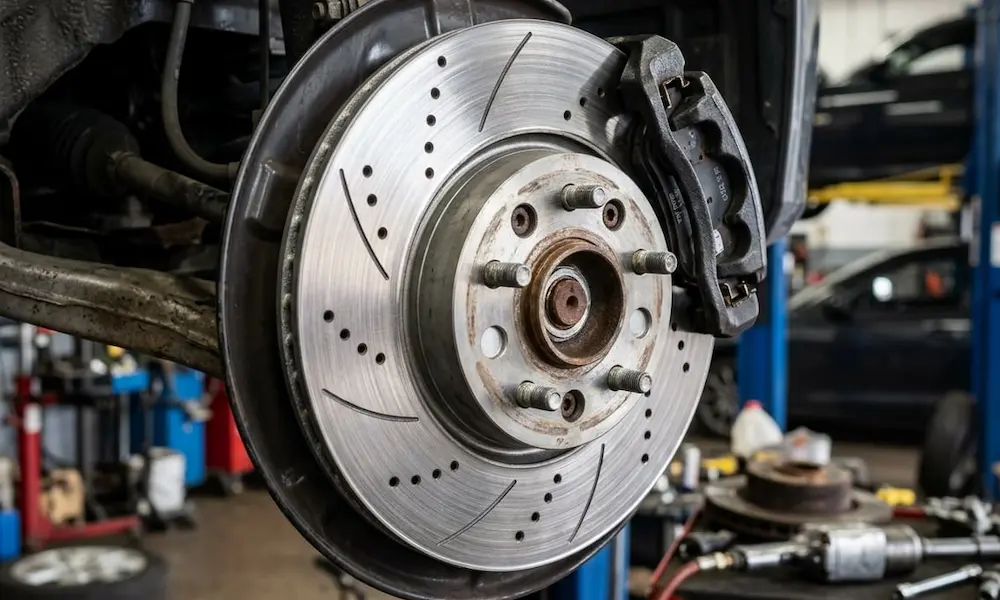
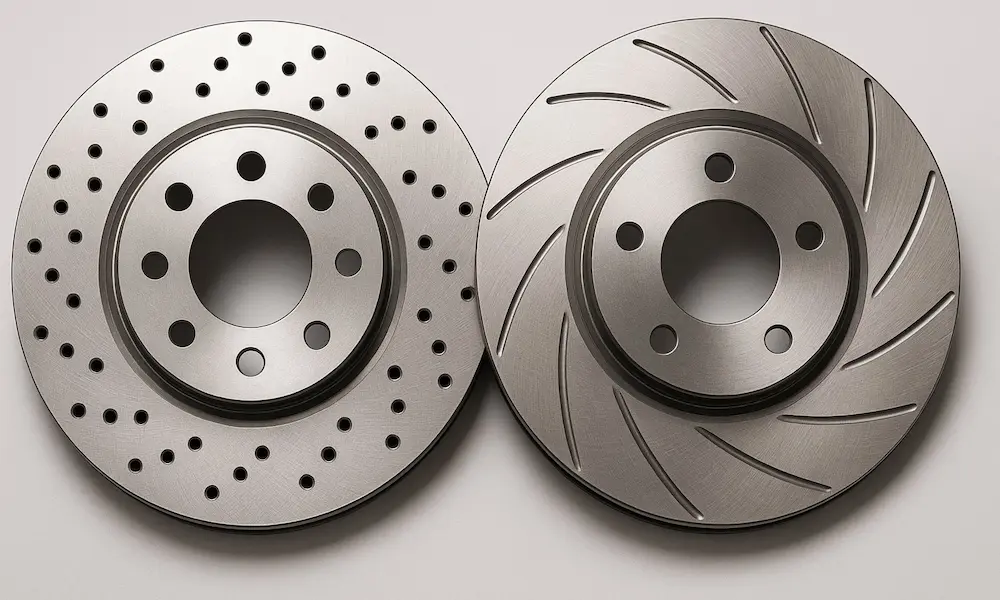
Drilled rotors have holes punched straight through the friction surface. You’ll spot them instantly—they look aggressive and race-ready.
Slotted rotors feature shallow grooves machined into the face. These slots don’t go all the way through, just deep enough to make a functional difference.
Some rotors combine both features, giving you a drilled and slotted hybrid that tries to do everything at once.
The Real Story Behind Drilled Rotors
Why Holes Were Originally Drilled
Back in the 1960s and 70s, racing brake pads had a serious problem. The organic resins binding the friction material would literally turn into gas under extreme heat. This gas created a slippery layer between the pad and rotor—imagine trying to stop with an air cushion between your brakes. Not ideal when you’re screaming into a corner at 150 mph.
Engineers drilled holes to vent these gases, giving them an escape route. It worked brilliantly for the era.
Here’s the kicker: modern brake pads don’t have this problem anymore. Today’s ceramic and semi-metallic compounds are thermally stable at much higher temperatures. The original reason for drilling rotors is basically obsolete for street cars.
What Drilled Rotors Actually Do Now
So why do they still exist? Because they’re legitimately excellent in wet weather.
When you drive through heavy rain, a water film forms on your rotors. The moment you hit the brakes, your pads must squeeze that water out before they can grip the metal. Those drilled holes act like drainage channels—water gets forced into the holes and flung away by centrifugal force. You get immediate bite instead of that squishy, delayed response.
The holes also help with heat dissipation through radiation and convection. Hot rotors emit infrared radiation, and the holes let that heat escape from inside the rotor’s internal structure.
The Structural Problem Nobody Wants to Talk About
Here’s where drilled rotors get dicey: those holes are stress magnets.
When you drill a hole in metal, you create a stress concentration point. The material around each hole experiences roughly three times more stress than the surrounding rotor. During hard braking, the rotor heats up and expands. Then it cools and contracts. This constant thermal cycling is brutal on drilled rotors.
Cracks start at the hole edges. With repeated heat cycles, those cracks grow. Eventually, they can connect multiple holes or reach the rotor’s outer edge. That’s catastrophic failure territory.
Premium manufacturers chamfer (bevel) the hole edges to reduce this stress concentration. Cheap drilled rotors skip this step, which is why they crack faster.
Real-world verdict: Drilled rotors are fantastic for spirited street driving in rainy climates. They’re a terrible choice for track days or heavy towing where thermal stress goes through the roof.
How Slotted Rotors Actually Work
The Wiper Effect
Slotted rotors have a different job entirely. Those grooves act like tiny squeegees, constantly scraping across your brake pad surface as the rotor spins.
This serves two critical functions:
First, it removes debris. Brake pads shed microscopic particles constantly. Carbon dust, friction material fragments, and road grime accumulate between the pad and rotor. The slots physically sweep this junk away, maintaining clean contact between surfaces.
Second, it prevents glazing. Under high heat, brake pads can develop a hard, glassy surface layer that significantly reduces friction. The slot edges continuously shave off this glazed layer, exposing fresh friction material underneath.
Superior Structural Integrity
Unlike drilled rotors, slots don’t penetrate through the entire rotor thickness. They’re shallow grooves—typically just 1-3mm deep. This makes a massive difference structurally.
Slots create far less stress concentration than holes. They don’t interrupt the rotor’s cross-sectional integrity the same way. The result? Much better crack resistance under thermal cycling.
Slotted rotors also retain nearly all their thermal mass. More metal means more heat capacity, which translates to better fade resistance during sustained hard braking.
This is why serious race cars—including the Porsche 911 GT3 Cup racing version—use slotted rotors exclusively. When engineering beats marketing, slots win every time for track use.
The Trade-offs You’ll Actually Notice
Slotted rotors aren’t perfect. That constant scraping action wears brake pads faster. It’s literally machining away material with every rotation. Expect to replace pads more frequently than with plain rotors.
They’re also noisier. You’ll hear a distinctive whirring or clicking sound, especially at low speeds. This isn’t a defect—it’s physics. Air pockets get trapped and released as pads pass over the slots.
For a daily driver focused on comfort, this can be annoying. For someone who prioritizes performance and fade resistance, it’s an acceptable compromise.
Drilled and Slotted Combo Rotors: The Kitchen Sink Approach
Hybrid rotors feature both holes and slots. They’re incredibly popular, but let’s be honest about what you’re getting.
When They Make Sense
For street performance cars that see occasional spirited driving but never visit a track, drilled and slotted rotors offer legitimate benefits:
- Wet weather bite from the holes
- Debris management from the slots
- Aggressive aesthetics that actually serve some function
The thermal loads during canyon carving or highway pulls rarely reach the temperatures where structural cracking becomes a primary concern.
When They’re Overkill (or Worse)
For dedicated track cars or heavy towing rigs, hybrid rotors combine the worst aspects of both designs. You get:
- Multiple stress concentration points (holes plus slot ends)
- Reduced thermal mass from all that removed material
- Higher likelihood of crack propagation connecting holes and slots
It’s engineering compromise taken too far. You’d be better off choosing pure slotted rotors for these demanding applications.
The Part That Actually Matters Most: Internal Vanes
Here’s what the marketing doesn’t emphasize enough: surface modifications (holes or slots) are secondary to your rotor’s internal vane design.
Vented rotors work like centrifugal air pumps. As the rotor spins, air gets sucked into the center hub and accelerates outward through internal channels. This airflow absorbs heat from the inside surfaces of the rotor cheeks.
Vane Geometry Comparison
| Vane Type | Airflow Efficiency | Cost | Directional? |
|---|---|---|---|
| Straight radial | Moderate | Low | No (universal fit) |
| Curved/directional | High | Medium | Yes (side-specific) |
| Pillar/post | Very high | High | No |
Premium rotors use curved or pillar vane designs that dramatically outperform straight vanes. This internal cooling architecture does more for heat management than any surface drilling ever could.
Interestingly, poorly designed drilled holes can actually disrupt the internal airflow, reducing vane pumping efficiency. It’s one reason cheap aftermarket drilled rotors sometimes perform worse than quality plain rotors.
Matching Rotors to Your Actual Driving
Stop buying based on looks. Here’s what actually makes sense for different use cases.
Daily Commuting and Normal Driving
Best choice: Plain (blank) rotors
You don’t need drilled or slotted rotors for driving to work and picking up groceries. Plain rotors offer:
- Longest pad life
- Quietest operation
- Maximum thermal mass for the occasional hard stop
- Lowest cost
The performance ceiling of your braking system is your tires, not your rotors. Spend money on quality rubber instead.
Street Performance and Weekend Canyon Runs
Best choice: Drilled or drilled/slotted rotors
For spirited driving that stays legal-ish, drilled rotors shine. You benefit from:
- Superior wet weather bite for safety
- Adequate cooling during rest periods between corners
- That performance aesthetic you actually want
Just buy quality pieces with chamfered holes. Cheap drilled rotors crack prematurely and you’ll regret the savings.
Track Days and Racing
Best choice: Slotted rotors (high-carbon or two-piece)
Consistency matters more than peak performance on track. Slotted rotors deliver:
- Maximum crack resistance under thermal cycling
- Constant pad surface refreshing for stable brake pedal feel
- Retained thermal mass to resist fade
Formula 1 doesn’t use cross-drilled carbon rotors despite temperatures exceeding 1,000°C. The structural risk isn’t worth it. Follow the engineering, not the marketing.
Heavy Towing (Trucks and SUVs)
Best choice: Slotted rotors, larger diameter if possible
Towing generates sustained, massive heat loads. Your rotors need maximum thermal capacity. Drilled rotors are genuinely dangerous here—the thermal shock from long descents can crack them catastrophically.
Slotted rotors provide the gas evacuation needed to prevent brake fade without compromising structural integrity.
What the OEMs Actually Install
Car manufacturers don’t make decisions based on marketing—they’ve got warranty costs and safety liability to worry about.
Porsche 911 GT3 street version: Cross-drilled rotors (or ceramic PCCB option)
Porsche 911 GT3 Cup race car: Slotted rotors exclusively
Notice the pattern? The street car gets drilled rotors for wet weather capability and customer expectations. The race car—where performance actually matters more than anything else—gets slots for reliability.
Even high-performance street cars like the BMW M series use drilled rotors primarily because buyers expect that look. The engineering benefit exists but isn’t the primary driver of the decision.
The Brake Pad Equation Nobody Mentions
Your rotor choice directly impacts what brake pads you should run. This relationship matters more than most people realize.
Pad Material Interactions
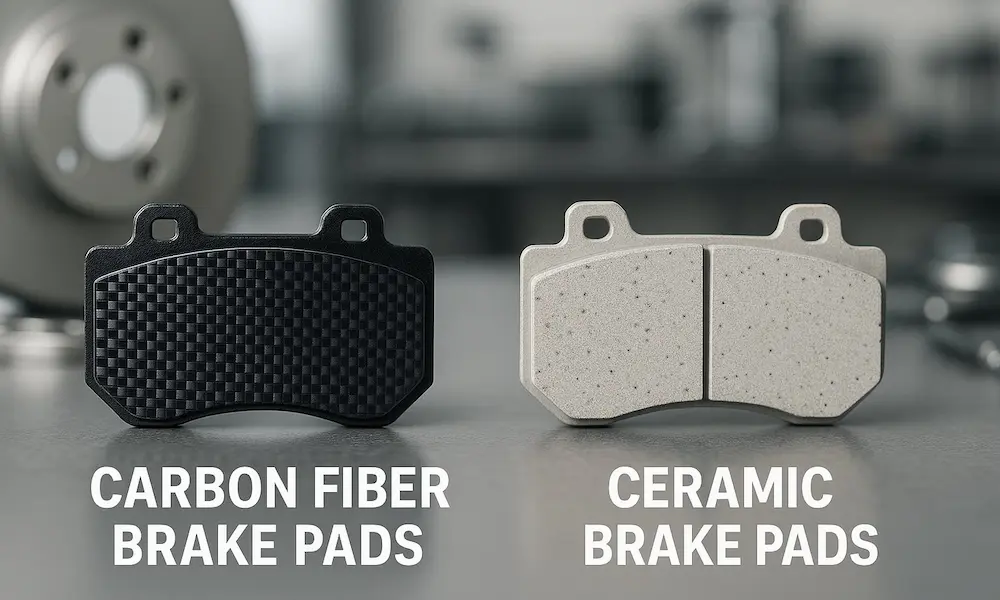
Ceramic pads rely on creating a transfer layer—a thin coating of pad material on the rotor surface. Friction happens between the pad and this layer, not between the pad and bare metal. Aggressive slotted rotors constantly scrape off this transfer layer, which can create inconsistent braking feel.
Semi-metallic pads work through direct metal-to-metal friction. They love slotted rotors because the slots keep the friction surface clean and fresh. However, semi-metallics are hard on rotors—combining them with slotted designs accelerates rotor wear.
Organic pads are soft and generate lots of dust. They benefit from slots to sweep away debris, but they’ll wear faster than they would on plain rotors.
The point? Don’t just upgrade rotors in isolation. Match the entire system to your driving style.
Proper Break-In Actually Matters
Here’s something that’ll save you from weird brake performance: you must bed in new rotors properly, especially drilled or slotted ones.
The bed-in process deposits that crucial transfer layer of friction material onto the rotor. Skip this, and you’ll get uneven pad deposits, leading to vibration and poor stopping power.
Quick bed-in procedure:
- Find a safe, empty road
- Make 8-10 stops from 60 mph to 15 mph with moderate pressure
- Don’t come to a complete stop—keep rolling
- After the last stop, drive normally for 5 minutes to cool everything down
- Avoid hard braking for the next 200 miles
Slotted rotors can make bed-in trickier because they keep removing material. You need multiple cycles to establish a stable transfer layer.
The Real Performance Upgrade Path
Want better braking? Here’s the order of priority that actually makes engineering sense:
1. Tires – Your contact patch is everything. Sticky rubber beats fancy rotors every time.
2. Brake fluid – High-temp fluid prevents vapor lock (spongy pedal) under hard use. Cheap upgrade, massive impact.
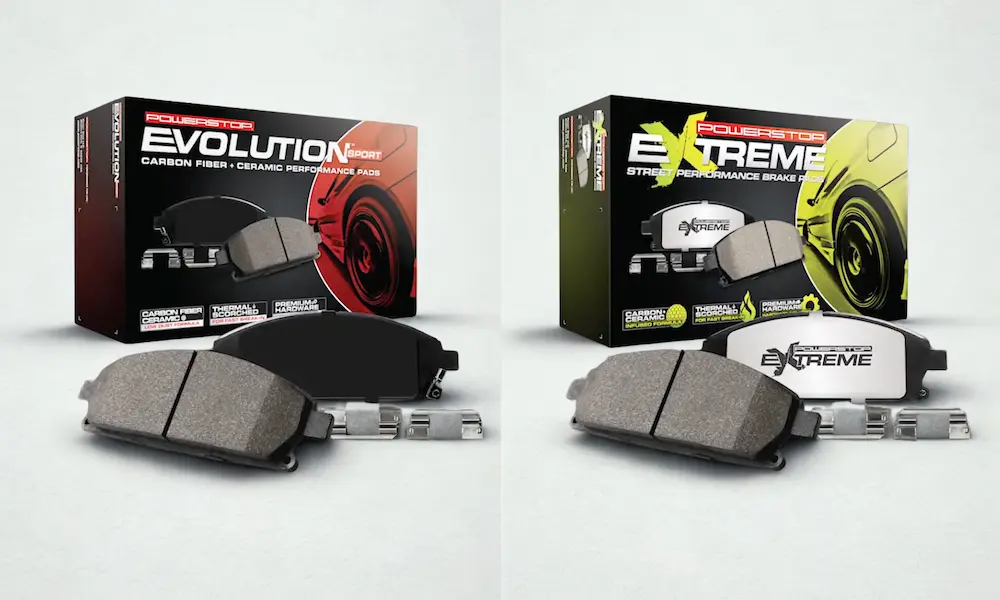
3. Brake pads – Match the compound to your driving. This affects stopping power more than rotor design.
4. Brake lines – Stainless steel lines improve pedal feel by eliminating rubber flex.
5. Rotor design – Only now does drilled vs. slotted vs. plain actually matter.
Most people skip straight to #5 because it looks cool. Don’t be most people.
Performance Comparison Table
| Factor | Plain Rotors | Drilled Rotors | Slotted Rotors | Drilled & Slotted |
|---|---|---|---|---|
| Thermal mass | Maximum | Reduced 10-15% | Minimal loss | Reduced 15-20% |
| Crack resistance | Excellent | Poor | Very good | Poor |
| Wet weather bite | Fair | Excellent | Good | Excellent |
| Pad wear rate | Standard | Moderate | High | High |
| Noise level | Quiet | Slight whoosh | Moderate whir | Moderate |
| Cost | $ | $$-$$$ | $$-$$$ | $$$-$$$$ |
| Best for | Daily driving | Street performance, wet climates | Track, towing, racing | Show cars, street performance |
Making Your Decision
Stop overthinking this. Answer these questions:
Do you drive in heavy rain frequently? → Drilled rotors help.
Do you track your car or tow heavy loads? → Slotted rotors only.
Is this a daily driver doing normal commuting? → Plain rotors save money and work perfectly.
Do you drive spiritedly on weekends but never hit a track? → Drilled or hybrid rotors won’t hurt and might help.
The drilled vs slotted rotors debate isn’t about finding a universal “best.” It’s about matching brake components to how you actually use your vehicle.
Buy quality pieces from reputable manufacturers regardless of which design you choose. A cheap drilled rotor cracks faster than a premium plain rotor stops worse. The material quality and manufacturing precision matter more than the surface pattern.
And remember—if your brake pedal feels spongy, you hear grinding, or you see cracks radiating from holes, it’s time to replace those rotors regardless of how pretty they look.