Want better braking performance but confused about your options? If you’re weighing carbon fiber brake pads against ceramic ones, you’re making a choice that affects everything from stopping power to your wallet. Both pad types offer advantages over traditional options, but they serve completely different purposes. Let’s cut through the marketing hype and explore which brake pad technology truly makes sense for your driving style.
What Are Carbon Fiber and Ceramic Brake Pads Made Of?
When you’re comparing brake pad technologies, understanding their basic composition explains a lot about their performance differences.
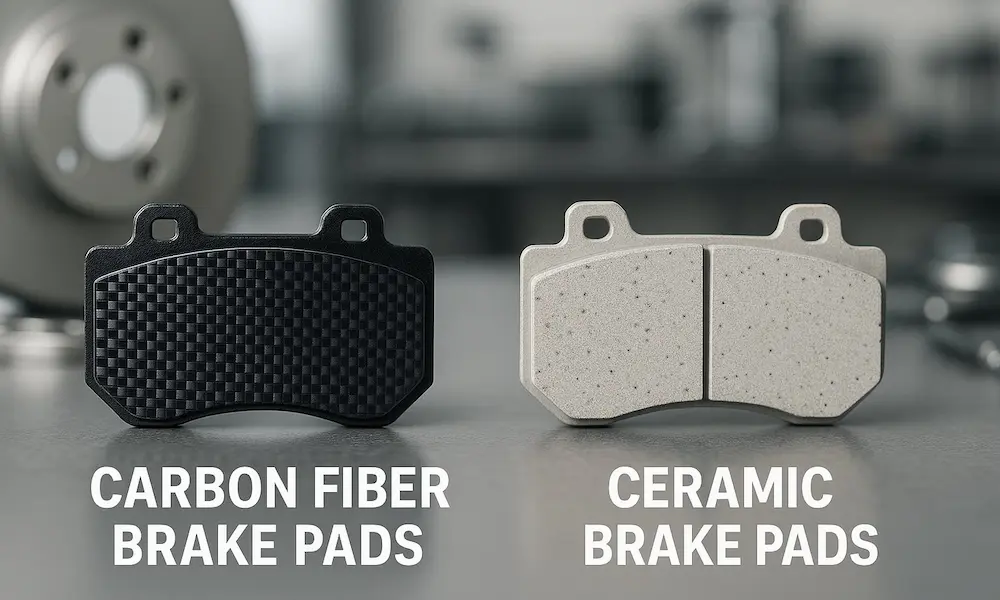
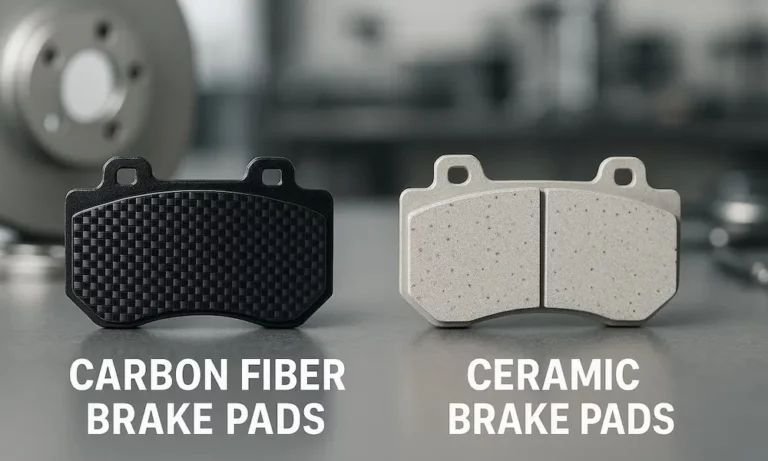
Carbon fiber brake pads combine carbon fibers with specialized resins and metallic compounds. This creates a material specifically engineered for extreme heat resistance and maximum stopping power. Think of them as the performance athletes of the brake pad world.
Ceramic brake pads contain dense ceramic compounds mixed with fine copper fibers. This creates a material similar to pottery but much more durable. The ceramic matrix offers excellent heat dissipation while maintaining consistent friction characteristics in normal driving conditions.
The fundamental difference? Carbon fiber pads are built for extreme performance, while ceramic pads balance everyday reliability with improved performance over standard pads.
Temperature Performance: The Critical Difference
The most telling difference between these pad types is how they handle heat.
Carbon fiber pads thrive in extreme heat, performing optimally between 700-1,100°F and capable of functioning up to a scorching 1,600°F. This makes them virtually fade-free under intense racing conditions.
Ceramic pads are built for more moderate temperatures, working effectively from cold starts up to about 800°F, with their sweet spot between 200-600°F. This range covers most daily driving scenarios perfectly, though they may lose some effectiveness in extremely demanding situations.
Here’s a simple comparison of their temperature performance:
| Brake Pad Type | Optimal Performance Range | Maximum Operating Temperature | Cold Performance |
|---|---|---|---|
| Carbon Fiber | 700-1,100°F | Up to 1,600°F | Poor to moderate |
| Ceramic | 200-600°F | About 800°F | Excellent |
If you’re daily driving in stop-and-go traffic, ceramic pads will perform consistently from the moment you start your car. Carbon fiber pads might feel grabby or less effective until they warm up.
Stopping Power and Brake Feel
The way your brake pedal feels under your foot matters almost as much as actual stopping power.
Carbon fiber pads deliver an impressive initial bite with friction coefficients typically ranging from 0.4 to 0.7 or higher. This translates to exceptional stopping power but can feel grabby to inexperienced drivers. The high friction remains stable even as temperatures climb dramatically.
Ceramic pads offer more moderate friction coefficients, usually between 0.3 and 0.45. While this means slightly longer stopping distances than carbon fiber, they provide superior modulation and progressive braking feel. Most drivers find this more comfortable and predictable.
Think of it this way: carbon fiber pads are like an on/off switch with tremendous power, while ceramic pads are more like a dimmer switch—still powerful but with better control.
Durability and Lifespan: The Long-Term Investment
Brake pad replacement isn’t cheap, so longevity matters when making your choice.
Ceramic brake pads shine in longevity, often lasting 70,000 miles or more with proper maintenance. This impressive lifespan comes from their stable composition and resistance to wear under normal driving temperatures. Even better, ceramic pads are gentle on rotors, minimizing expensive rotor replacement.
Carbon fiber pads have variable lifespan depending on how you use them. In normal street driving, expect 25,000-50,000 miles, but this drops significantly under racing conditions. When operating at their designed performance envelope, these pads prioritize stopping power over longevity.
For most daily drivers, ceramic pads deliver superior value considering their extended lifespan and rotor-friendly characteristics.
Noise and Dust: The Comfort Factors
Nobody wants squeaky brakes or wheels constantly covered in brake dust.
Ceramic pads are remarkably quiet, often producing sounds above the human hearing range. This makes them ideal for luxury vehicles and drivers who prioritize a peaceful cabin experience.
Carbon fiber pads can generate moderate to high noise levels, especially when cold or during initial application. While not necessarily a deal-breaker, this characteristic may annoy drivers used to quieter braking.
As for dust, ceramic pads produce minimal amounts that’s lighter in color and less likely to stick to wheels. Carbon fiber pads typically create low to moderate amounts of darker dust that might require more frequent wheel cleaning.
If clean wheels and quiet stops matter to you, ceramic pads have a clear advantage here.
Cost Analysis: Beyond the Price Tag
Let’s talk money—both upfront costs and long-term value.
Carbon fiber brake pads typically cost $200-400+ per set, which is 2-3 times the price of standard ceramic options. This premium reflects their specialized performance capabilities.
Ceramic brake pads range from $80-200 per set with potential lifespans exceeding 70,000 miles. When calculated on a cost-per-mile basis, ceramic pads often prove more economical despite their higher upfront cost compared to basic brake pads.
Here’s a cost comparison table showing the long-term economics:
| Brake Pad Type | Average Cost Per Set | Typical Lifespan | Approximate Cost Per 10,000 Miles |
|---|---|---|---|
| Carbon Fiber | $200-400+ | 25,000-50,000 miles | $40-160 |
| Ceramic | $80-200 | 50,000-70,000+ miles | $11-40 |
For most drivers, ceramic pads deliver better long-term value unless you specifically need the high-performance capabilities of carbon fiber.
Which Pad Type Is Right for Your Driving Style?
Your typical driving conditions should heavily influence your choice between these pad types.
Perfect for Racing and Track Days
If you regularly participate in track days or competitive driving events, carbon fiber brake pads are your best choice. Their exceptional fade resistance and high friction coefficients make them indispensable for motorsports applications. Professional racing teams choose carbon fiber compounds specifically formulated for their extreme thermal demands.
Carbon fiber pads excel when:
- You need consistent braking at extremely high temperatures
- Maximum stopping power is your priority
- You’re willing to accept higher costs for peak performance
- Your vehicle has high-performance or carbon-ceramic rotors
Ideal for Daily Driving and Commuting
For everyday driving, commuting, and general street use, ceramic brake pads are the sensible choice. Their quiet operation, minimal dust, extended lifespan, and excellent cold-weather performance make them perfectly suited to typical driving conditions. The smooth, progressive braking feel provides excellent driver confidence in various situations.
Ceramic pads make sense when:
- You want quiet, dust-free braking
- You drive primarily on public roads
- Long-term value matters to you
- You prefer consistent performance in all weather conditions
- Your vehicle has standard iron rotors
Climate Considerations and Weather Performance
Your local climate should factor into your brake pad decision.
In cold weather environments, ceramic pads maintain effective performance from the first touch of your brake pedal. Carbon fiber pads often need warming to reach optimal effectiveness, which can be problematic in regions with extended cold seasons.
If you live somewhere with extreme summer heat and do a lot of mountain driving or towing, carbon fiber pads might handle the heat better than ceramics. However, for the vast majority of drivers—even in varied climates—ceramic pads provide consistent, reliable performance year-round.
Rotor Compatibility: An Important Consideration
Not all brake pads play nicely with all rotors.
Carbon fiber brake pads can be aggressive on standard rotors, particularly at cold temperatures. Many manufacturers recommend pairing them with high-performance or carbon-ceramic rotors to achieve optimal performance and prevent excessive wear.
Ceramic brake pads are engineered to be rotor-friendly, producing minimal wear on standard iron rotors throughout their service life. This compatibility makes them an ideal upgrade for drivers seeking improved performance without requiring expensive rotor replacement.
If you’re not planning to upgrade your rotors, ceramic pads offer better compatibility with your existing braking system.
Performance Breakdown: Side-by-Side Comparison
Let’s compare these brake pad technologies across all key performance metrics:
| Performance Factor | Carbon Fiber Brake Pads | Ceramic Brake Pads |
|---|---|---|
| Stopping Power | Exceptional (High friction coefficient) | Very good (Moderate friction coefficient) |
| Heat Resistance | Outstanding (Up to 1,600°F) | Good (Up to 800°F) |
| Cold Performance | Fair to moderate | Excellent |
| Noise Level | Moderate to high | Very low |
| Dust Production | Low to moderate, dark dust | Minimal, light-colored dust |
| Rotor Wear | Can be aggressive on standard rotors | Gentle on all rotor types |
| Typical Lifespan | 25,000-50,000 miles (street use) | 50,000-70,000+ miles |
| Cost | High ($200-400+) | Moderate ($80-200) |
| Best Application | Racing, track days, performance driving | Daily driving, commuting, all-weather use |
Making the Right Choice for Your Vehicle
The decision between carbon fiber and ceramic brake pads ultimately comes down to your specific driving needs and expectations.
Carbon fiber brake pads excel in high-performance, racing, and track applications where extreme heat resistance and maximum stopping power are essential. Despite their higher cost and specialized requirements, they’re the go-to choice for serious performance enthusiasts.
Ceramic brake pads provide optimal performance for daily driving scenarios, offering exceptional longevity, quiet operation, minimal maintenance, and excellent value. Their moderate friction characteristics and broad temperature compatibility make them suitable for the vast majority of street-driven vehicles.
For most drivers, ceramic brake pads represent the most practical and cost-effective choice, delivering reliable performance with minimal maintenance requirements. Carbon fiber pads should be reserved for applications where their specialized high-temperature capabilities are genuinely needed and their associated costs can be justified by your driving habits.
Choose wisely, and your brakes will reward you with the perfect balance of performance, comfort, and value for your specific driving needs.