Shopping for brake upgrades shouldn’t feel like decoding rocket science. You need brakes that stop your car safely without breaking the bank or creating a dust storm on your wheels. The r1 concepts vs powerstop debate boils down to what matters most: PowerStop’s rock-solid reliability or R1 Concepts’ budget-friendly performance options. Let’s cut through the marketing fluff and see which brand deserves your money.
What Makes These Brands Different?
PowerStop and R1 Concepts play in completely different leagues, even though they’re competing for the same spot on your car.
PowerStop’s the established heavyweight. Founded in 1995 and pulling in $64.7 million annually, they’ve got the muscle to back up their promises. They invented the “one-click brake kit” concept – those complete packages where everything you need shows up in one box. No hunting down compatible parts or second-guessing your choices.
R1 Concepts runs leaner and meaner. Starting in 2002 with $12.1 million in yearly revenue, they’re the scrappy competitor focused on performance enthusiasts. Their motto? “Whiplash, In-Control, STOPPING POWER.” Subtle, right?
Here’s the thing: PowerStop generates five times more revenue than R1 Concepts. That gap means better distribution, more customer support staff, and stronger quality control systems. It doesn’t automatically make them better, but it does mean they’ve got more resources when something goes wrong.
Product Lines: Simple vs. Specialized
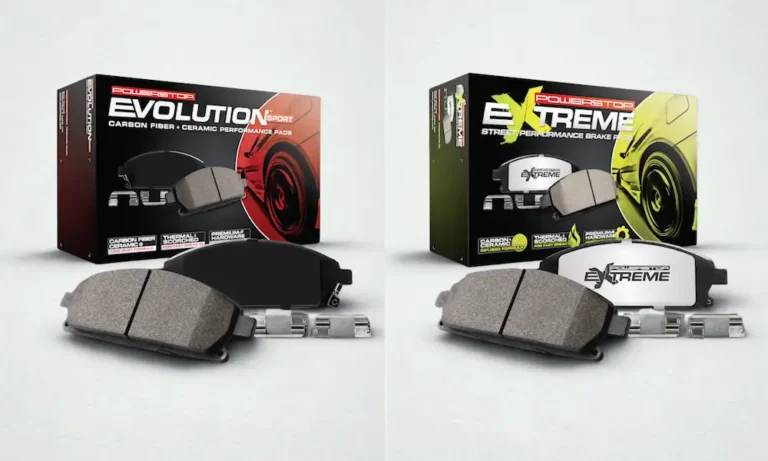
PowerStop keeps it straightforward with three main series:
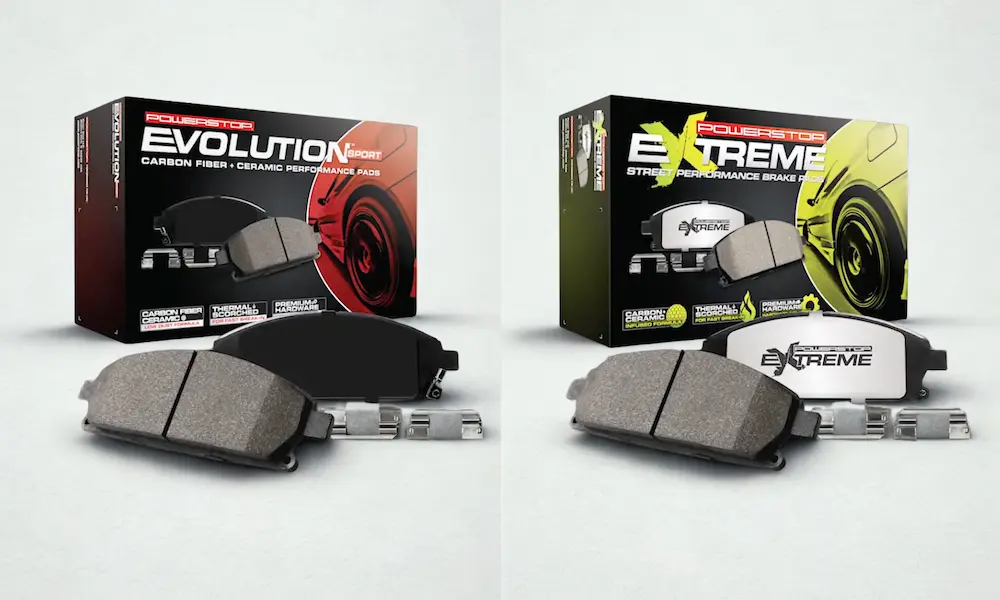
- Z23 Evolution Sport – Your daily driver upgrade with low dust and quiet operation
- Z26 Street Warrior – For muscle cars and modified vehicles needing extra bite
- Z36 Truck & Tow – Heavy-duty stopping for trucks that actually work
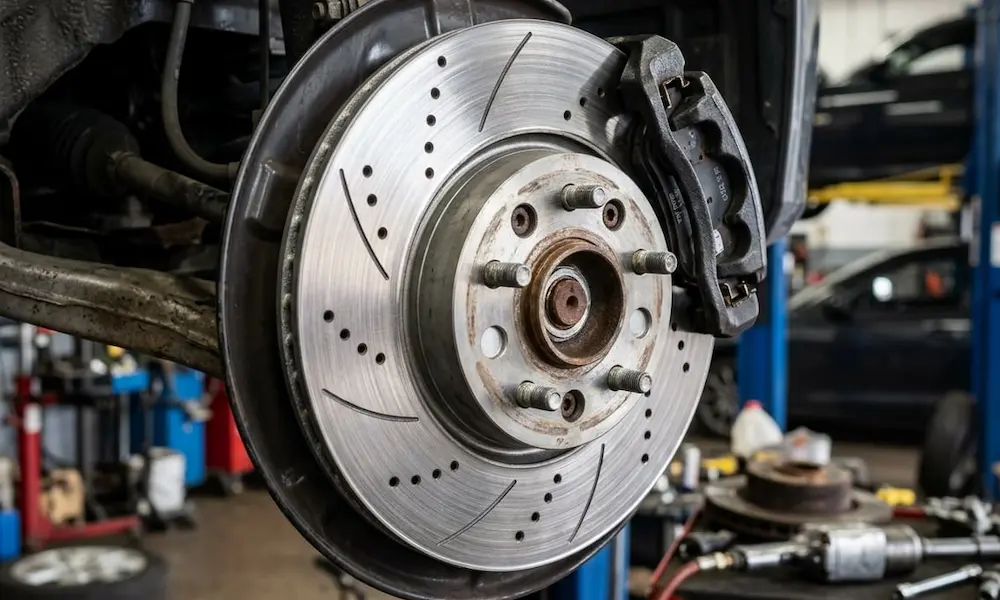
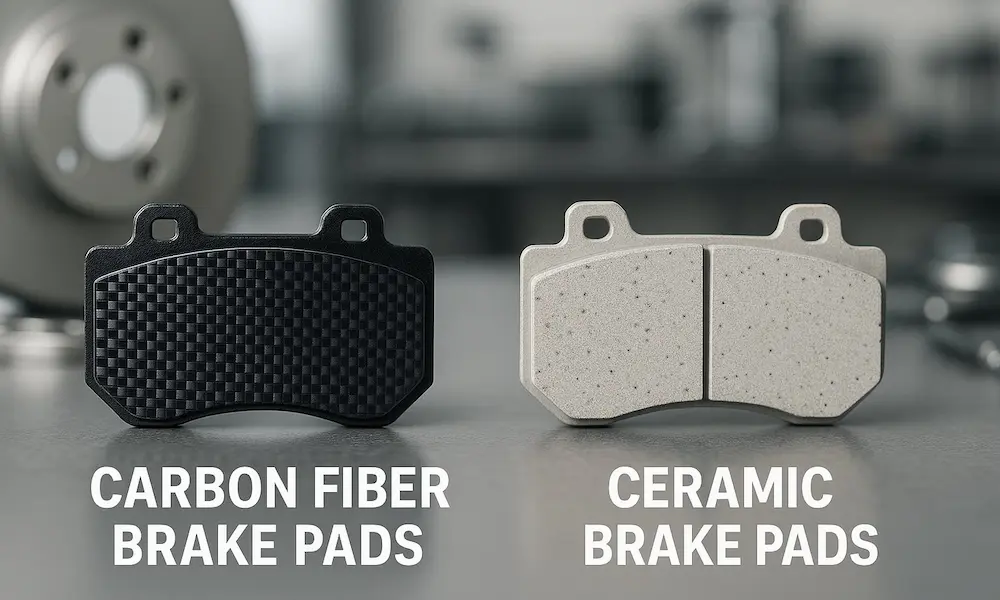
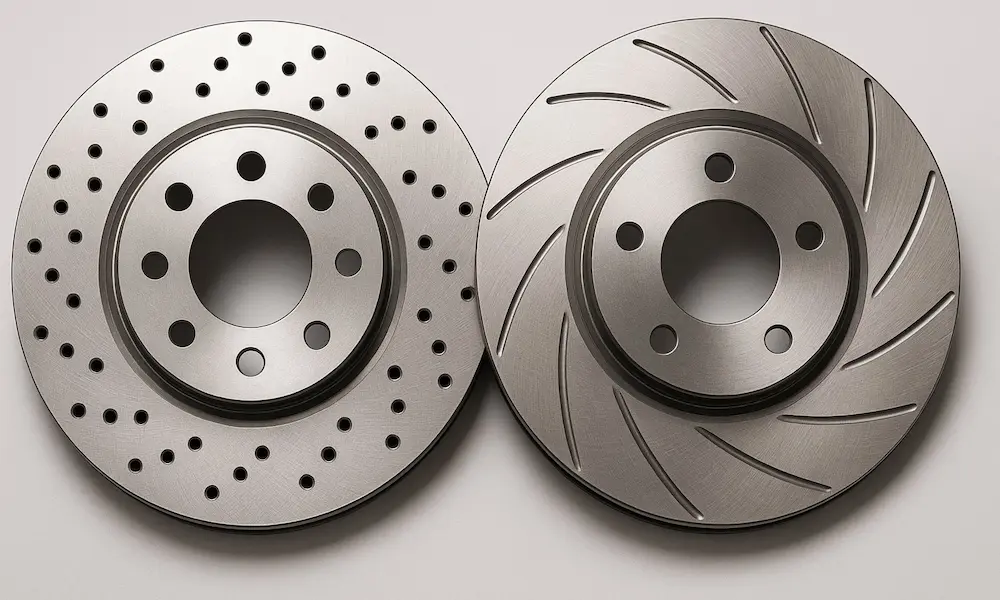
All PowerStop pads use their carbon-fiber ceramic formula. It’s designed to give you better performance than stock without coating your wheels in black dust. Their rotors come drilled and slotted with zinc plating to fight rust.
The Z36 series packs a 17% higher coefficient of friction than OEM pads. That’s not marketing speak – it’s the difference between confident stops and white-knuckle moments when you’re hauling a trailer.
R1 Concepts gives you more choices, for better or worse:
Their E-Line series starts with basic blank rotors and climbs to black zinc aesthetic options. The premium GEO-Carbon series brings GEOMET coating – fancy tech that fights corrosion better than standard zinc.
R1 Concepts also offers multiple pad compounds: ceramic, metallic, OEp (their optimum OE performance blend), and specialized off-road formulations. It’s like a buffet versus PowerStop’s prix fixe menu.
More options sound great until you’re staring at 15 different rotor types wondering which one you actually need. PowerStop’s limited lineup makes choosing easier. R1 Concepts’ variety helps if you know exactly what you want.
Performance Reality Check
PowerStop tests obsessively. They use the “LA Traffic Test” – the same grueling standard car manufacturers use. Their pads are 100% copper-free, meeting California and Washington environmental laws years ahead of deadlines. Everything goes through consistent manufacturing processes, so your brakes perform predictably.
R1 Concepts delivers mixed results. When they’re good, users rave about excellent initial bite, solid high-speed braking, and effective heat management. The rotors respond immediately after getting wet, which matters during surprise rainstorms.
But here’s where it gets sketchy: quality control issues pop up too often. BMW and Dodge forums share stories about manufacturing defects, incomplete drilling, and finish problems. One user found rotors that looked like they’d been rejected by quality control – because they probably should’ve been.
R1 Concepts uses G11H18 cast iron for their performance rotors, offering good strength-to-hardness ratios. PowerStop sticks with G3000+ equivalent standards – proven stuff that works for most driving situations.
The metallurgy matters less than consistency. PowerStop’s tighter quality control means you’re more likely to get parts that match the specifications. R1 Concepts’ variability means you might get amazing rotors or might be boxing them up for a return.
Manufacturing: Where Your Brakes Come From
PowerStop controls their destiny. Operations center in Bedford Park, Illinois, where they can watch every step. This centralized approach catches problems before parts ship to customers.
R1 Concepts designs in California but manufactures elsewhere. They claim to “maintain and supervise strict standards,” but customer experiences tell a different story. Using various manufacturing partners keeps costs down but makes quality consistency harder to guarantee.
PowerStop’s Evolution coating system uses zinc plating for basic corrosion protection. R1 Concepts counters with GEOMET coating on their GEO-Carbon series – legitimately better corrosion resistance than standard zinc.
If you live where roads get salted six months a year, that GEOMET coating isn’t just marketing. It’s the difference between rotors that last and rotors that rust into swiss cheese.
What You’ll Actually Pay
R1 Concepts typically costs less upfront. Complete kits run $100-$600 per axle depending on the series. E-Line blank rotors start around $80-200 – tempting for budget builds.
PowerStop ranges from $120-$800 per axle. Seems pricier until you factor in their frequent rebates through retailers like RockAuto. Z23 Evolution Sport kits typically land between $100-400, competing directly with R1 Concepts’ mid-range options.
Here’s the warranty kicker: PowerStop backs everything with 3-year/36,000-mile coverage. R1 Concepts offers their standard manufacturer warranty – notably shorter and less comprehensive. When you’re dropping $300-500 on brakes, that warranty difference matters.
Warranty and Support Comparison
| Feature | PowerStop | R1 Concepts |
|---|---|---|
| Warranty Length | 3 years/36,000 miles | Standard manufacturer warranty |
| Customer Service Rating | Generally positive | Mixed reviews |
| Distribution Channels | Major retailers + online | Primarily online |
| Quality Consistency | High | Variable |
| Return Process | Established, straightforward | Varies by retailer |
PowerStop’s warranty shows confidence. They’re betting their brakes won’t fail, and they’re willing to replace them if they do. R1 Concepts’ shorter coverage suggests they’re less certain – or less willing to stand behind their products long-term.
Customer Support: When Things Go Wrong
PowerStop’s support gets thumbs up from most users. Their established distribution through major retailers means you’ve got options if problems pop up. Multiple vendors compete for your business, keeping prices reasonable and service responsive.
R1 Concepts support varies wildly. Some customers praise their helpfulness. Others describe warranty nightmares and ignored emails. Being smaller means fewer support staff when issues arise.
Distribution models create different experiences. PowerStop’s retail presence often means same-day pickup at local stores. R1 Concepts relies on online shipping – great prices, but you’re waiting days for parts when your car’s stuck in the garage.
Which Brakes for Your Driving Style?
Daily commuters should grab PowerStop’s Z23 Evolution Sport. Low dust means your wheels stay clean. Quiet operation means your passengers don’t ask what’s wrong with the brakes. The comprehensive warranty means peace of mind for years.
Performance enthusiasts might prefer R1 Concepts’ GEO-Carbon series. Maximum stopping power and serious heat dissipation make track days more confident. Just inspect everything carefully when it arrives – quality varies batch to batch.
Truck owners towing or hauling need PowerStop’s Z36 Truck & Tow. That severe-duty carbon-fiber ceramic compound handles the heat generated by heavy loads. The 17% higher friction coefficient isn’t overkill when you’re pulling 8,000 pounds down a mountain grade.
Budget builders can consider R1 Concepts’ E-Line blank rotors. They’ll stop your car for less money. Just factor in the shorter warranty and potential quality issues when calculating total costs.
Real-World Application Guide
| Vehicle Type | Best Choice | Why |
|---|---|---|
| Daily commuter (sedan/SUV) | PowerStop Z23 | Low dust, quiet, reliable warranty |
| Performance car (track use) | R1 Concepts GEO-Carbon | Heat dissipation, aggressive bite |
| Muscle car (street/strip) | PowerStop Z26 | Proven performance, good support |
| Truck (towing 5,000+ lbs) | PowerStop Z36 | Severe-duty compound, tested durability |
| Budget rebuild | R1 Concepts E-Line | Lower cost, basic performance |
Installation and Compatibility
Both brands make fitment easy with vehicle-specific kits. PowerStop’s one-click packages include everything: rotors, pads, hardware, and often brake cleaner. R1 Concepts kits contain the essentials but sometimes require separate hardware orders.
Installation difficulty? Identical. If you can install one brand, you can install the other. The actual rotor and pad replacement process doesn’t change based on manufacturer.
PowerStop’s complete kits save trips to the parts store. R1 Concepts’ à la carte approach means double-checking your order before checkout. Missing a $15 hardware kit when you’re halfway through the job kills your weekend.
Environmental and Safety Standards
PowerStop’s copper-free formulation meets strict California SB 346 and Washington environmental regulations ahead of deadlines. Less copper means fewer heavy metals washing into waterways – good for fish, good for everyone.
R1 Concepts complies with required standards but doesn’t advertise exceeding them. Both brands meet federal safety requirements, so you’re not gambling with safety either way.
The copper-free thing isn’t just tree-hugging. Copper restrictions are spreading nationwide. PowerStop’s formulation won’t become outdated when your state adopts stricter rules.
Break-In Procedures Matter
Both manufacturers require proper break-in for optimal performance. You can’t just slap them on and hammer the brakes.
Standard break-in protocol:
- 30 gradual stops from 35 mph with 30-second intervals
- Avoid complete stops during break-in when possible
- No aggressive braking for first 200 miles
- Let rotors cool completely after initial break-in
Skip break-in and you’ll get uneven pad deposits, reduced performance, and potential noise issues. This applies equally to PowerStop and R1 Concepts – no shortcuts here.
PowerStop’s instructions clearly explain break-in procedures. R1 Concepts provides similar guidance, though some users report less detailed documentation with certain kits.
The Dust and Noise Factor
PowerStop’s carbon-fiber ceramic formula keeps wheels cleaner. If you’re tired of weekly wheel cleaning, this matters. The Z23 series produces noticeably less dust than stock brakes on most vehicles.
R1 Concepts’ ceramic options reduce dust too, but results vary by compound. Their metallic pads create more dust – the trade-off for aggressive bite. Choose based on whether you want clean wheels or maximum stopping power.
Noise complaints? PowerStop’s engineering minimizes squealing through premium shims and better pad-to-rotor contact. R1 Concepts users report occasional noise issues, especially if rotors arrive with surface irregularities.
Your neighbors will appreciate PowerStop’s quieter operation during early morning departures. R1 Concepts might announce your arrival with occasional squeaks.
Long-Term Durability Insights
PowerStop’s consistent quality control translates to predictable wear patterns. Users regularly report 40,000-50,000 miles from Z23 pads under normal driving. Z26 and Z36 series wear faster due to more aggressive compounds, but performance stays strong throughout their life.
R1 Concepts longevity reports scatter widely. Some users get 50,000+ miles from GEO-Carbon setups. Others need replacement at 25,000 miles. The variability suggests inconsistent manufacturing or material quality between batches.
Rotor longevity depends heavily on pad choice and driving style. Both brands’ rotors can outlast multiple pad sets if you’re not destroying them with track days. Proper break-in and avoiding severe overheating extend rotor life significantly.
When PowerStop Makes Most Sense
Choose PowerStop if you:
- Want reliable performance without gambling on quality
- Value comprehensive warranty protection
- Prefer buying from established retailers with easy returns
- Drive daily and need low-dust, quiet operation
- Tow or haul and need proven heavy-duty performance
PowerStop costs more initially but delivers better peace of mind. You’re paying for consistent quality and solid customer support.
When R1 Concepts Wins
Pick R1 Concepts if you:
- Know exactly what brake specs you need
- Want maximum performance at lower prices
- Don’t mind inspecting parts carefully on arrival
- Have experience identifying quality issues
- Can handle potential warranty hassles
R1 Concepts rewards informed buyers who can spot problems before installation. If you’re mechanically savvy and value performance over convenience, they’re worth considering.
The Smart Buyer’s Approach
First-time brake upgraders should stick with PowerStop. The streamlined product selection, comprehensive support, and strong warranty create a safety net for learning.
Experienced gearheads comfortable evaluating part quality might score great deals with R1 Concepts. Their GEO-Carbon series delivers legitimate performance when you get good units.
Don’t let price alone decide. A $50 savings evaporates quickly if you’re dealing with returns, reinstallation, and lost time. Factor in your mechanical skill, available tools, and patience for potential issues.
The r1 concepts vs powerstop decision ultimately depends on your priorities. PowerStop delivers reliable, consistent performance with excellent support. R1 Concepts offers performance potential at attractive prices, but with quality variability you need to manage.
Your car’s safety depends on these parts working correctly every single time. Choose the manufacturer that matches your skill level, budget, and tolerance for uncertainty. Both will stop your car – one just does it with fewer headaches along the way.