Your brakes are pulsing, your steering wheel shakes, and the shop just handed you a quote that made your jaw drop. Before you hand over your card, you need to know whether resurfacing or replacing your rotors makes more financial sense. This guide breaks down real brake rotor resurfacing costs, who still offers the service, and exactly when it’s worth it.
What Does Brake Rotor Resurfacing Actually Cost?
Brake rotor resurfacing cost depends on where you go and what you drive. Here’s the quick breakdown:
- Professional shop resurfacing + new pads: $300–$700 per axle
- Full pad and rotor replacement: $400–$900 per axle
- Both axles serviced: $800–$1,800 total
- Walk-in resurfacing at O’Reilly: $25–$45 per rotor
The gap between resurfacing and replacing has narrowed significantly. In many cases, you’ll pay only $100–$200 less to resurface. That difference matters, but it’s not always the whole story.
Cost by Vehicle Type
Your vehicle’s size and weight directly affect brake rotor resurfacing cost. Heavier vehicles need bigger, more expensive components, and labor takes longer.
| Vehicle Type | Resurfacing + Pads (Per Axle) | Replacement + Pads (Per Axle) |
|---|---|---|
| Economy Car | $180–$270 | $300–$450 |
| Standard SUV | $300–$450 | $450–$600 |
| Light Truck | $350–$500 | $500–$650 |
| Luxury / Performance | $500–$700 | $870+ |
Heavy-duty trucks typically cost 30–50% more than compact cars across the board.
Where You Get the Work Done Changes Everything
Dealerships
Dealerships charge the most. Expect labor rates of $150–$250 per hour in most cities, with overall quotes averaging 20% higher than independent shops. They use OEM parts and factory-trained techs, which adds real value for newer vehicles under warranty—but it’s a hard price to justify on a 12-year-old commuter car.
BMW and Volvo dealerships often mandate full rotor replacement during every pad service, which means resurfacing isn’t even an option at those service centers.
National Chains
Midas, Meineke, Firestone, and Pep Boys use tiered service packages. Here’s how their pricing compares:
| Chain | Resurfacing + Pads (Per Axle) | Replacement + Pads (Per Axle) | Warranty |
|---|---|---|---|
| Meineke | $130–$300 | $345–$500 | 12 months / 12,000 miles |
| Midas | $200–$219 | $350–$400 | Lifetime pad guarantee |
| Firestone | $130–$240 | $345–$398 | Lifetime pads + 12-month labor |
| Pep Boys | $209–$250 | $350–$435 | 12-month labor warranty |
Chains are solid for price transparency. Just know that upselling is common, so get a written quote before the car goes on the lift.
Independent Shops
Independent mechanics charge $80–$150 per hour for labor—significantly less than dealerships. Many include rotor machining in their flat-rate brake service, so you’re not paying separately for the lathe time. If you want someone to actually evaluate whether your rotors are worth saving, an independent shop is usually your best bet.
The Only National Retailer That Still Resurfaces Rotors
Here’s something most people don’t know: AutoZone and Advance Auto Parts no longer offer walk-in rotor resurfacing. They’ve completely phased it out in favor of selling new parts.
O’Reilly Auto Parts is now the only major national chain that still turns rotors in-store. Their pricing:
- Passenger car rotor: $25 per rotor
- Light truck rotor: $30 per rotor
- High-overhead metro areas: up to $45 per rotor
O’Reilly measures your rotor for free with a micrometer before machining it. If it doesn’t meet minimum thickness, they won’t touch it—which is actually the responsible call.
NAPA offers resurfacing through its service centers, but availability and pricing vary by location.
DIY Brake Rotor Resurfacing: Does It Save Money?
Doing your own brake job eliminates $80–$200 in labor per axle. A complete DIY service—pads, rotors, and hardware—typically runs $150–$400 depending on parts quality.
If your rotors are good candidates for machining, you can pull them yourself and bring them to O’Reilly. Pay $25–$45 per rotor for the lathe work, then reinstall. Total DIY resurfacing cost per axle: roughly $60–$100 in parts and machining, plus your time.
For performance or severe-duty platforms, Advance Auto Parts sells premium zinc-coated rotors with RotorShield technology starting around $53, and bi-metallic performance rotors that push past $108 each. Sometimes new parts are simply the better value.
Budget replacement rotors from online distributors start at $18–$30 each. At that price, the math often favors replacement over resurfacing—especially when you factor in shop labor.
How Do You Know If Your Rotors Can Be Resurfaced?
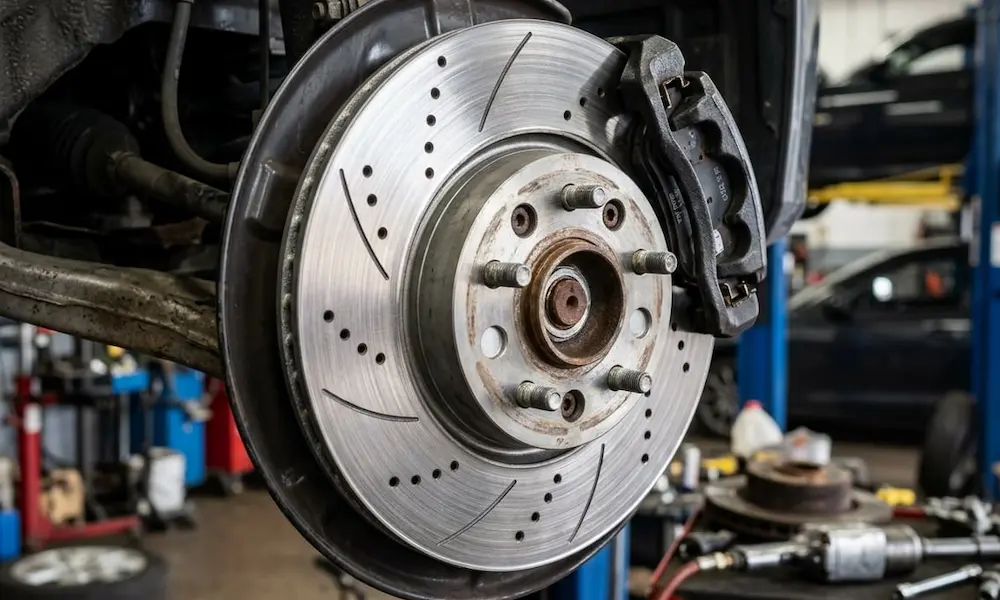
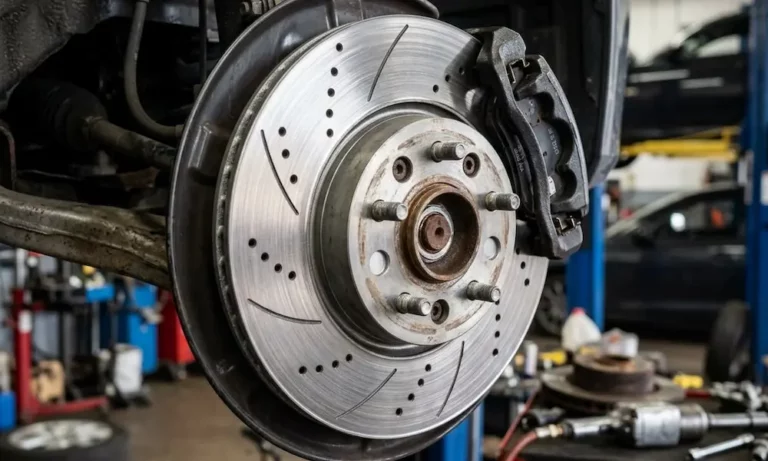
Not every rotor qualifies. A technician uses a precision micrometer to measure remaining thickness at multiple points. Every rotor has a minimum discard thickness stamped on the hub or rim.
Here’s the rule: the rotor needs at least 50 thousandths of an inch of metal above its discard limit to be a machining candidate. A standard lathe cut removes 0.2–0.4mm per pass. Go below the limit, and the rotor goes in the bin.
A new Toyota OEM rotor, for example, comes with about 3mm of usable wear thickness. That typically allows for one, maybe two resurfacing cycles before it hits the discard limit.
Symptoms That Tell You Something’s Wrong
These warning signs mean your rotors need attention—but they don’t automatically mean replacement:
| Symptom | Likely Cause | Action |
|---|---|---|
| Pulsing brake pedal | Uneven pad deposit transfer | Measure thickness; machine if viable |
| High-pitched squeal | Surface glazing | Light sanding or clean-up lathe cut |
| Metal grinding noise | Pad completely worn through | Inspect for deep grooves; replace immediately |
| Blue/purple discoloration | Overheating and thermal stress | Check for hard spots; discard if cracked |
| Vibration in steering wheel | Rotor irregularity on front axle | Measure runout; machine or replace |
| Angled pad wear | Sticking caliper piston | Service caliper pins; replace if needed |
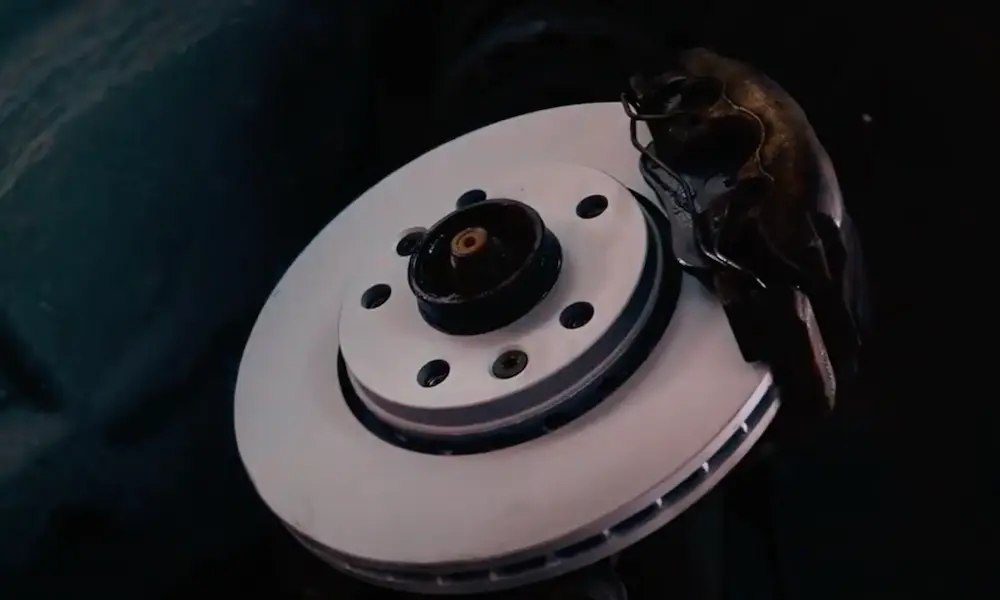
One important myth worth busting: most “warped rotor” complaints aren’t actually warped rotors. In 99% of cases, the pulsation comes from uneven pad material deposits on the rotor face, not physical distortion of the metal. A proper lathe cut removes those deposits and restores smooth braking.
Resurfacing vs. Replacing: The Real Trade-Offs
| Factor | Resurfacing | Replacement |
|---|---|---|
| Cost | Lower upfront | Higher, but often close in price |
| Lifespan | One or two cycles max | Full 30,000–70,000 mile reset |
| Heat management | Slightly reduced thermal mass | Maximum heat capacity |
| Environmental impact | Low waste, sustainable | Generates scrap metal |
| Installation time | 30–45 minutes of lathe work | Faster bolt-on process |
| Runout correction | On-vehicle lathes fix hub runout | Depends on clean hub and casting quality |
When you choose resurfacing, you’re keeping metal out of the landfill and spending less today. When you choose replacement, you’re getting a clean slate and, in many cases, not paying much more.
Why Shops Are Ditching the Lathe
There’s an economic shift happening in the industry. Modern rotors are thinner than ever because automakers trim weight to meet federal fuel economy standards. Less metal means less thermal mass—and less room for a lathe cut before you hit the discard limit.
At the same time, aftermarket rotors now cost $30–$60 for most passenger cars. Shop labor runs $80–$180 per hour. When machining a pair of rotors takes 30–45 minutes of shop time, the labor cost alone can exceed the price of new rotors. So shops skip the lathe, bolt on new parts, and move to the next car faster.
That logic makes financial sense for the shop. It doesn’t always make sense for you.
If your rotors are thick, your vehicle is a heavier platform, and you’re dealing with surface deposits rather than structural damage, resurfacing remains a smart and cost-effective repair—when you can find a shop willing to do it right.
What to Do Right Before You Pay
Whether you choose resurfacing or replacement, do these things first:
- Get the rotor thickness measured before agreeing to anything. If the shop can’t tell you the current thickness and the discard limit, find a different shop.
- Ask if they use an on-vehicle lathe. These machines correct hub runout that bench lathes miss—worth asking about for vehicles with recurring pulsation problems.
- Clean the hub face during installation. Rust or debris left on the hub causes runout and pedal pulsation within weeks of service.
- Bed in new pads and rotors properly. Make several controlled stops from highway speed without coming to a full stop. This transfers a uniform layer of pad material onto the rotor and prevents the exact deposit issue that causes pulsation in the first place.
- Compare quotes from at least two shops. A $150–$200 variance between an independent shop and a dealership is completely normal for the same job.
Your brakes are too important to guess on. Get the measurements, compare the prices, and make the call based on your specific rotors—not on what’s easiest for the shop.