Your AC just died in the middle of July. Now you’re staring down a repair quote that feels like a car payment. Sound familiar? This guide breaks down every factor driving a/c compressor repair cost in 2026 — for both your car and your home — so you know exactly what’s fair, what’s not, and what to do next.
What Does an A/C Compressor Actually Do?
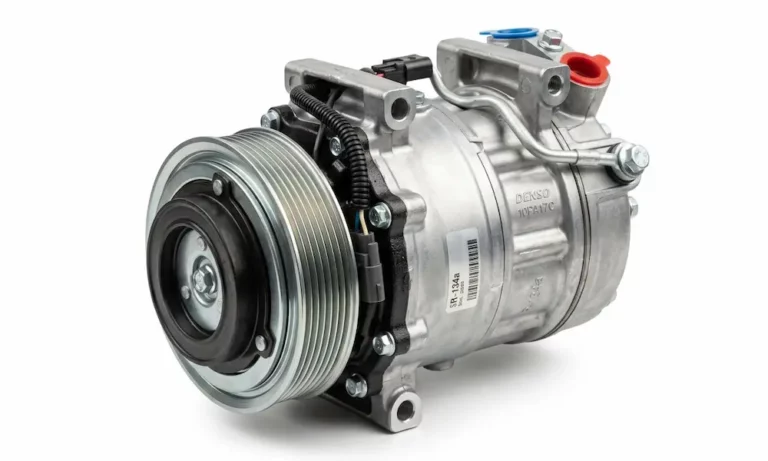
Think of the compressor as the heart of your AC system. It pressurizes refrigerant gas and keeps it moving through the loop that pulls heat out of your car or home.
Here’s the problem: it runs under constant stress, extreme heat, and high pressure. When it fails, the repair isn’t just swapping one part. It’s a multi-step process involving refrigerant recovery, line flushing, vacuum testing, and recharging. That’s why labor costs frequently equal or exceed the hardware itself.
Car A/C Compressor Repair Cost: What to Expect
For most standard vehicles, a complete AC compressor replacement runs between $400 and $1,800. But that range hides a lot of variation.
What Pushes Your Car’s Repair Cost Up or Down
Vehicle layout matters most. On a basic economy car, a tech can reach the compressor quickly. On a luxury European vehicle, they might need to pull the front bumper, intake manifold, or cooling components just to get to it.
Hybrid and electric vehicles cost more. These use high-voltage electric compressors instead of belt-driven units. They need specialized training, non-conductive oil, and proprietary parts — all of which drive the price up.
Where you go makes a big difference. Dealerships charge more. Independent shops can source quality aftermarket parts for 30–50% less, and many offer 12–24 month warranties on both parts and labor.
Here’s how specific models compare:
| Vehicle | Independent Estimate | Dealership Range |
|---|---|---|
| 2017 Chevy Tahoe V8 5.3L | $2,736 | $3,185 – $4,503 |
| 2018 Nissan Sentra L4 1.8L | $3,491 | $3,993 – $5,455 |
| Toyota Camry (avg) | $1,235 | $1,235 – $1,637 |
| Honda CR-V (avg) | $1,064 | $1,064 – $1,758 |
| Honda Accord (avg) | $1,004 | $1,004 – $1,554 |
| Chevy Silverado 1500 (avg) | $828 | $828 – $1,091 |
The “Black Death”: When a Repair Turns Into a Nightmare
This is the worst-case scenario, and it’s more common than people think.
When a compressor fails catastrophically while running, its internal parts shatter. The friction turns refrigerant and oil into a dark, acidic sludge mixed with metal shavings. The system’s pressure forces that toxic mix through every line, valve, and coil in the loop.
Installing a new compressor without addressing the contamination guarantees a second failure — often within days.
Black Death is especially notorious in early-to-mid 2000s Honda CR-V and Honda Fit models. Owners have reported dealership quotes ranging from $3,400 to $6,000 to fix the damage. The full repair includes:
- Replacing the condenser (often requiring bumper removal)
- Flushing all refrigerant lines with chemical solvents
- Replacing the expansion valve and receiver-drier
- In severe cases, pulling the entire dashboard to replace the evaporator core — that alone adds 10–15 labor hours
For a car worth $6,000–$10,000, that invoice can total the vehicle.
The good news? Independent shops that source aftermarket parts can often do the full system overhaul for $800 to $1,600, saving the car from the scrap yard.
Don’t Skip These Parts When Replacing the Compressor
Replacing the compressor alone isn’t enough. To protect the warranty on your new part — and avoid a repeat failure — shops must also replace:
- Receiver-drier or accumulator: Once the system opens to air, moisture gets in. The drier captures it. Skip this, and trapped humidity forms acid that destroys the new compressor from the inside.
- Orifice tube or expansion valve: These control refrigerant flow. They’re cheap relative to the compressor, and skipping them voids most warranties.
- Compressor clutch (if damaged separately): Replacing a standalone clutch assembly typically runs $666 to $797.
Can You DIY a Car AC Compressor Swap?
Technically, yes — mechanically. But here’s the catch.
Federal law prohibits venting refrigerant into the atmosphere because of its ozone-depleting and greenhouse gas properties. Doing it for pay without EPA certification risks penalties exceeding $350,000. Even as a private individual, you still need a licensed shop to recover the old refrigerant, pull a vacuum after your swap, and recharge the system with a precise refrigerant weight. That makes the DIY route less practical than it sounds.
Home AC Compressor Repair Cost: The Full Breakdown
Residential compressors are a different beast. They run on high-voltage power and cool entire homes. The national average cost to replace a home AC compressor in 2026 is $2,300, with most homeowners spending between $1,800 and $2,800.
How System Size Drives the Price
Residential AC capacity is measured in “tons.” As a rough rule, you need about 20 BTUs of cooling per square foot. A typical 2,200 sq ft home needs a 3.5–4.5 ton system.
The bigger the system, the bigger the compressor — and the higher the cost.
| System Size | Cooling Capacity | Avg Compressor Replacement Cost |
|---|---|---|
| 1.5 tons | 18,000 BTU | $1,500 – $2,000 |
| 2.0 – 2.5 tons | 24,000 – 30,000 BTU | $1,800 – $2,200 |
| 3.0 – 3.5 tons | 36,000 – 42,000 BTU | $2,000 – $2,600 |
| 4.0 – 4.5 tons | 48,000 – 54,000 BTU | $2,200 – $2,800 |
| 5.0+ tons | 60,000+ BTU | $2,500 – $3,500+ |
Single-Stage vs. Two-Stage vs. Variable-Speed Compressors
The type of compressor in your system affects both efficiency and replacement cost:
- Single-stage: Runs at 100% or off. Cheapest to replace ($400–$900 for the part). Common in older homes.
- Two-stage: Runs at ~65% on mild days, full power when needed. Better humidity control, quieter, more expensive to replace.
- Variable-speed (inverter): Constantly adjusts output to match real-time demand — like a dimmer switch instead of a light switch. Lowest energy bills, highest replacement cost. Often requires brand-specific proprietary parts that can’t be substituted.
Brand Matters More Than You’d Think
Not all HVAC brands are priced the same — and that affects both installation and repair costs.
| Brand | Typical AC Installed Cost | Typical Repair Cost Range |
|---|---|---|
| Trane | $5,000 – $12,500+ | $250 – $2,000 |
| Carrier | $4,500 – $11,500+ | $200 – $1,800 |
| Goodman | $3,200 – $8,500 | $200 – $1,500 |
Trane uses proprietary spine-fin coils and specialized compressor mounts. Generic aftermarket parts often don’t fit, which drives repair costs up. Goodman uses industry-standard components, so technicians can source parts from multiple suppliers, keeping costs slightly lower.
What Residential AC Labor Actually Costs
HVAC technicians charge $75 to $200 per hour, and a compressor swap takes 4–8 hours. That puts labor alone at $400–$1,200, on top of parts.
A few factors that push labor costs higher:
- Rooftop or hard-to-access units
- Emergency or weekend service (50–100% premium on standard rates)
- Systems with internal electrical burnout that require chemical line flushing
- Geographic location — California averages $450–$2,300 for AC repairs vs. $250–$1,600 in Arkansas
Other Components That Often Need Replacing Too
Sometimes the compressor isn’t actually the problem. A failing capacitor can mimic compressor failure entirely.
| Component | Avg Replacement Cost |
|---|---|
| Diagnostic / Service Call | $75 – $200 |
| Capacitor | $100 – $250 |
| Contactor / Relay Switch | $150 – $350 |
| Condenser Fan Motor | $200 – $700 |
| Circuit Board | $150 – $700 |
| Evaporator Coil | $1,000 – $4,500 |
| Filter Drier | $208 – $296 |
| Hard Start Kit | $100 – $270 |
A hard start kit gives an aging compressor an extra electrical boost at startup, potentially extending its life by a year or two at a fraction of the replacement cost.
How Refrigerant Regulations Are Driving Costs Higher in 2026
This is the factor most homeowners don’t see coming.
For Cars
Older vehicles used R-134a refrigerant. It’s a potent greenhouse gas — over 1,400 times more warming than CO₂. Regulations are cutting its production. Supply is shrinking, prices are climbing.
New vehicles since 2017 use R-1234yf, which has a near-zero warming impact — but it costs significantly more per pound. Either way, the refrigerant recharge alone adds a noticeable line item to your repair bill.
For Homes
The residential standard — R-410A (Puron) — is being phased out under the American Innovation and Manufacturing Act, targeting an 85% reduction by 2036. The result? Wholesale R-410A cylinders that used to cost under $150 now run $250–$500.
| Refrigerant Type | Wholesale Cost Per Pound | Installed Cost Per Pound |
|---|---|---|
| R-410A (Puron) | $4 – $8 | $50 – $80 |
| Older banned gases | $13 – $21 | $90 – $150 |
| New low-GWP replacements | $4 – $7 | $50 – $70 |
New replacement refrigerants are mildly flammable, which means new compressors require thicker casings, spark-proof electronics, and leak detection sensors — adding 5–15% to manufacturing costs. All of that gets passed to you.
Should You Repair or Replace Your Home AC System?
Here’s a simple industry rule called the $5,000 Rule:
Multiply the age of your AC unit by the cost of the repair. If the result exceeds $5,000, replace the system.
Example: A 12-year-old unit needs a $2,000 compressor replacement.
12 × $2,000 = $24,000 — way over $5,000. Replace it.
Example: A 3-year-old unit needs an $800 repair.
3 × $800 = $2,400 — under $5,000. Repair it.
Two more reasons to lean toward replacement on older systems:
- Other parts are aging too. A new compressor in a 15-year-old unit with a dying fan motor and rusted contactors is a gamble.
- Efficiency savings add up. If your system runs below a SEER 10 rating, a modern replacement can cut monthly energy bills by over 35%.
What Warranties Actually Cover (And What They Don’t)
Car Warranties
New vehicle bumper-to-bumper coverage (typically 3–5 years) covers compressor failure. After that, independent shops offer a strong alternative — quality aftermarket parts at 30–50% less than dealer pricing, often backed by 12–24 month warranties.
Home Warranties
Manufacturer warranties typically cover the compressor part for 5–10 years — but not labor or refrigerant. Even with a “free” compressor, expect to pay $600–$1,200 in labor and materials.
Third-party home warranty plans from providers like American Home Shield, Select Home Warranty, and Liberty Home Guard cover compressor failures from normal wear — but watch for these common exclusions:
- Pre-existing conditions
- Lack of documented maintenance
- Lightning, hail, or surge damage
- Improper installation
- Mismatched system components
Also check your refrigerant cap. Some base plans only cover $10 per pound — leaving you to cover the rest of the $50–$80 per pound installed cost out of pocket. Premium plans cover refrigerant fully. It’s worth reading the fine print before you need it.