That check engine light isn’t messing around. If your Duramax threw a P026D code, it’s telling you the engine is getting more fuel than it should — and ignoring it can turn a simple fix into a very expensive one. Read this before you start throwing parts at it.
What Is the Duramax P026D Code?
The P026D code means the fuel injection system is delivering more fuel than the engine control module expects. It’s not a soft warning — it’s the ECM hitting its limit trying to correct a fueling problem it can’t fix on its own.
Here’s how it works: Your ECM constantly monitors air flow, fuel rail pressure, and exhaust oxygen levels. It uses all that data to calculate the exact fuel dose for every driving condition. When the fuel delivery runs higher than the calibrated limit — and stays there — it flags P026D.
The code typically triggers when your truck is stopped in gear with the brake held for around 20 seconds. The NOx sensor in the exhaust detects more fuel byproducts than should be present, signaling that injectors are likely leaking or delivering uncontrolled fuel.
Which Duramax Engines Get This Code?
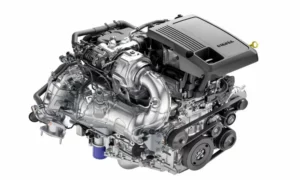
P026D shows up across the entire Duramax family. Here’s a quick breakdown:
| Engine | Size & Config | Vehicles | Model Years |
|---|---|---|---|
| L5P | 6.6L V8 | Silverado/Sierra 2500HD–3500HD | 2017–2025 |
| L5D | 6.6L V8 | Silverado 4500–6500HD Commercial | 2019–2021 |
| LM2 | 3.0L I6 | Silverado/Sierra 1500, Tahoe, Suburban, Yukon | 2020–2023 |
| LZ0 | 3.0L I6 | Silverado/Sierra 1500, Cadillac Escalade | 2023–2025 |
| LWN | 2.8L I4 | Colorado, Canyon, Express, Savana | 2016–2021 |
| LUZ/LH7 | 2.0L / 1.6L | Cruze, Equinox, Terrain | 2014–2019 |
The L5P gets the most attention here because its Denso high-pressure fuel system has a well-documented vulnerability at the fuel rail pressure sensor connector.
The Most Common Causes of Duramax P026D
Don’t swap injectors yet. P026D has multiple causes, and most of them aren’t the injectors. Work through this list first.
Corroded Fuel Rail Pressure Sensor Connector
This is the number one cause on L5P trucks. GM’s own Technical Service Bulletin 20-NA-197 confirms it directly.
The passenger-side fuel rail pressure sensor connector suffers from fretting corrosion. Diesel engines vibrate constantly, and those vibrations wear away the tin plating on the connector terminals. Moisture sneaks in, oxidation builds up, and suddenly the ECM is getting a lower voltage signal than reality.
The ECM reads that as low fuel pressure. So it tells the fuel pump to push harder. Now your injectors are firing at higher-than-commanded pressure — and P026D fires.
You’ll often see P026D alongside codes for low fuel rail pressure and fuel pressure regulator performance failures. Fix the connector and all those codes frequently clear together.
The fix: cut the factory connector, splice in GM part number 19367009 or an equivalent aftermarket pigtail, and seal it properly with waterproof heat-shrink connectors and dielectric grease.
Dirty or Restricted Intake Air
If the engine can’t breathe, the standard fuel dose becomes too rich by default.
Two culprits here:
- Saturated air filter — A clogged or water-soaked filter chokes airflow. Less air means the same fuel quantity creates a rich condition.
- Soot-fouled MAP sensor — EGR gases and crankcase oil vapors mix inside the intake manifold and form a thick sludge that coats the manifold absolute pressure sensor tip. Once it’s coated, the sensor feeds the ECM wrong data about air density. The ECM commands the wrong fuel quantity, and P026D follows.
Cleaning the MAP sensor is a critical first diagnostic step. Pull it, clean it with a sensor-safe solvent, and retest before doing anything else.
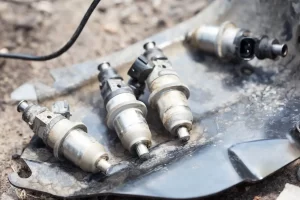
Mechanically Worn or Leaking Injectors
When the electrical and sensor causes check out clean, the injectors are next. Common rail injectors on the L5P run at pressures above 29,000 PSI and fire multiple times per combustion cycle. Over time, the internal needle valves wear out.
A worn needle valve leaks fuel into the cylinder continuously — even when the injector isn’t commanded to fire. This is called dribbling. The ECM detects that the affected cylinder is producing too much power and pulls fuel from it to rebalance the engine. That extreme correction is what triggers P026D.
You’ll identify the bad cylinder through injector balance rates (more on that below).
Fuel System Contamination
Water in your diesel destroys lubricity. Metal debris in the fuel system destroys everything else.
Technical Service Bulletin 18-NA-361 specifically warns against replacing injectors without flushing the system first. Residual debris will immediately destroy new injectors.
If you find metal particles in your filter housing or debris at the bottom of the fuel-water separator, you’re dealing with contamination. The fix involves:
- Disconnecting the chassis fuel feed line and purging 2–3 gallons through an external container
- Manually cleaning the separator reservoir before installing a new filter
- Running a clear section of return line to visually confirm zero debris before buttoning everything up
In severe contamination cases, the high-pressure fuel pump sheds metal flakes throughout the entire system. That means replacing tanks, lines, rails, pump, and all injectors — a very expensive outcome from skipping filter maintenance.
Intake Manifold Leaks (3.0L LM2 and LZ0)
On the 3.0L inline-six Duramax, TSB 22-NA-128 points to a specific issue: intake manifold leaks that bleed off turbocharger boost pressure.
Without adequate cylinder pressure, combustion is incomplete. The ECM senses the low torque output and over-fuels to compensate. You’ll typically see P026D alongside secondary codes for oxygen sensor performance and frequent DPF regeneration. The fix requires smoke testing to locate the exact leak, then replacing the compromised gaskets or plastic manifold components.
How Injector Balance Rates Help You Find the Problem
Balance rates are your best diagnostic tool when P026D doesn’t have an obvious electrical cause.
Here’s the concept: the ECM watches crankshaft acceleration after each cylinder fires. If one cylinder accelerates the crank too aggressively, the ECM pulls fuel from that injector. If a cylinder fires weakly, the ECM adds fuel. These adjustments show up as balance rates on a scanner.
| Balance Rate | Interpretation | Action |
|---|---|---|
| 0 to ±2 mm³ | Healthy injector, normal ECM compensation | None needed |
| ±2 to ±3 mm³ | Early wear or minor deposits | Monitor closely |
| ±3 to ±5 mm³ | Significant fouling or mechanical wear | Consider bench testing |
| Beyond ±5 mm³ | Injector failing or leaking | Replace injector |
Critical rules for valid balance rate readings:
- Engine must be at full operating temperature (coolant above 170°F)
- Vehicle must be parked or in neutral
- All accessory loads (A/C especially) must be off
- Cold readings are meaningless — fuel viscosity changes everything
When P026D is active, you’ll typically find one or more injectors with severe negative balance rates, confirming they’re mechanically leaking uncontrolled fuel.
If balance rates are off but no debris is in the filter, follow up with a return flow test. Disconnect and cap the return lines, route individual injector return flow into graduated vials, and run the engine for 15 seconds. Any injector returning more than 3ml in that window has failed internal seals and needs replacing.
What Happens If You Ignore P026D
Skipping this repair isn’t a money-saving move. It’s a money-multiplying mistake.
DPF overload — Over-fueling floods the diesel particulate filter with soot. The ECM forces constant active regeneration cycles to clear it, which hammers fuel economy and thermally degrades the filter. Eventually the DPF blocks exhaust flow entirely and the truck goes into limp mode. Replacement or cleaning costs thousands.
Oil dilution — Raw fuel condenses on cylinder walls, washes away the oil film protecting the piston rings, then drips past into the oil pan. Diesel fuel thins engine oil dramatically. Check your dipstick — a rising oil level or diesel smell on the dipstick means your bearings are running on compromised lubrication. Keep running it and you’ll spin a bearing or seize the engine.
Thermal overload — Rich diesel combustion runs hot. Under heavy load like towing, uncontrolled over-fueling can spike exhaust temperatures high enough to melt turbocharger blades, warp exhaust manifolds, or destroy piston crowns.
Fix It Right: The Correct Repair Order
Follow this sequence and you won’t waste money on parts you don’t need.
- Clean the MAP sensor first — Pull it, clean it with sensor-safe solvent, reinstall, and clear codes. This takes 20 minutes and costs nothing.
- Inspect and test the fuel rail pressure sensor connector — Use the terminal drag test described in TSB 20-NA-197. If terminals show fretting or oxidation, replace the pigtail with GM part 19367009. Apply dielectric grease before reconnecting.
- Check air filter condition — Replace if saturated or overdue. Don’t overlook this.
- Run balance rates — At full operating temp, zero accessories. Identify any injector beyond ±5 mm³.
- Perform return flow testing — Isolate leaking injectors definitively before ordering parts.
- Check for contamination — Inspect the fuel-water separator reservoir and filter housing. If you find debris or metal, follow the full flush protocol from TSB 18-NA-361 before installing any new injectors.
- Verify ECM calibration — If everything checks out mechanically and electrically, check for available software updates. GM occasionally releases calibration files that adjust the fuel mass observer tolerance to prevent false codes on high-mileage trucks.
- Program new injectors correctly — If you do replace injectors, the ECM must be programmed with the flow-rate codes stamped on the new units. Skip this step and your balance rates will be inaccurate from day one.
The Duramax P026D code sounds intimidating, but most cases on the L5P trace back to a corroded connector or a soot-coated MAP sensor — both cheap and fast to fix. Work the diagnostic ladder methodically, and you’ll save yourself from replacing injectors you never needed to touch.