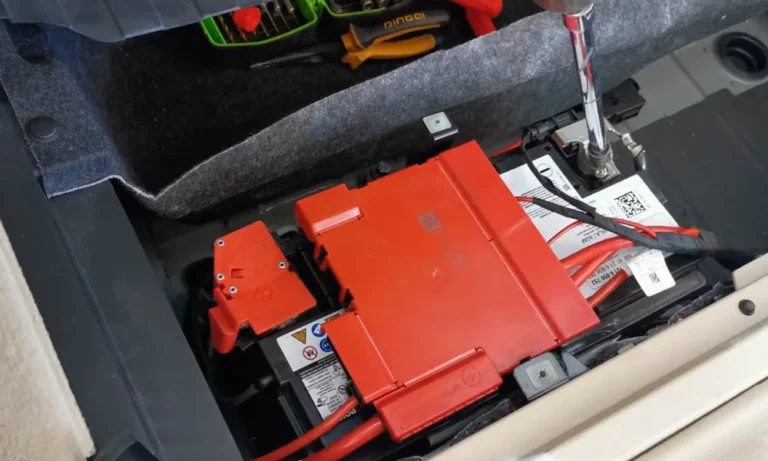
Your car won’t start, and the battery looks like a science experiment gone wrong. Crusty white or greenish gunk on the terminals is almost certainly the problem. The good news? Cleaning car battery connections is a straightforward fix you can do at home in under 30 minutes. Stick around — this guide covers every step, including some details most tutorials skip entirely.
What’s That Crusty Stuff on Your Battery Terminals?
That white, green, or bluish crust isn’t just dirt. It’s corrosion — and it’s actively strangling your car’s electrical system.
Here’s what’s happening under the hood: Your battery uses sulfuric acid to store energy. As it charges and discharges, it releases tiny amounts of acidic vapor. Those vapors hit the metal terminals and cable clamps, triggering a chemical reaction that creates crystalline deposits.
- White deposits = lead sulfate (most common)
- Green or blue deposits = oxidized copper from your cable clamps
These deposits act like an insulator. They block electricity from flowing freely, which causes slow starts, dim lights, and eventually a car that won’t start at all.
The rate corrosion forms depends heavily on where you live:
| Region | Main Threat | What It Does |
|---|---|---|
| Gulf Coast & Southeast | High humidity | Speeds up oxidation of copper clamps |
| Southwest (Arizona, Nevada) | Extreme heat | Increases acid vapor release from the battery |
| Northeast & Midwest | Road salt | Creates parasitic drain and accelerates pitting |
| Pacific Northwest | Persistent moisture | Causes internal wire rot inside cable insulation |
What You’ll Need Before You Start
Gather everything first. Stopping mid-job with live cables is how accidents happen.
Safety gear (non-negotiable):
- Nitrile or rubber gloves — not cotton, not leather
- Splash-proof safety goggles
- Old clothes or an acid-resistant apron
Tools and supplies:
- 10mm or 13mm wrench (insulated if possible)
- Battery terminal brush (the round one with inner and outer bristles)
- Baking soda + water, or a commercial battery cleaner spray
- Stainless steel detail brush for tight spots
- Clean rags or paper towels
- Silicone dielectric grease
- Anti-corrosion felt washers (red for positive, black for negative)
- Terminal protectant spray
- Memory saver tool (more on this below)
Pro tip on cleaning solutions: Commercial sprays often include a color-change indicator. They start yellow and turn pink when they hit acid. Keep spraying until the foam stays yellow — that means the acid is fully neutralized.
Don’t Skip This: Save Your Car’s Memory First
This step didn’t matter much 20 years ago. Today, it’s critical.
Modern vehicles store learned data in their onboard computers — fuel trim adjustments, transmission shift patterns, throttle calibrations. Disconnecting the battery without a backup power source wipes all of it. Some vehicles even trigger anti-theft lockouts on the radio or lose automatic window programming.
A memory saver tool plugs into your OBD-II port (under the dashboard) and supplies 12 volts to the electrical system while the battery is disconnected.
Important: Turn off all accessories first — lights, fans, infotainment. Memory savers typically handle only 4 to 5 amps. Exceed that limit and a fuse blows, which causes the exact data loss you’re trying to avoid.
Also, once the memory saver is active, your positive cable will still carry live current after you remove it from the battery. Wrap it immediately in a dry cloth or tuck it inside a rubber glove. Don’t let it touch any metal.
How to Clean Car Battery Connections: Step-by-Step
Step 1: Inspect Before You Touch Anything
Park on a flat surface. Turn the ignition fully off. If your car has a proximity key fob, move it away from the vehicle — some systems stay in an active state when the fob is nearby.
Now look at the battery case itself. If it’s bulging, cracked, or leaking electrolyte from the seams, stop. A damaged battery needs replacing, not cleaning. According to NHTSA, electrical system failures are among the leading causes of vehicle fires — a cracked battery is a serious risk.
If the case looks solid, you’re clear to continue.
Step 2: Disconnect Negative First, Always
This is the single most important rule in the entire process. Remove the negative (black) cable first.
Here’s why: The negative terminal connects directly to your car’s chassis and engine block. Removing it first breaks the circuit between the battery and every metal surface in the engine bay.
If you remove the positive cable first and your wrench accidentally grazes the engine block or frame? Direct short circuit. That means arcing, extreme heat, and a real risk of battery explosion.
Loosen the negative terminal nut with your wrench, wiggle the clamp free, and lay the cable well away from the battery. Then remove the positive cable.
Step 3: Apply Your Cleaning Solution
Mix about a tablespoon of baking soda with a cup of warm water, or use your commercial spray.
Apply it generously to the battery posts and the inside of the cable clamps. You’ll see fizzing — that’s the alkaline solution reacting with the acidic corrosion. Let it bubble until the reaction stops completely.
If you’re using a commercial spray, watch for the color change. Pink or red means acid is still present. Keep reapplying until it stays yellow.
Step 4: Scrub Until You See Bare Metal
Grab your battery terminal brush and scrub the posts until you see shiny, bare metal. Don’t stop when the surface looks clean — scrub until it actually looks fresh.
Here’s where most people mess up: they clean the posts but ignore the cable clamps. The inside bore of the clamp is just as important for electrical conductivity. Use the inner bristles of your terminal brush to scrub the clamp thoroughly.
For corrosion that’s crept into the terminal bolt threads, use a small stainless steel wire brush to clean those out too. A loose or poorly-seated clamp kills the connection even if everything else is spotless.
Step 5: Rinse and Dry Completely
Rinse everything with clean water to remove the neutralized corrosion and cleaning agent. Distilled water is ideal — tap water can leave mineral deposits.
Dry everything thoroughly with clean rags. Moisture left sitting on the battery top mixes with dirt and creates a conductive film that causes a slow, constant parasitic drain — sometimes called “case leakage.” It’s subtle and annoying to diagnose.
Step 6: Reconnect With Protection
Before you reconnect, add your protective layers:
- Slide anti-corrosion felt washers over each post — red for positive, black for negative. These absorb and neutralize the acidic vapors that escape from the post-to-case interface.
- Reconnect positive first, then negative — the reverse of removal order.
- Apply silicone dielectric grease after tightening — not petroleum jelly. Petroleum jelly melts at around 100°F, which your engine bay easily exceeds. Silicone grease holds up at much higher temperatures and doesn’t run. Apply it on the outside of the completed connection, not between the clamp and post where it could interfere with conductivity.
- Finish with terminal protectant spray — this dries to a flexible coating that seals the entire assembly against moisture and acid vapor. Many shops use a red-tinted version so future inspections make it obvious the terminals were properly serviced.
What to Do With the Mess Afterward
Cleaning car battery connections generates hazardous waste — lead compounds and sulfuric acid. Don’t just toss the rags in the trash.
| Waste Item | What to Do With It |
|---|---|
| Contaminated rags and paper towels | Seal in a labeled bag; take to a household hazardous waste facility |
| Rinse water | Neutralize with more baking soda before disposal; don’t pour into storm drains |
| Old battery (if replacing) | Return to the retailer — most US states require a core return for the core charge refund |
Search your zip code for “household hazardous waste” collection sites near you. The EPA makes this easy to find.
How to Keep Corrosion From Coming Back
Cleaning is a fix. Prevention is the real win.
Check the battery hold-down bracket. A loose battery vibrates during driving, which stresses the terminal posts and cracks the seals where acid vapor escapes. Every cleaning is a good time to confirm the battery is physically secure.
Get your charging system tested annually. If your alternator overcharges the battery, it’ll essentially boil the electrolyte, causing heavy outgassing and rapid corrosion. A voltage regulator problem can destroy a new battery in months.
Use a battery maintainer if you drive mostly short trips. Short drives don’t give the alternator enough time to fully recharge the battery. A quality maintainer keeps the battery at full charge and reduces the internal stress that leads to outgassing and corrosion buildup.
Re-inspect terminals every three months — especially if you live in the Southeast, Southwest, or Rust Belt, where environmental conditions hit your battery harder than average.
Clean connections mean your car starts every time, your electronics work properly, and your battery lasts its full lifespan. It takes less than 30 minutes and costs almost nothing. That’s a trade worth making.