
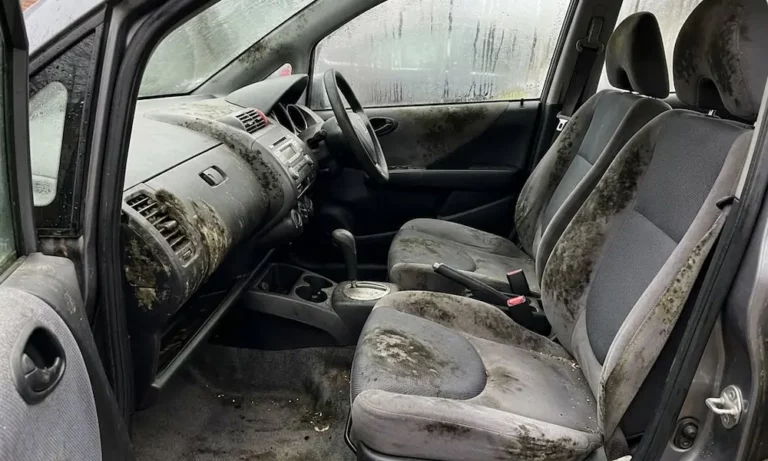
That musty smell hitting you every time you open your car door? That’s mold, and it’s not going anywhere on its own. This guide walks you through exactly how to remove mold from the interior of your car — safely, effectively, and without destroying your upholstery in the process. Stick around, because the cleaning mistakes section alone could save your car.
Why Mold Grows Inside Your Car
Mold needs three things to grow: oxygen, food, and moisture. Your car’s cabin already has the first two covered in spades — dust, skin cells, fabric fibers, and leather tannins all make great mold food. Moisture is the only variable you can actually control.
The CDC notes that mold spores can germinate and start colonizing porous surfaces within 24 to 48 hours of a moisture event. That’s frighteningly fast.
Common moisture sources include:
- Clogged sunroof drains — debris blocks the drain tubes, water spills over into the headliner and down the pillars
- AC condensate drain blockage — water from the evaporator core overflows into your footwells
- Worn door and window seals — aged rubber lets rain bypass your car’s defenses
- Owner habits — wet umbrellas, damp gym clothes, or open windows during rain
Once moisture enters the picture, you’re on a tight clock.
Gear Up Before You Start
Disturbing mold releases millions of airborne spores. Don’t skip the protective equipment — the CDC recommends this minimum kit before touching any mold:
- N95 respirator or higher — filters 95% of airborne particles
- Unvented safety goggles — standard glasses let spores reach your eyes
- Nitrile, vinyl, or rubber gloves — no latex
For severe infestations involving soaked carpet padding or seat foam, upgrade to a half-face respirator with HEPA cartridges. Add disposable coveralls to stop spores from hitchhiking into your home.
Work outdoors or in an open garage whenever possible. The car’s cabin is essentially a confined space, and aerosolized spores concentrate fast in an enclosed area.
Do You Need a Pro? The EPA’s 10-Square-Foot Rule
Before you start scrubbing, assess how bad the problem actually is. The EPA’s mold remediation guidelines give a clear framework:
| Contamination Area | Recommended Action |
|---|---|
| Under 10 sq ft | Healthy adult can DIY with proper PPE |
| 10–100 sq ft | Professional assessment strongly recommended |
| Over 100 sq ft | Certified professional remediation required |
If the mold involves your HVAC system, came from floodwater or sewage, or you can smell it but can’t find it — call a certified professional. Automotive carpet and padding can easily exceed 10 square feet during a serious water event.
The Cleaning Products That Actually Work (And One You Must Avoid)
Picking the wrong product can trash your interior or leave mold roots completely intact. Here’s what works on which surfaces:
| Cleaning Agent | Best For | Key Limitation |
|---|---|---|
| Distilled white vinegar | Fabric seats, carpet, hard plastics | Strong smell; needs good ventilation |
| Enzyme-based cleaner | Textiles, carpet, AC ducts | Needs 10–15 min dwell time to work |
| Mild detergent + water | Hard plastics, glass, metal | Doesn’t kill spores — mechanical removal only |
| Clove oil solution | Stubborn spots, natural deodorizing | Must be heavily diluted or it stains |
| Bleach | ❌ Nothing in your car interior | Destroys fabric, degrades leather, leaves roots alive |
Why bleach fails every time: The EPA, CDC, and professional detailers all agree — bleach has high surface tension, meaning it can’t penetrate porous materials like seat foam or carpet. It bleaches the visible surface while leaving root networks alive and thriving. Then the water content in the bleach feeds those surviving roots. Beyond that, bleach degrades seatbelt webbing, discolors upholstery, and produces fumes that turn toxic in a sealed cabin.
Never mix bleach with ammonia or other cleaners. The CDC warns this produces chloramine vapors that cause severe respiratory damage.
How to Remove Mold From Car Seats (Fabric)
Fabric seats are porous, so you need a cleaner that soaks in and attacks the roots — not just the surface.
- Vacuum the seat thoroughly using a HEPA vacuum to capture loose spores
- Spray an enzyme-based cleaner or white vinegar directly onto the affected area
- Let it dwell for at least 10–15 minutes
- Scrub with a medium-bristle brush in circular motions
- Extract moisture immediately with a wet/dry vacuum
- Repeat if necessary, then allow to fully air dry with doors open
Don’t let seats stay damp. Wet foam underneath the fabric is exactly how you end up back at square one.
How to Remove Mold From Leather Seats and the Steering Wheel
Mold on leather steering wheels is surprisingly common. Every time you drive, your hands deposit body oils and skin cells into the leather’s texture. When humidity spikes, that organic buildup becomes a buffet for mold spores.
Follow this sequence:
- Dry brush first — gently loosen fluffy surface mold with a soft brush while vacuuming simultaneously
- Apply cleaner to a cloth, not the surface — spraying liquid near airbag modules or electrical switches risks short circuits
- Agitate gently — use a pH-balanced leather cleaner or mild dish soap solution; a soft toothbrush reaches stitching and grain
- Wipe completely dry — leather must not stay saturated; it shrinks and cracks
- Condition immediately — cleaning strips the leather’s natural oils; apply a quality leather conditioner to restore protection and block future moisture penetration
For stubborn patches, a 50/50 rubbing alcohol and water mix briefly applied will kill the fungal cells — but use it sparingly to avoid stripping the dye.
How to Remove Mold From Car Carpet and Floor Padding
This is where most DIY attempts fall short. Automotive flooring is a layered system: synthetic carpet on top, with a thick jute fiber or open-cell foam pad directly beneath. When water enters, the carpet surface dries fast — often within a day — while the padding underneath holds water for weeks.
Research on wet carpet padding shows that by days three to seven, mold and bacteria establish colonies in the padding’s dark, warm environment. The result is that distinctively horrific sulfur-like “worm smell” that no air freshener will touch.
Surface cleaning saturated padding is pointless. The mold’s hyphal networks grow through the entire depth of the material. You can’t extract it without destroying the pad itself.
The correct protocol:
- Remove seats, disconnect harnesses, pull lower trim panels
- Peel back the carpet layer
- Scrape out and bag the contaminated padding — it goes in the trash
- Sanitize the bare metal floor pan with antimicrobial detergent and a mold inhibitor
- Install new padding — consider hydrophobic closed-cell materials like foil-faced butyl rubber to prevent future absorption
- Reinstall the carpet once everything is bone dry
If the contamination came from floodwater or sewage, replace the carpet too — no exceptions.
How to Remove Mold From Car AC Vents and HVAC System
That musty blast hitting you the moment you turn on the fan? That’s your evaporator core — the aluminum cooling component inside your dashboard — acting as a mold farm. It stays permanently dark, damp, and coated with organic debris from the air. Every time the blower runs, it shoots those spores directly at your face.
Spraying air freshener into the vents doesn’t work. The mist can’t navigate the ductwork in high enough concentrations to reach the source.
What actually works:
- Remove the cabin air filter — bag it immediately, it’s almost certainly contaminated. Replace it with a standard-flow antimicrobial filter (MERV 13 is ideal). Don’t upgrade to a true HEPA filter — it restricts airflow too much and can overheat the blower motor
- Apply antimicrobial foam — injected into the evaporator housing through the condensate drain tube or blower motor access port, the foam expands to coat the entire cooling fin array, breaks down biological matter, and flushes it out through the drain
- Run the heater at maximum — with windows open, this bakes residual moisture out of the ductwork before you seal everything back up
For severe infestations, professionals use chlorine dioxide gas treatment to neutralize mycotoxins embedded in the plastic ductwork — it’s more targeted than ozone and doesn’t degrade rubber seals.
Special Case: Mold on Child Car Seats
This situation demands extra caution. Child car seats are federally regulated safety devices, and the wrong cleaning approach can silently compromise their ability to protect your child in a crash.
Never use on harness webbing or fabric covers:
- Bleach
- Vinegar
- Hydrogen peroxide
- Ammonia
- Enzyme cleaners
- Machine washing or machine drying
These chemicals degrade the nylon straps’ tensile strength and strip mandatory fire retardants from the fabric — damage you can’t see until it’s too late.
The only approved method:
- Cold water and ultra-mild, unscented baby soap
- Damp microfiber cloth for spot cleaning
- A soft toothbrush or wrapped flathead screwdriver for crevices
- Air dry in direct sunlight only
Always check your specific manufacturer’s manual first — rules vary by brand. If the harness webbing has heavy mold growth that won’t come clean with soap and water, don’t reach for stronger chemicals. Replace the harness or the entire seat. Most manufacturers sell replacement harness systems for far less than a new seat.
What Does Professional Mold Remediation Cost?
Here’s what you’re realistically looking at depending on severity:
| Remediation Level | What’s Included | Estimated Cost (USD) |
|---|---|---|
| DIY | PPE, cleaning chemicals, wet/dry vac rental | $50–$100 |
| Standard detailing | Interior clean, steam, vacuum | $150–$350 |
| Detailing + remediation add-on | Antimicrobial treatment, HVAC foam | $300–$500 |
| Full professional remediation | Disassembly, padding replacement, subfloor sanitization, HVAC purge | $800–$3,000+ |
Professional detailers often decline severe mold jobs — they classify them as biohazard cleanup, not standard detailing. When padding removal and reinstallation is involved, you’re looking at multiple days of labor.
Will insurance cover it? Maybe. Standard liability and collision policies don’t cover mold. Comprehensive insurance may cover it if the cause was a sudden covered event — like a flood or storm damage. Neglect-based claims get denied. If the repair cost exceeds the car’s value, the insurer may total it and issue a branded salvage or flood title, which permanently tanks resale value.
Stop Mold From Coming Back
You’ve done the hard work — now keep it that way:
- Dry your AC system before parking — five minutes before you arrive, turn off the AC compressor but keep the fan running on fresh air mode. This evaporates condensation from the evaporator core before you seal the car
- Use moisture absorber bags — place silica gel packets under front seats; they passively pull humidity from the cabin air
- Clear your sunroof drains twice a year — pour water into the tray and watch it exit under the car. If it pools, clear the tubes with a flexible line or compressed air
- Act immediately after spills — towel-drying only handles the surface; use a wet/dry vacuum to pull moisture out of the padding before mold starts its clock
Frequently Asked Questions
Does driving with the windows down dry out a moldy car?
It helps exchange stale, spore-filled air with fresh air, but it won’t solve a deep moisture problem. Airflow through open windows can’t penetrate the carpet barrier to reach saturated padding underneath. You need mechanical extraction and targeted drying equipment for that. Open windows give a false sense of security while the subfloor keeps rotting.
Does running the heater on max kill mold spores?
No. Automotive heaters output air at roughly 130–150°F. Most mold spores need sustained temperatures well above 140°F applied directly and continuously to die. Running the heater is excellent for drying out ventilation ducts after cleaning, but it doesn’t function as a thermal biocide.
Can car mold spread to your home?
Yes, and it’s a serious risk. Opening a heavily contaminated car in a closed garage releases millions of spores into the structure. Spores also cling to clothing, hair, and shoes — you can carry a significant payload directly into your home. This is exactly why professional remediators wear disposable coveralls during the job.