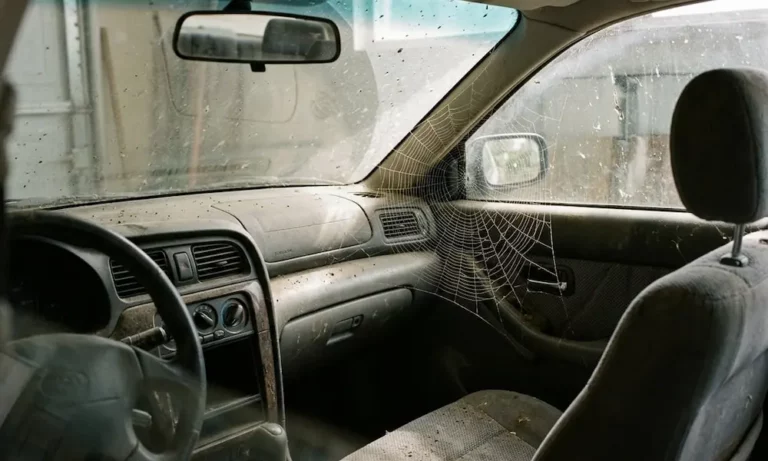
Found a spider dangling from your sun visor mid-highway? Yeah, that’s a problem. Spiders in cars aren’t just creepy — they’re a genuine safety hazard and can even damage your vehicle’s systems. This guide covers exactly how to rid spiders from your car safely, what methods to skip entirely, and how to keep them gone for good.
Why Spiders Love Your Car So Much
Your car isn’t just transport. To a spider, it’s a five-star hotel.
Spiders move into vehicles because cars offer exactly what they need: shelter from rain and cold, dark undisturbed spaces for nesting, and a steady food supply. That last part is important. Spiders don’t eat your dropped French fries. They eat the ants, gnats, and flies that do eat your dropped French fries.
This is the core problem most people miss. If your car has spiders, it almost certainly has a broader bug problem first. Kill the food supply, and the spiders follow.
Parked near a tree or woodpile? You’re basically handing out welcome mats.
Which Spiders Actually Show Up in Cars
Not every spider is the same threat. Here’s a quick breakdown of the most common species found in US vehicles:
| Spider | Where It Hides in Your Car | Danger Level |
|---|---|---|
| Yellow Sac Spider | Fuel lines, door seals, headliners | Low venom, high mechanical damage risk |
| Wolf Spider | Floorboards, under seats, trunk | Low — but startling |
| American House Spider | Dashboard corners, window frames | Very low |
| Cellar Spider | Trunk, spare-tire well | None |
| Brown Recluse | Deep storage, unused floor mats | High — seek professional help |
| Brown Widow | Wheel wells, undercarriage | High — seek professional help |
| Hobo Spider | Floor mats, trunk liner | Low to moderate |
| Grass Spider | Exterior cowls, wiper recesses | None |
If you spot a brown recluse or brown widow, don’t try to DIY it. Call a professional pest service.
How Spiders Can Actually Break Your Car
This part surprises most people. Spiders don’t just creep you out — they’ve caused real automotive recalls.
The Mazda Fuel Line Problem
Yellow Sac spiders triggered multiple Mazda6 recalls because they loved nesting inside the evaporative emissions hoses. Their dense silk sacs blocked the vents completely. That blockage created a vacuum in the fuel tank, which cracked it and created a serious fire hazard. Mazda had to install spring-loaded valves just to keep them out.
Spoiler: the spiders weren’t attracted to gasoline smell. Research debunked that myth entirely. The hose just happened to be the perfect size for their silk sac retreats.
The Toyota Airbag Issue
In 2013, Toyota recalled over 800,000 vehicles — including the Camry and Avalon — because spiders built webs inside the air conditioning drainage tubes. The blocked tubes caused water to back up onto the airbag control module. The result? Electrical shorts, airbag warning lights, and in some cases, spontaneous airbag deployment while the car was occupied.
This isn’t a fringe issue. Spiders in your car’s mechanical systems are a documented, costly, dangerous problem.
What NOT to Do First
Before covering the right methods, you need to know what to avoid. Two popular approaches can seriously hurt you.
Don’t Use Bug Bombs (Total Release Foggers)
It seems obvious — just bomb the car and be done with it. But the EPA strongly warns against using foggers in enclosed spaces like vehicles.
Here’s why they’re a bad idea in your car specifically:
- Fire risk: The aerosol propellants are highly flammable. A single static discharge, a keyless entry ping, or a dome light clicking on can trigger an explosion. The CDC documented thousands of illness cases and property damage incidents linked to fogger misuse.
- They don’t even work: Fogger particles fall straight down by gravity. They can’t reach under seats, behind dashboards, or inside the voids where spiders actually live. Studies confirm foggers are largely ineffective against crawling pests in enclosed settings.
- Toxic residue on everything you touch: The steering wheel, gear shift, armrests — all coated in pyrethroid film. Symptoms from exposure include respiratory distress, nausea, vomiting, dizziness, and skin burning.
- Material damage: The solvents can permanently stain leather, melt instrument cluster covers, and corrode dashboard electronics.
Don’t Spread Diatomaceous Earth in Your Car
Diatomaceous earth works great in wall voids and garden beds. Inside a car? It’s a respiratory hazard.
The moment you turn on your HVAC, it aerosolizes the microscopic silica shards directly into the air you’re breathing. Short-term: coughing, irritation, shortness of breath. Long-term concentrated exposure raises concerns about silicosis, a serious and irreversible lung condition.
If you use it at all, apply a whisper-thin dusting only in completely sealed, non-ventilated spots like trunk liner edges — and wear a proper respirator while doing it.
Step-by-Step: How to Rid Spiders From Your Car the Right Way
This four-phase process tackles the spiders, their food source, their eggs, and their entry points.
Phase 1: Deep Clean and Vacuum
This is the most important step, and most people skip it.
Start by removing all clutter from the cabin and trunk. Bags, old receipts, clothing, cardboard — all of it. Spiders use clutter as cover. No clutter, less hiding space.
Then grab a shop vacuum with a narrow crevice tool and go everywhere:
- Along seat tracks and under seat cushions
- Deep into floorboard edges
- The spare-tire well
- Trunk corners
- Dashboard vents (gently)
Vacuuming destroys the food chain. It removes crumbs that attract the insects that attract the spiders. It’s a two-for-one.
Don’t forget egg sacs. These small silken bundles hide in dark corners and look like tiny cotton balls. One overlooked egg sac means hundreds of spiderlings in a few weeks. Once you’re done vacuuming, empty the canister immediately into a sealed outdoor bin.
Phase 2: Apply Botanical Repellents
Spiders process smell through sensory hairs on their legs. Certain essential oils completely overwhelm those receptors and drive them out of treated areas.
Make a safe DIY spray:
Mix 10–15 drops of peppermint or citrus essential oil into 2 cups of water. Add one drop of dish soap as an emulsifier. Peppermint oil is one of the most consistently effective spider deterrents available.
How to apply it safely:
- Soak cotton balls and place them under seats, in door pockets, and in the trunk
- Wipe along rubber door seals and plastic kick panels with a microfiber cloth
- Don’t spray directly on leather, touchscreens, or steering wheel controls — oils can degrade finishes and dye
For a ready-made option, Wondercide’s plant-based sprays use cedarwood oil, lemongrass, and plant-derived sodium lauryl sulfate to kill spiders on contact and leave a residual barrier.
Effective oil options include:
- Peppermint — strong menthol disrupts spider chemoreception
- Citrus (lemon, lime, orange) — limonene disrupts scent trails
- Eucalyptus and cedarwood — woody aromatics mask prey tracking
Phase 3: Set Passive Traps
For spiders that avoided the vacuum, traps do the quiet work overnight.
| Trap Type | Where to Place It | Why It Works |
|---|---|---|
| Low-profile glue traps | Under seats, trunk corners, spare-tire well | Non-toxic, shows you exactly how bad the problem is |
| UV/blue light flying insect traps | In the garage near the car | Kills gnats and flies — starves the spiders of prey |
Glue traps inside the car catch spiders directly. Flying insect traps outside the car collapse the food supply. Use both together.
Phase 4: Clear Exterior Hotspots
Side-view mirrors are one of the most common spider nesting spots on any vehicle. The housing is warm, aerodynamic, and sheltered. Use a can of compressed air to blast the spider and web out of the housing gap.
After clearing it, wipe the mirror housing perimeter with a cotton swab dipped in peppermint oil or white vinegar. This creates a repellent barrier that discourages rebuilding. Apply vinegar with extreme precision — it strips automotive clear coat if it drips onto painted surfaces.
Also check:
- The cowl intake at the base of your windshield (leaf debris builds up here)
- Wheel wells and behind bumpers
- Door and trunk weatherstripping gaps
Long-Term Prevention: Keep Them Out for Good
Ridding your car of spiders once is only useful if you stop them from coming back.
Park Smarter
Parking under trees or next to dense bushes and woodpiles puts your car directly in a spider’s hunting range. Spiders drop down from tree canopies on silk threads and land directly on your roof or hood. Park on clear paved surfaces or in a swept, sealed garage whenever possible.
Maintain Your Seals and Filters
Cracked or dry-rotted weatherstripping around your doors and trunk is a direct entry point. Apply automotive rubber conditioner regularly. Replace seals that are torn or compressed flat.
Replace your cabin air filter annually. The filter sits right behind the cowl intake. An old clogged filter is a perfect nesting spot, and swapping it out gives you a chance to check the intake duct for webs.
Control Moisture
Spiders need water. So do the insects they eat. Place silica gel desiccant packs under your seats, in the glove compartment, and in the spare-tire well. Keeping the interior dry makes it a hostile environment for insect life at every level of the food chain.
What to Do If a Spider Appears While You’re Driving
This is where people make dangerous mistakes. A spider dropping from the sun visor while you’re doing 65 mph can trigger a full panic response — and that panic is more dangerous than the spider.
Here’s the protocol:
- Keep both hands on the wheel. Eyes forward. Don’t swat.
- Don’t brake suddenly or swerve. That causes accidents, not spiders.
- Signal, check mirrors, and pull over gradually to the nearest safe spot.
- Shift to park, apply the handbrake, shut the engine off.
- Open the doors and let the spider leave on its own — or use a cup and paper to capture and relocate it.
The spider won’t kill you. A panic swerve into oncoming traffic might. Stay calm, pull over safely, deal with it then.
One Final Tip That Most People Skip
After you’ve deep cleaned the interior, applied your repellents, and set your traps — don’t eat in your car anymore.
Food debris is the foundation of the whole problem. It pulls in the insects. The insects pull in the spiders. Cut off the food source at the root, and you’ve removed the biggest reason any spider would want to be in there in the first place.