Thinking about grabbing a Carista OBD2 scanner? You’ve probably seen it pop up in forums, Reddit threads, and YouTube teardowns. But the real question is whether it’s worth your money — or just another gadget that collects dust. This post breaks down exactly what you get, what it costs, and who it actually makes sense for.
What Is Carista OBD2, and How Does It Work?
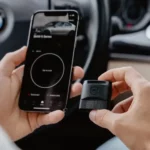
Carista is a Bluetooth OBD2 scanner that pairs with your smartphone. You plug the adapter into your car’s OBD2 port, open the app, and suddenly you’ve got access to diagnostics, maintenance tools, and hidden vehicle settings — all from your phone.
It turns your phone into a tool that used to cost hundreds of dollars at the dealership. The app works on iOS, Android, and Huawei devices, so most people are covered right out of the box.
There’s no bulky screen to carry around. No expensive standalone unit. Just a small Bluetooth dongle and an app.
The Two Adapters: Which One Do You Need?
Carista sells two physical adapters. Picking the wrong one matters.
Carista EVO Scanner
The EVO Scanner is the premium option, priced between $47.99 and $68.05. It supports a wide range of communication protocols — HS-CAN, MS-CAN, SW-CAN, and K-Line. That matters because modern vehicles use different communication layers, and cheaper adapters often miss them entirely.
The EVO also bypasses Volkswagen Group’s Vehicle Diagnostic Protection (SFD) security firewall on models built up to 2023. Standard code readers can’t do that. If you own a recent VW, Audi, SEAT, or Skoda, this feature alone makes the EVO the only real option.
Carista OBD Reader (Legacy)
The legacy adapter runs $29.99 to $55.00 and works best with older vehicles — primarily pre-2019 VW Group cars, older Toyota and Lexus models, BMW, Mini, Nissan, and Scion. It doesn’t support Ford’s MS-CAN lines and won’t touch SFD-protected vehicles.
If your car is a 2020 or newer European brand, skip this one entirely.
| Hardware Parameter | Carista EVO Scanner | Carista OBD Reader (Legacy) |
|---|---|---|
| Primary Vehicle Target | Modern multi-brand vehicles | Older models (typically pre-2019) |
| US Retail Price | $47.99–$68.05 | $29.99–$55.00 |
| Warranty | 2-year limited | Varies by distributor |
| Supported Protocols | HS-CAN, MS-CAN, SW-CAN, K-Line | Basic communication layers |
| SFD Security Bypass | Yes (VAG up to 2023) | No |
| Third-Party App Compatible | Yes | Yes |
One Big Thing Most People Miss
Both adapters work with third-party apps like Car Scanner ELM OBD2. That means if you cancel your Carista subscription, the hardware doesn’t become a paperweight. You can keep using it as a generic code reader on open-source platforms.
Cheap knockoff adapters — especially those unbranded “version 2.1” clones flooding Amazon — regularly drop Bluetooth connections and cause network instability during coding. The Carista adapters emulate a proper ELM327 v1.4 interface, which keeps things stable.
What Does the Subscription Actually Get You?
Here’s where things get real. The adapter alone doesn’t unlock everything. Full diagnostics and customization require an active subscription.
| Tier | Monthly Cost | What You Get |
|---|---|---|
| Free | $0 | Basic engine fault codes, emissions readiness, live data |
| 1-Month Plan | $14.99 | Single-use repairs or one-time setting changes |
| 12-Month Plan | $59.99 | Multi-vehicle households, regular DIY maintenance |
| 24-Month Plan | $119.99 | Long-term ownership of compatible vehicles |
The EVO Bundle combines the scanner and a 12-month subscription for roughly $107.98 to $119.98, depending on promotions. It also comes with a 30-day return policy and a 2-year warranty, with an optional extension for $9.99.
One major heads-up: Carista removed its free one-month trial in October 2024. Users who bought the adapter based on old product listings hit a paywall immediately. If you’re buying based on a cached product description, verify the current terms first. App store reviews confirm this friction was a genuine source of frustration.
Also worth knowing: iOS and Android subscriptions don’t transfer. Switch phones across platforms and you’re buying a second license. That’s a legitimate gripe.
What Can It Actually Do? The Tools That Save Real Money
This is where Carista OBD2 earns its keep for DIY mechanics.
Full Multi-System Diagnostics
The free tier only reads basic engine fault codes. With a subscription, Carista scans every module — ABS, airbags, transmission, TPMS, and more. Generic $20 code readers stop at the engine. Carista goes dealer-level deep.
Electronic Parking Brake (EPB) Retraction
On VW, Audi, SEAT, and Skoda models, the rear calipers use electric motors to hold brake pressure. When you replace rear pads, you must electronically retract those calipers first. Forcing them back manually without releasing the EPB can crack the caliper housing, destroy the actuator motor, or damage the master cylinder. Carista handles this safely through a guided digital tool. Dealerships charge $50–$100 just for this step.
Battery Registration
Modern smart alternators adjust charging based on battery age. Install a new battery without registering it, and the alternator continues using the old aggressive charging profile. That shortens the new battery’s life and can fry electrical components. Carista registers the battery through the OBD2 port in minutes.
DPF Regeneration
For diesel vehicles, a forced DPF regeneration burns off accumulated soot in the exhaust system. Skipping this leads to expensive exhaust blockages. Carista triggers the cycle manually from the app.
Pre-Purchase Used Car Inspections
Connect Carista to a used car before buying it. You can check airbag crash count records, view ECU hardware versions, examine historical launch control cycles, and — critically — run mileage verification checks. The scanner cross-references odometer data stored across multiple control units to spot odometer tampering. That alone could save you thousands.
Vehicle Customization: What Can You Actually Change?
Carista’s customization features let you unlock hidden settings manufacturers disable for different regional markets or trim levels. Toyota Tacoma and Lexus owners have documented hundreds of available tweaks:
- Chimes and warnings: Silence the seatbelt ding, adjust door-open warning volumes
- Key fob controls: Enable window roll-down and sunroof opening from the remote
- Lighting: Adjust automatic headlight sensitivity, toggle daytime running lights, extend the coming-home headlight timer, change turn signal blink count from 3 to 5
- Cabin electronics: Disable simulated engine noise pumped through the speakers, adjust microphone volumes, turn off active noise cancellation
Important caveat: Feature availability depends heavily on your specific model year and trim. A 2015 VW GLI might show certain menus but not all options. A 2023 Toyota Camry might have some settings greyed out entirely. Always check Carista’s compatibility tool for your exact vehicle before buying. Brand-level compatibility lists don’t guarantee every feature works on every trim.
Carista vs. the Competition
| Feature | Carista EVO | OBDeleven | BlueDriver | Carly |
|---|---|---|---|---|
| Target User | Multi-brand DIYers | European car enthusiasts | Diagnostic-only drivers | App-subscription coders |
| Pricing Model | Hardware + subscription | Hardware + credit system | One-time purchase | Hardware + subscription |
| Customization | Unlimited within subscription | Pay-per-use credits | None | Limited basic coding |
| SFD Bypass | Yes (up to 2023) | Yes (full) | No | Not documented |
| Hardware Portability | Open (works with other apps) | Closed | Closed | Closed |
OBDeleven offers deeper manual coding for VAG vehicles, but its credit system is where it stings. Every time you apply or revert a customization, it costs credits. Testing five settings back-to-back gets expensive fast. Carista lets you flip settings as many times as you want within your subscription period — no per-action charges.
BlueDriver is excellent if you only want check-engine light diagnostics. But it has zero bi-directional tools. No battery registration, no EPB retraction, no DPF regeneration. If you need any of those, BlueDriver hits a hard wall.
Carly looks similar on paper, but its adapter only works with the Carly app. If Carly shuts down or you cancel, the hardware dies with it. Carista’s open-adapter design keeps working on third-party apps indefinitely.
So Is Carista OBD2 Worth It?
It depends entirely on how you use it.
It’s worth it if:
- You drive a VW, Audi, BMW, Toyota, Lexus, or Ford from the last decade
- You do your own oil changes, brake jobs, or battery swaps
- You want to customize hidden settings in your car
- You inspect used cars before buying them
It’s not worth it if:
- You only want to check a check-engine light once a year
- You want raw module programming without guardrails (look at VCDS instead)
- You’re switching between iPhone and Android frequently
The smart move for one-time users: Buy the EVO adapter, grab the $14.99 monthly plan, do everything you need in one session, then cancel. The hardware stays useful on free third-party apps long after the subscription ends. That’s a fair deal.
For regular DIYers, the $59.99 annual plan pays for itself after skipping just one dealership diagnostic appointment — which typically runs $100 to $150 before any repairs start.