Thinking about buying OBDeleven but not sure if it’s the right call? You’re about to get a straight answer — no fluff, no hype. This guide breaks down exactly what OBDeleven does, what it costs, and whether it’s actually worth your money based on your specific car and how you plan to use it.
What Is OBDeleven, Exactly?
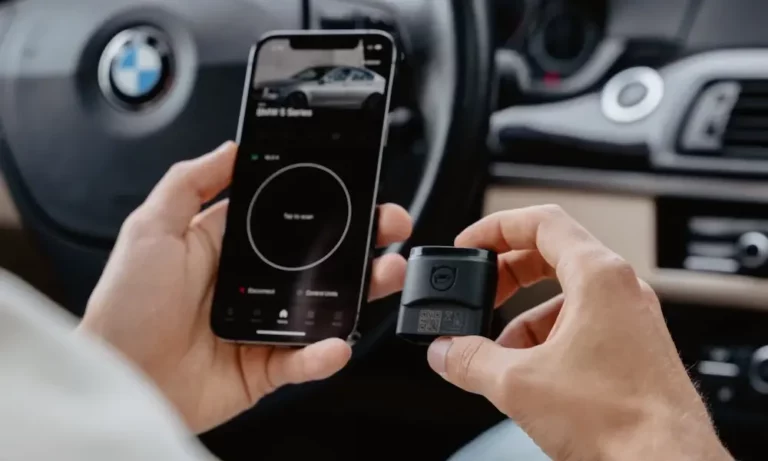
OBDeleven is a small Bluetooth dongle that plugs into your car’s OBD2 port. It connects to an app on your phone and lets you read fault codes, run full system scans, and — depending on your subscription — modify how your car behaves at the software level.
It’s not a generic code reader. It runs on officially licensed communication agreements with major manufacturers. That means it can talk to your car’s actual control modules, not just the basic emissions network.
That said, it’s not magic. How useful OBDeleven is depends heavily on what car you drive.
OBDeleven 2 vs. OBDeleven 3: Which Hardware Should You Buy?
There are two hardware versions. Here’s what actually separates them:
| Feature | OBDeleven 2 (NextGen) | OBDeleven 3 |
|---|---|---|
| Bluetooth Version | 4.2 | 5.0 Low Energy |
| CAN Channels | Dual-channel | Five-channel CAN FD |
| Smart Sleep Mode | No | Yes |
| Auto Ignition Detection | No | Yes |
| US Price | $60–$68 | $100–$128 |
The Cybernews OBDeleven 2 vs. 3 comparison explains why CAN FD matters. Modern cars juggle massive data flows across dozens of connected modules. The older dual-channel setup can lag during full system scans or lose connection mid-coding. The five-channel CAN FD in the third-gen device handles that data without transmission delays.
The smart sleep mode is also a real practical upgrade. Older dongles left plugged in will slowly drain your battery. OBDeleven 3 tracks ignition state and drops into a low-power sleep state automatically, so you can leave it connected without worry.
Bottom line: If you drive a newer car (2019 and up), spend the extra $30–$60 and get OBDeleven 3. The connection stability alone is worth it.
What Cars Does OBDeleven Actually Support?
This is where things get interesting — and where a lot of buyers get caught off guard.
| Vehicle Group | Coverage | What You Can Actually Do |
|---|---|---|
| VW, Audi, Skoda, Seat, Cupra | Full OEM-level access | Everything: long coding, adaptations, SFD unlock |
| BMW, MINI | Advanced diagnostics | Some adaptations; blocked on 2024+ models |
| Toyota, Lexus | Advanced diagnostics | Basic comfort tweaks only |
| Ford (US models only) | Full diagnostics | Select pre-coded apps, minimal manual coding |
| Mercedes-Benz (~2008–2022) | Full diagnostics | Pre-coded comfort apps only, no manual coding |
| Generic OBD2 brands | Basic scanning | Fault codes and live data only |
Volkswagen Group vehicles are where OBDeleven genuinely shines. The Skanyx OBDeleven review puts it plainly: for VAG cars built between 2008 and 2023, it’s best-in-class for a mobile diagnostic tool.
For BMW owners, note that OBDeleven’s support page confirms that 2024 and newer BMW models have software firewalls that block all coding apps entirely.
Mercedes-Benz support launched in April 2026, but it comes with strict limits. The official Mercedes compatibility page lists several models as completely unsupported — including the W223 S-Class, W206 C-Class, W214 E-Class, EQS, EQE, and all Smart vehicles. Cars built before 2008 or from 2023 onward are also excluded.
The Subscription Model: What Are You Actually Paying For?
OBDeleven has three tiers. Here’s the honest breakdown:
FREE — Comes with the hardware. You get full system scans, fault code reading, and live data. No manual coding, no adaptations.
PRO ($59.99/year) — Unlocks manual long coding, adaptations, output tests, and automatic SFD unlocking for protected VAG modules. This is the tier most enthusiasts actually need.
ULTIMATE ($189.99/year) — Everything in PRO, plus unlimited One-Click Apps, priority support, and a used-car inspection guide.
One detail worth knowing: if your PRO subscription lapses, you lose manual coding access immediately. The device drops back to FREE tier functionality. That’s an important consideration if you’re budgeting long-term.
For the full pricing breakdown, OBDeleven’s products page lists every option including bundle pricing.
One-Click Apps and the Credits System
One-Click Apps are pre-coded macros that change how your car behaves without you needing to touch raw coding data. Popular examples include:
- Needle sweep on startup (instrument cluster animation)
- Auto door lock when you walk away
- Comfort turn signals — adjust the number of flashes per tap
- Window control via key fob
- Start-stop system disable
- Seatbelt chime deactivation
Each app costs Credits — OBDeleven’s in-app currency. Running a modification costs credits, and reversing it costs credits too. Most comfort macros run about 10 credits. Some specialized procedures can cost up to 400 credits.
Credit packs:
- 10 credits: $1.99
- 100 credits: $17.99
- 500 credits: $74.99
ULTIMATE subscribers get unlimited app access under a fair-use policy, which makes the math favorable if you plan to modify frequently or across multiple vehicles.
The SFD2 Problem: What Nobody Tells You Before You Buy
This is the most important thing to read if you own a 2024 or newer VW Group vehicle.
VW Group introduced a first-generation security system called SFD (Schutz Fahrzeug Diagnose) around 2020 on cars like the Golf 8, ID.4, and Audi A3. OBDeleven solved that one — PRO and ULTIMATE subscribers get automatic real-time SFD token unlocking without any manual steps.
Then came SFD2.
Starting with 2024 model year vehicles, VW Group implemented SFD2 to comply with EU cybersecurity regulations. This system uses hardware-level encryption chips and requires a direct secure handshake between your car’s modules and VW’s own servers. OBDeleven’s SFD2 page confirms that this blocks all coding, adaptations, and One-Click Apps entirely.
As of 2026, there’s no working SFD2 unlock. The development team is working with VW Group on an authorized token gateway, but no release timeline exists.
What this means practically: If you own a 2024+ Golf, ID.4, Tiguan, Audi A3, or similar VAG vehicle, OBDeleven currently functions as an expensive fault code reader on those vehicles. Basic diagnostics work. Everything else is blocked.
OBDeleven vs. the Competition
| OBDeleven 3 | Ross-Tech VCDS | Carly | Carista | |
|---|---|---|---|---|
| Hardware Cost (US) | $100–$128 | $199–$449 | ~$85 | $49 |
| Annual Subscription | $60–$190 | None | $70–$174 | $60/yr or $15/mo |
| Manual VAG Coding | Yes (full) | Yes (near-factory) | No | No |
| SFD Unlock | Automatic | Manual (external token) | No | Yes (up to 2023) |
| VIN Limit | Unlimited | 3 or 10 vehicles | Tiered | Unlimited |
| Interface | Phone app | Windows PC | Phone app | Phone app |
Ross-Tech VCDS is the professional benchmark for VAG diagnostics. It has no annual fees and free lifetime updates — a real advantage if you keep cars long-term. The catch is that it requires a Windows laptop, limits you to 3 or 10 VINs on enthusiast licenses, and lacks automatic SFD unlocking. If you want to code a 2020+ locked module with VCDS, you’re sourcing tokens manually.
Carly targets people who want diagnostic guidance more than raw coding ability. Its “Smart Mechanic” feature rates fault severity and estimates repair costs — genuinely useful for non-technical owners. But OBDeleven’s Carly comparison page highlights the key gap: Carly doesn’t support manual long coding or SFD unlocking, and multi-brand subscriptions can hit $174 a year. It’s not built for DIY enthusiasts who want to do retrofits.
Carista is the budget-friendly entry point. At $49 for the scanner and $59.99 annually, it handles basic comfort mods and diagnostics without complexity. It supports SFD on VAG vehicles up to 2023 models. It’s a solid tool if your needs are simple — but it has no manual coding depth whatsoever.
So Is OBDeleven Worth It?
Here’s the honest answer by use case:
Buy it if you own a VW Group vehicle from 2008 to 2023. This is its sweet spot. Full coding, automatic SFD unlock, and One-Click Apps make it genuinely powerful for DIY maintenance and customization. You’ll recoup the cost after avoiding one or two dealer visits.
Skip it if you own a 2024+ VW Group vehicle. Until SFD2 gets resolved, you’re paying for a premium code reader. Wait for an official unlock announcement before buying.
It’s okay for BMW and Toyota owners who just want diagnostics. Don’t expect deep coding — especially on any BMW from 2024 onward.
It’s borderline for Mercedes-Benz owners. Limited to ~2008–2022 models, no manual coding, and a long list of unsupported vehicles. Check the full Mercedes compatibility list before you spend a cent.
The PRO plan at $59.99/year is the value tier for most users. The ULTIMATE plan makes sense if you’re modifying frequently or running diagnostics across multiple vehicles. If you plan to keep your VAG car for three-plus years, crunch the numbers against VCDS — the one-time cost often wins long term.