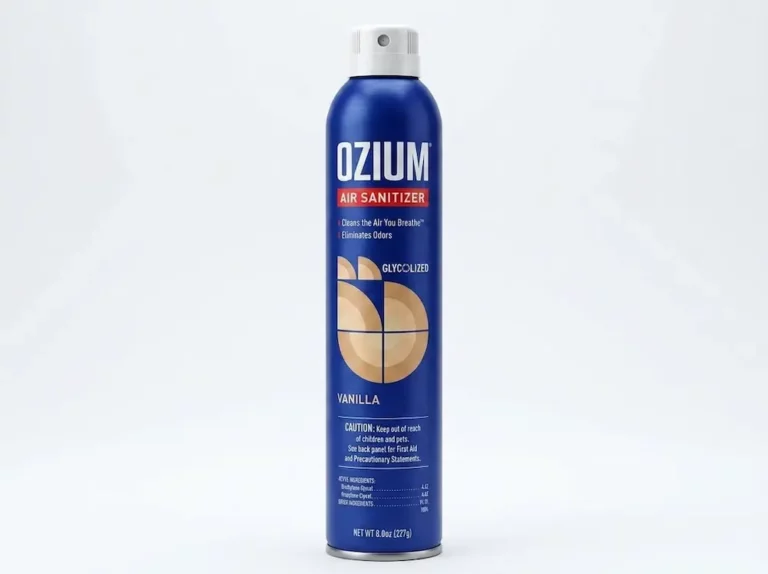
That little blue can looks harmless sitting on your dashboard. But if you’re wondering whether Ozium is actually dangerous, the answer is more complicated than the label suggests. This post breaks down exactly what’s inside, what it does to your body, and how to use it without putting yourself at risk. Stick around — some of this will genuinely surprise you.
What Is Ozium and How Does It Actually Work?
Ozium isn’t your typical air freshener. It was originally developed for hospitals and clinical settings to combat airborne pathogens — not just mask bad smells.
The active ingredients are triethylene glycol and propylene glycol, each at about 4.4% concentration. When you spray Ozium, these glycols float through the air as microscopic droplets. They physically attach to airborne bacteria, making the combined particle heavy enough to fall out of your breathing zone and onto the floor.
It’s a genuinely clever mechanism. But the other 91% of the formula? That’s where things get more interesting.
Because Ozium makes claims about reducing airborne bacteria, the EPA classifies it as a registered pesticide under the Federal Insecticide, Fungicide, and Rodenticide Act — not a cosmetic fragrance. That classification comes with real legal weight.
The Chemical Breakdown: What’s Really in the Can
Here’s the full picture of what you’re spraying into a room:
| Chemical Component | Concentration | Main Function | Key Hazards |
|---|---|---|---|
| Isopropyl Alcohol | 30–50% | Carrier solvent | Extreme flammability; CNS depression |
| Liquefied Petroleum Gases | 20–30% | Aerosol propellant | Fire/explosion risk; asphyxiation |
| 1,1-Difluoroethane | 5–10% | Secondary propellant | Cardiac sensitization; sudden death risk |
| Triethylene Glycol | 4.4% | Active sanitizer | Respiratory irritation at high doses |
| Propylene Glycol | 4.4% | Active sanitizer | Low toxicity; mild respiratory irritant |
Source: Ozium Safety Data Sheet via Fastenal
The glycols are genuinely low-risk when used correctly. The propellants and solvents are a different story entirely.
Is Ozium Dangerous? The Honest Answer
Used correctly — one one-second spray in a ventilated, empty room — Ozium poses relatively low acute risk to healthy adults.
Used incorrectly? Yes, Ozium is dangerous. Genuinely and seriously dangerous.
The risk isn’t theoretical. It comes from specific chemicals in the formula, and each one carries its own set of hazards.
The Isopropyl Alcohol Problem
Isopropyl alcohol makes up 30 to 50% of the product. That’s an enormous concentration.
Fire and explosion risk tops the list. The official safety data sheet classifies Ozium as an extremely flammable aerosol. Keep it away from flames, sparks, and hot surfaces. If the canister reaches above 122°F — which can happen in a parked car on a summer day — it can rupture violently.
Neurological effects come second. When sprayed in an unventilated space, the alcohol vapors build up fast. Inhaling high concentrations causes dizziness, drowsiness, nausea, loss of coordination, and headaches. In extreme cases involving a sealed, hot car cabin, unconsciousness is possible.
Skin damage is the third issue. Isopropyl alcohol at this concentration strips the natural protective oils from your skin. Direct contact causes defatting dermatitis — burning, cracking, and peeling skin. In your eyes, it causes immediate intense burning, redness, and blurred vision.
The Most Dangerous Ingredient: 1,1-Difluoroethane
This is where Ozium moves from “use with caution” into genuinely life-threatening territory.
1,1-Difluoroethane is the secondary propellant in the formula. It’s also the chemical that makes huffing Ozium potentially fatal — sometimes on the very first attempt.
Sudden Sniffing Death Syndrome
When someone intentionally inhales concentrated Ozium aerosol, the difluoroethane absorbs directly into the bloodstream through the lungs. It crosses into the heart muscle almost immediately.
Once there, research published in PMC documents exactly what happens:
- It blocks potassium ion channels, slowing the heart’s electrical repolarization
- It impairs calcium channels, weakening the heart’s ability to pump
- It paralyzes the electrical communication network between heart cells
- It makes the heart hypersensitive to adrenaline
That last point is what kills people. If the person experiences any sudden fright, physical exertion, or panic surge of adrenaline, the chemically sensitized heart is thrown into ventricular tachycardia, then ventricular fibrillation. Cardiac arrest follows.
This is sudden sniffing death syndrome. It doesn’t require chronic use. It can happen the first time.
The Risk Doesn’t End Quickly
Monte Carlo pharmacokinetic modeling shows difluoroethane can remain detectable in blood for 7 to 15 hours after inhalation. The cardiac risk persists the entire time.
Emergency responders treating suspected inhalant abuse must know one critical fact: do not administer epinephrine during resuscitation. Adrenaline will almost certainly trigger a fatal arrhythmia in the sensitized heart.
Long-Term Damage From Chronic Abuse
Survivors of repeated inhalant abuse face severe consequences. Clinical case studies document permanent toxic cardiomyopathy, acute liver damage, and kidney failure.
Perhaps the most striking documented outcome is skeletal fluorosis. As the body metabolizes difluoroethane, it releases fluoride ions that accumulate in the bones. Young adults have developed joint fusion, abnormal gaits, and permanent deformity of their hands and fingers from chronic inhalant abuse.
The Hidden Hazard: Phthalates Nobody Talks About
Here’s something that doesn’t appear on the label.
An investigative study by the Natural Resources Defense Council tested common household air fresheners for hidden phthalate content. The results for Ozium were striking — phthalate concentrations exceeded 7,300 parts per million, among the highest of all products tested.
The two specific phthalates detected — di-n-butyl phthalate and di-isobutyl phthalate — are classified as anti-androgens. They interfere with testosterone production. Prenatal and early childhood exposure correlates with male reproductive abnormalities, reduced sperm production, and long-term infertility risk.
Because fragrance formulations are legally protected as trade secrets, manufacturers don’t have to list phthalates on packaging. You’d never know they were there.
Pregnant women and parents of young children should take this seriously. Repeated exposure in enclosed, poorly ventilated spaces means repeated low-level doses of endocrine disruptors every single time someone sprays the can.
Ozium and Your Pets
Dogs, cats, and birds are more vulnerable than adults for three reasons: smaller body mass, higher respiratory rates, and they live closer to the floor where the heavy glycol-bacteria particles settle.
The EPA’s mandated usage instructions are clear: spray once for one second toward the upper center of the room, then evacuate. All people and animals must leave before you spray.
Veterinary toxicologists recommend a minimum 20-minute re-entry window. This gives the isopropyl alcohol and difluoroethane time to dissipate, and lets the glycol complexes settle out of the breathing zone.
Don’t skip this step with pets. What feels like mild irritation to a 180-pound adult can be far more serious for an 8-pound cat.
Debunking the Ozone Myth
A lot of people assume Ozium uses ozone to clean the air. The name sounds like it, after all.
It doesn’t. Not a molecule of ozone.
Actual ozone gas exposure causes severe oxidative damage to lung tissue, worsens asthma, and accelerates emphysema. Ozium works entirely differently — through the physical condensation of glycols onto airborne particles.
This distinction matters enormously for medical treatment. Glycol and difluoroethane inhalation require completely different interventions than ozone gas poisoning. If you’re ever speaking to emergency responders, be specific about what was actually inhaled.
Aerosol Spray vs. Gel: Which Is Safer?
If you want continuous odor control without the acute chemical risks, the passive gel format removes most of the danger.
| Hazard | Aerosol Spray | Passive Gel |
|---|---|---|
| Flammability/Explosion | Extreme — pressurized petroleum gases and alcohol | Negligible — no propellants |
| Huffing/Cardiac Risk | Critical — difluoroethane present | None — can’t be inhaled as gas |
| Sanitization Speed | Immediate, large-area reduction of airborne bacteria | Gradual, continuous odor maintenance |
| Environmental Spread | Requires full room evacuation | Generally safe for continuous occupation |
| Ingestion Risk | Severe — aspiration hazard | Still dangerous if swallowed by children or pets |
The gel doesn’t replace the aerosol’s rapid bacterial reduction capability. But if you just need ongoing odor control in a small space like a gym bag or vehicle, the gel is the far safer choice.
What to Do If Something Goes Wrong
Accidental Inhalation
Move immediately to fresh air. If symptoms like dizziness, chest tightness, or confusion don’t clear up quickly, call 911. Tell responders exactly what was inhaled — including that the product contains 1,1-difluoroethane.
Suspected Intentional Inhalation
Call 911 immediately. Keep the person calm. Inform responders about the difluoroethane content. Do not let responders administer epinephrine — it can cause fatal cardiac arrest in the sensitized heart.
Accidental Ingestion
Do not induce vomiting. The aspiration risk from these solvents causes chemical pneumonitis — a potentially fatal lung inflammation. Give small sips of water and call Poison Control at 1-800-222-1222 immediately.
Eye Contact
Hold the eye open and rinse with a continuous stream of lukewarm water for 15 to 20 minutes. Remove contact lenses only after the first 5 minutes to avoid trapping solvent against the cornea.
Skin Contact
Remove contaminated clothing immediately. Wash thoroughly with mild soap and plenty of water. If irritation or rash develops, seek medical attention.
Using Ozium Correctly
The EPA-registered label is federal law — not a suggestion. Here’s what correct use looks like:
- One spray. One second. Directed at the upper center of a 10x14x8-foot room
- Everyone out first — people and pets
- Wait 20 minutes before re-entry
- Never spray directly at people, animals, food, or food surfaces
- Wipe up liquid residue immediately — the solvent will damage plastics, painted walls, varnished wood, and fabric
- Never puncture or incinerate the canister, even when empty
- Dispose of partial cans through a local hazardous waste facility — not your household trash
More spray doesn’t mean cleaner air. It means more propellant toxicity and more risk. The glycols work at low concentrations. Extra spraying just saturates the room with chemicals for no added benefit.
The Verdict on Whether Ozium Is Dangerous
Ozium is effective at what it claims to do. The glycol mechanism genuinely neutralizes airborne bacteria in a way standard air fresheners can’t. Used exactly as directed — one second, empty room, good ventilation — the acute risk to healthy adults is low.
But the gap between correct use and dangerous use is narrow. The aerosol formula contains a volatile, flammable solvent at near-50% concentration, a propellant that can trigger fatal cardiac arrest if inhaled intentionally, and hidden endocrine disruptors that aren’t listed on the label.
That’s not a product to spray casually, use in your car with the windows up, or leave accessible to teenagers. Treat it like what it legally is — a federally registered pesticide — and the risks stay manageable. Ignore the label, and the consequences can be severe.