Weak airflow from your vents? A musty smell every time you turn on the AC? Your Kia’s cabin air filter is probably crying for help. This guide covers everything — when to replace it, which filter to pick, how much it costs, and exactly how to swap it yourself in minutes. Stick around, because the DIY steps alone could save you $60–$80 today.
What Does a Kia Cabin Air Filter Actually Do?
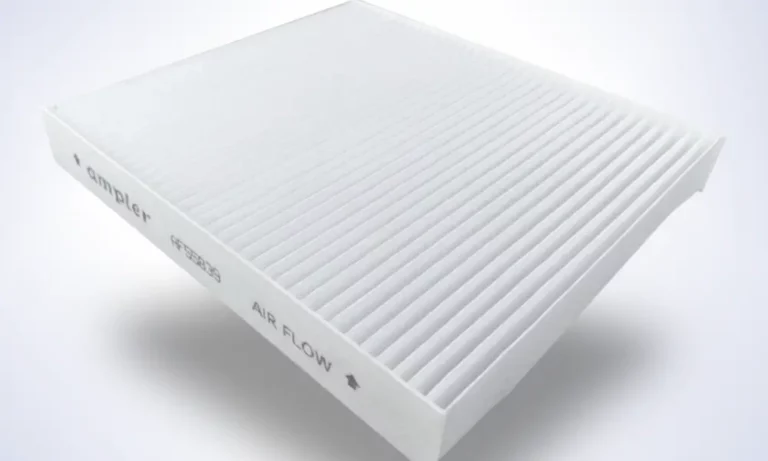
Your Kia pulls air in through the cowl at the base of the windshield. Before that air reaches you, it passes through the cabin air filter, which traps dust, pollen, soot, and other airborne junk.
The blower motor pushes that filtered air through the evaporator (cooling) or heater core (heating) before it comes out your vents. Even when you run the recirculation mode, the air still passes back through the filter. Think of it as your car’s lungs — clog them, and everything downstream suffers.
Which Type of Cabin Air Filter Should You Choose?
Not all filters are created equal. Here’s a quick breakdown:
| Filter Type | What It Catches | Best For | Odor Control |
|---|---|---|---|
| Standard Particulate | Dust, pollen, large debris | General suburban/rural driving | None |
| Activated Carbon | Gases, exhaust fumes, odors | Heavy city traffic, industrial areas | High |
| High-Efficiency (HEPA-style) | Ultrafine allergens, microscopic particles | Severe allergy/asthma sufferers | Variable |
Standard filters work well for most drivers and cost the least. Activated carbon filters add a layer of protection against noxious gases and traffic fumes — a smart upgrade if you commute in heavy traffic. High-efficiency filters offer the best air quality but can slightly reduce airflow in older HVAC systems.
How Often Should You Replace Your Kia Cabin Air Filter?
Kia’s official recommendation: replace the cabin air filter every 12 months or 15,000 miles, whichever comes first. But that’s the baseline for “normal” driving conditions.
Severe Driving Conditions Require More Frequent Changes
If any of these sound familiar, you’re on a severe schedule and need to replace the filter more often — sometimes every 7,500 miles:
- You regularly drive on unpaved or gravel roads
- You sit in heavy stop-and-go city traffic daily
- You drive through construction zones with heavy dust
How Your Location in the U.S. Changes Everything
Where you live matters just as much as how you drive.
| U.S. Region | Main Threat | Filter Risk Level | Recommended Check |
|---|---|---|---|
| Pacific Northwest / West | Wildfire smoke, fine ash | Very High (seasonal) | Bi-annually or post-wildfire |
| Southwest / Desert | Silica dust, fine sand | Constant & High | Every 7,500 miles |
| Southeast / Midwest | Heavy pollen, humidity, mold | Moderate to High | Annually before spring |
Western states: Wildfire smoke saturates filter media at an alarming rate. Replace the filter immediately after wildfire season — regardless of mileage.
Desert drivers: Fine silica and sand pack a filter tight within months. Stick to shorter inspection intervals.
Southeast and Midwest: High humidity causes trapped organic material to grow mold inside the filter housing. Replace before spring allergy season every year.
5 Signs Your Kia Cabin Air Filter Needs Replacing Now
Don’t wait for the 12-month mark if your Kia is already showing symptoms. Watch for these:
- Weak airflow from vents — Even on max fan speed, barely a breeze comes out. The filter’s clogged and blocking the blower motor’s airflow.
- Musty or mildew smell — Trapped organic matter gets damp and grows mold inside the housing. That smell goes straight into your face.
- Dust building up inside the cabin — When the filter’s overwhelmed, dirt bypasses it and settles on your dashboard and seats.
- Windows fogging up longer than usual — A clogged filter reduces the airflow your defroster needs to clear the windshield. That’s a genuine visibility and safety issue.
- Whistling or whining noise from vents — The blower motor is straining against the blockage. That noise is not normal.
What Happens If You Ignore It? (It Gets Expensive)
A $20 filter left too long can snowball into serious repair bills. Here’s how:
- Blower motor failure: The motor works overtime fighting restriction, overheats, and develops dead spots on the armature. Replacement costs several hundred dollars.
- Blower motor resistor burns out: The resistor relies on airflow to stay cool. Choke the airflow, and it overheats and fails. Classic sign: fan only works on the highest speed setting.
- Evaporator freezes over: Without enough airflow, the evaporator drops below freezing, ices up, and kills your AC entirely.
- EV range loss: In the Kia EV6 and EV9, the HVAC system draws from the high-voltage battery. A restricted filter forces the system to work harder — and that drains your driving range.
DIY vs. Dealership: What Does Kia Cabin Air Filter Replacement Cost?
Here’s the honest breakdown:
| Replacement Method | Parts Cost | Labor Cost | Total |
|---|---|---|---|
| Dealership / Shop | $35–$50 | $45–$60 | $80–$110 |
| DIY (Standard Filter) | $15–$25 | $0 | $15–$25 |
| DIY (Premium Carbon Filter) | $30–$45 | $0 | $30–$45 |
Dealerships regularly charge $80–$100 for this job. The replacement itself takes about 5–10 minutes with no tools required. Doing it yourself is a no-brainer.
How to Replace Your Kia Cabin Air Filter: Step-by-Step
The exact process depends on your Kia model. Here are the three main layouts:
Glove Box Method (Sorento, Sportage, Telluride, Forte, K5, Soul, Niro, Seltos)
Most Kia models store the filter directly behind the passenger glove box. Here’s how to get to it:
- Empty the glove box completely
- Detach the dampener arm on the right side (slide pin or friction clip)
- Rotate and remove the two plastic stoppers on the interior side walls — or squeeze the sides inward to clear the dashboard frame tabs
- The glove box swings down, revealing the HVAC housing
- Pinch the tabs on the filter cover plate and pull it straight out
- Slide the old filter out and clear any debris from the tray
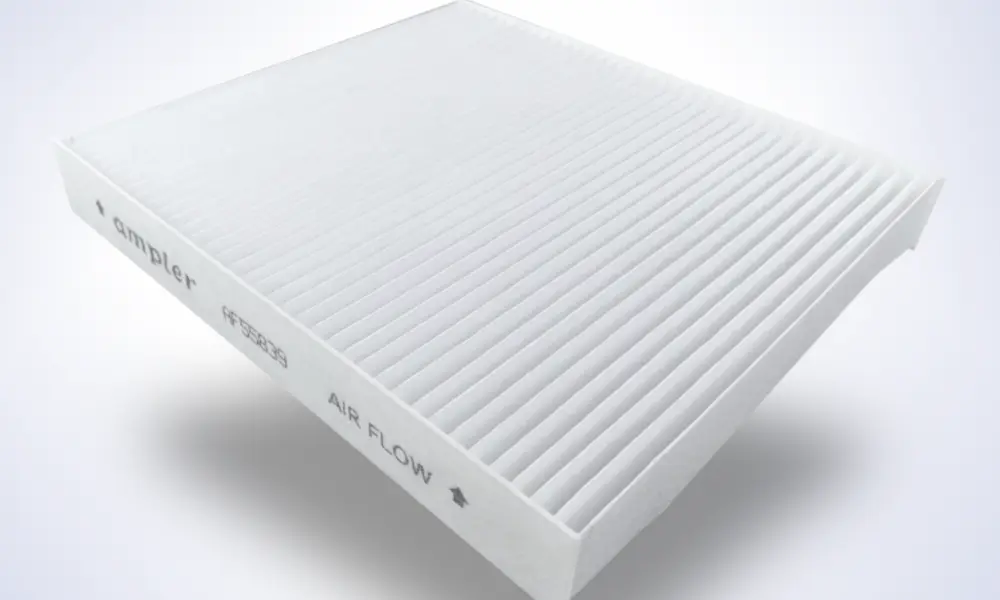
- Insert the new filter with the airflow arrow pointing down
- Snap the cover back, lift the glove box, and lock the stoppers back in
⚠️ Arrow direction is critical. Installing the filter upside down weakens the pleats under blower pressure and kills filtration efficiency.
Frunk Method (EV6, EV9, and E-GMP Electric Models)
Kia’s electric vehicles use the front trunk (frunk) to house the filter — a brilliant use of the extra space where an engine used to live. EV6 owners rave about how easy this is.
- Pop the hood and open the frunk
- Remove any cargo inside
- Locate the access panel on the rear wall of the frunk
- Pinch the two clips on the panel’s upper edge and pull the door open
- Pull the old filter straight out toward the front of the car
- Slide in the new filter with the airflow arrow pointing down
- Click the panel shut — both clips should audibly snap into place
That’s genuinely it. No glove box gymnastics required.
Dual-Filter Method (Kia Carnival)
The Carnival runs two separate HVAC systems, so it needs two cabin air filters. The front filter is behind the glove box (same as above). The rear filter is a different story:
- Fold or slide the third-row passenger-side seat forward
- Pull the rectangular trim panel on the rear cargo side wall outward to release the friction clips
- Find the filter access door near the top of the rear HVAC housing
- Push the top clip down and swing the door open
- Remove the old filter
- Insert the new filter (part number 97133-R0500) with the airflow arrow pointing toward the rear tailgate — this is horizontal, not downward
- Hook the door at the bottom hinges and snap the top clip shut
- Press the trim panel back until all clips lock in
| Kia Model | Filter Location | Arrow Direction |
|---|---|---|
| Sorento, Telluride, Forte, K5, Niro | Behind glove box | Pointing down |
| EV6, EV9 | Frunk bulkhead wall | Pointing down |
| Carnival (front) | Behind glove box | Pointing down |
| Carnival (rear) | Rear cargo wall trim | Pointing toward rear tailgate |
FAQs About Kia Cabin Air Filter Replacement
Can I use an engine air filter as a temporary substitute for a cabin air filter?
No. They’re completely different components with different dimensions, media densities, and purposes. An engine air filter handles high-velocity air for combustion. A cabin filter handles low-pressure air for your blower motor. They’re not interchangeable — forcing one into the other’s housing will damage your climate control ductwork.
Are there washable cabin air filters for Kia vehicles?
Yes. Several aftermarket brands make reusable cabin air filters with washable synthetic media. You remove them, wash with a degreaser, let them dry, and reinstall. They cost more upfront but can last the life of the vehicle. They also cut down on the millions of disposable filters that end up in U.S. landfills every year.
Does a non-OEM filter void my Kia warranty?
No. Under the Magnuson-Moss Warranty Act, manufacturers can’t void your warranty just because you used an aftermarket part or did the job yourself. They can only deny a claim if they prove an aftermarket part directly caused the covered failure. A properly sized, quality aftermarket filter won’t do that.
My economy filter has no airflow arrow. How do I know which way to install it?
Look at the filter’s physical structure. The side with reinforced ribs or support webbing goes on the downstream side (bottom). Those supports exist to prevent the pleats from collapsing under blower pressure.
Does driving with the windows down help preserve the cabin air filter?
Only if you also turn the HVAC fan completely off. If the blower motor runs while your windows are open, it keeps drawing air through the filter at the normal rate — no savings. And open windows let unfiltered pollen and exhaust pour directly into your cabin. It’s not a workaround worth using.