Think your Kia’s engine warranty is simple? It’s not. Between the standard coverage, court-ordered extensions, and sneaky exclusion clauses, there’s a lot to unpack. This post breaks down exactly what you’re covered for — and what could get your claim denied.
Kia’s Standard Engine Warranty: The Basics
Kia built its US reputation on one bold promise: a 10-year/100,000-mile powertrain limited warranty. That’s the engine, transmission, and drivetrain — all covered under the Kia warranty program.
But here’s the catch. That 10-year coverage only applies to the original owner.
Buy a used Kia? You inherit whatever’s left of the 5-year/60,000-mile basic warranty. Not the powertrain protection. That’s a significant drop — especially if you’re buying a three-year-old Kia thinking seven years of engine coverage comes with it.
Here’s how the full warranty stack looks:
| Warranty Type | Duration | Mileage Limit | Who’s Covered |
|---|---|---|---|
| Basic (Bumper-to-Bumper) | 5 Years | 60,000 Miles | Original + Subsequent Owners |
| Powertrain (Engine/Drivetrain) | 10 Years | 100,000 Miles | Original Owners Only |
| Anti-Perforation | 5 Years | 100,000 Miles | Original + Subsequent Owners |
| Roadside Assistance | 5 Years | 60,000 Miles | Original + Subsequent Owners |
| EV/Hybrid System | 10 Years | 100,000 Miles | Original + Subsequent Owners |
All timelines count from the Date of First Service — the day the vehicle was first sold, leased, or placed into service. That clock never resets on a private sale.
The Certified Pre-Owned Loophole
If you buy a used Kia through Kia’s Certified Pre-Owned (CPO) program, things change. The CPO vehicle goes through a 164-point inspection and must meet strict age and mileage requirements.
The reward? The 10-year/100,000-mile powertrain warranty is reinstated — calculated from the original in-service date, not your purchase date. CPO buyers also typically get an extra year or 12,000 miles of platinum coverage on top.
If you’re buying used, CPO is the only path back to full engine protection under the standard Kia engine warranty.
Why Kia’s Engine Warranty Got a Lot More Complicated
In a perfect world, the standard warranty would be all you need. But Kia had a problem — a big one.
Several engine families, primarily the Theta II, Nu, and Gamma engines, developed a pattern of premature connecting rod bearing failures. These bearings sit between the connecting rods and crankshaft. When they wear out, you hear a distinctive engine knock. Ignore it long enough and the engine seizes — or worse, catches fire.
The result was major class-action litigation and two federal court settlements that now govern engine coverage for millions of Kia owners.
The Engine I Settlement: Lifetime Coverage for Theta II GDI
The first settlement — called “Engine I” — targeted 2.0L and 2.4L Theta II Gasoline Direct Injection engines in these models:
| Model | Years Covered | Engine |
|---|---|---|
| Optima | 2011–2019 | 2.0L / 2.4L Theta II GDI |
| Sorento | 2012–2019 | 2.4L Theta II GDI |
| Sportage | 2011–2019 | 2.0L / 2.4L Theta II GDI |
The key benefit? A lifetime warranty on the engine short block assembly — available to any owner, original or subsequent, as long as the required software update has been installed.
You can confirm your vehicle’s inclusion at the Kia Engine Settlement VIN lookup.
The Engine II Settlement: 15-Year Coverage for Nu and Gamma Engines
The second settlement — “Engine II” — expanded coverage to more engine types, including Multi-Port Injection versions of the Theta II and GDI versions of the Nu and Gamma engines.
Instead of a lifetime warranty, this settlement provides 15-year/150,000-mile coverage from the original in-service date. That’s still a remarkable extension compared to standard automotive norms.
Vehicles covered include:
- Kia Forte (2010–2018) with 2.4L Theta II MPI or 2.0L Nu GDI engines
- Kia Soul (2012–2019) with 1.6L Gamma GDI or 2.0L Nu GDI engines
- Kia Sportage (2011–2013) with 2.4L Theta II MPI
- Kia Optima Hybrid (2011–2020) with Theta II MPI or Nu GDI Hybrid engines
Check whether your VIN qualifies at the Kia Engine Class Settlement site.
Coverage applies to the short block and long block assemblies, provided the damage links directly to connecting rod bearing failure.
The KSDS Update: The Gate You Must Pass Through
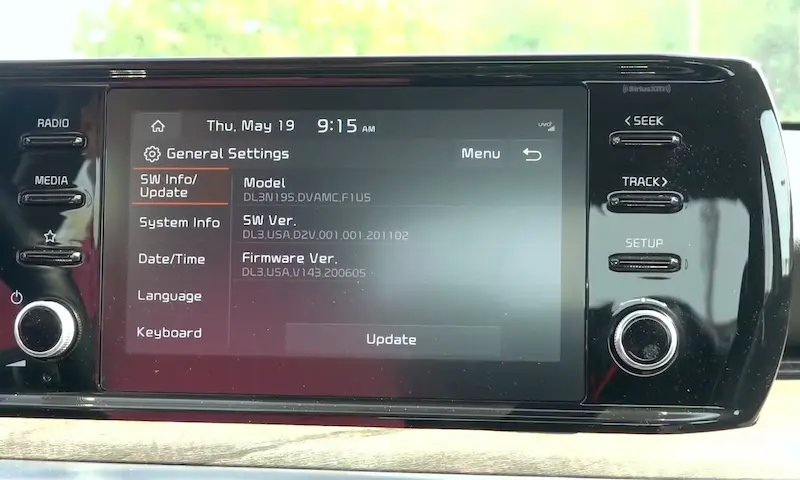
Here’s where many owners get tripped up. Both engine settlements require one critical step: installation of the Knock Sensor Detection System (KSDS) software update.
This update reprograms your Engine Control Unit to detect the vibration patterns of a failing connecting rod bearing — before catastrophic damage occurs. Here’s what happens when it triggers:
- Your Check Engine Light blinks continuously
- The engine enters a protection mode
- Power drops sharply — acceleration becomes sluggish
- Engine speed caps around 1,800–2,000 RPM
- Vehicle speed is limited, typically to 65 mph or below
According to the NHTSA product improvement campaign documentation, this system is designed to force you off the road before the engine seizes or catches fire.
The problem? If you never got the KSDS update and your engine fails, Kia can legally deny your warranty claim. The update is a settlement prerequisite — skip it and you could lose your coverage entirely.
The “Abusive Failure” Trap
The KSDS system does more than warn you. It records data. If the light starts blinking and you keep driving — ignoring the power restrictions — the dealership technician can see exactly how many miles you put on the engine after the warning triggered.
Drive far enough in that state and Kia may invoke the “Abusive Failure” clause to deny your claim. The argument? You bypassed a safety system specifically designed to prevent the damage you’re now claiming.
Per NHTSA campaign documentation, the system leaves a clear data trail. When the light blinks, pull over and call for a tow. Don’t risk it.
What “Exceptional Neglect” Really Means for Your Claim
The Kia engine warranty settlements include an “Exceptional Neglect” exclusion. Dealers and adjusters can use it to deny claims — and some stretch its definition further than the settlement allows.
Under the actual settlement terms, exceptional neglect requires:
- Evidence of at least one year without any maintenance
- A vehicle that appears dilapidated or abandoned
- Engine internals showing heavy sludge, varnish, or lacquering from oil breakdown
If a technician removes your valve cover and finds significant sludge, Kia will request maintenance records. Reddit threads from affected owners show this is one of the most common denial triggers.
Your Maintenance Records Are Your Protection
Under the federal Magnuson-Moss Warranty Act, Kia can’t void your warranty just because you used an independent shop or did your own oil changes. But you must prove the work actually happened.
CBS News coverage of a Pittsburgh-area case showed Kia denying a warranty claim even when owners provided multiple receipts — because those receipts lacked specific identifiers.
Every service receipt should include:
- Your VIN — linking the service to your specific vehicle
- Odometer reading — showing the mileage at time of service
- Part details — oil grade, filter brand, and quantity
For home oil changes, keep your parts store receipts. A Carscoops report documented cases where owners logged every single oil change — and still faced initial denial before media pressure prompted Kia to reverse course.
Build a physical folder. Keep every receipt. For used vehicle buyers, request records from the previous owner upfront.
Short Block vs. Long Block: What Your Repair Actually Covers
When Kia approves an engine repair, the scope matters. Here’s the difference:
| Assembly | What’s Included | Settlement Coverage |
|---|---|---|
| Short Block | Cylinder block, crankshaft, pistons, connecting rods, bearings | Engine I (Theta II GDI) |
| Long Block | Short block + cylinder heads, camshafts, valvetrain, oil pump | Often used in Engine II claims |
| Complete Engine | Long block + intake, injectors, turbo, all accessories | Rare; typically not covered |
A long block replacement is generally the better repair. It eliminates the risk that metal debris from the bearing failure migrated into the cylinder heads — debris that can cause a second failure down the road. Always ask your service advisor which assembly Kia is authorizing before work begins.
Roadside Assistance, Towing, and Trip Interruption Benefits
Don’t overlook the secondary benefits baked into the Kia engine warranty and settlements.
Towing: Any qualifying engine failure under the settlement periods entitles you to a free tow to the nearest Kia dealership — regardless of the vehicle’s age. Pay out of pocket for an eligible tow and Kia must reimburse you.
Trip Interruption: If a covered failure happens more than 150 miles from home and repairs take longer than 24 hours, Kia’s Trip Interruption Policy kicks in. You can claim:
- Hotel stays while waiting for repairs
- Reasonable meal expenses
- Rental car costs
Reimbursement caps at $100/day for up to three days per incident. It’s not a windfall, but it’s real money when you’re stranded.
EV Warranties and the ICCU Issue Worth Watching
Kia’s electric vehicles — the EV6, EV9, and Niro EV — carry a 10-year/100,000-mile EV System Warranty covering the electric motor, high-voltage battery, Electric Power Control Unit, and On-Board Charger. Unlike combustion engines, this warranty also includes a battery capacity guarantee: Kia will repair or replace any battery that drops below 70% of its original capacity within the warranty period.
A newer concern has emerged around the Integrated Charging Control Unit (ICCU). Failures in this component can cause a total loss of power while driving. In response, Kia has moved toward extending ICCU warranty coverage to 15 years or 180,000 miles — following the same playbook used in the Engine II settlement. EV owners should watch for official updates on this one.
How to File a Kia Engine Warranty Claim
If your engine fails, follow this sequence:
- Get an official diagnosis at an authorized Kia dealership. Independent shops can’t authorize warranty repairs through Kia’s internal portal.
- Confirm your VIN at the Kia Engine Class Settlement site before your appointment.
- Current repairs: The dealer handles authorization directly. No claim form needed for parts and labor.
- Reimbursement claims (prior repairs, towing, rentals): Submit a formal Claim Form at the Kia Engine Settlement claims page with proof of ownership, maintenance records, KSDS update confirmation, and receipts.
- Deadline: Most reimbursement claims must be submitted within 90 days of the expense.
If your claim gets denied, you can request a secondary review through Kia’s customer care department. Ask for photographic evidence of any alleged sludge or varnish — the settlement requires physical proof for any “Exceptional Neglect” denial.
The Hidden Resale Value in Settlement-Backed Coverage
Here’s something used car buyers often miss. Because settlement warranties attach to the VIN — not the owner — they transfer automatically to every subsequent buyer. A 2015 Kia Optima with a verified KSDS update and clean maintenance history carries stronger engine protection than many newer vehicles from competing brands.
For sellers, this is a genuine marketing advantage. For buyers, it’s worth specifically asking whether the KSDS update is confirmed before signing anything.
One important exclusion: these extended warranties don’t apply to vehicles with salvage or total loss titles, and vehicles used commercially — taxis, delivery fleets, rentals — are typically excluded as well. Always run a title search and check the vehicle’s usage history.
The bottom line on Kia’s engine warranty? The coverage is genuinely strong — but you earn it. Complete your recalls, keep dated service records with VIN and odometer readings, respond immediately to any blinking warning lights, and verify KSDS installation. Do all that, and you’ve got some of the most extensive powertrain protection in the US market.