If you own a Kia built between 2011 and 2025, this post could save your engine — and possibly your car. Kia engine problems have affected millions of vehicles, triggered billion-dollar lawsuits, and even caused fires. Here’s exactly what went wrong, which models are at risk, and what you can do right now.
The Core Problem: What’s Actually Breaking in Kia Engines
Kia engine problems didn’t come from one bad batch or a single design slip. They came from fundamental flaws in manufacturing and design across multiple engine families — primarily the Theta II, Nu, Gamma, and Lambda series.
These engines power some of Kia’s most popular models: the Optima, Sportage, Sorento, Soul, and Forte. Understanding what failed — and why — helps you spot early warning signs before you’re stranded on the side of a highway.
The Theta II Crisis: How Metal Debris Destroys Engines
The Theta II engine is at the center of the worst Kia engine problems. It’s a 2.0-liter or 2.4-liter four-cylinder used in millions of vehicles built between 2011 and 2019.
Here’s what happened during manufacturing:
- Crankshaft oil passages were machined at Kia’s plants in Alabama and South Korea
- A “deburring” process was supposed to remove metal fragments from those passages
- That process failed — leaving metallic shards inside the engine
Once you start the engine, those shards get pushed into the oil stream. They act like sandpaper on your connecting rod bearings. Over time, you get metal-on-metal contact, excessive heat, and eventually a seized or fractured connecting rod.
A fractured connecting rod can punch straight through the engine block. Hot oil sprays onto the exhaust. The car catches fire — without any collision involved.
The early warning sign is a knocking or tapping sound owners describe as a “death rattle.” Don’t ignore it.
Which Kia Models Are Most Affected by Theta II Failures?
| Model | Affected Years | Engine Variant | Primary Failure |
|---|---|---|---|
| Optima | 2011–2014 | 2.0L T-GDI / 2.4L GDI | Crankshaft debris / Bearing seizure |
| Sorento | 2012–2014 | 2.4L GDI | Crankshaft debris / Bearing seizure |
| Sportage | 2011–2013 | 2.0L T-GDI / 2.4L GDI | Crankshaft debris / Bearing seizure |
| Optima Hybrid | 2011–2013 | 2.4L MPI Hybrid | Bearing wear / Fire risk |
| Forte / Forte Koup | 2012–2013 | 2.4L MPI | Bearing wear / Lubrication failure |
Nu and Gamma Engines: Different Problems, Same Danger
The Nu and Gamma engine families brought a separate set of Kia engine problems to smaller models like the Soul, Rio, and Forte.
Nu engine issues (2.0L):
- Brittle or improperly seated piston rings
- Piston rings fail to seal the cylinder wall properly
- Engine oil leaks into the combustion chamber and burns off
- Pistons start “slapping” the cylinder wall, creating a rhythmic ticking sound
- Carbon deposits clog intake valves and overheat the catalytic converter
Gamma 1.6L GDI issues (2012–2016 Soul models):
- Extremely high exhaust gas temperatures damage the catalytic converter
- Damaged catalytic converter causes abnormal combustion
- Pistons can fail and connecting rods can break through the engine block
- Same fire risk as Theta II failures
| Engine Family | Models Affected | Common Symptoms | Root Cause |
|---|---|---|---|
| Nu 2.0L GDI | Soul, Forte, Sportage | Ticking, oil burning | Brittle piston rings / Cylinder scuffing |
| Gamma 1.6L GDI | Soul, Rio, Veloster | Power loss, stalling | Catalytic overheating / Piston damage |
| Nu 1.8L MPI | Forte | Piston slap, knocking | Manufacturing tolerances / Ring seal |
| Nu 2.0L Hybrid | Optima Hybrid 2017–20 | Hesitation, stall risk | Connecting rod bearing wear |
Why Kia Hid the Problem — And How a Whistleblower Changed Everything
Kia knew about these Kia engine problems earlier than they admitted publicly. The cover-up was exposed by Kim Gwang-ho, a safety engineer who worked at Kia’s Seoul headquarters for over 25 years.
In 2015, Kim discovered internal records showing the engine seizures weren’t random. They were systematic — affecting millions of vehicles. Yet Kia was reporting inaccurate data to the National Highway Traffic Safety Administration (NHTSA), claiming these were isolated incidents.
In 2016, Kim traveled to Washington D.C. with hundreds of pages of internal documents. He handed them over to the NHTSA. Kia fired him in retaliation and filed a criminal complaint against him in South Korea for allegedly leaking trade secrets.
His information triggered a federal investigation that forced Kia to massively expand recalls. In 2020, the NHTSA imposed a combined civil penalty of $210 million — the largest in the agency’s history at that time. Kim received a $24.3 million whistleblower award under the Motor Vehicle Safety Whistleblower Act.
The Engine Settlements: What You’re Entitled To
Two major class-action settlements now protect Kia owners in North America.
Engine I Settlement (2021): Covers Theta II GDI engines.
Engine II Settlement (approved 2023): Expands coverage to over four million vehicles with Theta II MPI, Nu GDI, and Gamma GDI engines.
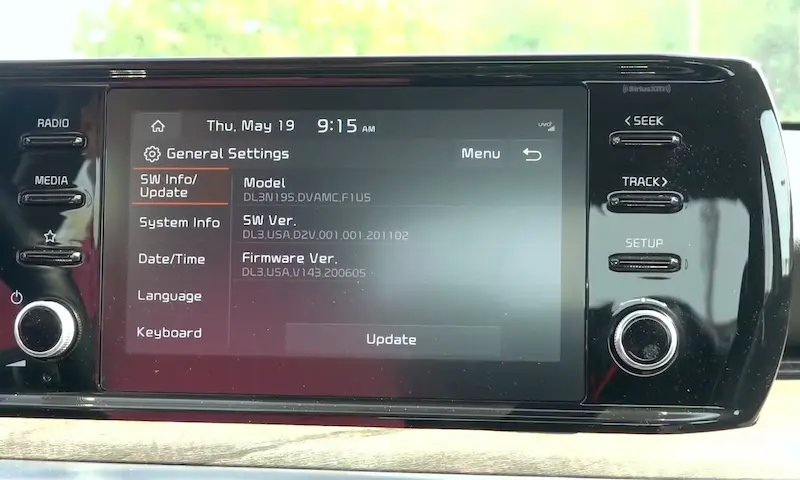
The big win here is a 15-year or 150,000-mile powertrain warranty extension — and in many cases, a lifetime warranty for rod bearing failures. But there’s a catch: you must get the Knock Sensor Detection System (KSDS) software update installed at a dealership. Without it, the extended warranty doesn’t apply.
The KSDS monitors for acoustic frequencies from a failing connecting rod bearing. When it detects a problem, it puts the car into “limp mode” — limiting engine speed so you can get to safety without a catastrophic failure.
Settlement Compensation Breakdown
If you’ve already paid out of pocket, or your car sat at the dealership for months, you may be owed money:
| Benefit Category | Condition | Compensation |
|---|---|---|
| Repair Delay | Wait time 61–180 days | $75.00 |
| Repair Delay | Wait time 181–210 days | $175.00 |
| Long-term Delay | Each additional 30 days beyond 210 | +$100.00 |
| Transportation | Over 150 miles from home | Up to $600.00 total |
| Rental Reimbursement | No loaner vehicle provided | Up to $40.00/day |
| Goodwill Payment | Qualifying failure or fire | $150.00 |
Lambda V6 Problems: Kia’s Bigger Engines Aren’t Off the Hook
The 3.3-liter and 3.8-liter Lambda V6 engines — found in the Sorento, Telluride, and Sedona — have their own serious issue: head bolt thread failure in aluminum engine blocks.
Here’s how it works: Steel bolts thread into an aluminum engine block. Aluminum expands more than steel when it heats up. Over time, that constant thermal stress fatigues the aluminum threads, and they strip out.
When the bolt threads fail, the cylinder head gasket loses its seal. Coolant leaks into the combustion chamber or into the engine oil. The engine overheats fast, and in the worst case, liquid coolant fills the cylinder — the piston can’t move — and the engine seizes while you’re driving.
Kia increased the thread engagement depth in mid-2017 to address this. For vehicles built before that update, Kia launched an extended warranty (WTY039) in 2024, covering 15 years or 180,000 miles for head gasket and head bolt failures.
The GDI Oil Problem Nobody Warns You About
Here’s something Kia engine problems share across all GDI (Gasoline Direct Injection) models: the design accelerates oil breakdown and carbon buildup.
In a GDI engine, fuel sprays directly into the combustion chamber — not through the intake valves. That means:
- No fuel washing the intake valves clean
- Oil mist from the crankcase ventilation system bakes onto hot valves
- Hard carbon deposits restrict airflow and cause rough idling
- Low airflow triggers pre-ignition or “knock” — which can shatter a piston
Making this worse: most 2011–2020 Kia models have no oil level sensor. The dashboard “low oil” warning only lights up when oil pressure drops — which often happens after significant internal damage has already occurred.
Check your oil manually at every fuel stop. It’s written in the owner’s manual. With these engines, it’s not optional advice — it’s damage prevention.
Are New Kia Engines Any Better? The Smartstream Story
Kia’s newer “Smartstream” engines use Dual Port Injection (DPI) — a combination of direct injection and traditional port injection. This reduces carbon buildup on intake valves, one of the biggest weaknesses of older GDI engines.
Early data suggests the Smartstream 2.5-liter and 1.6-liter turbocharged engines are more robust than the Theta II or Nu. But they’re not without issues.
In 2025, a recall was issued for certain 2025–2026 Kia models with 2.0-liter and 2.5-liter Smartstream engines due to improperly tightened connecting rod bolts during assembly. The fix? A full engine replacement.
| Smartstream Issue | Affected Models | Recall Date | Fix |
|---|---|---|---|
| Loose Engine Bolts | 2025 K4, Sorento | August 2025 | Replace entire engine assembly |
| Fuel Pipe Leaks | 2021–22 Sorento, K5 | October 2021 | Inspect/replace fuel pipe |
| Transmission Oil Pump | 2021–23 Sorento (8-DCT) | October 2022 | Replace electric oil pump |
| Turbo Oil Feed Pipe | 2022 Sorento | March 2022 | Replace oil feed pipe |
The Theta II crisis started with a loose, contaminated assembly process too. Smartstream is better — but manufacturing discipline still matters.
The JD Power Problem: Why “Dependability Awards” Missed This Completely
Here’s something that should make you pause. During the height of Kia’s engine crisis, JD Power regularly ranked Kia as one of the most reliable brands on sale.
How? JD Power’s Initial Quality Study measures the first 90 days of ownership. Their Vehicle Dependability Study looks at three-year-old vehicles. Most Kia engine failures happen between years four and seven — completely outside JD Power’s window.
Consumer Reports, which relies on long-term owner data, consistently flagged the Theta II and Nu engines as high-risk. The discrepancy is stark. A brand can win a “Dependability Award” in the showroom while mechanics are warning owners about catastrophic mid-life failures.
The lesson: when researching any used Kia, look at long-term owner reviews and NHTSA complaints, not just initial quality ratings.
What Kia Owners Should Do Right Now
Whether you’re a current Kia owner or thinking about buying one, here’s your action plan:
- Check if your VIN is covered by the Engine I or Engine II settlement at kiaengineclasssettlement.com
- Book the KSDS software update at your dealership — it’s free and activates your extended warranty
- Check your oil manually every time you fill up gas, especially on 2011–2020 models
- Listen for knocking — any ticking, tapping, or rattling from the engine needs immediate attention
- Keep every oil change receipt — Kia and its dealers have been known to deny warranty claims without documented maintenance history
- File a claim if you’ve already paid for an engine repair out of pocket — the settlement covers reimbursements
Kia engine problems aren’t a thing of the past. But if you stay informed and proactive, you can protect your investment — and avoid getting caught off guard by an engine that decides to quit without warning.