Ever wondered who actually builds the engine in your Kia? It’s not a simple answer — but it’s a fascinating one. The short version: it’s a tightly connected network of plants, engineers, and shared technology that spans two continents. Stick around, because understanding this changes how you see your car’s value.
Kia and Hyundai: Two Brands, One Engine Family
Kia doesn’t build its own engines in isolation. Since Hyundai Motor Company acquired a 51% stake in Kia during the 1997 Asian Financial Crisis, the two brands have shared engineering resources under the Hyundai Motor Group umbrella.
Think of it this way: Kia and Hyundai are like siblings who share the same DNA but dress completely differently.
They share:
- Engine architectures and core technology
- Vehicle platforms (the structural “skeleton” of the car)
- Transmission systems and powertrain logic
- Research and development budgets
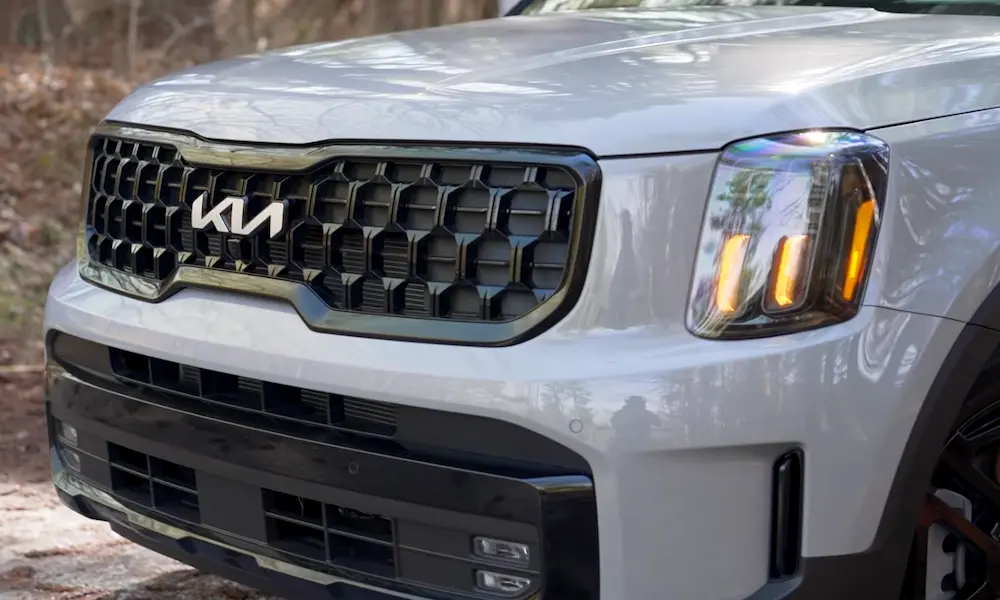
That’s why a Kia Telluride and a Hyundai Palisade are essentially mechanical twins — different faces, same heart. This shared approach is exactly what lets Kia offer sophisticated engines at competitive prices while still backing them with a 10-year warranty.
The Main Answer: Hyundai Motor Manufacturing Alabama
So, who makes Kia engines for US market vehicles? The direct answer is Hyundai Motor Manufacturing Alabama (HMMA), located in Montgomery.
This $1.8 billion facility is the primary engine supplier for both Hyundai and Kia vehicles built in North America. It’s technically a Hyundai operation, but Kia depends on it heavily. Here’s what makes this plant significant:
- It covers 3.4 million square feet
- It houses three dedicated engine shops
- It produces up to 700,000 engines annually
- A large portion of that output goes directly to Kia
Once the engines roll off the line in Montgomery, trucks haul them approximately 85 miles east to the Kia Motors Manufacturing Georgia (KMMG) plant in West Point. This Alabama-to-Georgia corridor works like a precision conveyor belt, delivering powertrains just in time for assembly.
Engines Built in Alabama for Kia Vehicles
| Engine | Key Feature | Typical Kia Model |
|---|---|---|
| Smartstream G2.5 GDI | Workhorse four-cylinder | Kia Sorento, K5 |
| Smartstream G2.5 T-GDI | Turbocharged, higher torque | Kia Sorento, Stinger |
| Smartstream G1.6 T-GDI | Compact, turbocharged | Kia Sportage |
| Smartstream G2.0 Atkinson | Optimized for hybrid efficiency | Kia Sorento Hybrid |
Hyundai WIA: The Component Architect Behind the Scenes
Hyundai WIA is a lesser-known but critical player in who makes Kia engines. This Hyundai Motor Group subsidiary manufactures core engine components like crankshafts and engine blocks.
WIA operates two key production plants in South Korea:
- Seosan Plant — flexible production lines that can switch between engine types on the same floor
- Pyeongtaek Plant — high-volume engine assembly for global markets
These Korean facilities supply engines for Kia models imported to the US as complete units, including the Kia Soul and Kia Carnival.
Mexico: The Next Production Frontier
The Hyundai WIA plant in Pesquería, Nuevo León, Mexico is building toward something big. Starting in early 2026, it’ll begin mass-producing 1.6-liter hybrid engines — exclusively for Kia.
These engines will power the Kia K4 sedan and hatchback hybrid variants. The plant has the capacity to produce up to 200,000 hybrid engines per year. It’s a strategic move — Mexico’s location keeps production close to North American buyers while keeping costs in check.
The Smartstream Engine Family Explained
The Smartstream engine family, introduced in 2018, is the current standard for Kia’s internal combustion technology. These engines replaced older architectures like the Gamma and Theta series.
What makes Smartstream engines stand out?
All-aluminum construction — lighter weight, better heat dissipation.
Dual injection system — the 2.5-liter Smartstream uses both direct injection and multi-port injection simultaneously. Direct injection maximizes power. Multi-port injection keeps the intake valves clean, preventing carbon buildup — a known weakness of pure GDI engines.
Integrated Thermal Management (ITM) — instead of a basic thermostat, electronically controlled valves manage coolant flow. The engine hits its ideal operating temperature faster, which cuts wear and improves fuel economy on short trips.
Lambda V6: The Big SUV Engine
The 3.8-liter Lambda V6 powers the Kia Telluride. It’s been in production since 2005 and has a strong reputation for smooth power delivery and long-term durability. Drivers who tow trailers or haul heavy loads tend to love it.
That said, for the 2026 model year, Kia is expected to replace it with a new 3.5-liter turbocharged engine — same performance capability, better fuel efficiency.
Where Kia Engines Are Designed: The Namyang R&D Center
Building an engine in Alabama is the final step. The design work happens at the Namyang Research and Development Center in Hwaseong, South Korea.
Namyang is a full-spectrum R&D campus covering every phase of vehicle development. For engine testing, engineers use:
- Environmental chambers that simulate temperatures from -30°C to +50°C
- Wind tunnels powered by a 3,400-horsepower system that simulates airflow up to 200 km/h
That wind tunnel isn’t just about aerodynamics — engineers study how air moves through the radiator and around the engine bay to keep turbocharged engines running cool under stress.
Supporting Namyang is a global network of technical centers:
- Hyundai America Technical Center (Detroit, Michigan & Irvine, California) — tunes engines for American driving habits like highway cruising and stop-and-go traffic
- Hyundai Motor Europe Technical Center (Rüsselsheim, Germany) — focuses on emissions compliance, which often influences global engine designs
- Hyundai Motor Japan R&D Center (Yokohama) — specializes in next-generation electronics and battery systems for hybrid integration
The Theta II Crisis: An Honest Look
No discussion about who makes Kia engines is complete without addressing the Theta II engine problems. This chapter was painful — but it changed how the group approaches quality.
The issue centered on 2.0-liter and 2.4-liter GDI engines built at the Alabama plant between 2011 and 2019. Investigations by the National Highway Traffic Safety Administration (NHTSA) found a manufacturing defect in the crankshaft machining process.
Metal debris from oil passage drilling wasn’t fully cleaned out. That debris traveled through engine oil into the connecting rod bearings, scored the surfaces, and eventually caused engine seizure — and in some cases, vehicle fires.
How did Kia respond?
- Settled class-action lawsuits totaling over $1.3 billion
- Introduced the Knock Sensor Detection System (KSDS) — a software update that monitors for the specific vibration patterns of a failing rod bearing and triggers a safe limp-home mode
- Extended lifetime warranty coverage on engine short blocks for affected failures
- If you own an affected model, you can check your vehicle’s recall status directly through NHTSA’s official recall database
It was a costly lesson. But the KSDS software fix was genuinely clever — repurposing existing sensors to prevent catastrophic damage while the driver still had time to reach a dealership safely.
How Engines Get from Alabama to Your Kia
The Kia Georgia plant (KMMG) doesn’t build engines on-site. It runs on a just-in-time delivery system that requires perfect coordination.
Here’s how parts flow in:
- Interstate 85 carries trucks loaded with finished engines from Alabama, arriving within hours of assembly
- Port of Savannah handles imported components from South Korea
- Cordele Inland Port — Kia and Georgia Ports Authority move containers by rail from Savannah to Cordele, then truck them the shorter distance to West Point. This system eliminates over 6 million truck miles from Georgia highways every year
- Glovis America, the group’s logistics subsidiary, runs on-site sequencing centers at KMMG, organizing parts into the exact order the assembly line needs them
An engine can arrive at the Georgia plant and be installed in a vehicle within hours. Zero excess inventory. Maximum efficiency.
Key Milestones in Kia Engine Manufacturing
| Year | Milestone |
|---|---|
| 1944 | Kia founded as Kyungsung Precision Industry |
| 1997–1998 | Asian Financial Crisis triggers Hyundai’s acquisition of Kia |
| 2005 | HMMA engine plant opens in Montgomery, Alabama |
| 2009 | Kia Georgia plant begins production in West Point |
| 2018 | Smartstream engine family introduced |
| 2026 | Hyundai WIA Mexico begins 1.6L hybrid engine production for Kia K4 |
What’s Next: The Metaplant and Hybrid Expansion
The Hyundai Motor Group Metaplant America (HMGMA) in Bryan County, Georgia is the next major step. It’s a dedicated EV facility designed to eventually produce multiple Kia electric models alongside battery systems and electric motors — the “engines” of the EV era.
Meanwhile, the K4 hybrid arriving with engines from Mexico signals that Kia’s near-term strategy isn’t all-or-nothing on EVs. It’s a layered approach — efficient combustion engines, hybrids, and full EVs — designed to meet American drivers wherever they are right now.
The answer to who makes Kia engines is really a story about industrial teamwork: Hyundai Motor Group designs them in South Korea, builds them in Alabama and Mexico, tests them in wind tunnels and climate chambers, and delivers them just-in-time to a Georgia assembly line that puts them in your driveway.