Trying to figure out the best year for Kia Sorento can feel like defusing a bomb. Pick wrong, and you’re staring down a seized engine or a car fire in your driveway. Pick right, and you’ve got one of the best-value family SUVs on the market. This guide cuts through 20+ years of model history to tell you exactly which years to buy — and which to run from.
A Quick Look at What You’re Dealing With
The Kia Sorento has been around since 2002. It’s gone through four generations and a complete personality change — from a boxy, truck-frame workhorse to a tech-loaded hybrid family hauler.
Here’s the generational breakdown at a glance:
| Generation | Years | Architecture | Key Trait |
|---|---|---|---|
| First | 2003–2009 | Body-on-frame | Rugged, simple, durable |
| Second | 2011–2015 | Unibody crossover | Troubled transition, avoid early years |
| Third | 2016–2020 | Refined unibody | Golden era for reliability |
| Fourth | 2021–present | Modern crossover + hybrid | Strong tech, early bugs resolved by 2024 |
The Best Years to Buy a Kia Sorento
Let’s not bury the lead. The best years for the Kia Sorento are 2017, 2018, 2019, 2020, and 2024. Each earns its spot for a different reason, so your ideal pick depends on your budget and priorities.
2017: The Reliability Champion
The 2017 Kia Sorento is the sweet spot for used buyers. It earned a five-star overall rating from NHTSA and a Top Safety Pick from the IIHS.
It came with three solid engine choices:
- 2.4-liter four-cylinder — efficient and smooth for daily driving
- 2.0-liter turbocharged four-cylinder — punchy but slightly less proven long-term
- 3.3-liter V6 — the most durable pick of the three
The V6 is worth seeking out. It’s part of Kia’s Lambda engine family, which side-stepped the manufacturing debris problems that plagued the smaller Theta II four-cylinders. Less stress, fewer failures, more miles.
2018: The Gold Standard for Dependability
The 2018 Sorento earned the IIHS Top Safety Pick+ award — the highest honor that organization gives. More impressively, it ranked number one in its segment in the J.D. Power 2021 Vehicle Dependability Study, which measures problems in three-year-old vehicles.
That’s not marketing copy. That’s hard data showing real owners experienced fewer problems per vehicle than any competing SUV that year.
If you want a used Sorento with the strongest reliability track record in the model’s history, the 2018 is your car.
2019: The Value Update
The 2019 model brought a meaningful mid-cycle refresh. Kia made three-row seating standard and added an eight-speed automatic transmission to the V6 models. The result? Smoother shifts and better highway efficiency.
J.D. Power scores for the 2019 Sorento landed at 87 out of 100 — a “Great” rating. Owner reviews on Kelley Blue Book show a 77% recommendation rate, with most praise going to the quiet cabin and smooth ride.
This is also one of the best-value used buys right now. It’s old enough to have depreciated significantly but modern enough to feel current.
2020: The Polished Finale
The 2020 model closes out the third generation, and it does it well. All the bugs from 2016 onward had been addressed at the factory by this point. J.D. Power rated it 85 out of 100 — another “Great” score.
Owners consistently highlight low maintenance costs and strong resale retention relative to competitors. The Edmunds review of the 2020 Sorento confirmed a towing capacity of up to 5,000 pounds with the V6 — a serious number for a midsize SUV.
| Metric | 2018 | 2019 | 2020 |
|---|---|---|---|
| J.D. Power Score | #1 in Segment | 87/100 (Great) | 85/100 (Great) |
| Safety Award | Top Safety Pick+ | Top Safety Pick | Top Safety Pick |
| Standard Seating | 5 or 7 | 7 passengers | 7 passengers |
| Transmission (V6) | 6-speed auto | 8-speed auto | 8-speed auto |
| Owner Recommendation | 77% | 77% | High satisfaction |
2024: The Modern Best Pick
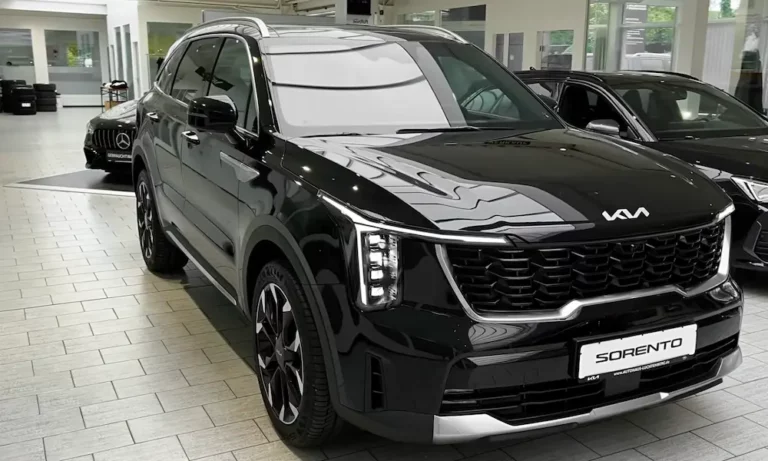
For buyers who want the latest tech, best fuel efficiency, and a freshly refined design, the 2024 Kia Sorento is the clear choice in the current generation.
It received a major styling overhaul, a faster 12.3-inch touchscreen, and a new X-Pro trim with all-terrain tires. The hybrid version returns an EPA-estimated 37 MPG combined, and the plug-in hybrid offers 32 miles of electric-only range.
The IIHS rates the 2024 Sorento “Good” across every major crash test category. The early transmission and software issues that stung the 2021 and 2022 models are resolved by this point.
Years to Avoid: The 2011–2016 Problem Period
This section might save you thousands of dollars. Read it carefully.
2011: The Worst Year in Sorento History
The 2011 model year kicked off the second generation — and it nearly killed the Sorento’s reputation. Nearly 1,500 NHTSA complaints were filed against it. That’s not a rounding error. That’s a crisis.
Two failures dominated:
1. Catastrophic engine seizure. The Theta II engine used in these models had a manufacturing flaw. Metal debris from the machining of the crankshaft wasn’t fully cleaned out before assembly. That debris traveled through the oil passages and destroyed the connecting rod bearings. The result? Engines seizing at highway speed — with no warning.
2. Fire risk while parked. The Hydraulic Electronic Control Unit (HECU) could short-circuit internally, igniting a fire in the engine bay even with the vehicle powered completely off. Kia issued recalls, but coverage wasn’t universal, and many owners paid out of pocket for a factory defect.
2012–2014: The Damage Continues
The 2012 and 2013 models carried the same engine risks and added transmission shifting complaints. The 2014 model improved but still showed lingering powertrain concerns. Reliability data across this window confirms a high-risk period for anyone buying used.
The bargain price on a 2012 or 2013 Sorento isn’t a deal. It’s a warning sign.
2016: First-Year Generation Bug
The 2016 model launched the otherwise excellent third generation — but early production carried reports of engine failure from faulty cylinder heads. It’s the same pattern Kia repeated with other generation launches. Skip the first year, buy the second.
What About the Theta II Engine Problem Specifically?
This engine powered Sorento models from roughly 2012 to 2019. Its gasoline direct injection system squeezed out more power, but early production had a fatal flaw in how the crankshaft was machined.
Kia eventually released a software patch called the Knock Sensor Detection System. It listened for the vibration signature of a dying bearing and triggered “limp home mode” before a full seizure occurred. It helped — but it didn’t fix the underlying weakness.
By 2017, Kia changed manufacturing tolerances and bearing materials. The problem rate dropped sharply. That’s one of the core reasons 2017 marks the turning point in Sorento reliability.
Fire Recalls: A Pattern You Need to Know
Beyond the Theta II engine fires, the Sorento has a recurring theme of fire-related recalls across generations.
In 2023, Kia recalled nearly 40,000 Sorentos from the 2021–2023 model years. A supplier used undersized wiring in the HVAC blower motor. At specific fan speeds, the wiring overheated and could start a fire inside the cabin. The warning sign? A burning smell from the vents.
A separate recall targeted models with tow hitch wiring harnesses. Moisture and debris could accumulate in the connector and cause a short — even with the vehicle parked and off.
Before buying any used Sorento, run the VIN through the NHTSA recall lookup tool to confirm all open recalls are closed. This one step could protect you from inheriting someone else’s headache.
Fuel Economy: How the Sorento Has Evolved
The difference between the oldest and newest Sorentos in fuel efficiency is dramatic.
| Model Year / Engine | Combined MPG | Efficiency Level |
|---|---|---|
| 2009 3.8-liter V6 | ~17 MPG | Low |
| 2017 3.3-liter V6 | 20–21 MPG | Moderate |
| 2020 2.4-liter 4-cylinder | 24–26 MPG | Average |
| 2024 1.6-liter Hybrid | 37 MPG | Strong |
| 2024 Plug-in Hybrid | 79 MPGe / 34 MPG | Best in class |
If fuel costs matter to you, the 2024 hybrid makes a compelling case. That 37 MPG figure more than doubles what the original Sorento delivered.
The Value Argument for the 2019–2020 Sweet Spot
The Sorento depreciates fast. Industry data shows it loses 50–55% of its original value within five years. That’s painful if you’re the original buyer. It’s a gift if you’re buying used.
A 2019 or 2020 Sorento with low miles often costs thousands less than a comparable Toyota Highlander or Honda Pilot — while offering more interior features and a fresher design.
One catch on warranty: Kia’s famous 10-year/100,000-mile powertrain warranty transfers fully only through a Certified Pre-Owned program. Private party or independent dealer sales typically drop that coverage to 5 years or 60,000 miles. Factor this in when you’re negotiating price.
Which Year is Actually Right for You?
Here’s the honest answer — there isn’t one universal “best” Kia Sorento year. There are three categories:
You want a tough, simple workhorse on a tight budget: The 2009 is your pick. It’s body-on-frame, mechanically uncomplicated, and built to exceed 200,000 miles with basic care. Don’t expect modern tech — expect durability.
You want the best balance of reliability, value, and features: Any year from 2017 to 2020 delivers. The 2018 has the strongest documented dependability data. The 2020 is the most refined. Either one is a smart buy at today’s used prices.
You want modern tech, hybrid efficiency, and updated safety systems: The 2024 is where to look. It’s the mature version of the current generation with the early problems sorted out, a stunning new interior, and the most capable driver-assistance tech Kia has ever offered in the Sorento.
The one rule that runs across every generation: skip the first model year of any new generation. The 2011, 2016, and 2021 models all had teething problems their successors didn’t. Let someone else pay for the bugs.