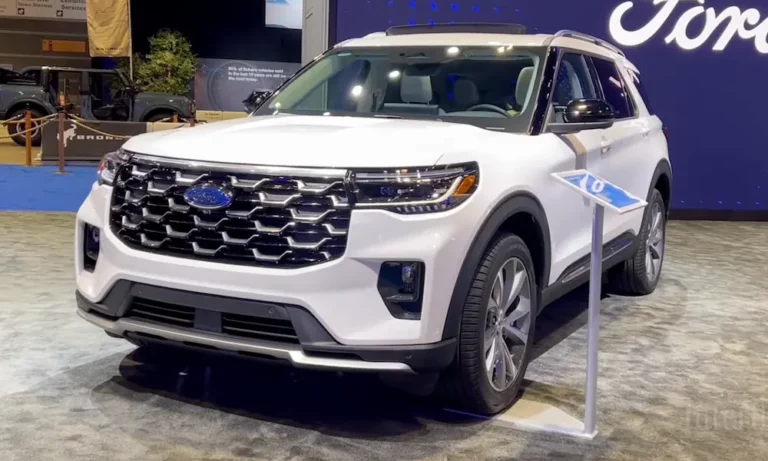
Picking the best year for a Ford Explorer sounds simple — until you realize some years are money pits and others are hidden gems. This guide cuts through 30+ years of Explorer history to show you exactly which model years to buy, which to skip, and why the difference matters to your wallet.
Why Model Year Matters More Than You Think
Not all Ford Explorers are created equal. Some years rolled off the assembly line with fresh engineering fixes. Others launched with bugs that took Ford two or three years to sort out. The pattern is consistent: first-year redesigns are risky. End-of-generation models are often the best bang for your buck.
That pattern holds whether you’re shopping for a rugged truck-based SUV from the early 2000s or a modern crossover with wireless CarPlay. Keep reading — the sweet spots might surprise you.
A Quick Look at Every Ford Explorer Generation
Before diving into specific years, here’s a fast snapshot of how the Explorer evolved.
| Generation | Model Years | Platform Type | Key Change |
|---|---|---|---|
| Gen 1 | 1991–1994 | Ranger-based frame | Born as a 5-door SUV |
| Gen 2 | 1995–2001 | Ranger-based frame | V8 option, dual airbags |
| Gen 3 | 2002–2005 | Dedicated U152 frame | Independent rear suspension |
| Gen 4 | 2006–2010 | Refined U251 frame | 6-speed auto, V8 refinement |
| Gen 5 | 2011–2019 | Unibody crossover (D4) | Front-wheel-drive based |
| Gen 6 | 2020–present | Rear-wheel-drive (CD6) | Rear-biased, 10-speed auto |
According to Ford Explorer’s full generational history on CarBuzz, each platform shift brought major capability changes — and new reliability risks.
The Body-on-Frame Era: Which Years Hold Up
2002–2005: The Generation to Avoid
This is the Explorer generation with the worst long-term reputation. Ford moved to an all-new dedicated platform with an independent rear suspension — a smart idea with one catastrophic flaw. The 5R55 five-speed automatic transmission became infamous for slipping, harsh gear changes, and outright failure at low mileage. Rebuilds often cost more than the truck’s resale value.
Avoid the 2002–2005 Explorer unless you’re a mechanic who enjoys a challenge.
2006–2010: The Refined Sweet Spot
Ford sorted things out here. The fourth generation kept the body-on-frame design but upgraded to a fully independent suspension and a more robust 6-speed automatic transmission. The 4.6L V8 paired with this gearbox is a notably smooth and durable combination.
The 2010 Ford Explorer is the best year if you want a truck-based SUV. It’s the final year of this generation, which means Ford had nearly five years to iron out the wrinkles. It’s tough, repairable, and carries none of the transmission headaches that plagued the 2002–2005 models.
The Collector’s Pick: 1996 With the 5.0L V8
If you want something older and simpler, the 1996 Explorer with the 5.0L V8 has a devoted following. It was the first full year for that engine and also the first year with OBD-II diagnostics. The 5.0L is celebrated for torque, durability, and an aftermarket parts supply that’s still easy to find. It’s not a daily driver recommendation — it’s a project truck with real staying power.
The Crossover Era: Fifth Generation (2011–2019)
What Changed in 2011
Ford made a bold call in 2011: ditch the truck frame entirely. The fifth-generation Explorer moved to a unibody crossover platform with a transverse engine layout. This gave families more interior space and better fuel economy. It also introduced a new set of problems.
The Water Pump Problem That Ate Engines
Here’s the issue that defines fifth-gen ownership risk. The 3.5L V6 engines — both the naturally aspirated Cyclone and the EcoBoost version — used an internal water pump driven by the timing chain. When the pump seal failed, coolant mixed with engine oil. The result was often total engine seizure.
Replacing it isn’t a quick job. Because the pump sits inside the timing cover, labor costs ran between $2,000 and $3,500. That’s a brutal repair bill for a used SUV.
The fix? Choose the 2.3L EcoBoost four-cylinder engine. It uses an external, belt-driven water pump that doesn’t carry the same catastrophic risk. If you’re shopping a fifth-gen Explorer, the 2.3L isn’t just acceptable — it’s the smarter engine choice.
Fifth Generation Year-by-Year Reliability
| Model Year | Reliability Status | Infotainment | Main Risk |
|---|---|---|---|
| 2011–2013 | Poor | MyFord Touch (buggy) | Power steering failures |
| 2014–2015 | Average | MyFord Touch (stabler) | Internal water pump (V6) |
| 2016 | Mixed | 2.3L EcoBoost arrives | Exhaust smell; suspension recalls |
| 2017–2018 | High | SYNC 3; Apple/Android Auto | Carbon monoxide (fixed via TSBs) |
| 2019 | Very High | SYNC 3 (mature) | Minimal |
2019: The Best Used Crossover Explorer You Can Buy
The 2019 Ford Explorer is the top pick for used crossover shoppers. It’s the last year of a platform Ford spent nearly a decade refining. The SYNC 3 system is stable and supports Apple CarPlay and Android Auto without drama. The 2017–2018 fixes for power steering and exhaust issues carried over. And it avoids the first-year bugs of the 2020 redesign.
If you’re buying used and want the lowest risk, start here.
The Modern Era: Sixth Generation (2020–Present)
2020: Promising Platform, Rocky Launch
The 2020 Explorer made a bold statement. Ford returned to a rear-wheel-drive-based architecture — the CD6 platform shared with the Lincoln Aviator — improving towing capacity to up to 5,600 pounds and achieving better weight distribution than the front-wheel-drive crossover it replaced.
The problem? The launch was messy. Assembly issues, transmission software glitches, and electrical faults piled up quickly. IIHS testing also revealed structural intrusion near the driver’s feet in the small overlap front crash test, earning only an “Acceptable” rating. Ford modified the front subframe structure for units built after May 2020. If you’re shopping a 2020 Explorer, verify the build date before you commit.
2022–2023: The Sweet Spot of the Modern Explorer
Skip the 2020 and 2021 models if you want confidence without question marks. The 2022 and 2023 Explorers represent the sixth generation at its most reliable. Assembly quality improved significantly. SYNC 4 arrived with wireless Apple CarPlay and Android Auto. Safety ratings climbed to Top Safety Pick+ from IIHS.
These are modern, capable, and sorted. And because the Explorer loses roughly 47–53% of its value over five years, buying a two-year-old example saves you over $20,000 compared to a new one — with most of the technology intact.
The Explorer ST and Timberline: Which Trim Fits You?
The sixth generation added two specialized trims that pull the Explorer in opposite directions.
The Explorer ST packs a 400-hp twin-turbo 3.0L V6, sport-tuned suspension, and paddle shifters. It’s built for driving enjoyment. It handles body roll better than you’d expect from a three-row SUV.
The Timberline (introduced in 2021) takes the opposite approach. It adds off-road front struts, steel skid plates, and a Torsen limited-slip rear axle. It’s the most trail-capable Explorer since the body-on-frame days — all while keeping the practical 2.3L EcoBoost engine.
Both trims come with a Class IV trailer tow package and a maximum tow rating of 5,600 pounds.
What It Costs to Own a Ford Explorer
Here’s the honest math on Explorer ownership costs over time.
| Year of Ownership | Annual Maintenance Cost | Major Repair Probability | Cumulative Cost |
|---|---|---|---|
| Year 1 | $411 | 2.72% | $411 |
| Year 3 | $588 | 5.06% | $1,470 |
| Year 5 | $892 | 12.85% | $3,105 |
| Year 7 | $1,282 | 15.58% | $5,547 |
| Year 10 | $1,447 | 27.48% | $9,730 |
Source: CarEdge ownership cost data
RepairPal puts the average annual Explorer repair cost at $732, which is higher than the $573 segment average for mid-size SUVs. That’s worth factoring into your budget — especially if you’re shopping older fifth-gen models with the V6 engine.
One smart way to reduce risk: Ford’s Blue Advantage Certified Pre-Owned program. The Gold Certified tier covers vehicles under 6 years old with fewer than 80,000 miles, including a 12-month/12,000-mile comprehensive warranty and a 7-year/100,000-mile powertrain warranty. For a used V6 Explorer with the internal water pump, that powertrain coverage could save you thousands.
Safety Ratings: What You Need to Know
Modern Explorers carry a strong safety record, but it wasn’t always straightforward. The 2020 launch year had that structural concern in crash testing — which Ford fixed mid-production. Since then, the Explorer earned Top Safety Pick+ from IIHS for 2021, 2022, 2024, and 2025.
All current Explorers come standard with Ford Co-Pilot360, which includes:
- Automatic emergency braking with pedestrian detection
- Blind-spot monitoring with cross-traffic alert
- Lane-keeping assist
- Rear backup camera
The IIHS rates these systems as “Superior” for collision avoidance at both day and night speeds. That’s not marketing speak — it means the systems actively reduce crash risk in real-world testing.
Infotainment: SYNC 3 vs. SYNC 4 and Why It Matters
The infotainment system in your Explorer will define how you feel about the vehicle every single day. Here’s the quick breakdown:
SYNC 3 (2016–2020): A major upgrade over the buggy MyFord Touch system it replaced. It uses a capacitive touchscreen with pinch-to-zoom and added Apple CarPlay and Android Auto support. Stable, intuitive, still perfectly usable.
SYNC 4 (2021+): Doubled the computing power of SYNC 3 and introduced wireless smartphone connectivity. No cables needed. Voice commands work faster and more naturally.
2025 Digital Experience: The latest refresh added a standard 13.2-inch touchscreen, BlueCruise hands-free highway driving capability, and Google-based navigation with real-time data. It’s impressive tech — but you’ll pay a new-car premium for it.
For most buyers, SYNC 4 in a 2022–2023 model hits the sweet spot: modern enough to feel current, proven enough to trust.
The Best Year for Ford Explorer: Clear Recommendations
Here’s the summary you came for.
Best used crossover: 2019 Explorer
Final year of a refined platform. Lowest complaint volume of any unibody Explorer. Pairs best with the 2.3L EcoBoost to avoid water pump issues. SYNC 3 is fully mature.
Best modern buy: 2022 or 2023 Explorer
Rear-wheel-drive platform sorted after the 2020 rocky launch. SYNC 4 with wireless connectivity. Top Safety Pick+ rated. Still within a reasonable used-car budget thanks to depreciation.
Best truck-based SUV: 2010 Explorer
The final and most refined body-on-frame Explorer. The 4.6L V8 and 6-speed automatic combination is durable and easy to live with. Great if you want something rugged and repairable.
Best collector or hobby pick: 1996 Explorer with 5.0L V8
Mechanically simple, parts are everywhere, and the 5.0L is one of the most reliable Ford engines ever produced. Not for daily driving — but it’ll outlast plenty of things that are.
The best year for a Ford Explorer always comes down to how you plan to use it. But in almost every case, the answer lives at the end of a generation — where the bugs are gone and the price is right.