Ever looked at your car’s paint job and winced at that new scratch or rock chip? You’re looking at a problem that thousands of drivers face every day. Paint protection film (PPF) promises to shield your vehicle from these everyday hazards, but the price tag might make you hesitate. Is it really worth the investment, or just another expensive add-on that detailers push?
Let’s cut through the marketing hype and examine what PPF actually delivers, how much it really costs, and whether it makes financial sense for your specific situation.
What Exactly Is Paint Protection Film?
PPF is a transparent thermoplastic urethane film that’s applied to your car’s exterior surfaces. Think of it as a high-tech, invisible armor for your vehicle’s paint. But unlike the basic clear bras of yesteryear, modern PPF has evolved dramatically.
The Science Behind Modern PPF
Today’s premium paint protection films are engineering marvels. Typically measuring between 6-12 mils thick (that’s thinner than a credit card), these films create a virtually invisible barrier between your paint and the environment. The most impressive feature? Self-healing technology.
When your car gets a minor scratch or swirl mark, the film’s polymer structure responds to heat from the sun or warm water by flowing back to its original shape, literally erasing the damage. Tests show that high-quality PPF retains these self-healing properties for 5-10 years with proper care.
Beyond scratch protection, premium PPF blocks up to 99% of harmful UV rays that cause paint fading and deterioration. This means your car’s color stays vibrant longer, especially important for darker paint colors that show fading more readily.
How Effective Is It Against Real Damage?
Laboratory and real-world testing reveal impressive protection capabilities:
- Premium 8-mil films can withstand rock impacts at highway speeds up to 60 mph
- Thicker 10-mil versions handle impacts at 80 mph
- Maintains less than 10% gloss loss after 24 months of extreme sun exposure
- Resists damage from common chemicals like motor oil, road tar, and fuel
PPF isn’t indestructible, but it handles most everyday hazards that would otherwise permanently damage your paint.
The Real Cost of Paint Protection Film
Let’s talk money. PPF isn’t cheap, but understanding the complete cost picture helps determine if it’s worth it for your situation.
What You’ll Actually Pay
PPF costs vary based on coverage area and vehicle type:
| Coverage Area | Typical Price Range |
|---|---|
| Partial Front (hood, bumper, mirrors) | $500-1,500 |
| Full Front End | $1,200-2,500 |
| Complete Vehicle | $3,000-8,000 |
Larger vehicles and complex curves typically push costs toward the higher end of these ranges. Luxury and exotic cars may cost even more due to their complex bodywork.
Comparing to Repair Costs
To determine if PPF is worth it, consider what you might spend without it:
- Single paint chip repair: $300-600
- Bumper respray: $500-1,500
- Multiple touch-ups over time: $1,500-5,000
- High-end complete respray: $5,000-20,000
Most vehicles experience multiple minor damage incidents throughout their ownership period. Research indicates that the average vehicle without protection faces approximately $5,000 in paint-related repair costs over a 10-year period.
The Resale Value Factor
This is where PPF often proves its worth. Vehicles with well-maintained PPF can retain up to 15% more of their original value compared to unprotected vehicles. For a $40,000 vehicle, that translates to $6,000 in preserved value.
Why? Over 70% of car buyers list exterior condition as a top factor when evaluating used vehicles. A car with pristine paint commands higher resale prices, while rock chips and scratches become negotiation points for buyers to lower your asking price.
Who Should Consider Paint Protection Film?
PPF isn’t for everyone, but certain drivers see significantly more value from this investment.
Ideal Candidates for PPF
You’ll likely find PPF worth the cost if you:
- Own a new vehicle you want to keep in showroom condition
- Drive a luxury or high-end car with expensive factory paint
- Commute regularly on highways where road debris is common
- Live in areas with harsh environmental conditions (extreme sun, road salt, gravel roads)
- Lease your vehicle and want to avoid end-of-lease damage charges
- Plan to keep your vehicle for 5+ years
- Care about maintaining maximum resale value
The math makes more sense for higher-value vehicles. On a $70,000 luxury car, protecting 15% of resale value means preserving $10,500 – easily justifying even full-body PPF.
When PPF Might Not Make Sense
Skip the PPF if you:
- Drive an older vehicle with existing paint damage
- Own a budget car you plan to replace within 2-3 years
- Rarely drive your vehicle (garage-kept weekend cars)
- Have a vehicle nearing the end of its useful life
For these situations, less expensive protection options like ceramic coatings might provide better value.
Professional vs. DIY Installation
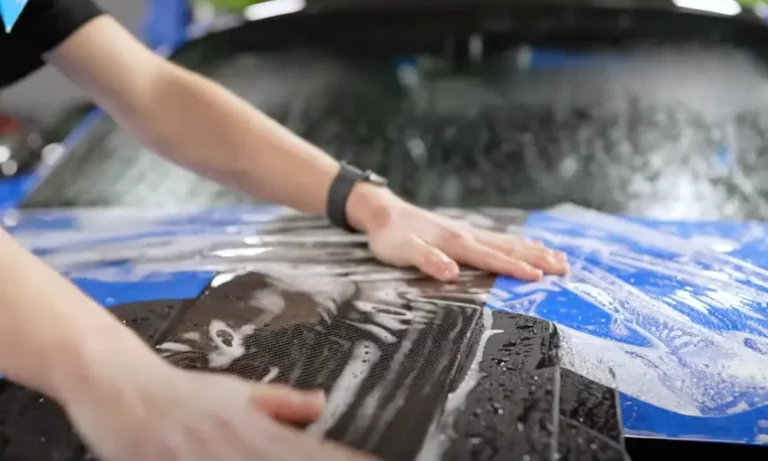
While DIY PPF kits exist, most experts strongly recommend professional installation.
The Professional Advantage
Professional PPF installation typically costs $1,000-5,000 depending on coverage, but offers significant benefits:
- Computer-cut patterns that precisely fit your specific vehicle model
- Seamless coverage without bubbles or lifting edges
- Professional surface preparation to ensure proper adhesion
- Higher-quality materials with better self-healing properties
- 5-10 year warranties against yellowing, peeling, and installation defects
Studies show DIY installations have only about a 60% success rate, with nearly half requiring redoing or professional correction – eliminating any cost savings.
The Cost of Poor Installation
Poor installation doesn’t just look bad – it can actually damage your paint. Improper techniques can trap contaminants between the film and paint surface, causing etching or staining. Edge lifting creates pathways for dirt and moisture that can lead to serious issues requiring complete removal and reapplication.
Comparing Top PPF Brands
Not all paint protection films offer equal performance. Here’s how the leading brands compare:
| Brand | Self-Healing | Clarity | Warranty | Price Point |
|---|---|---|---|---|
| XPEL Ultimate Plus | Excellent | Excellent | 10 years | Premium |
| 3M Scotchgard Pro | Very Good | Excellent | 7 years | Premium |
| SunTek Ultra | Very Good | Good | 10 years | Mid-Range |
| STEK DYNOshield | Excellent | Very Good | 7 years | Premium |
Premium brands cost more upfront but typically deliver better appearance, longevity, and protection performance. Lower-quality films may yellow faster, lose adhesion, or fail to self-heal effectively after a few years.
Maintaining Your Paint Protection Film
One of PPF’s advantages is relatively low maintenance requirements compared to regular paint care.
Simple Care Guidelines
To keep your PPF performing optimally:
- Wash regularly with pH-neutral car soap
- Avoid high-pressure washing directly on film edges
- Wait 7-10 days after installation before washing
- Park in shade when possible to reduce extreme heat exposure
- Apply compatible sealants every 3-6 months for enhanced performance
With proper care, premium PPF typically lasts 5-10 years before needing replacement, with many installations exceeding their warranty periods.
PPF vs. Alternative Protection Methods
Paint protection film isn’t your only option for preserving your vehicle’s finish.
Ceramic Coatings: A Complementary Approach
Ceramic coatings cost less ($300-2,000 for full vehicle coverage) and excel at:
- Chemical resistance
- Enhanced gloss and shine
- Easier cleaning and maintenance
- UV protection
However, ceramic coatings can’t protect against physical damage like rock chips or scratches. Many owners use both: PPF on high-impact areas (front bumper, hood, mirrors) and ceramic coating on the rest of the vehicle for comprehensive protection.
Traditional Protection Methods
Traditional methods like waxes ($100-300 annually) and sealants ($200-500 annually) provide minimal physical protection and require frequent reapplication. They’re better than nothing but don’t compare to PPF’s protective capabilities.
Vinyl wraps ($2,000-5,000 for full coverage) offer style customization with moderate protection but lack PPF’s self-healing properties and optical clarity.
Making a Smart Decision About PPF
Based on extensive research and real-world performance data, here’s how to determine if PPF is worth it for your situation:
- Assess your vehicle’s value: Higher-value vehicles justify more comprehensive coverage
- Consider your driving habits: Highway commuters benefit more than city drivers
- Evaluate your ownership timeline: Longer ownership periods increase PPF’s value
- Examine your local conditions: Harsh environments increase protection needs
- Check your budget: Partial coverage offers good value if full coverage exceeds your budget
For most owners of newer vehicles who drive regularly, PPF delivers measurable financial benefits through reduced repair costs and preserved resale value, making it a worthwhile investment.
The technology’s proven ability to prevent damage, maintain appearance, and preserve value typically outweighs initial costs over multi-year ownership periods. For maximum value, focus on protecting high-impact areas if budget constraints exist, choose reputable brands with strong warranties, and ensure professional installation.
Remember: The question isn’t whether PPF works—extensive testing confirms it does. The real question is whether its benefits align with your specific vehicle, usage patterns, and financial priorities.