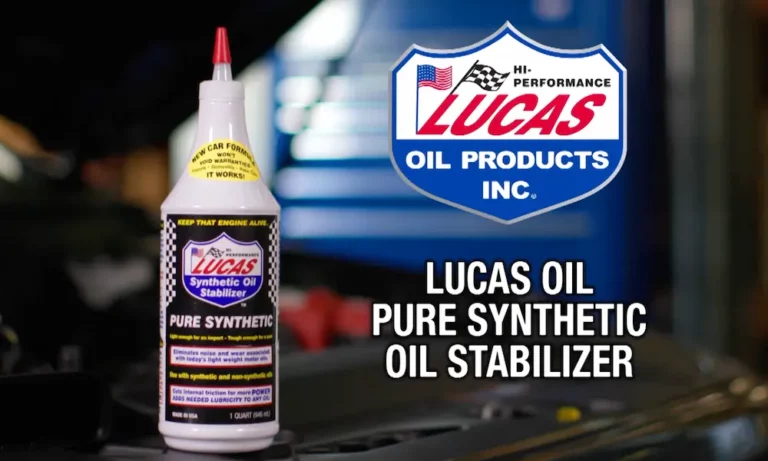
You’ve probably seen Lucas Oil Stabilizer at the auto parts store, promising to extend engine life and quiet noisy motors. Before you pour that thick liquid into your engine, there’s some stuff you need to know. Real mechanics, engineers, and lab tests reveal problems that could actually harm your engine instead of helping it.
What’s Actually Inside Lucas Oil Stabilizer
Here’s the thing: Lucas Oil Stabilizer isn’t magical engine protection. According to professional engineer analysis, it’s basically “ultra-purified non-synthetic 110 straight grade oil combined with 20-30% olefin copolymers.”
Sounds technical, right? Here’s what that means in plain English.
The olefin copolymers are thick polymers that make your oil syrupy. Think of it like adding cornstarch to water. You’re making it thicker, but you’re not making it better.
The real kicker? It contains zero actual engine-protecting additives. You’re diluting your quality motor oil with thick goop that provides no friction reduction benefits.
Professional engineer Rawze puts it bluntly: “Lucas seems to have zero additives towards friction reduction and provides no benefits towards this.” Those polymers just restrict oil flow, similar to sawdust in radiator stop-leak products.
Lucas Oil Stabilizer Clogs Your Oil System
Multiple mechanics report a nasty problem: Lucas Oil Stabilizer gums up oil filters and passages.
One mechanic documented that “the bottom half of the LF9080 oil filter will gum up with the polymers, shortening its effective lifespan.” This isn’t just inconvenient. It’s dangerous.
Here’s what happens when your oil system gets contaminated:
- Critical engine parts don’t get enough oil
- Your oil filter needs replacing way too early
- Tight engine passages can’t get proper lubrication
- Your filter can’t do its job effectively
The irony? You’re using a product to protect your engine, but it’s actually starving engine components of the lubrication they desperately need.
It Can Blow Out Your Seals
This one’s scary. Video evidence shows cases where Lucas Oil Stabilizer created such high oil pressure that it literally “popped the seal out” and caused major oil leaks.
Why does this happen? The product’s extreme thickness creates pressure that exceeds what your engine seals are designed to handle. This gets even worse in cold weather when the stuff becomes incredibly thick.
Professional mechanics warn straight up: “Putting too much Lucas Oil will do exactly that – it’s going to pop the seal out.”
Imagine trying to save a few bucks on oil consumption, only to face a costly seal replacement. That’s not a good trade-off.
Lab Tests Show It Actually Fails
Independent laboratory testing reveals some pretty damning results. When researchers subjected oil treated with Lucas to ASTM D5293 Cold Crank Simulator testing, it completely failed.
The oil “no longer meet the requirements of a 5W oil, completely failing the test.”
Let that sink in. Your 5W-30 oil stops being 5W-30 when you add Lucas. It becomes too thick to flow properly during startup—exactly when your engine needs protection most.
Cold starts cause the majority of engine wear. Lucas Oil Stabilizer makes your oil fail at the exact moment your engine is most vulnerable.
It Dilutes the Good Stuff in Your Oil
Here’s where it gets technical, but stay with me because this is important.
Quality motor oil contains carefully balanced additives that actually protect your engine. Laboratory analysis shows that adding Lucas Oil Stabilizer dilutes these critical components:
| Additive Component | Before Lucas | After Lucas | Impact |
|---|---|---|---|
| Calcium | 1,230 ppm | 443 ppm | 64% reduction |
| Phosphorus/ZDDP | 681 ppm | 430 ppm | 37% reduction |
That phosphorus drop? It fell “below the API minimum of 600 for this type of oil.” Your oil literally stops meeting industry standards.
Even worse: Oxidation testing proved that oil treated with Lucas Oil Stabilizer had a shorter working life than untreated oil. The research concluded that “putting the additive in your oil compromises the life of your oil.”
You’re paying extra to make your oil worse. That’s backwards.
What Engineers Say About Lucas
Professional mechanics and engineers don’t mince words about Lucas Oil Stabilizer’s fundamental design problems.
Uncle Tony’s Garage explains that the product’s famous demonstration actually showcases “a characteristic that is the exact opposite of how you want the oil in your engine to behave.”
Your engine has a windage tray that helps oil fall back to the pan quickly. This prevents oil from being whipped into foam and ensures proper lubrication. Lucas Oil Stabilizer works against this principle by causing oil to cling and form webs.
It’s fighting against decades of engine design engineering.
Real Engines, Real Problems
Professional mechanics report specific failures they’ve linked to Lucas Oil Stabilizer use:
- Increased wear metals in oil analysis compared to untreated oil
- Engine noise getting worse rather than better after treatment
- Bearing failures in extreme cases
- Shortened engine life instead of extension
One mechanic’s oil analysis revealed: “The iron and other wear metal content of my oil was slightly higher with Lucas than without.”
That’s the opposite of what you want. More metal in your oil means more wear, not less.
Cold Weather Turns It Into Sludge
If you live anywhere that gets cold, this section matters a lot.
Lucas Oil Stabilizer becomes dangerously thick in cold weather. Users report that “cold starts are significantly noisier” and “the ticking has become louder” after using the product.
Here’s what happens in winter:
- It prevents proper startup lubrication
- Creates excessive oil pressure that can blow seals
- Fails ASTM cold-flow requirements
- Can cause engine damage during cold starts
Your engine’s cold start is when it needs fast-flowing oil the most. Lucas makes that impossible.
The Math Doesn’t Work Out
Let’s talk money because Lucas Oil Stabilizer isn’t cheap.
Professional analysis reveals that Lucas costs $34-36 per gallon versus $12-13 for quality motor oil. That’s roughly three times more expensive.
What do you get for that extra cost?
- No measurable protection benefits
- Increased maintenance costs through filter contamination
- Potential for expensive engine damage
The product costs three times more than regular oil while providing zero proven benefits and potentially causing damage. That’s a terrible investment.
When Additives Might Make Sense
Here’s the honest truth: oil additives should only be used as temporary measures in severely worn engines that you’re planning to replace or rebuild soon.
Even then, higher viscosity oils or gear lubricants provide better value and actual protection.
For healthy engines, regular oil changes with quality oil provide superior protection at lower cost than any additive system. It’s not exciting, but it works.
The Product Design Flaw
Let’s get to the core issue with Lucas Oil Stabilizer.
Modern motor oils are carefully engineered products. Chemists spend years developing additive packages that balance multiple properties:
- Viscosity across temperature ranges
- Friction reduction
- Detergent properties
- Anti-wear additives
- Oxidation resistance
When you pour Lucas into your oil, you’re disrupting this careful balance. You’re thickening the oil without adding any beneficial additives. You’re diluting the good stuff that’s already there.
It’s like watering down expensive wine with grape juice. You’ve got more liquid, but it’s worse quality.
What Your Engine Actually Needs
Your engine doesn’t need magic additives. It needs:
Clean oil at the right viscosity. Check your owner’s manual. Use what the manufacturer recommends.
Regular oil changes. Fresh oil with a full additive package beats old oil with Lucas any day.
Proper diagnosis of actual problems. If your engine’s noisy or burning oil, find out why. Don’t mask symptoms.
Consulting with qualified mechanics for proper diagnosis beats attempting to mask problems with oil additives. Proper mechanical repair addresses root causes rather than temporarily concealing symptoms.
The Demonstration Trick
You’ve probably seen Lucas demonstrations where they run equipment with just Lucas and no oil. Impressive, right?
Not really. Those demos show the wrong characteristic. Oil shouldn’t cling and form strings. It should flow quickly to where it’s needed, then drain back to the pan.
The thick, clingy behavior Lucas demonstrates? That’s actually bad for your engine. It creates windage problems and prevents proper oil circulation.
It’s a great marketing trick, but it showcases a flaw, not a feature.
The Bottom Line on Lucas Oil Stabilizer Problems
After reviewing professional mechanics’ experiences, engineering analysis, laboratory testing, and real-world results, the evidence is clear: Lucas Oil Stabilizer poses significant risks that outweigh any potential benefits.
The product thickens oil without providing protective additives. It dilutes the beneficial properties of quality motor oil. It can cause oil system contamination, dangerous pressure buildup, and failed cold-flow performance during critical startup periods.
The overwhelming professional consensus? Lucas Oil Stabilizer is unnecessary for healthy engines and potentially harmful to both healthy and worn engines. Quality motor oil changed at appropriate intervals provides superior protection at lower cost without the documented risks.
Save your money. Skip the Lucas. Use good oil and change it regularly. Your engine will thank you.