Ever stood in your muddy truck wondering why you can’t have floor protection that’s both durable AND easy to clean? You’re looking at WeatherTech floor liners, but now they’ve got two versions – regular and HP – and the price difference has you questioning which is actually worth it. I’ve done the deep dive on both to help you make the right call for your vehicle and lifestyle.
Material Differences: The Foundation of Performance
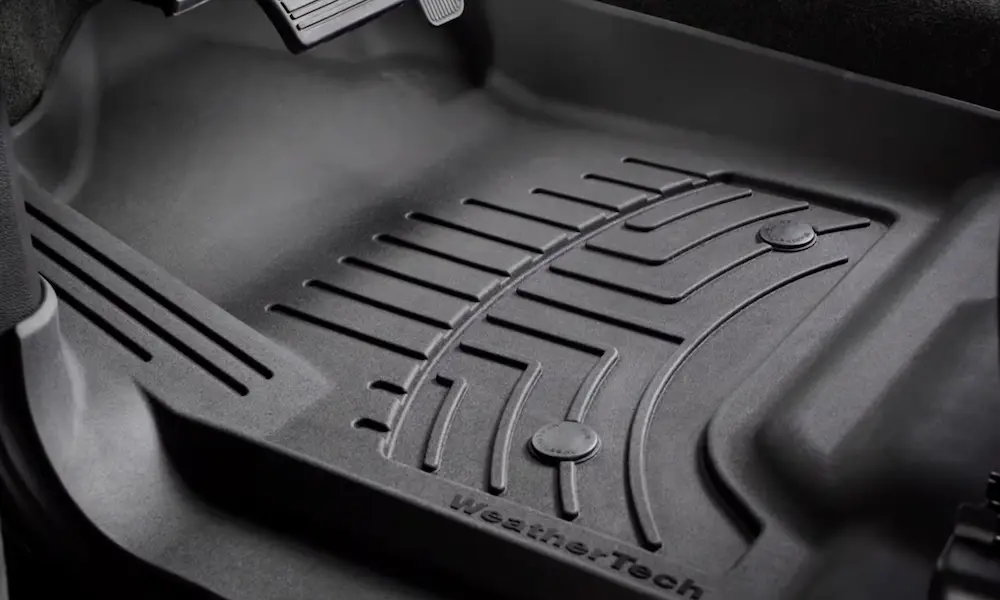
The standard WeatherTech FloorLiner uses High-Density Tri-Extruded (HDTE) thermoplastic material. This creates a rigid, sturdy liner that maintains precise contours even under heavy use. The material features a patented tri-layer construction with a rigid core for strength while still providing some surface friction.
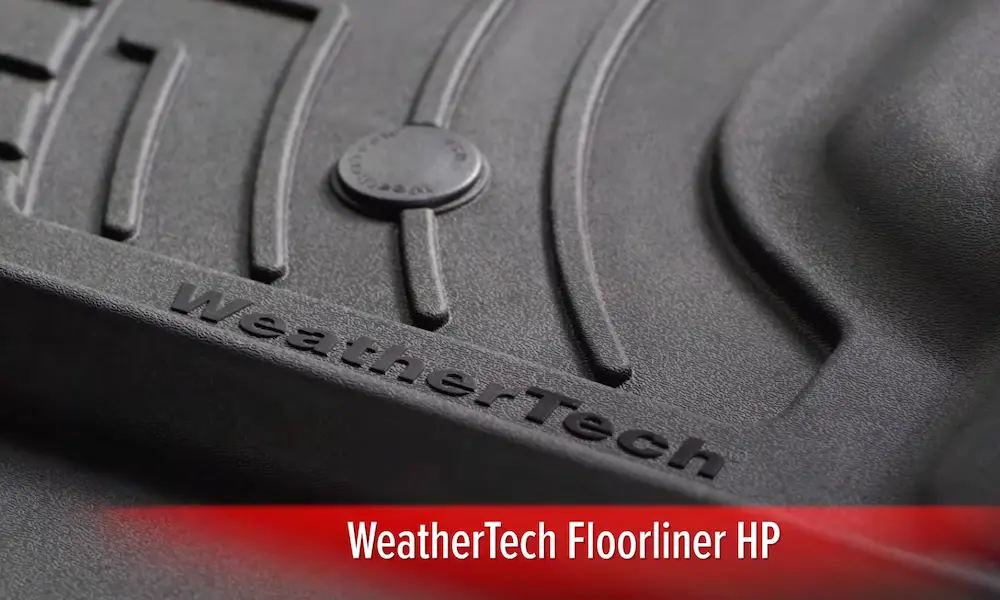
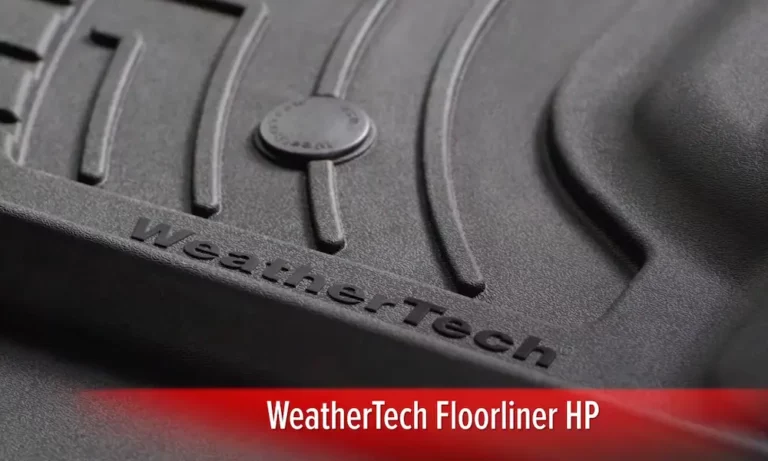
In contrast, the newer FloorLiner HP uses an advanced Thermoplastic Elastomer (TPE) compound. This material feels more rubber-like – combining softness with impressive durability. The HP version is also 100% recyclable, latex-free, and PVC-free, making it the more environmentally conscious choice.
The differences aren’t just marketing hype – they fundamentally change how the liners perform in daily use.
Installation Experience: A Tale of Two Liners
If you’ve ever wrestled with floor liners during installation, you’ll appreciate this difference. The standard FloorLiners can be downright frustrating to install properly. Their rigid construction makes them challenging to maneuver into tight spaces, especially when trying to anchor them with OEM footings.
The HP version solves this problem brilliantly. Car and Driver testing found the HP liners “much easier to install and remove for cleaning” thanks to their flexible material. The HP’s underside features special anti-skid nibs that grip carpet fibers, often eliminating the need for factory retention hooks altogether.
This flexibility is particularly valuable in vehicles with complex floor geometries or steep-angled retention systems.
Cleaning Comparison: The Deal-Breaker for Many
Here’s where the real-world difference hits home for most users. Standard WeatherTech liners are notoriously difficult to get truly clean. Despite being easy to rinse off, they tend to retain scuffs and dirt marks that become embedded in the textured surface.
The HP FloorLiners represent a significant upgrade in this department. Their TPE material has non-stick properties and a smoother surface finish that makes dirt and grime easier to remove. Multiple user reports confirm the HP mats maintain their appearance longer and don’t require aggressive scrubbing to restore their look.
If you regularly track mud, dirt, or snow into your vehicle, this cleaning advantage alone might justify the price premium.
Protection Capabilities: What They’re Made For
Both liner types excel at their primary job – protecting your vehicle’s carpet from damage. However, they approach this mission differently:
Water and Debris Containment
Standard FloorLiners feature deeper reservoir channels specifically designed to collect and trap larger volumes of water, mud, and debris. Their rigid walls create effective barriers against spillover, making them ideal for extreme conditions.
The HP FloorLiners offer similar high-wall protection but with beveled edges that prevent the inward curling that can happen with rigid mats over time. While the reservoirs might be slightly less deep, the material’s flexibility ensures consistent contact with vehicle contours, potentially providing better real-world protection against debris infiltration.
Table: Protection Feature Comparison
| Feature | Standard FloorLiner | FloorLiner HP |
|---|---|---|
| Material | HDTE Thermoplastic | TPE Compound |
| Reservoir Depth | Deeper | Moderate |
| Edge Design | Straight | Beveled |
| Contact with Contours | Good when new | Consistently excellent |
| Curl Resistance | Poor to moderate | Excellent |
Long-Term Durability: The Test of Time
The standard FloorLiners have an established track record for extreme durability. Many users report 5+ years of service without structural failure. However, a persistent issue emerges over time – edge curling, which affects the rigid material’s ability to maintain proper contact with vehicle surfaces.
The HP version specifically addresses this curling problem through its flexible TPE construction, which naturally resists permanent deformation. Since it’s a newer product, comprehensive long-term data is still developing, but early indications are promising.
Some users express concern about potential faster wear in high-traffic areas due to the softer material, though this remains theoretical rather than widely observed in real-world use.
Price Analysis: Is the Premium Worth It?
Let’s talk money. Standard FloorLiners typically retail between $200-250 for a complete set. The HP version commands a premium of roughly $15-40 more, putting them in the $225-290 range.
This price difference represents about a 10-15% premium for the HP version. When considering the total cost of vehicle ownership, this relatively small increase may be justified by the significant improvements in user experience.
For most users, the decision comes down to a simple question: Is easier installation, better cleaning performance, enhanced comfort, and resistance to edge curling worth paying a bit more upfront?
Best Applications: Which Liner for Which User?
Not all vehicles and driving habits are created equal. Here’s where each liner type shines:
Standard FloorLiner Ideal Applications
The regular FloorLiners excel in demanding environments where maximum protection and durability are non-negotiable:
- Work trucks and commercial vehicles
- Off-road applications with extreme mud exposure
- Situations where maximum liquid containment is critical
- Older vehicles where HP versions might not be available
FloorLiner HP Target Market
The HP FloorLiners make more sense for:
- Luxury vehicle owners who prioritize aesthetics
- Daily commuters who value easier maintenance
- Family vehicles where frequent cleaning is necessary
- Vehicles with complex floorboard designs
- Those concerned about edge curling issues
Competitive Landscape: How They Stack Up
WeatherTech isn’t the only player in the premium floor protection game. Car and Driver testing positioned both WeatherTech products as premium options, though they noted TuxMat received their “Best Premium” rating for comprehensive coverage and appearance.
Husky Liners represents a significant competitor, with their X-Act Contour line offering rubber-like flexibility similar to WeatherTech HP at potentially lower prices. However, WeatherTech maintains advantages in manufacturing quality, warranty coverage, and brand recognition.
In comparative testing, both WeatherTech products performed well in protection and fit, but some competitors like Husky WeatherBeaters demonstrated superior stain resistance, “bouncing back well, maintaining their deep black color after cleaning.”
Installation Process: Step-by-Step Comparison
The installation process highlights key differences between these products:
Standard FloorLiner Installation
- Remove factory floor mats
- Clean vehicle floor surface thoroughly
- Carefully align liner with vehicle contours
- Force rigid material to conform to floor shape
- Secure to factory retention posts (often requiring significant pressure)
- Check edges for proper seating against vehicle surfaces
FloorLiner HP Installation
- Remove factory floor mats
- Clean vehicle floor surface
- Place liner on floor – flexibility allows easier positioning
- Anti-skid nibs grip carpet automatically
- Gently press into place – material naturally conforms to contours
- Attach to factory retention if desired (often optional)
The simpler installation of the HP version becomes immediately apparent when you’re on your hands and knees in your vehicle.
User Experiences: What Owners Are Saying
Real-world feedback reveals consistent patterns about both products:
Standard FloorLiner owners consistently praise:
- Exceptional durability even after years of abuse
- Superior containment of large amounts of liquid
- Availability for virtually all vehicle makes and models
However, they frequently complain about:
- Difficulty achieving a truly clean appearance
- Edge curling developing over time
- Challenging installation and removal
HP FloorLiner owners highlight:
- Significantly easier cleaning and maintenance
- More comfortable underfoot feel
- Better retention of “like new” appearance
- Superior conformity to vehicle contours
Their main concerns center around:
- Higher initial cost
- Questions about long-term durability (though few actual failures)
- Limited availability for some vehicle models
Environmental Considerations: A Growing Factor
For environmentally conscious consumers, the material differences matter. The HP FloorLiner’s TPE compound is 100% recyclable, while also being latex-free and PVC-free. This represents an improvement over the standard version for those concerned about end-of-life product disposal.
Both products benefit from WeatherTech’s American manufacturing, which reduces transportation emissions compared to overseas production. However, the HP version’s material composition gives it a slight edge in environmental impact.
Maintenance Tips: Getting the Most from Your Investment
Regardless of which version you choose, proper maintenance extends lifespan and appearance:
Standard FloorLiner Maintenance
- Remove liners completely for thorough cleaning
- Use mild soap and warm water solution
- Scrub with soft-bristled brush
- For stubborn stains, try specialized rubber cleaner
- Rinse thoroughly and air dry completely
- Apply protectant designed for rubber/vinyl occasionally
FloorLiner HP Maintenance
- Remove liners for cleaning (much easier than standard)
- Wash with mild soap and water
- Wipe with microfiber cloth
- For tougher soil, gentle brushing is usually sufficient
- Rinse and air dry
- TPE material generally needs less conditioning than standard
The HP’s easier maintenance translates to more frequent cleaning for most owners, resulting in better long-term appearance.
Making Your Decision: Key Factors to Consider
When deciding between WeatherTech HP and regular FloorLiners, ask yourself:
- How important is easy cleaning to you?
- Do you frequently remove your liners for maintenance?
- Is your vehicle a work truck or a daily driver?
- Does your vehicle have complex floor contours?
- Are you concerned about edge curling over time?
- Is the price difference significant to your budget?
For most everyday drivers who want protection without hassle, the HP version offers better value despite the higher initial cost. The improved cleaning performance, installation ease, and curl resistance justify the premium.
For commercial applications, extreme off-roading, or those on tight budgets, the standard FloorLiner still represents excellent protection at a lower price point.
Technical Specifications: The Numbers Behind the Performance
Let’s look at the detailed specifications that differentiate these products:
Standard FloorLiner Specifications:
- Material: High-Density Tri-Extruded (HDTE) thermoplastic
- Average thickness: 3mm (varies by application)
- Weight: Approximately 4-7 lbs per front liner (varies by vehicle)
- Reservoir depth: Up to 1.5 inches in deepest sections
- Color options: Black, tan, or gray
- Warranty: Limited lifetime
FloorLiner HP Specifications:
- Material: Advanced Thermoplastic Elastomer (TPE) compound
- Average thickness: 2.5-3mm (varies by application)
- Weight: Approximately 3-6 lbs per front liner (varies by vehicle)
- Reservoir depth: Up to 1.25 inches in deepest sections
- Color options: Black only
- Warranty: Limited lifetime
The weight difference reflects the material composition, with the more flexible HP version typically being slightly lighter.
The Evolution of Floor Protection: Why HP Exists
WeatherTech didn’t develop the HP liner on a whim. It represents a direct response to the most common complaints about their standard product. Understanding this evolution helps explain the price difference.
The standard FloorLiner revolutionized vehicle floor protection when introduced, focusing primarily on maximum protection and precision fit. As the market matured, consumer feedback highlighted cleaning difficulties and edge curling as pain points.
The HP version directly addresses these issues while maintaining the core protective benefits. It represents WeatherTech’s recognition that different consumers have different priorities – some value absolute maximum protection, while others prioritize user experience and maintenance.
Both products continue to be manufactured because they serve different segments of the market effectively.

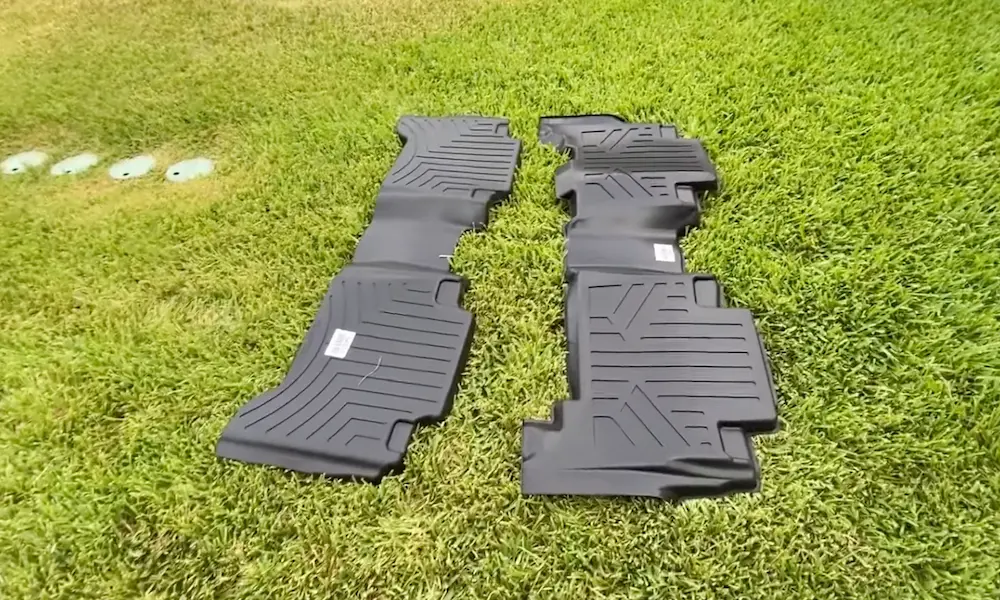
- Compatible with select 2024-2025 Ford F-150 Lightning, 2015-2020 Ford F-150, 2021-2025 Ford F-150, 2022-2023 Ford F-150 Lightning, 2017-2020 Ford F-150 Raptor, 2023-2023 Ford F-150 Raptor Models. Please confirm fitment to your year, make, and model in Amazon ConfirmedFit prior to purchase.
- Coverage Area: 1st & 2nd Row, Color: Black
- Made in USA!

- Compatible with select 2014-2023 Lexus GX, 2013-2024 Toyota 4Runner Models. Please confirm fitment to your year, make, and model in Amazon ConfirmedFit prior to purchase.
- Coverage Area: 1st & 2nd Row, Color: Black
- Made in USA!
- FloorLiner HP is made using advanced rubber-like, Thermoplastic Elastomer (TPE) compound making it both soft and durable. Engineered and created to stand up to the most extreme weather conditions, it won’t crack, curl or break down. This material is also 100 percent recyclable and is both latex and PVC-free!
The Bottom Line: WeatherTech HP vs Regular
After thorough analysis, the choice between WeatherTech HP and regular FloorLiners comes down to your specific needs and preferences:
Choose Standard FloorLiners if:
- Maximum durability is your top priority
- You need the deepest possible liquid reservoirs
- Budget constraints make the lower price appealing
- You rarely remove your liners for cleaning
- Your vehicle is primarily used for work or extreme conditions
Choose HP FloorLiners if:
- Easy cleaning and maintenance matter to you
- You want protection that stays looking newer longer
- Edge curling has been an issue with previous mats
- You remove your liners frequently
- Interior comfort and aesthetics are important
- Your vehicle has complex floor contours
Both products carry WeatherTech’s reputation for quality and precise vehicle-specific fit. Either will provide superior protection compared to generic floor mats, but the HP version delivers a more refined user experience that most drivers will appreciate daily.