
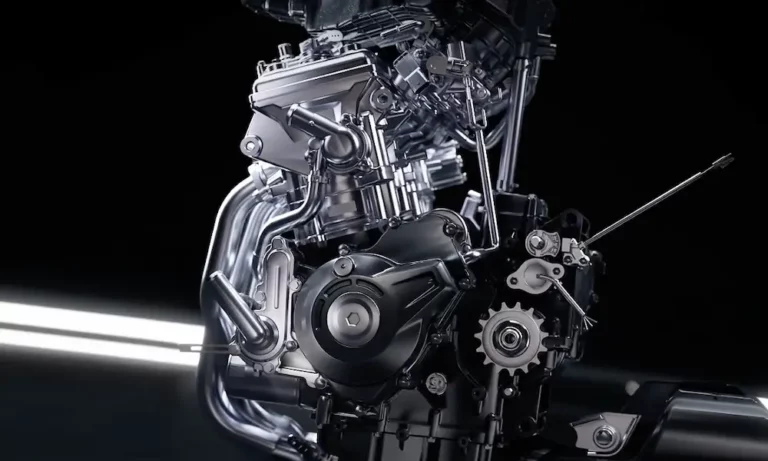
If you’ve been shopping for a budget-friendly motorcycle or ATV and stumbled across CFMOTO, you’ve probably asked yourself: who actually makes these engines? It’s a fair question. The answer is more interesting than you’d expect — and it involves KTM, Yamaha, and a Chinese gigafactory pumping out 800,000 engines a year. Keep reading.
CFMOTO Engines Come From One Company: Zhejiang Chunfeng Power
The short answer? Zhejiang Chunfeng Power Co., Ltd. makes CFMOTO engines. That’s the parent company behind the CFMOTO brand name. They’re headquartered in Hangzhou, China, and they’ve been building engines since 1989.
This isn’t a company that slaps a badge on someone else’s motor. They cast, machine, assemble, and test their own engines in-house. That’s called vertical integration, and it matters because it gives them control over quality, cost, and how fast they can update their designs.
Here’s a quick look at how the company grew from a spare parts shop to a global engine manufacturer:
| Year | Milestone |
|---|---|
| 1989 | Founded in Wenzhou as a spare parts workshop |
| 1992 | Produced first 125cc cylinder head |
| 1997 | Built first liquid-cooled engine (the 152MI) |
| 2005 | Debuted first ATV (ATV500) at EICMA |
| 2011 | Started commercial ties with KTM |
| 2017 | Launched KTM joint venture (CFMOTO-KTMR2R) |
| 2023 | Formed joint venture with Yamaha |
Where CFMOTO Engines Are Actually Built
The main production hub sits in Hangzhou, China — a facility covering roughly 1.6 million square feet. It uses automated robotics for welding and engine assembly. The numbers are hard to ignore: this factory produces around 800,000 engines and 600,000 complete vehicles per year.
CFMOTO also runs assembly plants in Mexico and Thailand to serve regional markets. These plants put together kits using engines and frames shipped from Hangzhou. The core engine work still happens in China.
Their North American headquarters in Plymouth, Minnesota handles design, marketing, and vehicle development specifically for American buyers. No engines get built there, but the specs you ride on a U.S.-market CFMOTO often get shaped there.
The KTM Connection: What It Actually Means
Here’s where things get interesting. CFMOTO doesn’t just make its own engines — it also manufactures engines for KTM, the Austrian motorcycle brand.
In 2017, both companies formed a joint venture called CFMOTO-KTMR2R. CFMOTO owns 51%, KTM holds 49%. A dedicated factory sits right next to the main Hangzhou plant, built specifically for larger-displacement bikes.
Under this deal, CFMOTO now builds the KTM 790 and 890 series engines in Hangzhou for global markets. KTM moved production from Austria to free up its Mattighofen facility for flagship models. Meanwhile, CFMOTO uses KTM’s LC8c architecture as the base for its own 800MT and 800NK bikes.
| Engine Family | Status | Notes |
|---|---|---|
| KTM 790 (799cc) | Contract Build | Full production moved to Hangzhou |
| KTM 890 (889cc) | Contract Build | Built alongside CFMOTO models |
| CFMOTO 800 Series | KTM-Derived | Uses LC8c architecture |
| CFMOTO 1250 Series | KTM-Derived | Re-engineered from KTM LC8 V-twin |
| CFMOTO 450cc Twin | Proprietary | KTM uses it for their RC450 |
That last row says a lot. KTM now uses CFMOTO’s own 450cc engine for the RC450 sportbike. The technology transfer runs both directions now.
The 650cc and 700cc Engines: What’s the Kawasaki Story?
If you’ve read anything about the CFMOTO 650NK, you’ve probably seen people call it a Kawasaki clone. That label has some truth to it — and some important context.
The 650NK’s parallel-twin engine, launched in 2012, shares a very similar architecture with the Kawasaki ER-6n. Same 180-degree crankshaft, nearly identical bore and stroke (83mm x 60mm). There’s no formal licensing agreement here — this was design influence, not a partnership.
But CFMOTO didn’t just copy and freeze it. Over 10+ years, they adjusted the counterbalancing system, retuned the ECU, and bumped the displacement up to 693cc for the 700CL-X series. That version puts out 74 horsepower and 50 lb-ft of torque. It’s not just a borrowed design anymore — it’s been genuinely developed.
CFMOTO’s Proprietary Engines: The New Generation
Here’s the part that tends to surprise people. CFMOTO is now building engines that nobody else designed for them.
The 450cc Parallel Twin
This one uses a 270-degree crankshaft, which gives it firing characteristics similar to a 90-degree V-twin. It’s punchy, responsive, and built entirely in-house. It powers the 450NK, 450SS, and Ibex 450. The fact that KTM chose this engine for the RC450 says more than any marketing claim could.
The 675cc Inline Triple
This is brand new. CFMOTO developed a 12-valve DOHC three-cylinder that produces around 95 horsepower at 11,000 RPM. A triple is genuinely complex to engineer — balancing the rotating mass is tricky. The fact that they pulled it off in-house marks a real jump in capability.
The V4 Superbike Engine
At EICMA 2024, CFMOTO revealed a 997cc V4 prototype targeting over 210 horsepower at 14,500 RPM. It uses a counter-rotating crankshaft — tech you normally see on MotoGP bikes and Ducati Panigales. This engine is aimed at a future World Superbike Championship entry.
| Engine | Output | Application |
|---|---|---|
| 450cc Parallel Twin | 51–55 HP | 450NK, 450SS, Ibex 450 |
| 675cc Inline Triple | 95 HP | 675SS, 675NK |
| 1000cc V4 (prototype) | 210+ HP | V4 SR-RR |
| 1280cc V-Twin | 140 HP | 1250TR-G |
Off-Road Engines: ATVs and Side-by-Sides
CFMOTO didn’t start as a motorcycle company — it built its reputation on quads and utility side-by-sides. It’s currently China’s largest ORV exporter and holds the number one market share in the UK.
Every engine in the CFORCE, UFORCE, and ZFORCE lineup — from the 400cc singles to the 1000cc V-twins — gets designed and built in Hangzhou. These engines are purpose-built for off-road work, meaning they’re tuned for low-end torque rather than peak RPM power.
SuperATV notes that CFMOTO’s standard inclusion of electronic fuel injection gives their ORVs a notable edge on value — features that competitors charge significantly more for.
The Yamaha Joint Venture: What It Adds
In September 2023, CFMOTO and Yamaha formed Zhuzhou CF Yamaha Motor Co., Ltd. in Zhuzhou, China. This venture focuses on small-displacement motorcycles for the Chinese domestic market.
It’s not exporting to North America or Europe — Yamaha clarified that clearly. But the partnership gives CFMOTO access to decades of Yamaha engineering knowledge in the commuter and scooter segment. Combined with the KTM alliance, CFMOTO now sits at the intersection of two of the world’s most respected powersports brands.
How CFMOTO Ensures Engine Quality
Quality on Chinese-built engines was a fair concern five years ago. CFMOTO has made deliberate moves to address it.
Here’s what backs up their engine systems:
- Bosch EFI and engine management on most modern models
- Brembo or J.Juan braking on performance-focused bikes
- KYB or WP suspension to handle the power properly
- Dedicated test tracks for braking, ABS, and thermal stability checks
- California ARB and EPA compliance for North American sales
In 2024, CFMOTO spent over CNY 1 billion (roughly $145 million USD) on R&D — about 7% of annual revenue. They hold over 1,812 global IP rights and 540 patents. They also acquired a 51% stake in Kalex Engineering, the German firm that dominates Moto2 chassis construction, bringing elite racing-grade engine tuning expertise directly into their development cycle.
The “budget Chinese engine” label doesn’t really hold up against those numbers.
The Bottom Line on Who Makes CFMOTO Engines
Zhejiang Chunfeng Power makes CFMOTO engines — all of them. They design, cast, machine, and assemble everything at their Hangzhou facility. Some platforms use KTM architecture under a formal joint venture. Others draw design influence from Japanese engineering that’s been refined over a decade. And the newest ones? Those are fully proprietary, good enough that KTM buys them.
Whether you’re looking at a CFORCE ATV or the new 675SS sportbike, the engine traces back to one address: Hangzhou, China — built by a company that’s spent 35 years learning exactly how to do this right.


