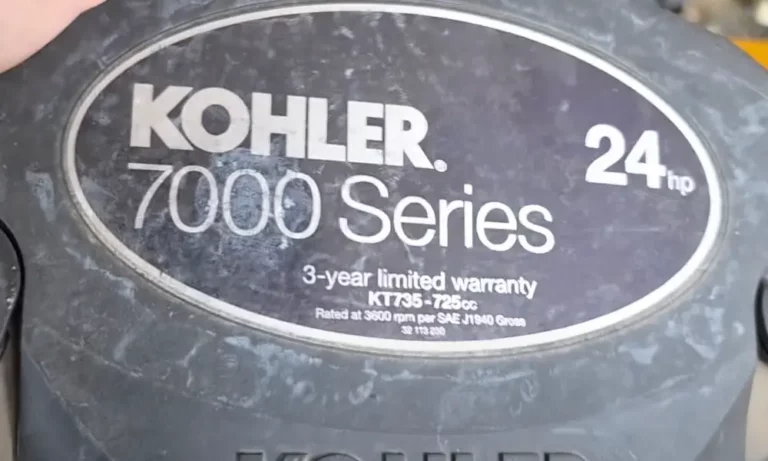
Your mower’s losing power, making weird noises, or refusing to start when it’s warm. If you’ve got a Kohler 7000 series engine, you’re not imagining things—these engines have a reputation for specific, recurring problems. Let’s dig into what actually goes wrong, why it happens, and what you can do about it.
The Head Gasket Issue Everyone Talks About
Here’s the bad news: head gasket failure is practically a given with these engines. Most owners report problems between 200-500 hours of use.
You’ll know it’s happening when you hear a distinct hissing sound after shutting down. Then comes the power loss, hard starting, and eventually white smoke billowing from the exhaust. It’s not subtle.
The problem starts when the gasket breaches between the combustion chamber and cooling passages. Coolant seeps into places it shouldn’t be, exhaust gases escape where they shouldn’t go, and everything gets worse fast. It’s a cascading failure that feeds on itself.
Why does this keep happening?
Most head gasket failures trace back to overheating from poor maintenance. Grass clippings and debris pile up in your cooling fins. You don’t see it because it’s hidden under the shroud, but it’s there—acting like a thermal blanket around your cylinder heads.
Low oil levels make everything worse. Your engine can’t manage heat properly without adequate lubrication, and those hot spots exceed what the gasket material can handle.
Kohler released updated gaskets (part number 24 841 04-S) that address some design flaws. But you’re still looking at 3-4 hours of labor and $150-400 in total costs when this happens.
Running on One Cylinder? It’s Probably Your Ignition Coils
Ignition coil failures typically show up between 300-700 hours. Your V-twin engine keeps running, but it’s down to one cylinder. You’ll notice immediately when you engage the mowing deck or hit a hill.
The coils can’t handle the constant heat cycling. Every time you start up and cool down, the coil windings expand and contract. Eventually, the insulation between windings breaks down. Add in rodent damage—mice love chewing spark plug wires—and you’ve got a perfect storm.
Testing is straightforward.
Pull one spark plug wire while the engine’s running. If that cylinder was working, the engine dies immediately. If nothing changes, you’ve found your dead cylinder. Just don’t touch the wire with your bare hands unless you enjoy getting shocked.
Replacement coils run $50-150 each. Here’s a pro tip: replace both at the same time. They’ve experienced identical wear patterns, and the second one usually fails shortly after the first anyway.
The Smart Choke System That Isn’t So Smart
Post-2015 engines come with Kohler’s Smart Choke system, and it’s a constant headache. The system was supposed to make starting easier. Instead, it’s made things worse.
The Smart Choke uses an air vane deflector, thermostat assembly, and oil pressure switch working together. When any part of this chain fails—and it will—your starting problems begin.
Common failures include the choke not closing when cold (hard starting) or not opening when warm (rich running and black smoke). The air vane deflector develops excessive play in its mounting. Debris gets stuck in the linkage. Corrosion locks things up.
Many techs just bypass the whole system when problems start. Manual choke conversions or delete kits cost less than $50 and actually work reliably. Sometimes simpler is better.
Fuel Pump Problems Sneak Up on You
Fuel pump failures happen between 300-600 hours, but they don’t announce themselves dramatically. Performance just gradually gets worse.
The mechanical pump runs on vacuum pulses from the crankcase. A diaphragm inside draws fuel from your tank and pushes it to the carburetor. Over time, especially with ethanol fuel, that diaphragm hardens and cracks.
At first, you’ll only notice issues when you’re working the engine hard—climbing hills or cutting thick grass. The pump can’t maintain pressure under load. Eventually, it fails completely, and your engine stalls during normal operation.
Testing requires checking fuel flow at multiple points.
A failing pump might produce some flow when you test it sitting still, but it can’t maintain pressure when the engine’s running. Don’t forget to check the vacuum line connecting the pump to the crankcase. Cracks or blockages there will kill a new pump fast.
Replacement pumps are cheap—$25-80—and easy to install. Just make sure that vacuum line is solid before you button everything back up.
Power Loss and Surging That Drives You Crazy
Power loss and surging affect these engines more than they should. Your RPMs bounce between 2700-3500 in a rhythmic pattern. It’s unstable, annoying, and makes cutting evenly almost impossible.
Surging happens when your engine can’t maintain consistent fuel mixture. Air leaks, fuel delivery problems, or carburetor issues all cause it. The problem usually develops gradually as seals and gaskets age.
Intake manifold gaskets are frequent culprits. Heat cycling and fuel vapors deteriorate them, creating vacuum leaks that lean out your fuel mixture. The problem often gets worse when the engine’s warm because thermal expansion opens up any existing cracks.
Valve adjustment matters more than you think.
Valve clearances need periodic adjustment to maintain proper timing and compression. Tight valves prevent complete closure, reducing compression and causing hard starting when warm. This maintenance step gets skipped way too often.
Overheating: The Problem That Creates Other Problems
These air-cooled engines depend entirely on forced air circulation from the flywheel fan. When that airflow gets restricted, temperatures spike rapidly.
The most common cause is debris in the cooling fins. Grass clippings, leaves, and dirt build up around the cylinders and heads. You can’t see it from outside—you’ve got to remove the engine covers to find it.
Rodent nests make things exponentially worse. Mice love building homes in warm engine spaces. They use grass clippings and other materials that completely block cooling passages and create fire hazards.
Regular maintenance means removing all covers and blowing out those fins with compressed air. Do it more often than Kohler recommends, especially if you’re mowing in dusty or debris-heavy conditions.
Valve Train Issues That Multiply Over Time
Valve problems become more common as hours accumulate. Simple valve adjustments turn into bent pushrods, stuck valves, and worn valve guides.
Stuck intake valves are particularly nasty. They develop when engines overheat, causing carbon deposits to form around valve stems. The valve can’t move properly. Infrequent oil changes let combustion deposits accumulate, making everything worse.
Valve clearance adjustment isn’t optional.
You need to do this every 500 hours or annually. Incorrect clearances cause hard starting, reduced power, and accelerated wear. The job requires feeler gauges and attention to proper specs for both intake and exhaust valves.
Bent pushrods usually result from stuck valves. The valve won’t open, excessive force builds on the pushrod, and it bends. You’ll need to replace the pushrod and figure out why the valve stuck in the first place.
What This Means for Your Wallet
The overall reliability of these engines depends heavily on maintenance quality. Engines that get proper care can provide satisfactory service despite inherent design issues. But poor maintenance creates cascading failures fast.
Problems increase dramatically after 300-400 hours. Many engines need significant repairs by 500 hours. This contrasts poorly with competing engines like Kawasaki, which often run trouble-free past 1,000 hours.
Cost of ownership adds up quick.
Head gasket replacement runs $300-500 with labor. Ignition system repairs add another $100-200 per incident. These costs can approach or exceed your original equipment value.
| Common Repair | Parts Cost | Labor Cost | Total Cost |
|---|---|---|---|
| Head Gasket | $50-100 | $150-300 | $200-400 |
| Ignition Coils (both) | $100-300 | $50-100 | $150-400 |
| Fuel Pump | $25-80 | $50-100 | $75-180 |
| Valve Adjustment | $0 | $75-150 | $75-150 |
Preventive Maintenance That Actually Matters
You can’t fix the design flaws, but you can minimize their impact. Here’s what actually works:
Clean those cooling fins religiously. Don’t wait for the manual’s interval. If you’re mowing in dusty conditions or heavy grass, do it monthly. Remove the shroud completely and blow out every fin with compressed air.
Check your oil constantly. Low oil accelerates every problem these engines have. Use quality oil appropriate for your operating conditions and change it more frequently than recommended.
Inspect for rodent damage regularly. Look for chewed wires, especially around the ignition system. Check for nests in hidden spaces around the engine. A mouse can cause hundreds of dollars in damage overnight.
Adjust valves on schedule. Every 500 hours or annually, whichever comes first. This simple maintenance prevents major problems down the road.
Address problems immediately. That weird noise or slight performance change you’re noticing? It’s not going away on its own. Small problems become big problems fast with these engines.
The Repair-or-Replace Decision
For newer equipment with low hours, repairs make sense despite the costs. You’ve got value left in the machine, and addressing problems early prevents cascading failures.
For older equipment or engines with multiple problems, replacement might be smarter. Adding a new Kawasaki or similar engine to your existing deck often costs less than repeated Kohler repairs and gives you better long-term reliability.
The frequency of problems with Kohler 7000 series engines isn’t a secret anymore. Owners, technicians, and forums are full of similar stories. If you’re buying new equipment, consider alternatives. If you already own one, aggressive preventive maintenance is your best defense.
These engines aren’t completely terrible—they can work if you’re vigilant about maintenance and address problems quickly. But they require more attention and generate more repair costs than competing options. Know what you’re dealing with, stay on top of maintenance, and don’t ignore warning signs. Your wallet will thank you.