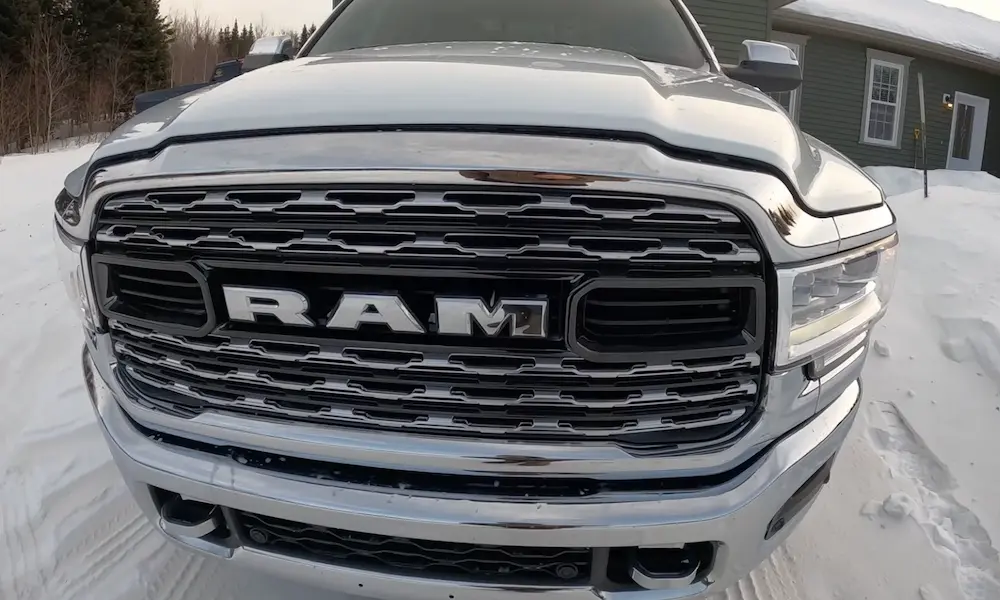
Choosing the wrong coolant for your 6.7 Cummins can wreck your cooling system. The right choice depends entirely on your truck’s year, and mixing the wrong types creates a costly mess. Here’s what you need to use based on when your Ram rolled off the assembly line.
Why Your Model Year Changes Everything
The 6.7 Cummins coolant type you need isn’t a one-size-fits-all answer. Ram made a major switch in 2013 that affects every coolant decision you’ll make.
2007.5-2012 Models: The HOAT Years
If you’re running an early 6.7 Cummins, your truck came with HOAT (Hybrid Organic Acid Technology) coolant. You’ll typically see this as pink or orange liquid when you pop the hood. It’s traditional automotive coolant tech that worked fine but required more frequent changes than what came later.
2013 and Newer: The OAT Switch
Ram switched to OAT (Organic Acid Technology) coolant starting with 2013 models. This purple-colored coolant meets the MS-90032 specification and offers way better service intervals. We’re talking 10 years or 150,000 miles between changes.
The switch wasn’t random. OAT coolant protects modern diesel components better and cuts down on maintenance headaches.
What the Factory Specs Actually Mean
Let’s cut through the alphabet soup of coolant specifications.
The MS-90032 Standard
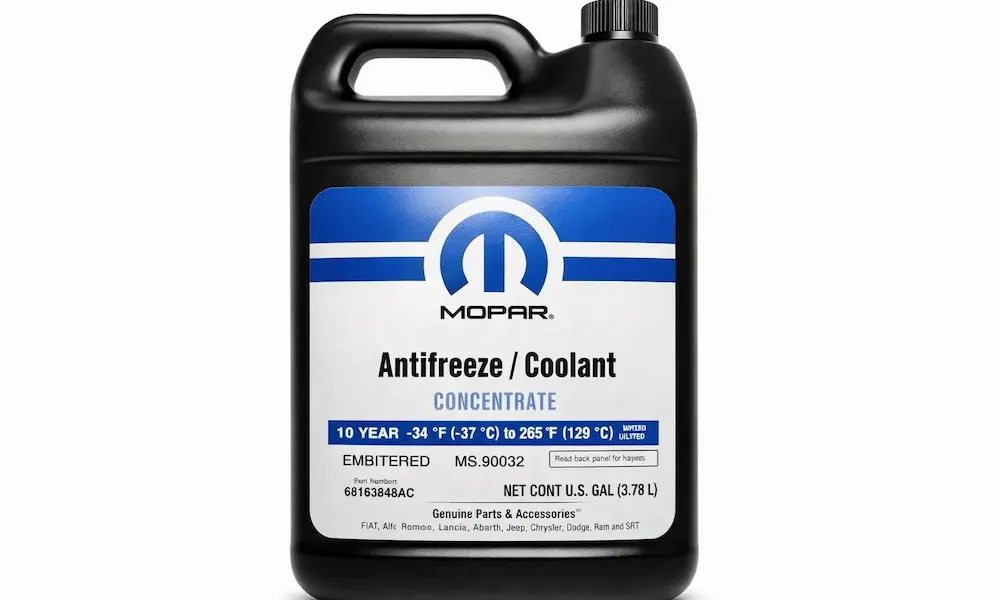
For 2013+ trucks, you need coolant that meets the MS-90032 specification. This is Mopar’s current standard for OAT coolant. You might also see MS-12106 listed on older bottles—they’re compatible. Mopar just updated their numbering system but kept the same formula.
Official Mopar Part Numbers
- Concentrated: 68163848AB or 68163848AC
- Pre-mixed 50/50: 68163849AB
- Alternative concentrated (red OAT): 68104496AA
The concentrated versions give you flexibility, but the pre-mixed stuff eliminates guesswork if you’re topping off.
How Much Coolant Your System Holds
Your 6.7 Cummins cooling system takes about 7 gallons when you fill it completely. That’s roughly 26.5 liters if you’re working with metric measurements.
Keep this number handy when you’re planning a complete flush. You’ll need at least two gallons of concentrate if you’re mixing your own, or four gallons of pre-mixed 50/50.
Best Aftermarket Coolant Options That Actually Work
You don’t have to stick with Mopar purple if you don’t want to. Several aftermarket options meet or exceed the factory specs.
Peak Final Charge Global Extended Life
This red OAT coolant meets Cummins CES 14603 specification and claims a ridiculous 1,000,000 mile service life. It’s nitrite-free and compatible with MS-90032 requirements.
Peak specifically designed this to work even if you’ve got up to 25% of another coolant mixed in. That’s handy if you’re transitioning or just topped off with something else in an emergency.
Fleetguard ES Compleat OAT
Cummins approves this one under CES 14603 and CES 14439. It’s the most common coolant Cummins actually uses in their engine testing, which says something about reliability.
You’ll recognize it by its red color. The life-of-engine protection rating (1,000,000 miles) makes the higher upfront cost worth it for long-term ownership.
Shell Rotella ELC Heavy Duty
Shell’s heavy-duty formula meets both CAT EC-1 and Cummins approvals. It’s free of 2-EHA, which provides better elastomer protection—your hoses and seals will thank you.
The extended drain intervals match what you’d get from factory coolant, and it plays nice with other OAT formulations.
AMSOIL Heavy-Duty Antifreeze & Coolant
AMSOIL’s offering hits 1,000,000 miles or 8 years and meets Cummins 14603 specs. The anti-scale formulation helps prevent buildup in hard water areas. They claim it’s compatible with all ethylene glycol coolants, though I’d still avoid mixing if possible.
The Coolant Color Confusion
Here’s where things get weird. OAT coolants come in different colors depending on who made them:
- Purple: Mopar OAT (MS-90032)
- Red: Peak Final Charge, Fleetguard ES Compleat
- Orange: Some factory fill variations
Don’t rely on color alone to figure out what you’ve got. Two different coolant types can look identical, and the same type can look different. Always check the spec sheet or bottle label for the actual formulation.
Why You Can’t Mix HOAT and OAT (Seriously, Don’t)
Never mix HOAT and OAT coolants without flushing the entire system first. I’m not being dramatic here—mixing these creates real problems:
- Coolant gelling that blocks your system
- Destroyed corrosion protection
- Potential cooling system damage
- Voided warranty if you’re still covered
If you’ve got a 2007.5-2012 truck and want to switch to OAT coolant, do a complete flush. Don’t half-ass it.
Mixing Different OAT Brands
Different brands of OAT coolant can generally mix without disaster, but it’s still not ideal. You’re better off sticking with one brand for optimal protection. Peak Final Charge specifically says you can have up to 25% contamination with other coolants, which gives you some wiggle room.
What to Use for Older 6.7 Cummins Trucks
If you’re keeping your 2007.5-2012 truck on its original HOAT coolant, here’s what works:
Zerex G-05 is the most common recommendation you’ll see. It’s widely available at auto parts stores and compatible with the factory HOAT formulation.
You can also use Mopar HOAT formulations if you want to stick with OEM products.
Honestly though? If you’re due for a coolant change anyway, switching to OAT makes more sense. The extended service life alone justifies the flush labor.
Best Practices for 2013+ Models
Stick with OAT formulations that meet MS-90032. Your best bets:
- Genuine Mopar OAT (purple) – Safe factory choice
- Peak Final Charge Global – Great price-to-performance ratio
- Fleetguard ES Compleat OAT – What Cummins uses in testing
- Shell Rotella ELC – Excellent if you’re already using Rotella oil
All of these hit the 10-year or 150,000-mile service interval. Don’t cheap out with conventional coolant that needs changing every 2-3 years.
Service Intervals You Should Actually Follow
Here’s when to deal with your coolant:
| Service Type | OAT Coolant | HOAT Coolant |
|---|---|---|
| Complete change | 10 years or 150,000 miles | 5 years or 100,000 miles |
| Visual inspection | Annually (especially before winter) | Annually |
| pH testing | Every 2-3 years | Every 2 years |
Visual checks take five minutes. Pop the overflow reservoir cap when the engine’s cold and look for:
- Discoloration (brown or rusty)
- Floating debris
- Oil contamination (looks like a milkshake)
pH testing tells you if your coolant’s still protecting against corrosion. Test strips cost a few bucks and prevent expensive problems.
Coolant Comparison: What You’re Actually Paying For
| Feature | Mopar OAT | Peak Final Charge | Fleetguard ES | Shell Rotella ELC |
|---|---|---|---|---|
| Service life | 150,000 miles | 1,000,000 miles | 1,000,000 miles | Extended intervals |
| Color | Purple | Red | Red | Varies |
| Cummins approved | Yes (MS-90032) | Yes (CES 14603) | Yes (CES 14603/14439) | Yes (CES 14603) |
| Typical cost | $$ | $ | $$$ | $$ |
| Availability | Dealer/online | Wide retail | Specialty/online | Wide retail |
The extended service life of premium coolants makes them cost-effective. You’re paying more upfront but changing coolant less often. For professional technicians and fleet operators, that reduced maintenance time adds up fast.
Common Mistakes That’ll Cost You
Using coolant based on color – Color means nothing. Check the specs.
Topping off HOAT with OAT – You’re creating a chemistry experiment in your cooling system. Don’t do it.
Ignoring service intervals – OAT coolant lasts 10 years, but that doesn’t mean ignore it. Annual visual checks catch problems early.
Mixing concentrate ratios wrong – If you’re mixing your own, stick to 50/50. More antifreeze doesn’t mean better protection. You actually reduce heat transfer efficiency above 60% concentration.
Skipping the burping process – Air pockets in your cooling system cause hot spots and poor heater performance. Follow the proper fill procedure with the front end elevated.
What Mechanics Actually Use
Most independent diesel shops stock Fleetguard ES Compleat because it’s what Cummins uses in their own testing. That real-world endorsement matters more than marketing claims.
Dealerships obviously use Mopar purple since that’s what’s on the shelf and what warranty work requires.
Fleet operators often go with Peak Final Charge for the price-to-performance ratio. The 1,000,000 mile rating works well for high-mileage commercial applications.
Shell Rotella ELC shows up in shops that already run Rotella oil products. The dual approval (Cummins and CAT) makes it versatile for mixed fleets.
The Bottom Line on 6.7 Cummins Coolant Type
Your 6.7 Cummins coolant type comes down to model year. 2007.5-2012 trucks need HOAT unless you’re doing a complete flush to switch to OAT. 2013 and newer require OAT coolant meeting MS-90032 specs.
Don’t mix coolant types. Don’t rely on color to identify what you’ve got. Do check your coolant annually even if you’re using extended-life formulas.
The upfront cost of quality OAT coolant pays for itself through extended service intervals and better component protection. Your 6.7 Cummins is expensive to fix—spending an extra $20 on proper coolant is the easiest insurance policy you can buy.
Stick with Cummins-approved formulations (CES 14603 at minimum), follow the service intervals, and your cooling system will outlast the truck. It’s really that straightforward.