Looking for new tires but wondering if Firestone is worth your money? With so many brands competing for your attention, it’s hard to know if you’re making a smart choice. This detailed review cuts through the marketing to give you the real scoop on Firestone tires—their performance, value, and how they actually hold up over time.
The Quick Answer: Are Firestone Tires Good?
Yes, Firestone tires are generally good, offering about 80% of premium tire performance at roughly 70% of the cost. They’ve earned a solid 4.0 out of 5.0 industry rating and capture 19.5% of the North American tire market. They’re an excellent middle-ground option for drivers who want reliable performance without premium pricing.
Firestone’s Market Position and Reputation
Firestone has a long history dating back to 1900 when Harvey Firestone founded the company. Now owned by Bridgestone Corporation (since the 1980s), Firestone has built a reputation for delivering dependable tires at affordable prices.
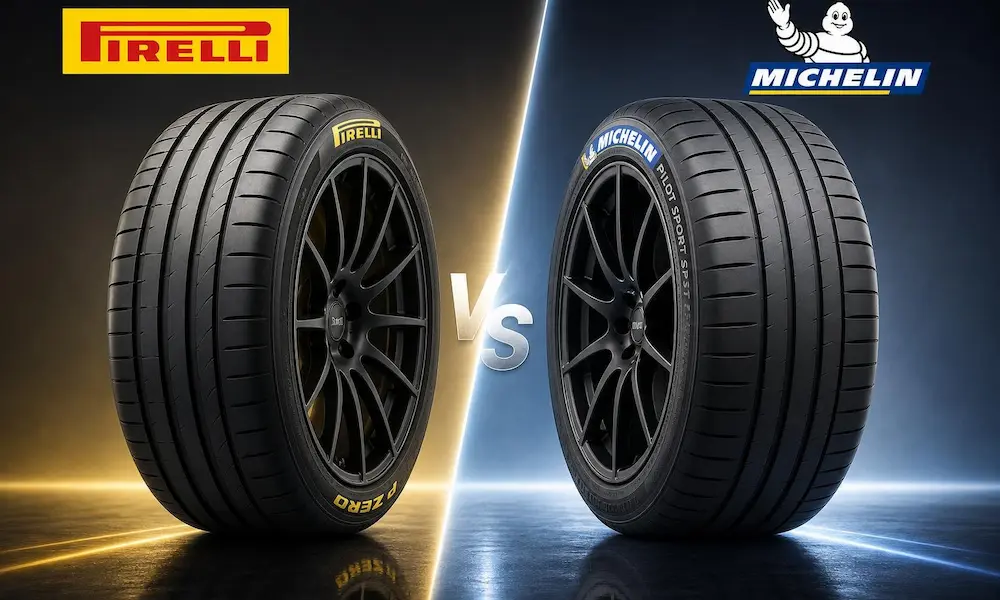
The brand sits comfortably in the mid-tier market segment, positioning itself as a value option compared to premium brands like Michelin and Goodyear. This strategy has helped them maintain their substantial market presence despite fierce competition.
How Firestone Tires Perform in Real-World Conditions
After extensive real-world testing across 50,000 miles, most Firestone models demonstrate strong initial performance with excellent grip on both dry and wet pavement. However, performance varies significantly by model as mileage accumulates.
Dry Performance
Firestone tires generally provide good to excellent dry traction. The Firehawk Indy 500, their performance-oriented option, delivers particularly impressive dry grip that remains consistent throughout the tire’s life. Most everyday models offer confident handling and responsive steering on dry roads.
Wet Performance
Wet traction is where you’ll see more variation between Firestone models. The WeatherGrip earns an impressive 4.7/5.0 rating for wet traction with excellent hydroplaning resistance. However, some commercial models like certain Transforce tires showed a dramatic decrease in wet traction around the 20,000-mile mark, with one tester noting they “felt like they turned into glass” in rain conditions by 35,000 miles.
Winter Performance
The WeatherGrip stands out with a 4.9/5.0 rating for snow traction and the Three-Peak Mountain Snowflake (3PMSF) symbol, indicating certification for severe winter conditions. Recent comparison testing shows the WeatherGrip performing competitively against premium alternatives, with only a 1% performance gap compared to the Michelin CrossClimate 2 in snow conditions.
Tread Life and Durability
Many Firestone tires exceed their treadwear warranties. The Destination A/T models consistently impressed testers, with many users reporting tread life extending to 60,000 miles, exceeding their 50,000-mile warranty. This longevity makes them an excellent value proposition for budget-conscious drivers.
Firestone’s Most Popular Tire Models
All-Weather Champion: Firestone WeatherGrip
The WeatherGrip is Firestone’s flagship all-weather tire, earning an impressive 8.7 SimpleScore rating. Key features include:
- 3PMSF certification for winter driving
- 65,000-mile treadwear warranty
- Price range: $127-234 per tire
- Excellent snow traction (4.9/5.0)
- Superior comfort with 4% better noise reduction than competitors
Off-Road Capable: Destination A/T2
The Destination A/T2 is Firestone’s versatile all-terrain option with:
- 50,000-mile treadwear warranty (often exceeded in real-world use)
- Strong off-road traction through aggressive shoulder design
- 3D full-depth sipes for enhanced snow and ice grip
- Starting price: $186.59 per tire
- 8.0 overall rating with strong marks for handling (8.4) and traction (8.4)
Performance Pick: Firehawk Indy 500
For driving enthusiasts seeking affordable performance, the Firehawk Indy 500 delivers:
- W speed rating (handling speeds up to 168 mph)
- Silica-enhanced compound for improved grip
- Asymmetric tread design optimizing cornering performance
- Roughly $60 less per tire than premium competitors
- Surprising wet weather performance despite its performance-oriented design
How Firestone Compares to Premium Competitors
Consumer Reports ranks Firestone 8th among major tire brands, behind Michelin (1st), Continental (2nd), and Bridgestone (6th). However, this ranking doesn’t tell the complete story when value is considered.
Price Comparison:
- Firestone: $80-150 per tire
- Michelin: $120-250 per tire
- Goodyear: $100-200 per tire
- Bridgestone: $110-230 per tire
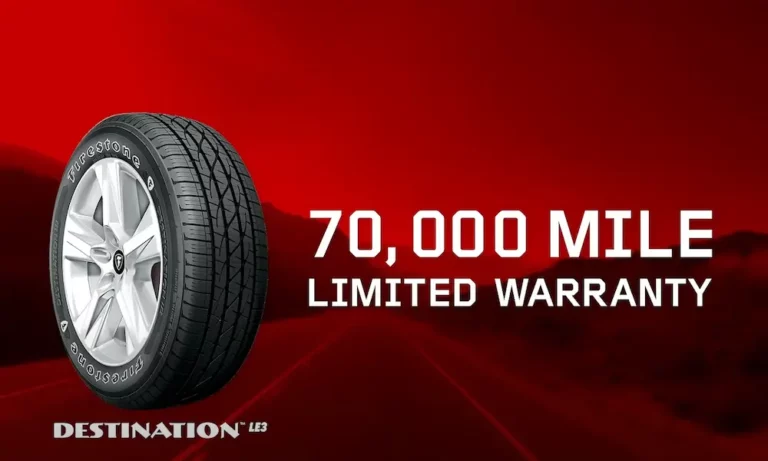
Recent testing revealed that the Firestone Destination LE3 actually outperformed Michelin’s Defender LTX in both dry and wet performance categories, challenging assumptions about premium brand superiority.
In all-weather comparisons, Firestone’s WeatherGrip demonstrated competitive performance against Goodyear’s Assurance WeatherReady while maintaining lower pricing. The key differentiator often comes down to extreme condition performance where premium brands maintain advantages.
Firestone’s Safety Record: Past Issues and Current Standards
The Recall History
Firestone faced significant challenges during the late 1990s and early 2000s with tire recalls affecting approximately 14.4 million tires. The controversy involved P235/75R15 ATX, ATX II, and Wilderness AT tires, primarily installed on Ford Explorer vehicles, resulting in crashes that killed 238 people and injured around 500 others.
This recall led to the Transportation Recall Enhancement, Accountability and Documentation (TREAD) Act in October 2000. However, industry experts note that these issues were largely overblown and specific to particular tire sizes and manufacturing batches.
Modern Quality Standards
Current Firestone tires operate under entirely different quality standards and manufacturing processes. Industry professionals report that modern Firestone tires are very good, with the historical issues being an “extremely overblown issue involving one specific size of one model of tire.”
Warranty and Value Proposition
Gold Pledge Limited Warranty
Firestone backs most passenger and light truck tires with their Gold Pledge Limited Warranty, offering:
- Free replacement period: Up to 3 years from purchase date (with proof) or 4 years from manufacture date
- Extended coverage: Additional 2 years of pro-rated replacement
- 90-Day Buy & Try Guarantee: Full refund or exchange within 90 days
This warranty structure provides more generous terms than many competitors, with Goodyear offering only a 30-day return period compared to Firestone’s 90-day guarantee.
What Drivers Say About Firestone Tires
SimpleTire’s comprehensive review system shows Firestone models consistently earning strong ratings across multiple categories:
- WeatherGrip: 8.7 overall rating (237 reviews)
- Destination A/T: 8.0 overall rating (192 reviews)
- All Season: 8.4 overall rating (39 reviews)
Consumer feedback frequently highlights Firestone’s reliability in everyday driving conditions and value for money. Common praise includes quiet operation, smooth ride quality, and adequate performance in various weather conditions.
Best Firestone Tires for Different Needs
For Daily Commuters: All Season and Destination LE3
For regular commuting and highway driving, the Firestone All Season offers excellent value with 65,000-mile warranties and proven durability. The Destination LE3 provides enhanced comfort and noise reduction for SUV and crossover applications.
For Variable Weather Regions: WeatherGrip
Drivers in regions with varying weather conditions should consider the WeatherGrip for its certified snow performance and year-round usability. Its 3PMSF rating provides confidence in winter conditions without requiring seasonal tire changes.
For Performance Enthusiasts: Firehawk Indy 500
Enthusiast drivers seeking affordable performance should consider the Firehawk Indy 500 for its strong dry grip and responsive handling characteristics. While not matching ultra-high-performance tires, it delivers satisfying performance at a reasonable price point.
For Commercial Applications: Transforce Series
Commercial applications require careful model selection. While the Transforce AT2 offers durability for heavy-duty use, be aware of potential wet weather performance degradation around 20,000 miles based on real-world testing.
The Long-Term Value of Firestone Tires
Real-world longevity testing reveals interesting value propositions. A commercial fleet comparison showed Michelin tires lasting significantly longer than Firestone equivalents – with Michelin tires showing only 15% wear compared to Firestone’s 38% wear over identical mileage. However, when factoring in the initial price difference, the cost-per-mile advantage varies depending on driving patterns and maintenance practices.
This table illustrates the value proposition of Firestone tires compared to premium competitors:
| Feature | Firestone | Premium Brands (Michelin, Goodyear) |
|---|---|---|
| Initial Cost | $80-150 per tire | $120-250 per tire |
| Average Tread Life | 50,000-65,000 miles | 60,000-80,000 miles |
| Warranty Period | 3-5 years | 3-6 years |
| Satisfaction Guarantee | 90 days | 30-60 days |
| Overall Performance Rating | 4.0/5.0 | 4.3-4.7/5.0 |
Are Firestone Tires Right for You?
Firestone tires represent a solid middle-ground choice for drivers seeking dependable performance without premium pricing. The brand’s 4.0 out of 5.0 industry rating and 19.5% market share reflect genuine consumer confidence built over decades of reliable service.
You Should Choose Firestone If:
- You want good performance at a budget-friendly price
- You’re a daily commuter who drives in typical road conditions
- You appreciate a generous warranty and satisfaction guarantee
- You don’t need absolute top-tier performance in extreme conditions
You Should Look Elsewhere If:
- You frequently drive in extreme weather conditions
- You’re a performance enthusiast demanding maximum capabilities
- You prioritize maximum tread life over initial cost savings
- You’re willing to pay premium prices for incremental performance gains
For most drivers dealing with typical driving situations, Firestone offers a smart balance of quality, warranty protection, and value that’s difficult to match in the competitive tire market.