Thinking about replacing your worn-out shocks with KYB? You’re probably wondering if they’re worth the money or just another overhyped brand. Let’s cut through the marketing fluff and look at what actually matters: engineering quality, real-world performance, and whether they’ll match your driving style.
The KYB Pedigree: More Than Just a Parts Brand
Here’s something most people don’t realize: KYB isn’t just selling shocks—they’re making them for Toyota, Honda, Nissan, Volkswagen, and GM at the factory level. KYB Corporation has been in the hydraulic engineering game since 1919, supplying original equipment to major automakers worldwide.
This matters because when you buy KYB aftermarket shocks, you’re getting components from the same manufacturing lines that build OEM parts. They call this philosophy “Original Equipment for the Aftermarket” (OEA). The company operates 15 manufacturing plants globally and pulls in over $4.2 billion annually—this isn’t some fly-by-night operation slapping logos on imported junk.
That said, there’s a twist: KYB intentionally tunes their aftermarket shocks differently than factory originals. They’re firmer, typically 10-15% stiffer than brand-new OEM units. Why? Because they’re designed for your worn-out suspension with 100,000 miles on it, not a showroom-fresh chassis.
Twin-Tube vs. Monotube: Understanding KYB’s Technology
KYB offers two fundamental shock designs, and picking the wrong one will leave you miserable.
Twin-Tube Design (Excel-G)
The Excel-G line uses twin-tube construction—an inner working cylinder surrounded by an outer reserve chamber. This design gives you a longer stroke in a compact package and balances comfort with control.
The trade-off? Under extreme stress (think spirited mountain driving or towing heavy loads), the oil and gas can mix, causing temporary fade. For daily commuting in a sedan or crossover, this isn’t an issue. For hardcore off-roading or constant heavy towing, you’ll want to upgrade.
Monotube Design (Gas-a-Just & MonoMax)
KYB’s monotube shocks put everything in one cylinder: oil, piston, and a high-pressure nitrogen chamber separated by a floating piston. This setup dissipates heat faster and responds instantly to road inputs.
The Gas-a-Just is your performance upgrade, offering about 25% more damping than standard twin-tubes. It’s ideal for trucks, SUVs, or anyone who wants sharper handling without going full race-car stiff.
The MonoMax takes this further with 40% more damping than OEM—but here’s the catch: it’s too stiff for empty trucks. If you’re not regularly towing or hauling heavy loads, you’ll hate the harsh ride. One user described their unladen truck as “bouncing like a ping pong ball” over highway expansion joints.
The KYB Product Lineup: Choosing the Right Tier
Excel-G: The Workhorse Replacement
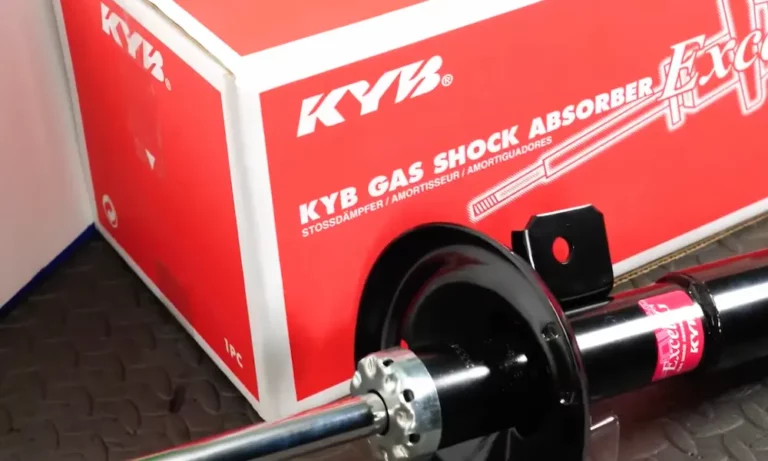
This is the black strut you’ll find at every parts store. It’s KYB’s bread-and-butter OEM replacement, designed for passenger cars, minivans, and crossovers.
Best for: Daily drivers looking to restore factory handling with slightly improved control. If your car has 150,000 miles and the suspension feels like a waterbed, Excel-G will tighten things up noticeably.
Not ideal for: Drivers wanting a cloud-soft luxury ride—Monroe OESpectrum is better for that.
Gas-a-Just: The Performance Middle Ground
Want better handling without punishing your spine? This is your sweet spot. The monotube design gives you fade resistance and sharper response.
Best for: Light trucks, performance sedans, and anyone who finds their current setup too soft. It transforms body roll into planted cornering.
Not ideal for: Comfort-first drivers or vehicles with already-stiff sport suspensions.
MonoMax: Heavy-Duty or Bust
These red-colored monotubes are built for work trucks hauling trailers and equipment.
Best for: ¾-ton and 1-ton trucks actively used for towing or off-road work. They’ll eliminate the scary trailer sway you get with worn shocks.
Not ideal for: Daily-driven trucks that rarely carry loads. You’ll feel every crack in the pavement.
AGX: Adjustable Performance
The AGX line features manual damping adjustment (usually 8 positions), letting you dial in firmness without tools.
Best for: Track day enthusiasts and autocrossers who want soft damping for the street and firm settings for the circuit.
Not ideal for: Anyone expecting height adjustment (these aren’t coil-overs) or pairing with aggressive lowering springs that can cause bottoming.
Strut-Plus: Convenience with a Caveat
These pre-assembled units include the strut, spring, mount, and hardware—no spring compressor needed.
The problem: While the KYB damper itself is solid, multiple mechanics report that the included upper mounts often fail prematurely, causing clunking noises within months. Smart money says buy the bare KYB strut and pair it with a genuine OEM or premium aftermarket mount.
KYB vs. The Competition: How They Stack Up
KYB vs. Monroe
Monroe prioritizes comfort with softer valving. KYB prioritizes control with firmer damping. For Asian imports (Toyota, Honda) where a connected road feel is part of the vehicle’s DNA, KYB is the better technical match. For American luxury sedans or minivans where you want a couch-like ride, Monroe wins.
Longevity? Most mechanics agree KYB units last longer before losing their damping effectiveness.
KYB vs. Bilstein
Bilstein is the premium European standard—smoother, more sophisticated, and significantly more expensive. KYB offers roughly 85-90% of Bilstein’s performance at 60-70% of the cost.
For German cars (BMW, Mercedes, Porsche), enthusiasts almost universally recommend spending extra for Bilstein to maintain the intended driving dynamics. For Japanese vehicles where KYB is often the original supplier, the performance gap narrows considerably.
Where KYB Shines (and Where They Don’t)
The Japanese Car Advantage
Since KYB supplies OEM shocks for most Toyota, Honda, and Nissan vehicles, installing Excel-G struts essentially returns your car to factory specification. Owners consistently report the ride feels “like new” with perfect fitment and no modifications required.
The Subaru Controversy
Here’s where things get interesting. Although KYB manufactures OEM struts for Subaru, their aftermarket Excel-G replacements are frequently described as noticeably harsher than stock units on Outback and Forester forums. You’ll feel every pavement crack.
Oddly, Subaru owners who lift their vehicles prefer this stiffness because it controls the raised center of gravity and reduces body roll.
European Vehicles: Proceed with Caution
On BMW and VW platforms, KYB is often seen as a budget compromise. The sophisticated suspension geometry of German cars seems to demand the nuanced damping of Bilstein or Sachs (the original suppliers). KYB can feel “crashy” or unsettled by comparison.
Domestic Trucks: Application Matters
For dedicated tow rigs, MonoMax is praised for eliminating dangerous trailer sway. For daily-driven trucks that rarely haul, it’s universally criticized as unbearable. The Gas-a-Just hits the sweet spot for truck owners wanting better control without punishment.
The “Stiff Ride” Reality Check
Let’s address the elephant in the room: Yes, KYB shocks will likely ride firmer than your worn-out originals—and possibly firmer than your car was brand new.
This isn’t a defect. It’s intentional engineering.
KYB’s philosophy assumes your vehicle has wear in other components—softened bushings, fatigued springs, worn sway bar links. If they valved the shocks to factory-new softness, your overall suspension would still feel loose because of these other worn parts. So they increase damping rates by 10-15% to compensate.
The result? You’ll feel more road texture—expansion joints, cracks, reflectors. You’ll also get reduced body roll, less nose-dive during braking, and better control during emergency maneuvers. According to the National Highway Traffic Safety Administration, worn shocks significantly increase stopping distance and reduce vehicle stability—KYB’s firmer valving directly addresses these safety concerns.
Many owners report the ride “breaks in” and softens slightly over the first few thousand miles as the internal valves wear to their optimal range.
Spotting Counterfeit KYB Shocks
KYB’s market dominance makes them a target for counterfeiters. Here’s how to avoid getting burned:
- Visual check: Genuine KYB shocks typically feature a silver top plate with crisp tack welds. Counterfeits often use black plates or sloppy welding.
- Part number stamping: Should be deeply engraved, not just printed. “Made in Japan” should be clearly visible on Japanese-manufactured units.
- Packaging quality: High-density cardboard with sharp, high-resolution printing. Flimsy boxes or blurry logos are red flags.
- Buy from authorized dealers: Stick with reputable retailers like Tire Rack or established auto parts chains. Random third-party sellers on marketplaces frequently sell fakes.
Some markets feature verification codes or holographic stickers you can check via mobile app.
The Warranty Fine Print You Need to Know
KYB offers a Limited Lifetime Warranty covering defects in materials and workmanship. Sounds great, right?
Here’s the catch: The warranty only covers the part, not the labor to install it.
For DIYers, this is fine. For folks paying a shop $100-150 per hour, the labor cost for warranty replacement often exceeds the part cost itself. Plus, you’ll need another alignment (another $100-150).
If you buy from online retailers like RockAuto or Amazon, the warranty process gets messier. You’ll typically need to remove the defective part, ship it back for inspection, and wait weeks for approval—meaning your car sits on jack stands. Many customers end up buying a second set just to keep driving, hoping the warranty claim gets approved.
Troubleshooting: It’s Probably Not the Shock
Here’s a secret from KYB Technical Support: A huge percentage of “defective” shock returns are actually fully functional units. The noise or problem comes from something else.
Common Culprits for Post-Installation Clunking
Worn upper mounts: The bearing inside the strut mount carries the vehicle’s weight and allows rotation. If it binds or has play, it’ll clunk every time the wheel turns.
Loose hardware: If the top nut isn’t torqued to spec (or someone used an impact gun and spun the internal shaft), you’ll have play in the assembly.
Sway bar links: Removing the strut often disturbs nearly-failed sway bar end links. They’ll clunk immediately after reassembly, getting blamed on the new shock.
Misting vs. Leaking
A light oil film on the upper shock rod is normal “misting”—it lubricates the seal. Actual failure only occurs when oil actively drips down the shock body or the unit is wet past the spring seat.
The Bottom Line: Are KYB Shocks Good?
Yes, definitively—with the right application.
KYB excels when:
- You’re restoring a Japanese vehicle (Toyota, Honda, Nissan) to factory performance
- You want tighter handling than your current worn suspension provides
- You’re upgrading a truck for towing or hauling (MonoMax or Gas-a-Just)
- You value proven OEM-level engineering at a reasonable price
KYB disappoints when:
- You’re seeking a cloud-soft luxury ride (choose Monroe instead)
- You’re installing MonoMax on a lightly-used daily driver truck
- You’re working on a German performance car (Bilstein is worth the premium)
- You expect a complete Strut-Plus assembly to match bare-strut quality
For the vast majority of drivers—especially those maintaining Toyota, Honda, Nissan, or domestic trucks—KYB represents the sweet spot between bargain-basement parts that fail quickly and diminishing-returns racing dampers that cost triple. They’re a sound, safe investment in vehicle stability and longevity.
Just make sure you’re buying the right tier for your actual driving needs, not what sounds cool on paper.