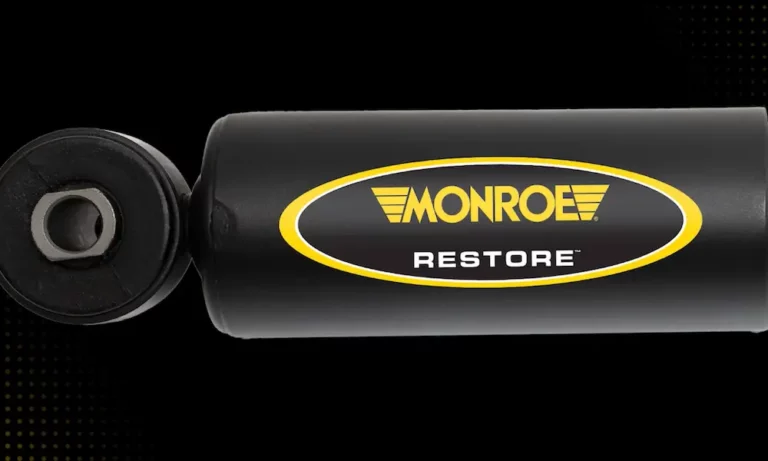
Shopping for new shocks and wondering if Monroe’s worth your money? You’re asking the right question. Monroe’s been around since 1916, but longevity doesn’t always equal quality. Let’s cut through the marketing fluff and look at what these shocks actually deliver for your truck, SUV, or daily driver.
What Makes Monroe Different From Other Shock Brands
Monroe doesn’t play in the same sandbox as performance brands like Bilstein. They’re not trying to turn your grocery-getter into a track weapon. Instead, Monroe focuses on restoring that smooth, quiet ride you had when your vehicle rolled off the lot.
The brand operates under Tenneco’s massive umbrella, giving them serious R&D resources and a global manufacturing footprint. They produce millions of units annually from facilities in Arkansas, Belgium, and China. This scale keeps prices competitive but introduces some quality consistency issues we’ll dig into later.
The Twin-Tube Philosophy
Most Monroe shocks use twin-tube low-pressure gas technology. Here’s what that means for you: there’s an inner working tube where the piston moves, and an outer reserve tube that stores displaced fluid. Low-pressure nitrogen gas prevents the fluid from foaming during rough roads, which would otherwise cause your shocks to fade.
This design prioritizes comfort over handling precision. The longer stroke and softer valving absorb bumps beautifully but generate more heat than monotube designs. If you’re towing heavy or driving aggressively, that heat buildup causes the oil to thin temporarily, reducing damping power when you need it most.
Monroe’s Product Lineup: Which Line Fits Your Needs
Monroe segments their shocks into distinct tiers. Comparing their budget line to a competitor’s premium offering isn’t fair to anyone. Here’s the breakdown.
OESpectrum: The Commuter’s Choice
The OESpectrum line targets daily drivers who want a comfortable, factory-like ride. These shocks feature Twin Technology Active Control, combining an Impact Control Valve with Low-Speed Tunability.
What does that engineering jargon actually do? The system filters out both sharp impacts (potholes) and low-frequency vibrations (that annoying highway drone). It’s specifically tuned to compensate for worn bushings and mounts in older vehicles.
Perfect for: Toyota Camrys, Honda Accords, or Ford Fusions with 80,000+ miles where you want comfort without breaking the bank.
Reflex: Built for Body Control
The Reflex series is Monroe’s answer for trucks and SUVs that need stability. These units pack Acceleration Sensitive Damping (ASD), which is genuinely clever engineering.
The ASD valve acts like an inertial switch inside the piston. During gradual body roll in corners, it stays closed to keep your vehicle flat and stable. But when you hit a sharp bump, it opens instantly to soften the impact. You get both handling control and comfort instead of choosing one or the other.
This technology shines on vehicles with high centers of gravity—think Chevy Silverados, Ford F-150s, and full-size SUVs that feel too mushy in stock form.
Magnum: The Commercial Workhorse
If you’re running a fleet or driving a Class 3-6 truck, the Magnum series handles heavy-duty applications. The Gas-Magnum 60 and 65 variants feature sintered iron pistons and larger reserve tubes for increased oil capacity.
These aren’t the longest-lasting shocks on the market for extreme mileage, but they’re cost-effective for fleet operations. Some long-haul truckers prefer specialized heavy-haul brands, but Magnums deliver adequate performance at a price fleet managers appreciate.
The Budget Option: Monro-Matic Plus
Let’s be blunt—the Monro-Matic Plus line is basic transportation. These shocks use simple Velocity Proportional Valving without the adaptive tech found in premium lines. They lack sophisticated noise isolation and wear faster.
Best use case: You’re selling an older vehicle soon and need to pass inspection. Don’t expect these to last more than a couple of years under normal conditions.
The Quick-Strut Controversy: Convenience vs. Quality
Monroe revolutionized DIY suspension work with the Quick-Strut—a fully assembled unit containing the strut, spring, mount, boot, and bumper. No spring compressors needed, cutting installation time in half.
The concept makes sense. By the time your struts fail at 80,000+ miles, the mounts and bearings are usually shot too. Replacing everything at once should restore the corner to factory condition.
Where Quick-Struts Fall Short
Here’s where things get messy. The Quick-Strut line generates the most complaints about Monroe quality, but not because of the shock itself. The ancillary components cause headaches.
Mount failures dominate the complaint forums. Owners report clunking, popping, or binding noises while steering shortly after installation. The culprit appears to be lower-quality rubber compounds or inferior bearing materials compared to OEM Honda or Toyota parts.
Spring rate inconsistencies create ride height problems. Some vehicles sit too high or sag after installing Quick-Struts, suggesting the included springs don’t always match the precise rate of original equipment. This particularly affects vehicles with sport vs. luxury trim packages.
Monroe’s technical bulletins point out that many “failures” stem from installation errors—specifically, not torquing mounting nuts properly with the vehicle weight on the wheels. Fair point, but the sheer volume of complaints suggests their tolerances aren’t as tight as OEM standards.
Monroe vs. The Competition: Where They Stand
Fighting KYB for Import Market Share
This comparison matters most for Asian vehicle owners. KYB supplies OEM shocks for most Japanese vehicles, and their Excel-G aftermarket line restores original handling characteristics—which tend to be firmer than domestic vehicles.
Monroe tunes their shocks softer and more forgiving. KYB owners describe the ride as “sporty” with more road feel. Monroe drivers use words like “plush” or “floaty.”
If you’re trying to restore the sharp handling of a Honda Civic, KYB wins. If you want to soften a high-mileage SUV, Monroe’s your pick. Professional mechanics generally favor KYB for seal integrity and resistance to gas leakage over time.
The Bilstein Performance Gap
There’s no direct competition here. Bilstein’s monotube technology (B6 and B8 series) uses a single chamber with a floating piston separating gas and oil. This eliminates aeration completely and provides vastly superior heat dissipation.
Bilstein transforms handling. Monroe restores it to baseline. Bilstein units cost 50-100% more but often last twice as long (80,000-100,000+ miles). For long-term vehicle ownership, that price premium delivers better value despite the higher entry cost.
Budget Battle: Monroe vs. Gabriel
Both brands compete for fleet operators and budget-conscious consumers. Gabriel’s Ultra line squares off against Monroe’s OESpectrum and Reflex.
Monroe holds the technological edge with ASD and Twin Technology features. Gabriel comes across as a more utilitarian commodity product. Monroe’s investment in electronic suspension systems (RideSense) places them a tier above in engineering sophistication.
| Feature | Monroe OESpectrum | KYB Excel-G | Bilstein B6 | Gabriel Ultra |
|---|---|---|---|---|
| Core Tech | Twin-Tube Low Pressure | Twin-Tube Gas | Monotube High Pressure | Twin-Tube |
| Ride Feel | Soft, Comfort-Focused | Firm, Controlled | Sporty, Precise | Basic Standard |
| Best For | Daily Commuting | Asian Imports | Towing, Off-Road | Budget Repairs |
| Typical Lifespan | 50,000 miles | 60,000-80,000 miles | 100,000+ miles | 40,000-50,000 miles |
| Price Point | Low-Mid | Mid | High | Low |
Manufacturing Origins Matter More Than You’d Think
Monroe’s global production creates a quality lottery. You might buy two front struts for the same vehicle—one manufactured in Arkansas, the other in China—depending on stock rotation.
The Paragould Advantage
Units from the Arkansas facility maintain the highest consistency for weld quality and gas pressure retention. This plant focuses on OESpectrum and Reflex lines for the domestic fleet, adhering to the legacy standards that built Monroe’s reputation.
European Excellence
The Belgian plant in Sint-Truiden represents Monroe’s high-tech frontier. It produces OE components for European automakers and Monroe’s electronic suspension systems. If you’re buying Monroe shocks for a BMW, Volvo, or Volkswagen, you’re likely getting a unit that shares DNA with higher-specification OE components.
The Chinese Wild Card
Tenneco’s Changzhou facility produces over 18 million units annually, including high-tech electronic dampers for premium EVs. However, mechanics report that Quick-Strut assemblies from Chinese facilities show higher rates of premature mount failure and spring sag compared to Western-produced units.
What the Warranty Actually Covers (Read the Fine Print)
Monroe offers a Limited Lifetime Warranty on premium lines covering defects and wear for as long as you own the vehicle. Sounds great, right?
Here’s the catch: it covers the part only, not labor. For DIY mechanics, this is fantastic—a failed shock costs only your time to replace. But if you’re paying a shop $120/hour, that “free” warranty shock might cost $300 in labor to install.
In this scenario, spending more upfront on longer-lasting shocks (like Bilstein) often costs less long-term than replacing Monroe units twice.
Monroe does offer a unique “Feel the Difference Guarantee” with a 90-day/1,000-mile trial period. If you’re unhappy with the ride, they’ll refund the product and potentially cover up to $100/axle in installation costs. That’s genuine confidence in their ride quality tuning.
Real-World Lifespan: What to Actually Expect
While Monroe suggests a 50,000-mile replacement interval, real performance varies dramatically by product line and driving conditions.
Monroe twin-tube shocks typically degrade internally rather than failing catastrophically through leaks. The oil thins and valves fatigue, leading to gradual damping loss. Drivers on rough roads report a return to bounciness within 20,000-30,000 miles, particularly with economy lines.
For severe service applications, Gas-Magnum series handles fleet duties adequately, but “morning sickness” (poor cold-weather performance) and fade under continuous heavy loads remain limitations of hydraulic twin-tube designs.
Installation Mistakes That Masquerade as Product Failures
A surprising number of “defective” shocks trace back to installation errors. Modern suspension components are sensitive, and shortcuts create problems.
The Torque Specification Critical Point
The most common Quick-Strut noise source is improper upper mount nut torquing. If you tighten these nuts with an impact gun while the suspension hangs unloaded, you’ll misalign or crush the bearing. Monroe’s technical resources emphasize that final torque must often be applied with the vehicle’s weight on the wheels.
Don’t Skip the Priming Step
Twin-tube shocks stored horizontally experience fluid migration—gas enters the working chamber. If you install without “priming” (compressing and extending the unit vertically several times), air pockets cause noise and zero damping for the first few miles. Many people mistake this for DOA parts.
Who Should Buy Monroe Shocks
Monroe makes sense for specific situations. They’re not universally “good” or “bad”—context determines value.
Monroe is Your Best Bet When:
You’re on a tight budget: For aging vehicles where you need to restore safety without exceeding the car’s value, Monroe Quick-Struts offer unbeatable price-to-convenience ratios for DIY repairs.
Comfort trumps performance: Drivers of domestic sedans and crossovers who find modern suspension too harsh will appreciate OESpectrum’s emphasis on isolation and plushness.
You need electronic suspension replacement: For vehicles with MagnaRide or similar systems, Monroe RideSense provides one of few viable aftermarket alternatives to dealership parts that cost a fortune.
You’re doing the work yourself: The lifetime warranty makes perfect sense when you’re not paying labor costs.
Skip Monroe If:
You want performance: Drivers seeking improved cornering, steering feedback, or track capability will find Monroe’s hydraulic compliance disappointing. Bilstein or Koni are the upgrades you need.
You tow heavy regularly: The thermal inefficiency of twin-tube designs makes them inferior to high-pressure monotubes for dedicated tow rigs.
You’re an import purist: Honda, Toyota, and Subaru owners accustomed to specific handling profiles often find Monroe units feel imprecise compared to OEM-equivalent KYB shocks.
You keep vehicles long-term: The math favors spending more initially on shocks that last 100,000+ miles versus replacing Monroe units at 50,000 miles—even with warranty coverage, you’re still paying labor twice.
The Bottom Line on Monroe Quality
So, are Monroe shocks good? They’re competent engineering solutions for the mass market that successfully prioritize comfort, availability, and cost-efficiency. Monroe leads the industry in noise and vibration isolation, but trails specialized competitors in raw performance and heavy-duty durability.
Think of Monroe as the Toyota Camry of the shock world—reliable, comfortable, and widely available, but not exciting. They’ll get the job done for most drivers under normal conditions. Just don’t expect miracles if you’re towing a 10,000-pound trailer through the Rockies or carving canyon roads on weekends.
The sweet spot for Monroe is the DIY mechanic replacing worn shocks on a daily driver who can leverage that lifetime warranty. Professional installers and enthusiasts often find better long-term ROI in premium alternatives, even at higher upfront costs.
Choose Monroe when your priorities align with what they engineer for: a quiet, comfortable ride at a reasonable price. Choose something else when you need maximum durability or performance that pushes beyond daily commuting.