You’re staring at rock chips on your rocker panels, or maybe you’re just wondering if those plastic flaps are worth the cash. Let’s cut through the noise and figure out if splash guards actually protect your ride—or if they’re just dealer upsell garbage.
What Splash Guards Actually Do (And Don’t Do)
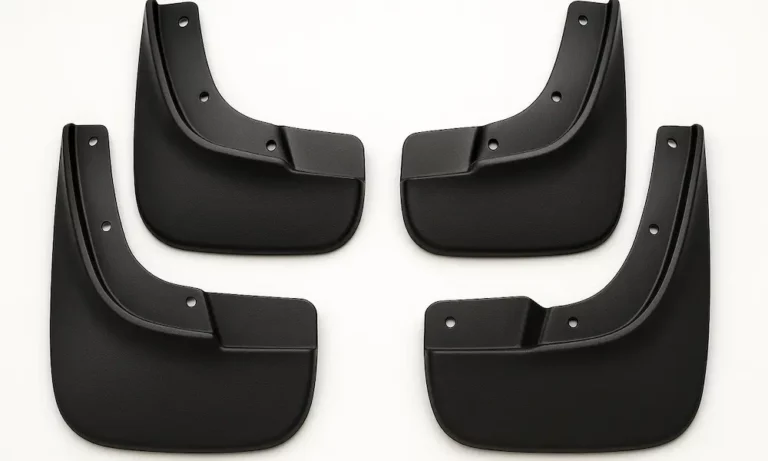
Splash guards sit behind your wheels and catch debris before it turns into flying shrapnel. Think of them as shields between your tires and everything else.
When your tires spin, they pick up rocks, gravel, salt, and whatever else is on the road. Then they fling it at speeds that can match your car’s velocity. That “sandblasting” effect chips paint, dings fenders, and coats your undercarriage in corrosive road salt.
Splash guards interrupt this ballistic assault. They’re positioned close to the tire, catching debris before it accelerates into your bodywork or the car behind you.
Here’s what they protect:
- Your rocker panels and lower doors from rock chips
- Following vehicles from windshield-cracking projectiles
- Trailers and boats you’re towing from gravel bombardment
- Your undercarriage from salt spray (in winter climates)
What they don’t do: improve performance, boost fuel economy, or make your car look cooler (usually the opposite).
The Real Cost of Not Having Them
Skip the splash guards and you’re playing a different game. Every highway mile adds micro-chips to your paint. Each winter dumps salt into your wheel wells.
Paint repair isn’t cheap. Fixing rock-chipped rocker panels can cost thousands if you want it done right. And once chips expose bare metal, rust starts its slow march through your fenders.
If you tow, the math gets worse. Rocks thrown by your truck can destroy a boat’s gel coat or dent trailer siding. A $100 set of heavy-duty flaps beats a $2,000 boat repair every time.
The resale value hit matters too. Buyers see chipped paint and rust bubbles as red flags. They wonder what else you didn’t maintain. A pristine exterior commands a premium that far exceeds what you spent on basic protection.
Rigid Plastic vs. Flexible Rubber: Which Actually Works
Not all splash guards are created equal. The material dictates whether they’ll protect your car or just look pretty for six months.
Rigid Thermoplastic Guards
These are the molded-to-fit pieces that blend with your fender. They’re made from ABS plastic or similar materials.
Pros:
- Clean, factory look
- Color-matched options
- Low-profile design
Cons:
- Crack in freezing temps
- Can’t flex around obstacles
- Transfer impact force to your fender
If you back into a snowbank or catch a curb, rigid guards can shatter. Or worse—they stay attached and rip your fender liner off.
Flexible Rubber/Polyurethane Flaps
These are the rally-style mud flaps that hang lower and move with impacts.
Pros:
- Bend without breaking
- Work in extreme cold
- Maximum debris coverage
- Absorb impacts instead of transferring them
Cons:
- More visible (some hate the look)
- Can flutter at highway speeds
- Don’t blend with body lines
For daily drivers in mild climates, rigid works fine. For trucks, off-roaders, or winter warriors, flexible is the only choice that won’t leave you buying replacements.
| Feature | Rigid Plastic | Flexible Rubber | Polyurethane |
|---|---|---|---|
| Cold weather performance | Cracks below freezing | Stays flexible | Best performance |
| Impact resistance | Shatters | Bends and returns | Highly durable |
| Appearance | Sleek, integrated | Utilitarian | Rally-style |
| Lifespan in harsh conditions | 1-2 years | 3-5 years | 5+ years |
The Rust Paradox Nobody Warns You About
Here’s the plot twist: splash guards can cause rust if you install them wrong.
If the flap doesn’t sit flush or creates pockets facing the tire, it traps mud and salt against your paint. That trapped slurry holds moisture for days, preventing it from drying. The result? Accelerated corrosion in the exact spot you’re trying to protect.
Vibration makes it worse. A poorly fitted guard rubs against your fender like sandpaper, wearing through clear coat and exposing bare metal.
How to avoid the rust trap:
Apply Paint Protection Film (PPF) under the mounting area before installation. This creates a sacrificial barrier that prevents abrasion damage.
Choose no-drill options that use factory mounting holes. Every new hole you drill is a potential rust entry point.
Wash behind the flaps periodically. Flush out accumulated salt and mud so they don’t form a corrosive poultice.
Use stainless hardware or isolate dissimilar metals to prevent galvanic corrosion.
Do They Kill Your Gas Mileage?
Short answer: no, not really.
Splash guards add surface area that disrupts airflow. In theory, that increases drag and hurts fuel economy. In practice, the effect is negligible for passenger vehicles—usually less than 1-2% or within measurement error.
EV owners worry more about range than MPG, and the concern is the same. Tesla and Ioniq forums are full of this debate. The consensus? The range impact is unnoticeable in daily driving, and protecting your paint matters more than a theoretical 1% loss.
Modern designs help. Contoured guards that follow the wheel arch create less turbulence than flat rectangles. Some commercial flaps use vented designs that let air through while still catching water and debris.
If you’re hypermiling or racing, skip them. For everyone else, the aerodynamic penalty is irrelevant compared to paint protection benefits.
When They’re Actually Required by Law
If you’ve lifted your truck or installed wider tires, splash guards might not be optional.
States like Utah, Arizona, and Texas have specific laws for modified vehicles. Utah Code 41-6a-1633 requires mud flaps on vehicles with altered frame heights or tires extending beyond the body. The flaps must cover the full tire width.
Skip them and you’re looking at equipment violation tickets. The cost of a citation exceeds what you’d spend on a quality set of flaps.
These laws exist for safety, not revenue. Heavy spray from big tires reduces visibility for following drivers, creating hazardous conditions. Splash guards direct water down instead of into the air, keeping everyone safer.
OEM vs. Aftermarket: Where Your Money Goes
Dealerships love selling OEM splash guards because the markup is insane. You’ll see quotes from $100 to over $400 for parts, with some dealers trying to charge $1,100 for installation.
OEM advantages:
- Perfect fitment guaranteed
- Often color-matched
- Covered under warranty
But aftermarket options from WeatherTech, Husky Liners, Rally Armor, or RokBlokz offer similar or better protection for $50-150. They’re designed using laser scans of your vehicle, so fitment is spot-on.
WeatherTech and Husky dominate the truck market with no-drill thermoplastic solutions. Their QuickTurn systems let you install without removing wheels or drilling holes.
Rally Armor and RokBlokz own the enthusiast space. Their polyurethane flaps flex like crazy without breaking—perfect for Subarus, off-road trucks, and anything that sees gravel or snow.
Installation takes under an hour with basic tools. Paying dealership labor rates for a bolt-on job makes zero financial sense.
Who Actually Needs Them (And Who Doesn’t)
You need splash guards if:
You drive in winter climates with road salt. Salt accelerates corrosion, and guards reduce the volume of salty spray coating your undercarriage.
You tow trailers, boats, or RVs. Protecting your $30,000 boat from rock chips is a no-brainer.
You own an EV with soft paint (looking at you, Tesla). The rocker panels on Model 3s and Ys are notorious for rock rash.
You drive gravel roads or construction zones regularly. Heavy debris exposure demands heavy protection.
You’ve lifted your truck or installed oversized tires. Probably required by law anyway.
You can skip them if:
You drive exclusively in dry, mild climates with clean roads.
You’re leasing and don’t care about long-term paint condition.
Your vehicle lives in a garage and sees minimal highway miles.
You prioritize aesthetics over function and hate how flaps look.
The Real Answer: It Depends on Your Situation
Are splash guards worth it? For most people, yes—but context matters.
If you’re spending $50-150 to prevent thousands in paint and rust repair, that’s a solid investment. The ROI is clear, especially if you keep your vehicle long-term or care about resale value.
The “worth” calculation changes based on climate, driving conditions, and vehicle type. A sedan in Phoenix has different needs than a truck in Minnesota.
Choose flexible materials for harsh conditions and rigid guards for mild climates. Use no-drill installation and apply PPF underneath. Wash behind them periodically to prevent salt buildup.
The upfront cost is minimal. The protection is real. Whether that’s “worth it” depends on how much you value your paint, your peace of mind, and your wallet five years from now.