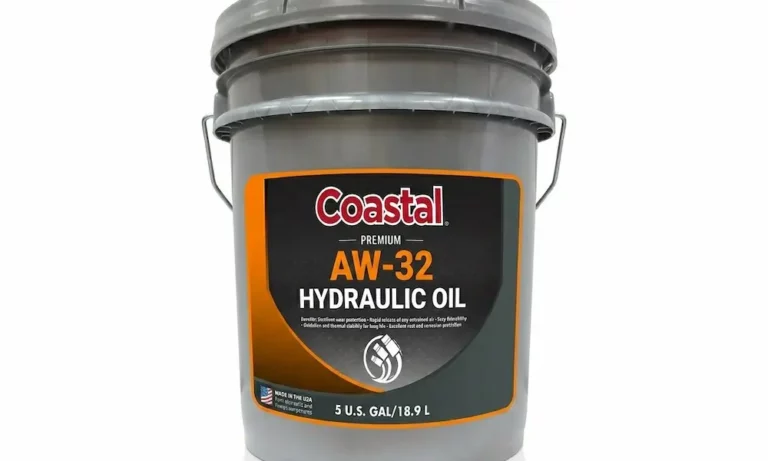
Picking the wrong hydraulic oil grade is one of those mistakes you don’t notice until something expensive breaks. The difference between AW32 and AW46 comes down to one thing: viscosity. But getting that choice right protects your pump, cuts energy bills, and keeps your machine running longer. Stick around — this guide covers everything you need to pick the right grade with confidence.
What “AW32” and “AW46” Actually Mean
The numbers aren’t random. They come from the ISO 3448 viscosity classification system, which grades oils by how thick they are at 40°C. The “32” and “46” refer to the fluid’s midpoint kinematic viscosity in centistokes (cSt) at that temperature.
Here’s a quick way to picture it: water at room temperature measures about 1 cSt. So AW46 is roughly 46 times thicker than water at 40°C, and AW32 is about 32 times thicker. That 44% difference in thickness has real consequences for how your pump, valves, and actuators perform.
The “AW” part stands for Anti-Wear — meaning both grades contain chemical additives that protect metal surfaces when the oil film alone isn’t enough.
| Property | AW32 | AW46 |
|---|---|---|
| Viscosity at 40°C (cSt) | 32.0 | 46.0 |
| Viscosity at 100°C (cSt) | ~5.4–6.0 | ~6.1–7.5 |
| SAE Equivalent | 10-weight | 20-weight |
| Typical Pour Point | -30°C to -36°C | -24°C to -30°C |
| Best Ambient Range | -10°C to 25°C | 5°C to 40°C+ |
How Viscosity Changes With Temperature
Oil doesn’t stay the same thickness all day. As temperature rises, viscosity drops. As it cools, the oil thickens. This isn’t a flaw — it’s just physics. But it matters enormously if your equipment runs outdoors, starts in the cold, or builds serious heat under load.
The Viscosity Index (VI) tells you how much an oil’s viscosity shifts across a temperature range. A higher VI means the oil stays more consistent between cold and hot conditions. Premium synthetic fluids often use this property to cover a wider operating window without needing a seasonal oil change.
The key takeaway: AW46 starts thicker and stays thicker across the temperature range. At 100°C, AW46 still holds more viscosity than AW32 — which means better film protection under sustained heat and heavy loads.
What Anti-Wear Additives Actually Do
Both AW32 and AW46 contain anti-wear (AW) additive packages that protect your pump during startup, shutdown, and shock-load events. Here’s how they work.
During operation, metal surfaces aren’t perfectly smooth. Under high pressure, the oil film can get squeezed out from between moving parts. When that happens, the AW additives step in. They bond to the metal surface and form a thin sacrificial barrier — typically 50 to 200 nanometers thick — that wears away instead of your pump.
The most common additive is Zinc Dialkyl Dithiophosphate (ZDDP). Heat triggers a chemical reaction that lays down a glass-like phosphate film on steel surfaces. As that film wears away, fresh additives in the oil replace it.
Other additive types include:
- Ashless additives — no zinc, better for environmentally sensitive areas
- Sulfur-phosphorus compounds — great for gear pumps and extreme-pressure situations
- Organic molybdenum and boron — reduce friction further and stabilize the protective film
- Synthetic esters — biodegradable option with excellent thermal resistance
The additive package is just as important as the viscosity grade. A well-formulated AW fluid also resists oxidation, prevents rust, and neutralizes acids that form during operation.
AW32: Where It Shines
Cold Weather and Fast Startups
AW32 is the lighter grade, and that’s its biggest strength in cold environments. With a pour point as low as -36°C, it flows easily even during freezing-cold startups. Thicker oils like AW46 can become sluggish below 5°C, and a sluggish oil means the pump pulls it in too slowly — that’s how cavitation damage starts.
Cavitation happens when the pump creates a vacuum and vapor bubbles form in the oil. When those bubbles collapse, they hit the internal pump surfaces with enormous force — causing pitting, erosion, and eventually pump failure.
Precision Machinery and Energy Savings
In climate-controlled facilities, AW32 is often the smart choice. Industrial robots, CNC machines, and automated assembly lines benefit from the lower internal resistance of AW32 — it moves through small orifices and control valves faster, enabling quicker actuator response and more precise positioning.
There’s also a real energy benefit. Because AW32 has less internal friction, your pump moves it with less effort. Testing on plastic injection molding equipment showed switching from AW46 to a high-quality AW32 fluid cut electrical consumption by up to 4.2%. Across thousands of hours of operation, that’s a meaningful reduction in utility costs.
AW46: Where It Shines
Heavy Heat, Heavy Loads
AW46 is the most widely used hydraulic oil grade globally — and for good reason. Heavy equipment like excavators, bulldozers, and industrial presses generate intense internal heat during continuous operation. AW46 starts thicker, so even after it thins out from heat, it still maintains a protective film.
If you used AW32 in these conditions, the oil could thin past the safe operating range. At that point, metal-to-metal contact becomes a real risk — and that’s where catastrophic pump failure begins.
High-Pressure System Performance
Many modern hydraulic systems operate above 2,500 PSI. Some push past 4,000 PSI. Under those pressures, the fluid faces intense shearing forces that try to squeeze it out of tight clearances inside the pump.
AW46 has the film strength to resist that displacement. This matters for volumetric efficiency — how much fluid the pump actually moves versus its theoretical capacity. When oil leaks internally from the high-pressure side back to the low-pressure side, the pump has to work harder to deliver the same output. AW46 minimizes that internal slippage, preserving both power and responsiveness.
Outdoor Mobile Equipment in Temperate Climates
For construction, agriculture, and forestry equipment, AW46 acts as a reliable all-season fluid in moderate climates. It’s fluid enough for most morning starts, yet thick enough to handle peak afternoon heat. That’s why most heavy equipment manufacturers default to AW46 for general outdoor use.
How Different Pump Types React to Each Grade
Not all pumps handle viscosity changes the same way. Your pump design should influence your fluid choice.
- Vane pumps — The vanes slide in and out of a rotor and make direct contact with the cam ring. They’re extremely dependent on a stable oil film. Too thin, and the vanes chatter and scuff the ring surface. Vane pumps need robust AW protection and appropriate viscosity — usually AW46 in heavy-duty applications.
- Gear pumps — More tolerant of viscosity variation, but the oil still needs enough body to seal the gear faces and prevent internal leakage. Either grade can work depending on the operating conditions.
- Piston pumps — These operate at the tightest clearances and highest pressures. They’re particularly sensitive to viscosity at operating temperature. Too thin, and internal leakage spikes, causing heat buildup and a dangerous thermal feedback loop.
What Happens When You Use the Wrong Grade
Using the wrong viscosity doesn’t always cause immediate failure. Sometimes it slowly degrades your system over months. Here’s what to watch for:
If your oil is too thick (AW46 in a system spec’d for AW32):
- Pump starvation — oil can’t flow fast enough into the pump intake
- Cavitation damage from vapor bubble formation and collapse
- Overheating from increased fluid friction
- Slower actuator response and reduced energy efficiency
If your oil is too thin (AW32 in a system spec’d for AW46):
- Metal-to-metal contact as the film breaks down under load
- Increased internal leakage past seals and pump clearances
- Spongy or imprecise actuator control
- Accelerated seal wear and potential external leaks
Don’t Mix AW32 and AW46
It’s tempting to top off with whatever’s on the shelf. Don’t. Different manufacturers use different base oil groups and additive chemistries. Mixing a Group 1 mineral oil with a Group 2 mineral oil can cause the additives to fall out of suspension — forming sludge or varnish that clogs filters and jams valves.
Even if you mix two oils from the same group, you end up with a viscosity of roughly 39 cSt — not spec’d for anything. That “compromise” viscosity is too thick for cold starts and too thin for high-heat operation.
Handling Seasonal Temperature Changes
If your equipment runs outdoors year-round, you’ve got two solid options:
Seasonal switching — Run AW32 in winter, switch to AW46 for summer. This keeps your fluid matched to current conditions but requires two full drain-and-fill cycles per year.
High Viscosity Index (HVI) fluids — These premium, often synthetic fluids flow like AW32 in the cold but hold the film thickness of AW46 in the heat. They cost more upfront but eliminate seasonal oil changes and protect across a much wider temperature window.
The Quick Selection Guide
Still not sure which grade fits your situation? Use this:
| Application | Best Choice |
|---|---|
| Indoor manufacturing, climate-controlled | AW32 |
| CNC machines, industrial robots | AW32 |
| Cold climate equipment, outdoor winter use | AW32 |
| Systems under 1,500 PSI, light duty | AW32 |
| Excavators, wheel loaders, bulldozers | AW46 |
| Agricultural and forestry equipment | AW46 |
| Systems above 2,500 PSI | AW46 |
| Continuous heavy-duty outdoor operation | AW46 |
| Variable outdoor temps, temperate climate | AW46 or HVI fluid |
The manufacturer’s spec sheet is always your first reference. But understanding viscosity, temperature behavior, and pump type means you can make smarter calls when real-world conditions don’t match the manual’s assumptions.
Your hydraulic system is only as reliable as the fluid running through it. Get the grade right, and you’ll see fewer breakdowns, lower energy bills, and a much longer service life from every pump, valve, and actuator in the system.