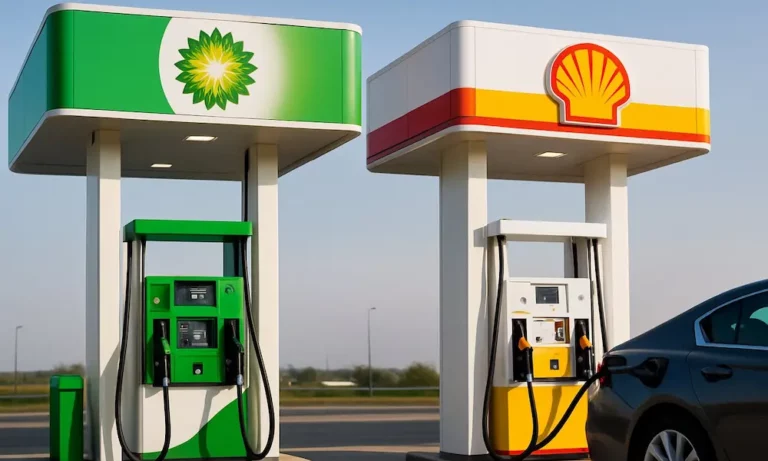
Choosing between BP and Shell gas can feel like splitting hairs. Both are major players with premium fuel options that promise better engine performance and efficiency. But are there meaningful differences that could impact your vehicle and wallet? Let’s dive into a detailed comparison of BP vs Shell gas to help you make an informed decision next time you pull up to the pump.
How BP and Shell Gas Meet Industry Standards
Both BP and Shell belong to an elite group of fuel retailers who offer TOP TIER™ Detergent Gasoline. This industry standard requires detergent concentrations 2-5 times higher than the EPA’s minimum requirements.
When you use TOP TIER™ fuels like those from BP and Shell, you’re getting gasoline that’s proven to reduce carbon deposits on intake valves and fuel injectors by 45-75% compared to regular gas. In fact, AAA testing has shown that engines running on these premium fuels show significantly less deposit buildup after 4,000 simulated miles.
Why does this matter? Because cleaner engines deliver:
- Better fuel economy
- Reduced emissions
- Smoother performance
- Longer engine life
BP’s Invigorate® Technology vs Shell’s V-Power Formula
BP’s Approach to Fuel Additives
BP incorporates its proprietary Invigorate® technology across all its gasoline grades, including the premium Amoco Ultimate®. This technology focuses primarily on active deposit removal.
Key benefits of BP’s Invigorate® include:
- Dissolves existing carbon deposits in your engine
- Combines polyether amines with corrosion inhibitors
- Improves horsepower by up to 6.7% according to BP’s fleet tests
- Enhances acceleration by approximately 4.1%
BP claims drivers can travel up to 300 miles farther annually using Amoco Ultimate® with Invigorate® thanks to improved combustion efficiency.
Shell’s V-Power Technology
Shell takes a slightly different approach with its V-Power Nitrogen Enriched formula, which emphasizes prevention of deposits before they form.
Shell’s V-Power features:
- Patented Nitrogen Enriched Cleaning System
- Thermally stable molecules that resist breakdown under high engine temperatures
- Reported removal of up to 100% of performance-robbing deposits
- 1-3% improvement in fuel economy over baseline fuels
Shell’s premium 93 octane V-Power NiTRO+ is specifically formulated to reduce engine knock in high-compression engines, potentially unlocking improved power output through advanced ignition timing.
Real-World Performance Comparison
Fuel Economy: BP vs Shell
Consumer experiences with fuel economy vary widely between BP and Shell. Some drivers report significant improvements:
- One driver documented a 20% improvement in city MPG with BP gas (20 MPG vs. 17 MPG on generic fuel)
- Another noted a 13% highway MPG advantage with Shell
- A controlled test comparing two tanks each of BP and Shell regular gasoline found Shell provided slightly better mileage (445 vs. 437 miles per tank)
These variations likely stem from differences in driving habits, vehicle age, and engine design. Your results may differ based on your specific circumstances.
Engine Performance Benefits
| Performance Metric | BP (Amoco Ultimate®) | Shell (V-Power NiTRO+) |
|---|---|---|
| Octane Rating | 93 octane | 93 octane (99 RON) |
| Deposit Removal | Excellent (focus on removing existing deposits) | Excellent (focus on preventing new deposits) |
| Horsepower Improvement | Up to 6.7% over regular gas | Up to 30hp in turbocharged engines vs. 87 octane |
| Best For | Older engines with existing carbon buildup | Modern high-compression or turbocharged engines |
Shell’s V-Power 93 octane seems to offer particular benefits for turbocharged or high-compression engines, like Ford’s EcoBoost. Meanwhile, BP’s Amoco Ultimate® provides balanced performance across a wider range of vehicles but doesn’t emphasize specific horsepower gains related to octane.
Long-Term Engine Health Effects
How BP Protects Your Engine
BP’s Invigorate® has shown impressive results in reducing valve-seat wear during extensive dynamometer tests. The company reports sludge reduction rates exceeding 80% with continued use.
This makes BP’s premium fuel potentially beneficial for:
- Older vehicles with accumulated deposits
- Engines that haven’t been maintained with premium fuel previously
- Vehicles that regularly experience stop-and-go driving conditions
Shell’s Engine Protection Strategy
Shell’s V-Power, tested over 500,000 miles across diverse engines, demonstrated minimal injector fouling over time. The formula also helps maintain catalytic converter efficiency by avoiding metallic additives that can cause damage.
A recent study noted that Shell’s friction modifiers reduced wear on fuel pumps by approximately 15% compared to industry averages, suggesting potential benefits for engine longevity.
Price Considerations and Value
Shell typically prices its gasoline 2-5 cents higher per liter than discount retailers, reflecting its premium additive package and brand positioning. BP’s pricing generally falls in a similar range.
Surveys indicate that 68% of Shell customers prioritize engine longevity over immediate savings, suggesting they see value in paying more for premium fuel. Meanwhile, BP’s loyalty programs like BPme Rewards attract cost-conscious drivers who still want the benefits of detergent additives.
The regional availability and pricing of each brand varies significantly:
- BP/Amoco has stronger presence in the Midwest
- Shell dominates coastal regions through partnerships with retailers like Kroger and Safeway
Corporate Approaches: Beyond the Pump
The companies behind these fuels take different approaches to their business strategies, which might matter to consumers who consider corporate values in their purchasing decisions.
Shell’s Balanced Energy Strategy
Under CEO Wael Sawan, Shell maintains a modest 1% annual growth target in oil and gas production through 2030. The company simultaneously invests in carbon capture and renewable energy projects as part of what it calls a “balanced transition” strategy.
This approach has resonated with investors, with Shell outperforming BP in stock performance this year. The company maintains significant quarterly share buybacks reflecting its commitment to shareholder returns despite increasing environmental regulations.
BP’s Recent Fossil Fuel Shift
BP has recently pivoted from its previous “Beyond Petroleum” position, announcing a 20% increase in oil and gas investments alongside a substantial reduction in renewable spending.
This strategic shift has drawn criticism from environmental groups and coincided with a significant year-over-year profit decline. BP’s current approach appears more focused on energy security concerns than on aggressive climate commitments.
Which Station Should You Choose?
Based on the comprehensive analysis of BP vs Shell gas, here are some recommendations for different types of drivers:
Choose BP (Amoco Ultimate® with Invigorate®) if you:
- Drive an older vehicle with potential carbon buildup
- Want a fuel focused on removing existing deposits
- Prefer BP’s loyalty programs or have convenient access to BP stations
- Value a balanced fuel for mixed driving conditions
Choose Shell (V-Power NiTRO+) if you:
- Drive a modern turbocharged or high-compression engine
- Want preventative deposit protection
- Can benefit from the higher-octane performance in a premium-recommended vehicle
- Have convenient access to Shell stations
For most standard engines, both companies’ regular grades (87 octane) meet TOP TIER™ requirements and will provide adequate protection. The premium options offer incremental benefits that may or may not justify the higher price, depending on your vehicle’s needs and your driving patterns.
The Environmental Perspective
Both companies offer carbon offset options at certain locations, allowing environmentally conscious consumers to pay a small premium to offset the carbon emissions from their fuel purchase.
Shell has invested more heavily in electric vehicle charging infrastructure in recent years, with plans to install over 500,000 charging points globally by 2025. BP has similar initiatives but at a smaller scale.
If environmental impact is a key concern, researching the specific sustainability commitments of each company in your region might help inform your choice between BP and Shell gas.
The Bottom Line on BP vs Shell Gas
BP and Shell both produce high-quality fuels that exceed minimum detergent requirements. Their premium options offer genuine benefits, particularly for engines that can utilize higher octane levels or those suffering from carbon deposits.
Your best choice ultimately depends on:
- Your specific vehicle’s needs and manufacturer recommendations
- Your typical driving patterns (city vs. highway)
- Convenient location and pricing in your area
- Whether you value deposit prevention (Shell) or removal (BP) more highly
For most drivers, consistency is key—whichever premium fuel you choose, using it regularly will likely provide better results than switching between brands or occasionally treating your car to premium gas.
TOP TIER™ Detergent Gasoline certification for both brands confirms that you’re getting quality fuel either way, with the main differences coming down to their specific additive formulations and octane strategies.