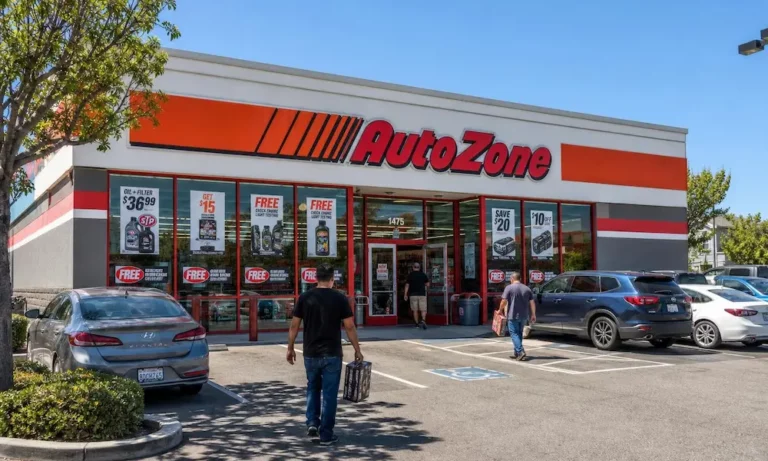
You need your rotors resurfaced and AutoZone is the closest store. Makes sense to ask. But before you load up your car, here’s what you actually need to know — including where to go if AutoZone can’t help you.
Does AutoZone Turn Rotors?
No. AutoZone does not turn, resurface, or machine brake rotors. Not anymore.
AutoZone stopped offering in-store rotor turning more than 15 years ago. They used to run manual brake lathes in some locations, but that service was phased out nationwide. Today, zero AutoZone stores offer walk-in rotor resurfacing.
So if someone told you AutoZone turns rotors, that information is seriously outdated.
Why Did AutoZone Stop Turning Rotors?
A few reasons pushed AutoZone out of the resurfacing business:
- Maintenance headaches. Keeping precision brake lathes calibrated across thousands of stores is expensive and labor-intensive.
- Liability risks. Modern rotors are thinner than older designs. Machine a worn rotor incorrectly, and it drops below the safe minimum thickness — creating a real danger and a legal problem.
- Business model shift. AutoZone makes more money selling parts than running a machining service. It’s that simple.
Their current model focuses on high-volume parts retail. They sell their Duralast brake rotor lineup directly over the counter, which is often just as affordable as getting your old rotors turned anyway.
What Does AutoZone Offer Instead?
AutoZone replaced its service model with two alternatives worth knowing about:
1. Loan-A-Tool Program
Need to do the job yourself? AutoZone lends out specialized brake tools — think caliper piston spreaders and other gear — with a refundable deposit. You borrow the tool, do the work, return it, and get your money back.
2. Shop Referral Program
Not into DIY? AutoZone runs a national search platform that connects you with local independent shops they call “Preferred Shops.” These are garages that buy wholesale parts from AutoZone regularly, so they’re vetted through volume. You get a professional install; AutoZone keeps the parts sale. Everyone wins.
Which National Chains Actually Turn Rotors?
Here’s where it gets useful. If you specifically want resurfacing, a few chains still offer it.
| Retailer | Turns Rotors? | Typical Cost | How It Works |
|---|---|---|---|
| AutoZone | No | N/A | Parts sales + Shop Referral Program |
| O’Reilly Auto Parts | Yes | $25 (car) / $30 (truck) | Bring uninstalled rotors; free thickness check, then lathe resurfacing |
| Pep Boys | Yes (service centers) | Bundled ~$182/axle | On-car precision match lathes; full brake service packages |
| NAPA Auto Parts | Not at retail stores | Varies by shop | Routed through NAPA Auto Care Centers with certified techs |
| Advance Auto Parts | No | N/A | Parts retail only; ships brands like Carquest Premium |
O’Reilly Auto Parts: Your Best Bet for Walk-In Resurfacing
O’Reilly is the most accessible option for over-the-counter rotor turning. You pull the rotors off your car, bring them in, and a staff member checks the thickness with a micrometer — free of charge. If there’s enough material left, they resurface them on a manual brake lathe right there.
Prices have climbed over the years. O’Reilly used to charge $10–$12 per rotor. Now it’s $25 for passenger cars and $30 for trucks, driven by rising labor costs and tooling upkeep. One heads-up: lathe availability isn’t guaranteed at every location. Equipment wears out, staff turnover happens. Call ahead before making the trip.
Pep Boys: Full Service, Not Just Machining
Pep Boys doesn’t offer standalone rotor turning at a counter. Instead, they bundle resurfacing into full brake service packages at their service centers. Their technicians use on-car precision match lathes — a step up from manual lathes because the rotor spins on your actual hub, correcting microscopic runout issues that off-car lathes can miss.
That said, some customers report that service advisors sometimes skip the resurfacing portion of promotional packages and push full replacement instead. Ask specifically what’s included before you sign off.
Should You Even Bother Turning Your Rotors?
Here’s the honest truth: for most standard cars, turning rotors is rarely worth it anymore.
The Cost Gap Has Almost Disappeared
Budget-tier aftermarket rotors from brands like NAPA Proformer run $18–$25 each. Mid-grade options like Duralast or Carquest Premium run $50–$120. Meanwhile, O’Reilly charges $25–$30 just to machine your existing, already-worn rotor.
You’re paying nearly the same money for a part that has less thermal mass than a new one. That’s not a great trade-off.
New Rotors Win on Performance Too
A brand-new rotor starts with full material thickness, which means better heat dissipation and longer service life. A machined rotor has lost some of that thermal mass — it runs hotter, wears pads faster, and warps more easily under hard braking. Replacement is the smarter long-term call for most drivers.
When Resurfacing Still Makes Sense
Resurfacing isn’t dead — it just has a narrower use case now. If you drive a heavy-duty truck, a performance vehicle, or a luxury import where OEM replacement rotors cost $150–$250 each, machining makes real financial sense. As long as the rotor has adequate thickness remaining and no signs of thermal damage, turning it is a smart, cost-effective move.
How To Know If Your Rotors Can Even Be Turned
Not every rotor is a good candidate for resurfacing. Here’s a quick diagnostic guide:
| Rotor Condition | Can It Be Turned? | What To Do |
|---|---|---|
| Thickness below stamped discard spec | No | Replace immediately |
| Hairline cracks near edges or vents | No | Replace immediately |
| Severe warping or heavy steering vibration during braking | Unlikely | Replace for safety |
| Deep blue discoloration or hot spots | Low chance | Replace; hard spots wreck lathe blades |
| Shallow grooves, surface glazing, minor scoring | Yes | Resurfacing is a solid fix |
Every rotor has a minimum discard thickness stamped directly on the hub or outer rim. To qualify for lathe work, the rotor needs at least 0.050 inches of clearance above that number. That safety margin gives the cutting tool enough material to work with while keeping the finished part within safe limits.
Thermal discoloration — that dark blue tint from excessive heat — is a red flag. The heat changes the metal’s molecular structure and creates hard spots that fight the lathe blade. You’ll get blade chatter and an uneven surface finish, which defeats the whole point.
DIY Rotor Replacement: The Basics
If you decide to swap rotors yourself instead of turning them, the process is straightforward. Here’s the sequence:
- Loosen lug nuts slightly before lifting the car
- Jack the vehicle up and secure it on jack stands — not just a jack
- Remove the wheel, then pull the caliper mounting bolts
- Hang the caliper from the upper control arm with a bungee cord — never let it dangle by the brake line
- Slide the old rotor straight off the hub
- Wash the new rotor with warm water and mild soap to remove shipping oil
- Use a caliper spreader or C-clamp to push the piston back into the caliper bore — crack the bleeder valve open slightly to avoid pushing fluid back into the ABS unit
- Reinstall caliper, torque fasteners to factory spec
- Pump the brake pedal several times before moving the car — this re-engages the pistons
AutoZone’s Loan-A-Tool program can save you money on the caliper spreader if you don’t own one.
The Bottom Line on AutoZone Rotor Turning
AutoZone doesn’t turn rotors — hasn’t for over 15 years. If you want resurfacing, O’Reilly Auto Parts is your most accessible walk-in option. If you’re driving a budget daily driver, just replace the rotors outright. The cost difference is minimal, and new parts outperform machined ones every time. Save the resurfacing for situations where OEM replacement costs actually make it worth your while.