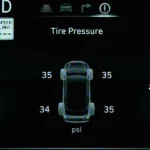
That little tire pressure warning light is staring at you again. You’re heading to Costco for new tires anyway, so you’re wondering — does Costco replace TPMS sensors while they’re at it? Good news: yes, they do. But there are rules, costs, and a few surprises worth knowing before you pull into that tire bay.
What Costco Actually Does with Your TPMS Sensors
Yes, Costco does replace TPMS sensors. But the service breaks down into two distinct options depending on what your sensors actually need.
Option 1: The Service Pack ($2.99 per wheel)
This is a maintenance kit — not a full sensor swap. It includes a new rubber grommet, a nickel-plated valve core, a sealed valve cap, and (for metal stems) a new hex nut and washer. Costco requires this kit on every tire installation for vehicles with direct TPMS. It’s cheap insurance against slow air leaks.
Option 2: Full Sensor Replacement ($45–$65 per wheel)
If your sensor’s battery is dead or the hardware is physically damaged, Costco swaps the whole unit. This price includes the sensor, installation labor, and electronic programming to sync everything with your dashboard.
Both options are solid. Which one you need depends on the age and condition of your sensors.
How Much Does TPMS Sensor Replacement Cost at Costco?
Here’s a direct comparison so you can see exactly what you’re saving:
| Service Provider | Cost Per Sensor | Total (4 Wheels) | Notes |
|---|---|---|---|
| Costco Wholesale | $45–$65 | $180–$260 | Includes installation and programming |
| Typical Dealership | $100–$374 | $400–$1,496 | Labor often billed separately |
| Discount Tire | ~$60 | ~$240 | Includes standard installation |
The savings over a dealership can be dramatic — especially on luxury brands like Toyota or Infiniti, where a single sensor can run $200–$374. Costco’s flat-rate aftermarket pricing keeps that cost predictable.
One extra note: if you need a sensor replaced outside of a new tire purchase, Costco may charge about $15 per wheel for the labor to break the tire bead and install the sensor.
What Sensors Does Costco Use?
Costco partners with Dill Air Controls, an American manufacturer that makes programmable “universal” sensors. A Costco technician can configure a single Dill sensor to match the radio frequency and data protocol of nearly any standard vehicle. This lets Costco service over 90% of vehicles with a small, efficient inventory.
These sensors meet all federal safety standards and work well for most drivers. Some members notice a brief delay before their car’s computer fully recognizes the new sensor, but the relearn procedure (more on that below) typically resolves this quickly.
Important rule: Costco won’t install sensors you bring from home or buy elsewhere. They only install sensors from their own inventory. This policy exists because outside sensors — especially ones purchased from online marketplaces — often lack the coding needed for Costco’s programming tools and carry higher failure rates. Using their own stock means they can warranty the work.
Direct vs. Indirect TPMS: Why It Matters for Your Bill
Before you pay anything, know which system your car uses. This directly affects what Costco charges you.
Direct TPMS uses a physical sensor inside each wheel to measure actual air pressure. These require the $2.99 service pack at minimum — and possibly a full sensor replacement.
Indirect TPMS doesn’t use pressure sensors at all. It monitors wheel speed through your anti-lock braking system to detect a low tire. Because there’s no sensor hardware to service, Costco replaces the standard rubber valve stem, which is included in the installation at no extra cost.
| System Type | How It Works | Costco Service | Cost |
|---|---|---|---|
| Direct | Internal pressure sensor in each wheel | Service pack or full replacement | $2.99–$65 per wheel |
| Indirect | Calculates pressure via ABS wheel speed | Basic rubber valve stem | Included in installation |
If you drive a vehicle with an indirect system and you see a TPMS service pack fee on your bill, you’re entitled to a refund. Ask about it.
What Is the TPMS Relearn Process?
Installing a new sensor physically is only half the job. Your car needs to “learn” the new sensor’s unique ID number and match it to the correct wheel position. Costco technicians handle this as part of the service. Here’s how it works depending on your vehicle:
- OBD Relearn — Common on Japanese and Korean vehicles. The technician reads all four sensor IDs and uploads them directly to your car’s computer via the diagnostic port.
- Stationary Relearn — Used by Ford, GM, and other domestic brands. The car enters a “learning mode” through dashboard menus, and the technician triggers each sensor in order (front-left, then clockwise) using an RF tool.
- Automatic Relearn — Many newer vehicles and European brands detect new sensors on their own. You drive at 20+ mph for 15–20 minutes, and the car’s computer figures it out automatically.
If Costco can’t complete the relearn due to a software conflict or proprietary system lock, they’ll let you know and direct you to a dealership to finish the process.
How Long Do TPMS Sensors Last?
The battery inside a TPMS sensor is sealed — it can’t be replaced separately. Once it dies, the whole sensor goes with it. Most sensors last 5 to 12 years, with 7 years being the average failure point under normal driving conditions.
That 7-year mark typically lines up with your second or third set of tires. So if your car is getting up there in age, Costco technicians will evaluate your sensor health during every tire change and flag any units that are running low on battery life.
Pro tip: If your car is approaching 7 years old, consider replacing all four sensors at once during your next tire installation. Replacing them in batches saves you from multiple service appointments as individual sensors die off over months.
Cold weather accelerates the problem. When a lithium-ion battery gets cold, the chemical reaction inside slows down. A sensor that works fine in summer may throw an intermittent warning light in January — often the first sign it’s nearing the end.
What Can Shorten a Sensor’s Life Even Faster?
Environment matters more than most people realize.
- Road salt causes galvanic corrosion when different metals (like a brass valve core in an aluminum sensor body) react in the presence of moisture and salt. The core can seize permanently, forcing you to replace the entire sensor over what should have been a minor fix.
- Moisture inside the tire corrodes the sensor body and valve core over time. This is one reason Costco fills tires with nitrogen instead of compressed air. Nitrogen is an inert, dry gas that creates a much better environment for the hardware inside your wheels.
Costco’s service packs use nickel-plated valve cores specifically to prevent this kind of corrosion — a small detail that extends sensor life in salty climates.
Which Vehicles Does Costco NOT Service?
Costco covers a wide range of vehicles, but some are excluded:
- Luxury European brands — BMW, Mercedes-Benz, Audi, and Porsche often use encrypted signals or non-standard radio frequencies that require dealership-level software.
- Tesla — Newer models use Bluetooth-based sensors that don’t work with standard RF programming tools.
- Commercial vehicles and dually trucks — Vehicles with more than four wheels or non-standard rim sizes are generally not serviced.
- Pre-2001 vehicles — Parts aren’t standardized from that era, and Costco typically can’t source compatible hardware.
- Spare tires — Some vehicles (like the Toyota RAV4) have a fifth sensor in the full-size spare. Costco technicians will usually check the spare’s pressure as a courtesy, but if the spare sensor is triggering your warning light, mention it upfront.
Costco’s Membership Rules and Restrictions
A few ground rules worth knowing before you book:
- You must be an active Costco member to use the Tire Center.
- Costco generally services tires purchased through Costco — either in-warehouse or on Costco.com. They’ll often do flat repairs on outside tires, but full mounting, balancing, and sensor installation are reserved for Costco-purchased tires.
- No outside sensors. As covered above, bring-your-own sensors won’t be installed.
- Appointments are required. You can schedule online at the Costco Tire Center. Sensor diagnostics and replacements take longer than a standard rotation, so plan accordingly.
- No wheel alignments. Costco doesn’t offer alignments. If your new tires need one — and they often do — you’ll need to visit a separate shop.
What’s Covered Under Warranty?
Costco offers a five-year road hazard warranty on the tires it sells. This covers replacement if a tire gets damaged by a non-repairable puncture or road impact. It does not cover the sensors.
TPMS sensors purchased at Costco carry a one-year manufacturer’s warranty against defects. If a sensor fails shortly after installation due to a manufacturing flaw, Costco managers have generally been willing to replace it or offer a refund under their standard satisfaction guarantee. To keep any tire warranty valid, Costco requires regular rotations and proper inflation — which means keeping your sensors working is part of the deal.
Is Costco Worth It for TPMS Sensor Replacement?
For most drivers, yes — especially compared to dealership pricing. The cost savings on a four-wheel sensor replacement can run into the hundreds of dollars. You get professional installation, electronic programming, and a sensor backed by a manufacturer’s warranty. The nitrogen fill is a genuine perk for sensor longevity, not just a sales gimmick.
The trade-offs are real but manageable: you need a membership, you can only use Costco-purchased tires, and some vehicles (especially European luxury cars) may not be compatible with their tools. If your car is straightforward and you’re already buying tires there, the TPMS service practically pays for itself.
Know your system type, check your vehicle’s age, and ask the technician upfront if your car is on the compatible list. That’s all the prep you need.